
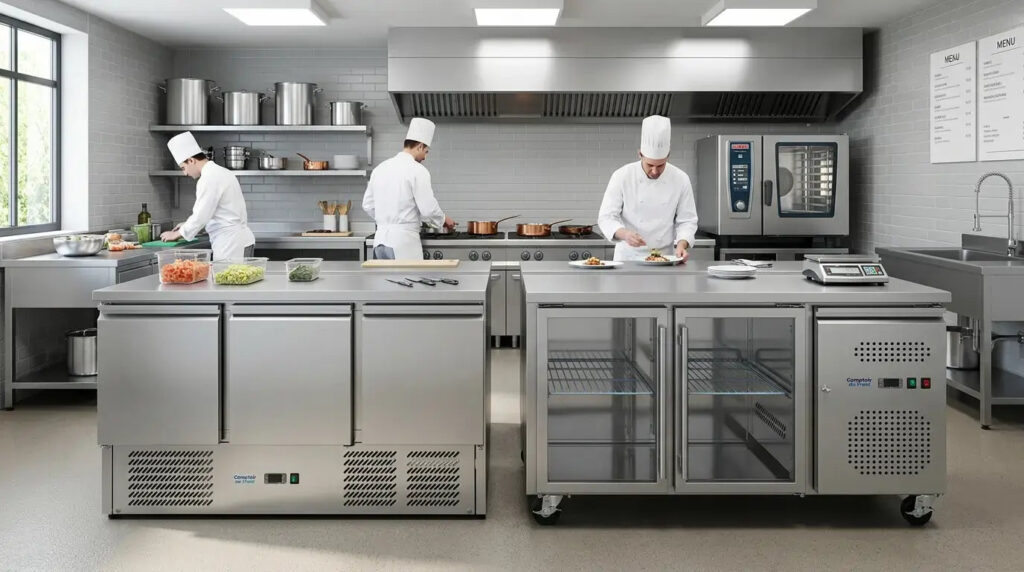
A positiva y negativa mesa refrigerada no responde a la misma lógica empresarial en función de los productos, el ritmo de servicio y el nivel de preparación en cocina. En la práctica, el positivo sirve para mantener los alimentos frescos inmediatamente utilizables en la estación, mientras que el negativo asegura reservas congeladas o productos que no deben entrar demasiado pronto en la fase de servicio.
Por lo tanto, un buen arbitraje no es “¿qué mesa es la mejor?” pero dónde colocar el frío positivo, dónde mantener el frío negativo y cuándo cambiar de una zona a otra. Es esta distribución la que mejora la fluidez del servicio, limita los errores HACCP y evita utilizar una unidad de preparación como simple almacenamiento intermedio.
¿Necesitas una mesa refrigerada positiva o negativa, o ambas en una cocina profesional?
La verdadera pregunta es simple: ¿necesita un gabinete de preparación, un gabinete de almacenamiento de congelados o una combinación de ambos? La respuesta depende de cuándo deben estar disponibles sus productos y de la temperatura a la que deben permanecer durante el servicio.
Se diseña una tabla positiva para ingredientes frescos ya utilizados en producción: bases frías, guarniciones, lácteos, carnes o salsas en uso. Una mesa de negativos toma el relevo para alimentos congelados, precortados mantenidos seguros o flujos donde la salida del negativo debe permanecer controlada hasta el último momento.
- Elija una mesa positiva si el puesto debe preparar, ensamblar y montar continuamente con productos frescos.
- Elija una tabla negativa si necesita almacenar alimentos congelados lo más cerca posible de un área de cocción o reprocesamiento.
- Elija ambos si su línea combina implementación en frío, rotación rápida y dependencia de referencias congeladas.
- Evite el mueble único que sirve para todo: aquí es donde a menudo surgen la confusión sobre el almacenamiento y las diferencias de temperatura.
Para sentar las bases a la hora de dimensionar un puesto de trabajo, también puedes leer nuestro artículo sobre cómo elegir una mesa refrigerada según el formato de tu cocina profesional.
¿Cómo distribuir los productos entre frío positivo y frío negativo sin crear fricción durante el servicio?
La pregunta operativa es: ¿qué productos deben estar disponibles inmediatamente y cuáles deben permanecer en espera controlada? La respuesta consiste en pensar por tiempo de servicio, no solo por familia de muebles.
En la cocina de restauración, la mesa positiva debe acoger los alimentos que salen regularmente durante la cocción. La mesa negativa debe seguir siendo una zona de espera corta o reserva cercana para los productos que aún están congelados, a fin de evitar idas y venidas a un armario lejano y una manipulación desordenada.
| Situación del servicio | Tabla positiva | Tabla negativa |
|---|---|---|
| Instalación y revestimiento en frío | Sí, para mantener los productos listos para su uso entre 0 y +8°C | No, a menos que exista una necesidad muy específica de almacenamiento transitorio |
| Reserva de productos congelados cerca de una estación caliente | No, riesgo de fallo de la lógica del producto | Sí, para limitar la salida prematura del negativo |
| Snack o comida rápida con mezcla fresca + congelada | Sí, para ingredientes de ensamblaje de alta rotación | Sí, si parte del menú depende de alimentos congelados a intervalos regulares |
| Organización clara HACCP | Muy bueno si el contenido está reservado para el servicio nuevo | Muy bueno si el contenido sigue estando estrictamente dedicado a alimentos congelados |
Veredicto: si su cocina prepara principalmente alimentos frescos, lo positivo debe permanecer en el centro de la estación. Si manejas una porción importante de alimentos congelados, lo negativo se convierte en un mueble estratégico. Los dos son complementarios cuando sirven diferentes momentos del flujo, no cuando almacenan lo mismo “por si acaso”.
Asesoramiento de campo: el error más común consiste en transformar la mesa positiva en un stock de mini-reserva o la mesa negativa en una esclusa de descongelación. En el campo, esto degrada la legibilidad de la estación, sobrecarga las aberturas y complica el cumplimiento de las normas HACCP.
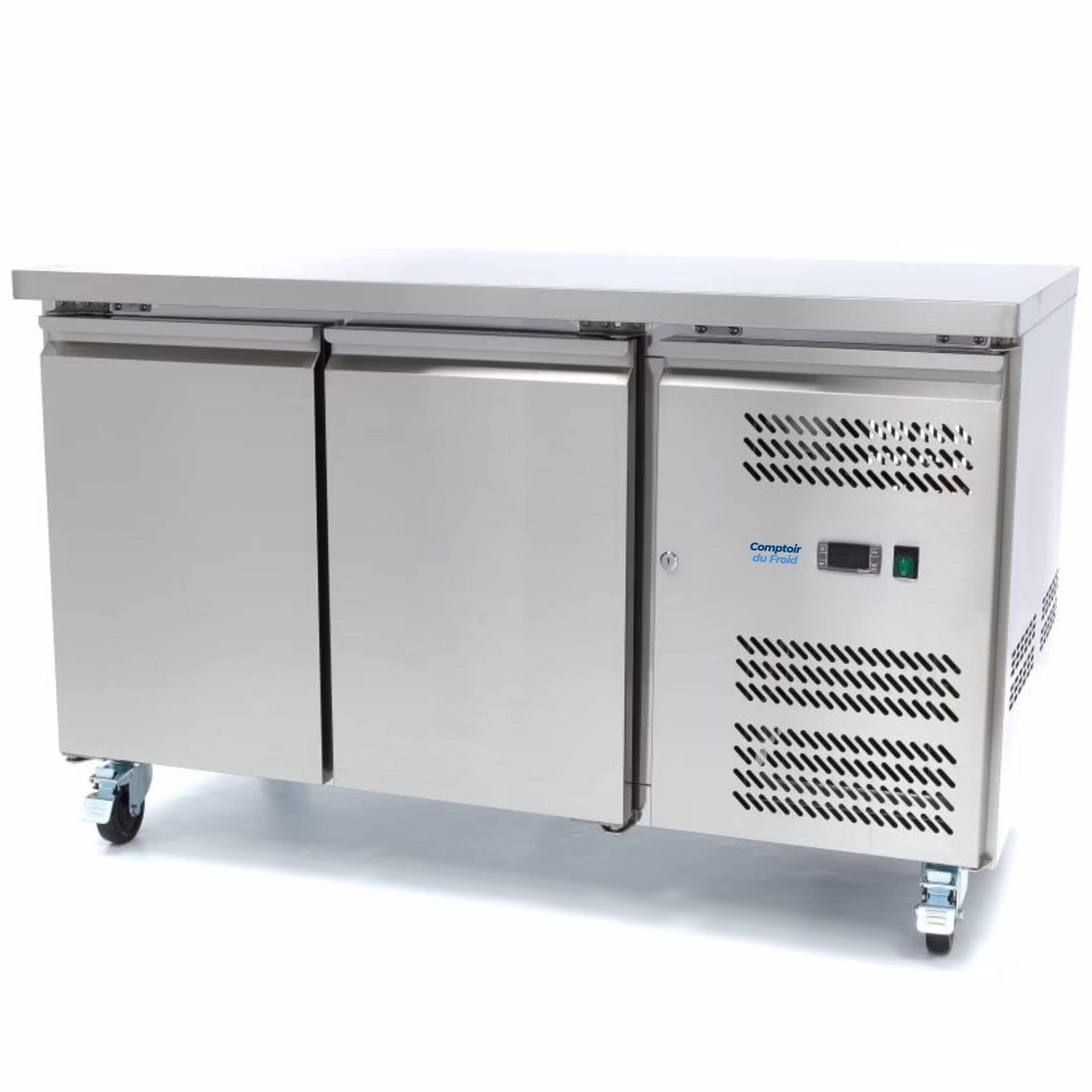
Mesa Frigorífica Positiva 2 Puertas 136cm (GN 1/1)
- Perfectoo para mantener ingredientes frescos al alcance del preparador.
- Formato GN 1/1 útil para estructurar un diseño limpio y legible.
- Planta coherente de acero inoxidable para una estación de preparación de catering versátil.
¿En qué casos una tabla negativa realmente mejora la organización de una estación CHR?
La pregunta que cabe plantearse es: ¿la tabla negativa aporta una ganancia real de caudal o sólo una duplicación de equipos? La respuesta es que cobra relevancia cuando una estación consume alimentos congelados de forma regular, rápida y repetida.
En una cocina que trabaja con bases ya porcionadas, productos empanizados, helados, bases de repostería o determinadas referencias de resolución de problemas, colocar una mesa negativa cerca del punto de uso reduce el movimiento y evita repetidas aperturas de un mueble de almacenaje principal. También sirve para separar mejor los circuitos entre frescos listos para aliñar y congelados en espera.
- Identificar los productos efectivamente recogidos durante el servicio.
- Compruebe si deben permanecer estrictamente negativos hasta su uso.
- Mida los viajes de ida y vuelta evitados en comparación con su almacenamiento principal.
- Confirma que el mobiliario tendrá una función clara y no desbordará.
Si su necesidad se refiere principalmente al almacenamiento a baja temperatura en la estación, nuestra guía sobre la elección de una mesa refrigerada negativa detalla los puntos de vigilancia específicos.
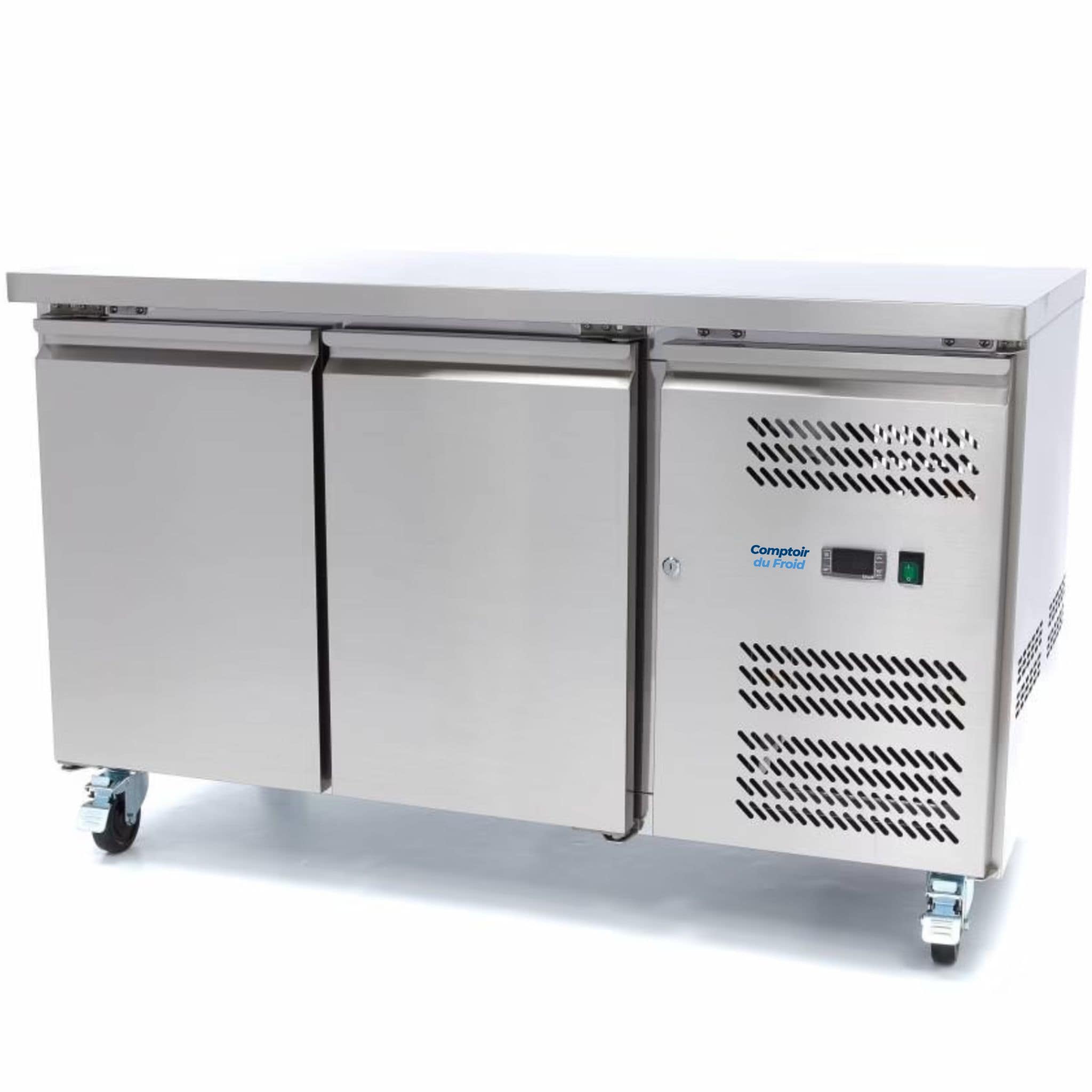
Mesa Congelador 2 Puertas 136cm GN 1/1 (Top Acero Inoxidable)
- Proporciona una reserva congelada local real para estaciones de trabajo de alta velocidad.
- Permite separar claramente el flujo congelado del flujo fresco que se está preparando.
- Planta de acero inoxidable útil si el mueble se convierte en un soporte funcional en la línea.
¿Qué implementación le permite mantener la fluidez y cumplir con HACCP?
La pregunta correcta es: ¿dónde debe colocarse cada mueble para ahorrar tiempo sin interrumpir la cadena de frío? La respuesta es alinear la distribución con las acciones reales de la estación: recepción interna, preparación, posible cocción, vestido, limpieza.
Por lo general, una mesa positiva debe ubicarse lo más cerca posible del plano de preparación o montaje. Una mesa negativa debe ser accesible pero ligeramente desplazada si alimenta una estación caliente o una estación de acabado, para evitar que se convierta en el punto central de todo el servicio. El objetivo no es pegar dos muebles idénticos uno al lado del otro, sino construir una distribución legible de temperaturas y usos.
- mantiene lo positivo en el corazón del ambiente fresco;
- reservar el negativo para las referencias congeladas efectivamente utilizadas en la estación;
- evitar mezclar productos crudos, semiacabados y listos para servir sin lógica de zonas;
- comprobar las temperaturas reales y el estado de las juntas, especialmente en las posiciones más abiertas.
En la práctica, la mejor distribución suele ser aquella que reduce el número de aperturas innecesarias y aclara inmediatamente el destino de cada mercancía. Esto también es lo que reduce el riesgo de error del equipo durante los servicios tensos o las sustituciones.
¿Necesitas una estación de frío positivo realmente adaptada a tu ritmo?
Compare nuestras mesas y torres refrigeradas positivas para construir una línea de preparación más suave, limpia y fácil de operar a diario.
Preguntas frecuentes
¿Podemos almacenar los mismos productos en una tabla positiva y en una tabla negativa?
No, su función no es la misma: el positivo se utiliza para productos frescos listos para usar, el negativo para conservar congelados o para una reserva local específica.
¿Una mesa negativa reemplaza a un congelador vertical?
No siempre. Sobre todo, complementa el almacenamiento principal cuando una estación necesita un acceso rápido a alimentos congelados durante el servicio.
¿Qué mesa instalar primero en una pequeña cocina de catering?
En la mayoría de los casos, la tabla positiva viene primero, porque apoya directamente la colocación y aderezo de productos frescos.
¿Por qué separar el frío positivo y el frío negativo en la estación?
Porque esta separación hace que los gestos sean más legibles, limita los errores de almacenamiento y ayuda a mantener una lógica HACCP más limpia en servicio.