
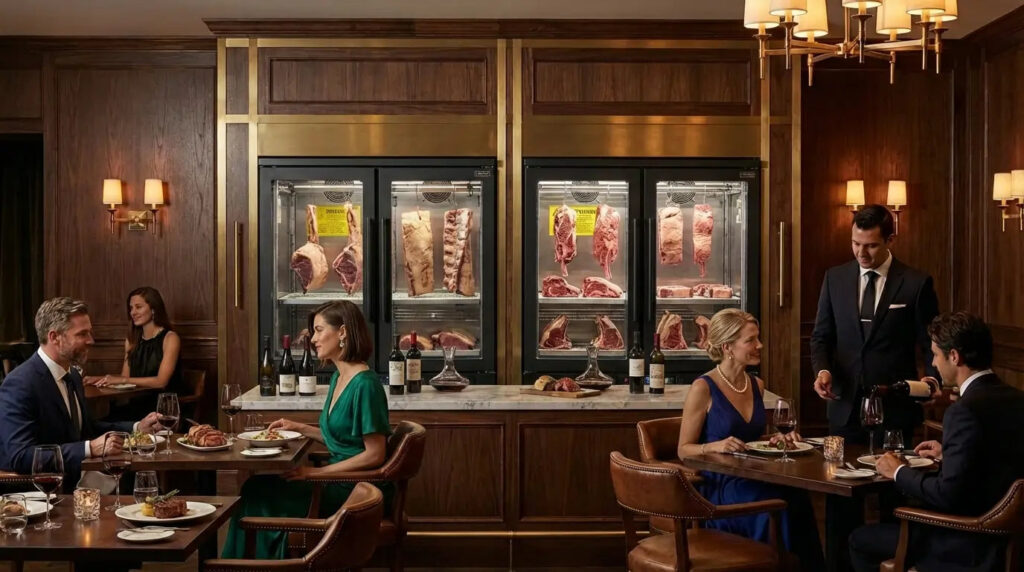
La maturazione Dry Aged permette di trasformare un bel pezzo di carne in un prodotto molto pregiato, più concentrato nel gusto e più tenero. Ma questo risultato non si ottiene né con un frigorifero classico, né con semplici celle frigorifere improvvisate.
Per ottenere una maturazione a secco senza derive sanitarie o perdite eccessive, è necessaria una cantina di maturazione in grado di stabilizzare temperatura, igrometria e circolazione dell’aria. È questo controllo che separa la vera carne frollata dalla carne lasciata semplicemente al freddo per troppo tempo.
Cos’è la maturazione Dry Aged?
La frollatura a secco è una maturazione controllata della carne. Durante questa fase il pezzo perde parte della sua acqua, che concentra gli aromi, mentre gli enzimi lavorano lentamente le fibre per migliorarne la tenerezza.
Questo processo richiede un vero rigore, perché la carne rimane per diversi giorni o diverse settimane in un ambiente molto specifico. Se uno dei parametri devia, non guadagni in qualità: perdi in rendimento, sicurezza o regolarità.
- Temperatura: generalmente da +1°C a +3°C.
- Igrometria: sufficientemente controllato per evitare un’eccessiva essiccazione o un ambiente eccessivamente umido.
- Ventilazione: l’aria deve circolare correttamente attorno alla carne.
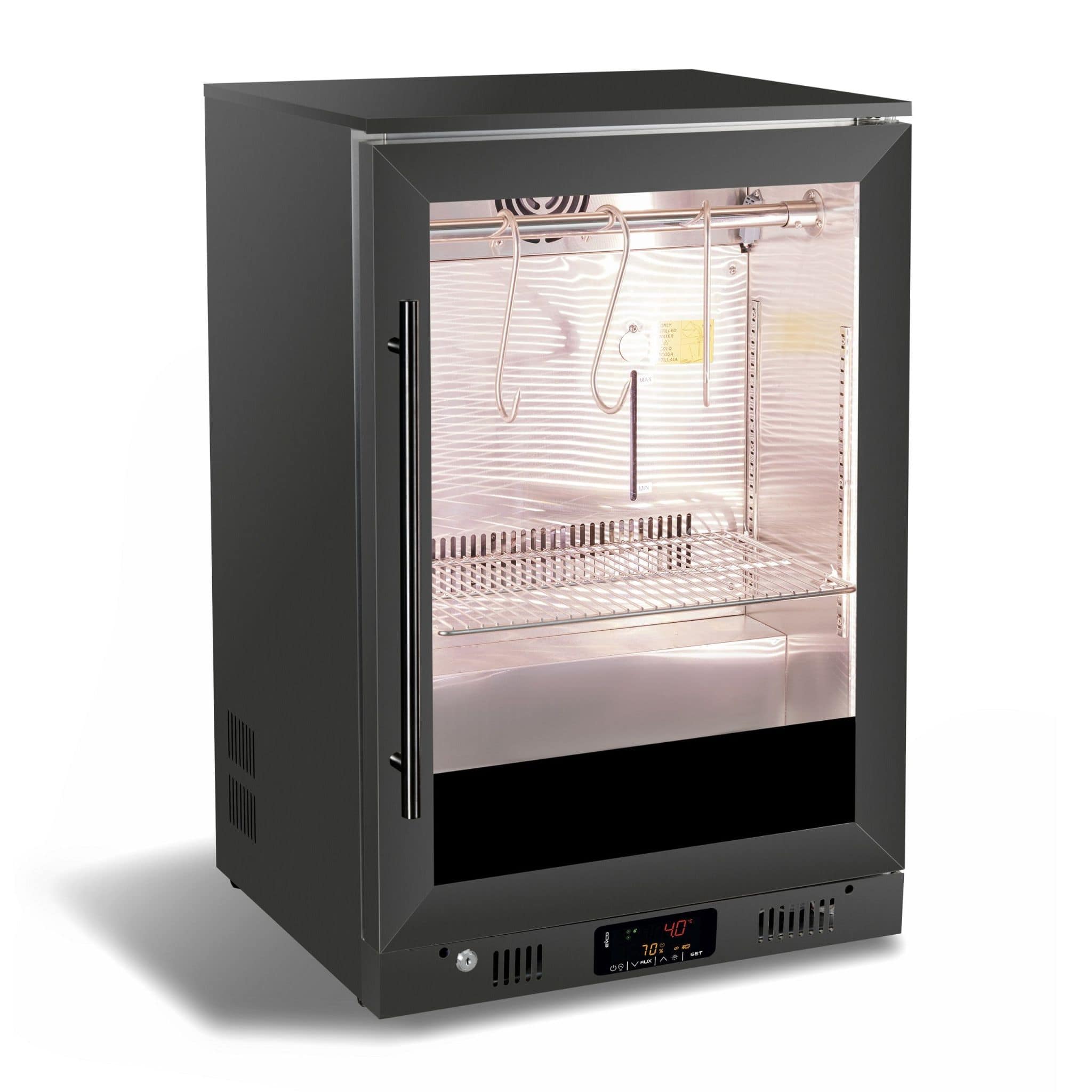
Cantina di maturazione per carne stagionata a secco – Con pietra di sale – 138L
- Formato molto buono per iniziare con una vera presentazione del prodotto
- Permette di entrare nel Dry Aged senza passare subito in un ampio guardaroba
- Soluzione coerente per ristoranti, macellerie o punti vendita premium
Perché un frigorifero classico non basta?
Perché un frigorifero standard la mantiene fredda, ma non controlla la vera maturazione. Può mantenere la carne fresca per alcuni giorni, ma non è progettato per gestire in modo sostenibile i sottili equilibri richiesti dalla maturazione Dry Aged.
| Punto critico | Frigorifero classico | Cantina di stagionatura |
|---|---|---|
| Temperatura | Freddo, ma non adatto a lunghe stagionature | Impostazione più coerente per la maturazione |
| Igrometria | Poco padroneggiato | Meglio regolato a seconda del modello |
| Circolazione dell’aria | Spesso insufficiente o mal distribuito | Progettato per aggirare le parti |
| Presentazione prodotto | Nessuna logica di esposizione | Può diventare una vera leva commerciale |
| Rischio operativo | Alto | Molto più controllabile |
Verdetto: se vuoi della vera carne stagionata che possa avere un valore commerciale, il classico frigorifero è una falsa economia. Conserva, ma non sostituisce, una cantina predisposta per la stagionatura a secco.
Che ruolo gioca la pietra di sale dell’Himalaya?
La pietra di sale non viene utilizzata solo per “avere un bell’aspetto”. In una cantina di maturazione ben progettata, contribuisce all’atmosfera interna dei mobili e rafforza la logica premium del prodotto esposto.
A seconda dei modelli, contribuisce ad una gestione ambientale più pulita e ad una presentazione più convincente al cliente. Questo non è l’unico criterio di scelta, ma per lunghe stagionature o per uso vetrina è un vero plus.
In altre parole: la pietra di sale non è un gadget se il resto dei mobili la segue. Completa una logica di cantina pensata per la maturazione, senza mascherare attrezzature medie.
Quale capacità scegliere in base alla tua attività?
Il volume giusto dipende dal tuo flusso, dal tuo luogo e dal modo in cui vuoi vendere la carne frollata. Una cantina troppo piccola blocca la rotazione. Una cantina troppo grande, vuota o mal gestita, blocca contanti e scorte.
- 138L: buona scelta per iniziare, testare l’offerta o promuovere alcuni pezzi visibili.
- 292L: livello intermedio più comodo per lavorare su più referenze.
- 458L: formato coerente per steakhouse, macelleria o stabilimento che fa della maturazione una vera priorità aziendale.
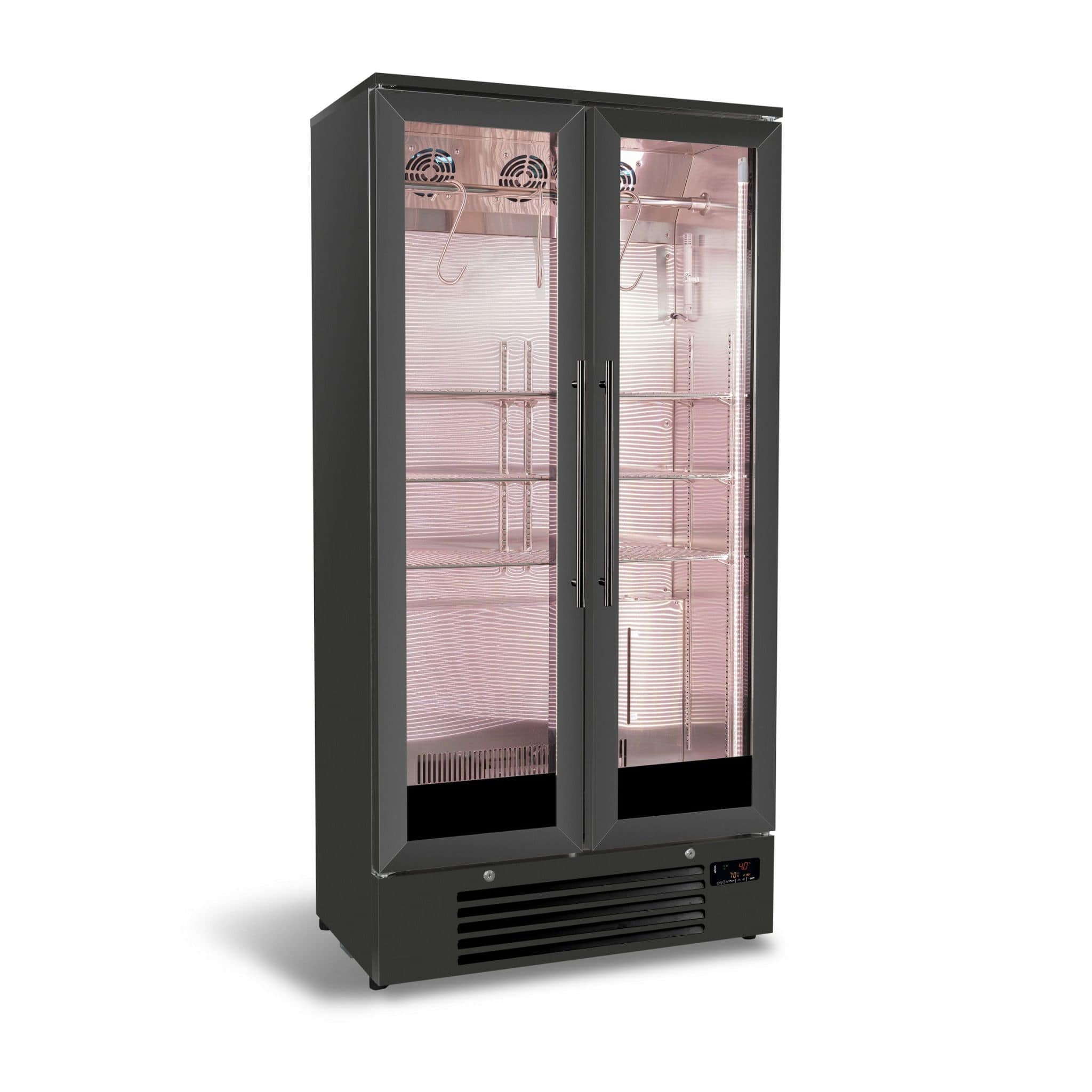
Cantina di maturazione per carne stagionata a secco – Con pietra di sale – 458L
- Formato adattato alla logica reale di volume e rotazione
- Più rilevante se la carne frollata diventa una firma commerciale
- Permette di strutturare meglio più orizzonti di maturazione
Perché questa attrezzatura può diventare molto redditizia?
Perché una cantina di stagionatura permette di trasformare una materia prima già di qualità in un prodotto molto più pregiato. Non vendi più semplicemente una costata di manzo: vendi esperienza, rarità e know-how visibile.
La redditività generalmente deriva da 3 leve:
- biglietto medio più alto su pezzi stagionati,
- posizionamento premium più difendibile,
- differenziazione commerciale difficile da copiare senza materiale reale.
Se confronti anche usi simili legati alla stagionatura, puoi leggere il nostro articolo su la scelta di una cantina di stagionatura per formaggi e salumi.
Pronto a rendere la carne stagionata un vero prodotto esclusivo?
Esplora la nostra selezione di cantine di maturazione professionali per scegliere il formato giusto in base al tuo flusso, al tuo spazio e alla tua ambizione commerciale.
FAQ
Quanto tempo occorre per maturare la carne Dry Aged?
Tutto dipende dal risultato desiderato, ma la logica del Dry Aged si svolge generalmente in diverse settimane, non in pochi giorni di cella frigorifera.
Possiamo preparare il Dry Aged in un frigorifero classico?
Questo non è raccomandato. Un frigorifero standard non controlla adeguatamente l’ambiente necessario per una vera maturazione a secco.
Perché la circolazione dell’aria è così importante?
Perché aiuta a mantenere un ambiente omogeneo attorno al pezzo di carne e contribuisce alla qualità complessiva della frollatura.
Quale cantina scegliere per intraprendere l’attività di ristorazione?
Un formato da 138 litri può essere sufficiente per partire correttamente, poi diventa rilevante aumentare la capacità se la carne frollata occupa un posto reale nella tua offerta.


