
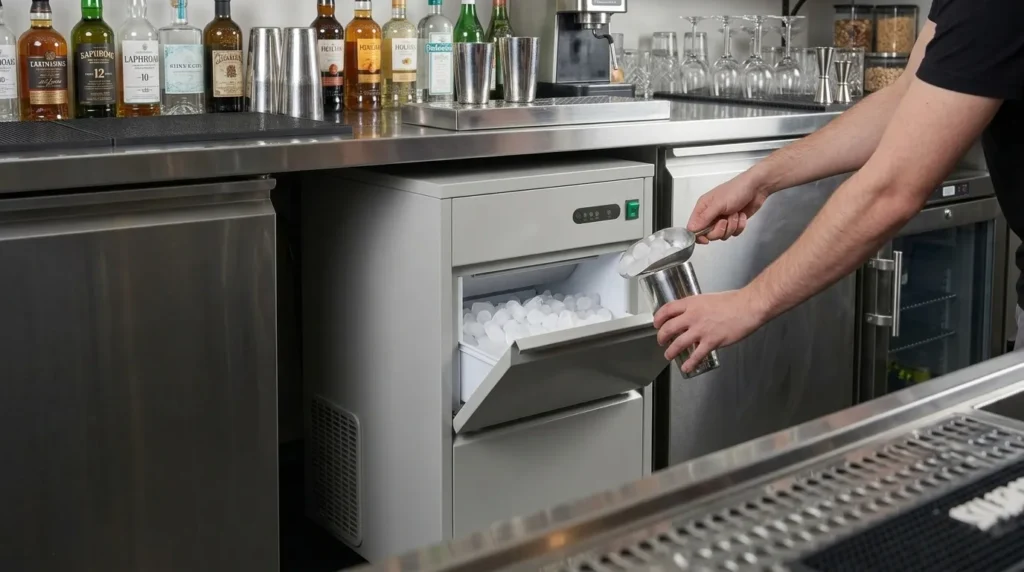
Una máquina de hielo profesional de segunda mano puede seguir siendo una buena oferta, pero sólo si compra una máquina que siga siendo coherente con su caudal, su ubicación y sus requisitos de higiene. En CHR, el riesgo real no es sólo una avería, es sobre todo la interrupción del servicio en medio de un disparo o una máquina difícil de higienizar correctamente.
Antes de firmar, deberá comparar el precio indicado con el coste real de reparación, el consumo, el estado del grupo frigorífico y la disponibilidad de piezas. Si este cálculo no está claro, un modelo compacto nuevo suele ser más rentable que uno de segunda mano dudoso.
Cuando una máquina usada todavía puede tener sentido
Una máquina usada puede ser relevante si sus necesidades son simples, su presupuesto es ajustado y su rendimiento es bien conocido. Esto es especialmente cierto para un pequeño bar, cafetería o snack bar que quiera producir cubitos de hielo sin aspirar a un gran volumen diario.
Por otro lado, la oportunidad se vuelve rápidamente riesgosa si abre durante largos períodos de tiempo, si la máquina debe funcionar todos los días o si no puede permitirse una avería en mitad del servicio.
- Buen caso de uso: necesidad moderada, presupuesto limitado, máquina probada e historial claro.
- Caso de riesgo: equipo antiguo sin mantenimiento rastreable, almacenamiento cuestionable, vendedor impreciso.
- Casos a evitar: fuerte estacionalidad, gran flujo de bebidas, espacio caliente o mal ventilado.
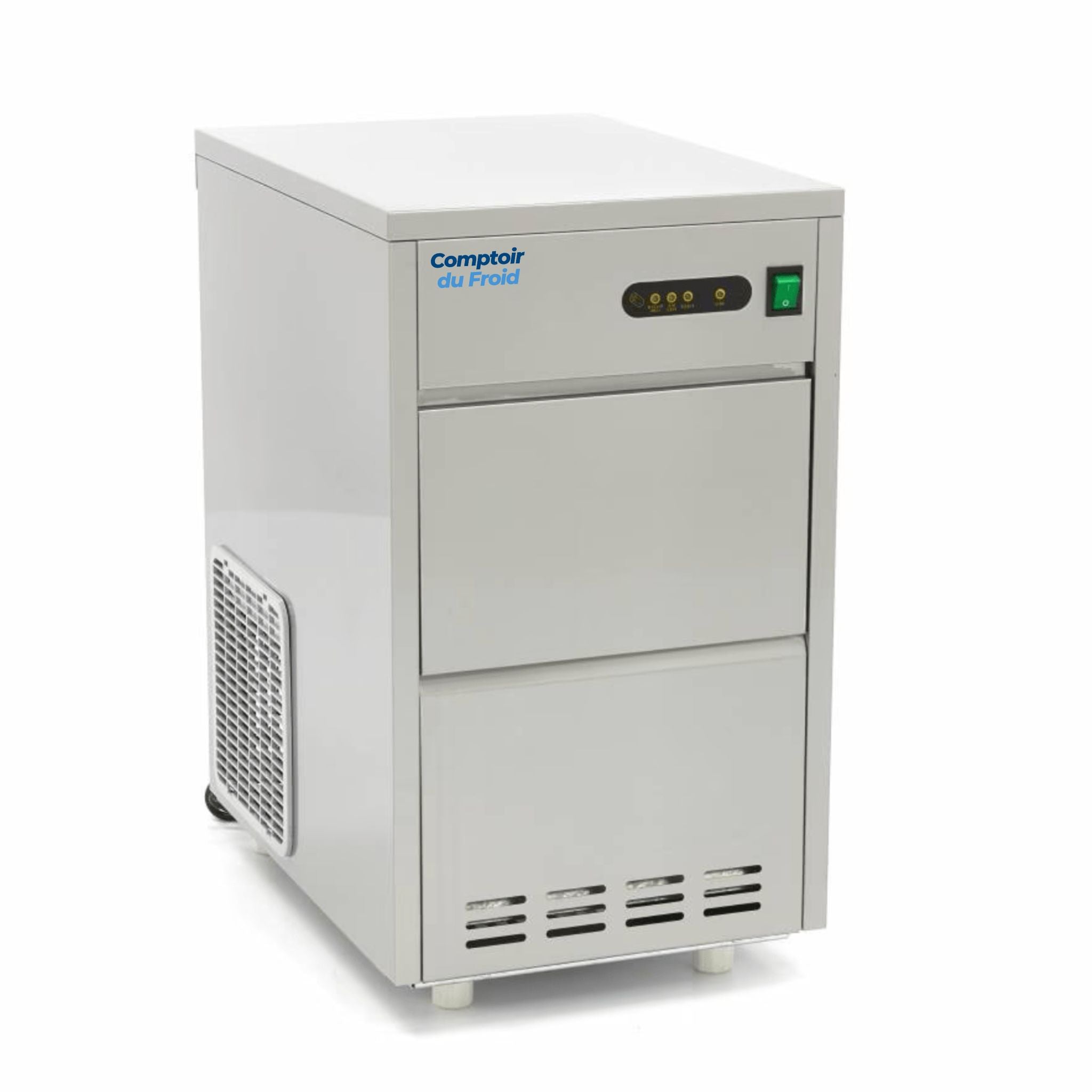
Fabricador de hielo hueco profesional – 24 kg por día – Refrigeración por aire
- Producción 24 kg por día con contenedor de almacenamiento de 5 kg para cubrir las necesidades de un pequeño flujo regular
- Cubitos de hielo huecos diseñados para enfriar rápidamente refrescos y cócteles sin diluir excesivamente la bebida
- Versión de aire adecuada para instalaciones bien ventiladas, más económica que la refrigeración por agua
Qué puntos comprobar antes de comprar
Antes de comprar, la pregunta es simple: ¿la máquina sigue siendo confiable, se puede limpiar y está dimensionada para su uso? Un producto usado que todavía produce frío pero ha perdido eficiencia o tiene un circuito en mal estado puede volverse caro muy rápidamente.
Comprobar primero la producción real durante 24 horas, el nivel de ruido, el estado del tanque, la limpieza de las zonas en contacto con el agua y la posible presencia de corrosión. Compruebe también si la máquina ha estado funcionando en un ambiente grasoso, caluroso o con mucho polvo, ya que esto desgasta rápidamente la unidad de frío.
También debes fijarte en los siguientes puntos:
- Tipo de cubito de hielo producido e idoneidad para su oferta de bebidas.
- Refrigeración por aire o agua dependiendo de su ubicación.
- Estado del condensador, filtros, juntas y depósito.
- Disponibilidad de piezas y costo de reparaciones de refrigeración.
- Trazabilidad del mantenimiento, especialmente en desincrustación y desinfección.
Para comprender sus necesidades antes de comprar, también puede consultar nuestra guía para elegir una máquina de hielo profesional. Y para evitar una máquina de tamaño insuficiente, mire también qué presupuesto planificar según su caudal real.
Usado o nuevo, ¿qué opción es más rentable según tu servicio?
La elección correcta depende en primer lugar de su nivel de riesgo aceptable. Usado puede parecer más barato, pero se vuelve malo si tienes que pagar por una reparación rápida, reemplazar una bomba o perder una noche de servicio.
| Criterio | Usado | Nuevo compacto |
|---|---|---|
| Precio de compra | Inicialmente más bajo | Más alto, pero más legible |
| Riesgo de avería | Variable según historial | Menor al inicio |
| Higiene/limpieza | Puede ser incierto si el mantenimiento no está claro | Condición de limpieza y monitoreo más fácil |
| Rendimiento real | A veces degradado por el desgaste | Capacidad anunciada más confiable |
| Visibilidad de costos | Bajo si se planea rehabilitación | Mejor visibilidad presupuestaria |
Veredicto: si tiene un caudal pequeño y estable y una máquina probada con un historial claro, se puede defender la oportunidad. Si su servicio realmente depende del hielo, un compacto nuevo suele ser la opción más racional.
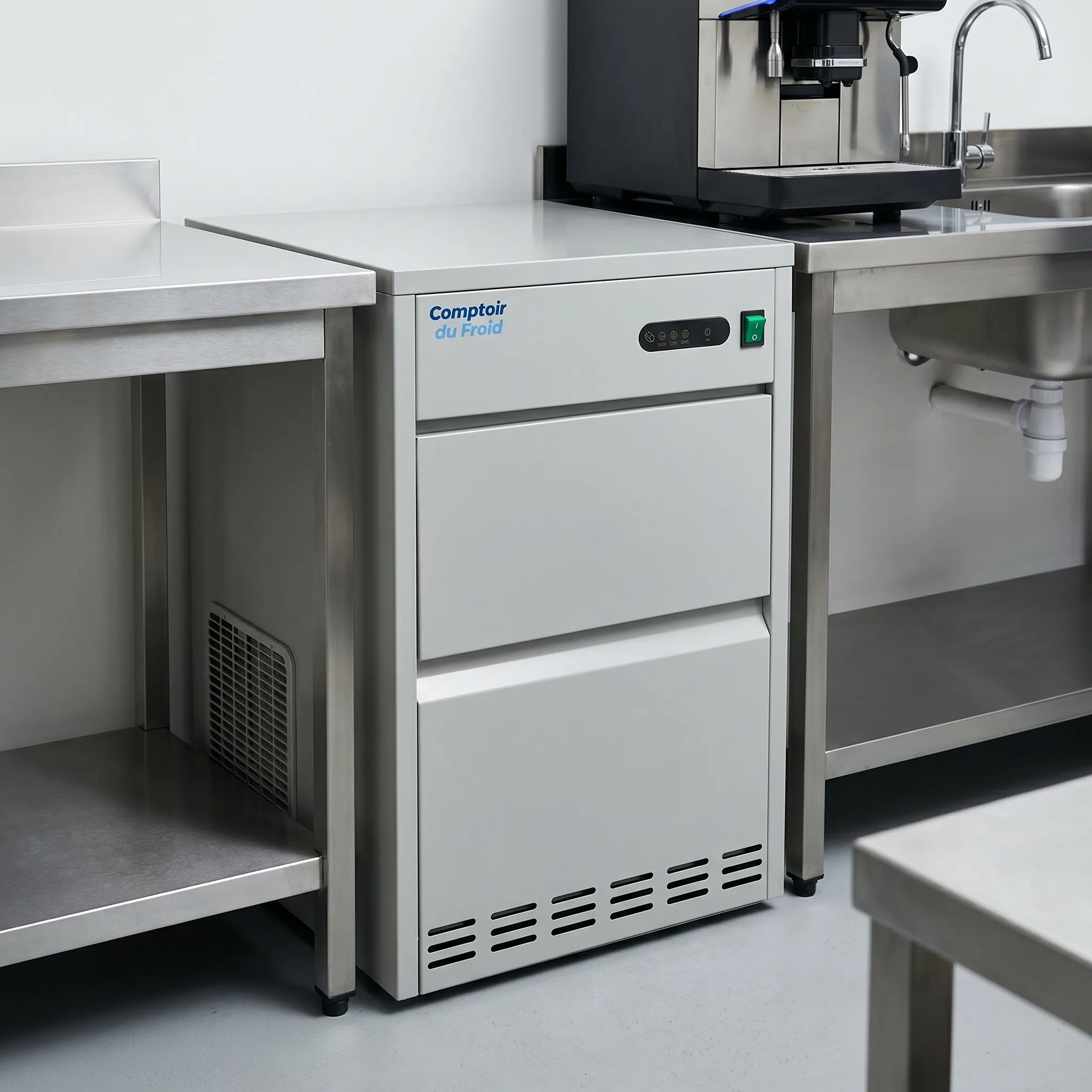
Fabricador de hielo hueco profesional – 45 kg por día – Refrigeración por aire
- Producción 45 kg por día con versión de aire diseñada para un caudal más serio en bares o restaurantes
- Contenedor de 9 kg para afrontar mejor los picos de demanda sin recargar constantemente
- Cuerpo de acero inoxidable 18/8 y aislamiento del tanque útil para mantener los cubitos de hielo en buenas condiciones por más tiempo
Los errores más costosos en el mercado de segunda mano
El primer error es comprar basándose únicamente en el precio. Una máquina económica pero con un mantenimiento deficiente puede costar rápidamente más que un modelo básico nuevo una vez que se añaden el transporte, la limpieza, la descalcificación y la nueva puesta en servicio.
El segundo error es subestimar la implementación. Una máquina de aire colocada en un gabinete hermético o detrás de una barra caliente pierde rápidamente su rendimiento. El tercero es comprar muy poca capacidad, lo que crea una producción insuficiente durante las horas punta y cansa aún más la máquina.
- No pruebe la máquina en agua o frío antes del pago.
- Olvídese del costo de un ingeniero en refrigeración y repuestos.
- Elija una capacidad teórica que se acerque demasiado a su necesidad real.
- Descuidar el nivel de higiene del circuito y de la cubitera.
¿Quieres evitar un trato falso?
Compare directamente nuevos modelos diseñados para CHR, con capacidad clara y uso consistente dependiendo de su flujo.
Preguntas frecuentes
¿Sigue siendo rentable una máquina de hielo profesional usada?
No. Sólo es rentable si su precio sigue siendo significativamente más bajo que el de un equivalente nuevo después de la inspección, limpieza y posible reparación.
¿Cuál es el punto más importante a comprobar antes de comprar?
La producción real en funcionamiento, con pruebas de frío, evacuación y tanque, sigue siendo el control más importante.
¿Deberíamos evitar una máquina sin historial de mantenimiento?
Sí, especialmente en CHR. Sin un historial claro, se arriesga la higiene, la incrustación y la vida útil de la unidad de frío.
¿Cuándo es mejor comprar nuevo?
Cuando el hielo es fundamental para su servicio, cuando su rendimiento se mantiene o cuando no desea absorber el riesgo de una interrupción a corto plazo.