
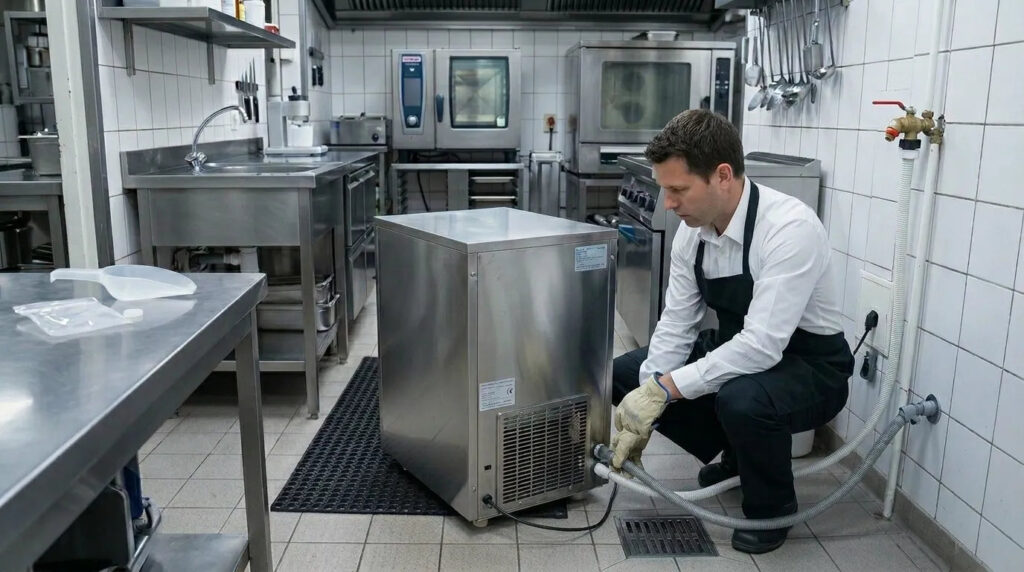
Una máquina de hielo con entrada de agua se convierte en la elección correcta tan pronto como su flujo es regular, los llenados manuales hacen perder tiempo o desea una producción más estable durante el servicio. En restaurantes, bares o cafeterías, la conexión evita, sobre todo, que se rompa el hielo en el momento equivocado.
El verdadero tema no es solo tener una máquina conectada a la red. Sobre todo debes comprobar si tu tarifa de servicio, tu ubicación y tu nivel de exigencia justifican un modelo conectado en lugar de un dispositivo cisterna o un pequeño formato auxiliar.
En nuestros modelos, esta conexión sigue siendo fácil de entender, con una entrada de agua y una salida , tanto si la máquina se enfría por aire como por agua.
¿Cuándo se vuelve realmente relevante una máquina de hielo conectada?
La pregunta correcta es simple: ¿necesita continuamente cubitos de hielo durante varias horas? Si es así, un suministro de agua directo rápidamente se vuelve más lógico que el llenado manual.
En la práctica, la conexión se vuelve interesante en tres casos: un bar que sirve sin interrupción, un restaurante que combina bebidas, postres y extra frío, o un establecimiento que quiere asegurar su servicio sin depender del cobro humano.
- produces cubitos de hielo todos los días, no solo como respaldo
- tienes tomas en las que el hielo roto cuesta ventas o ralentiza la barra
- busca una producción más regular con menos manipulación
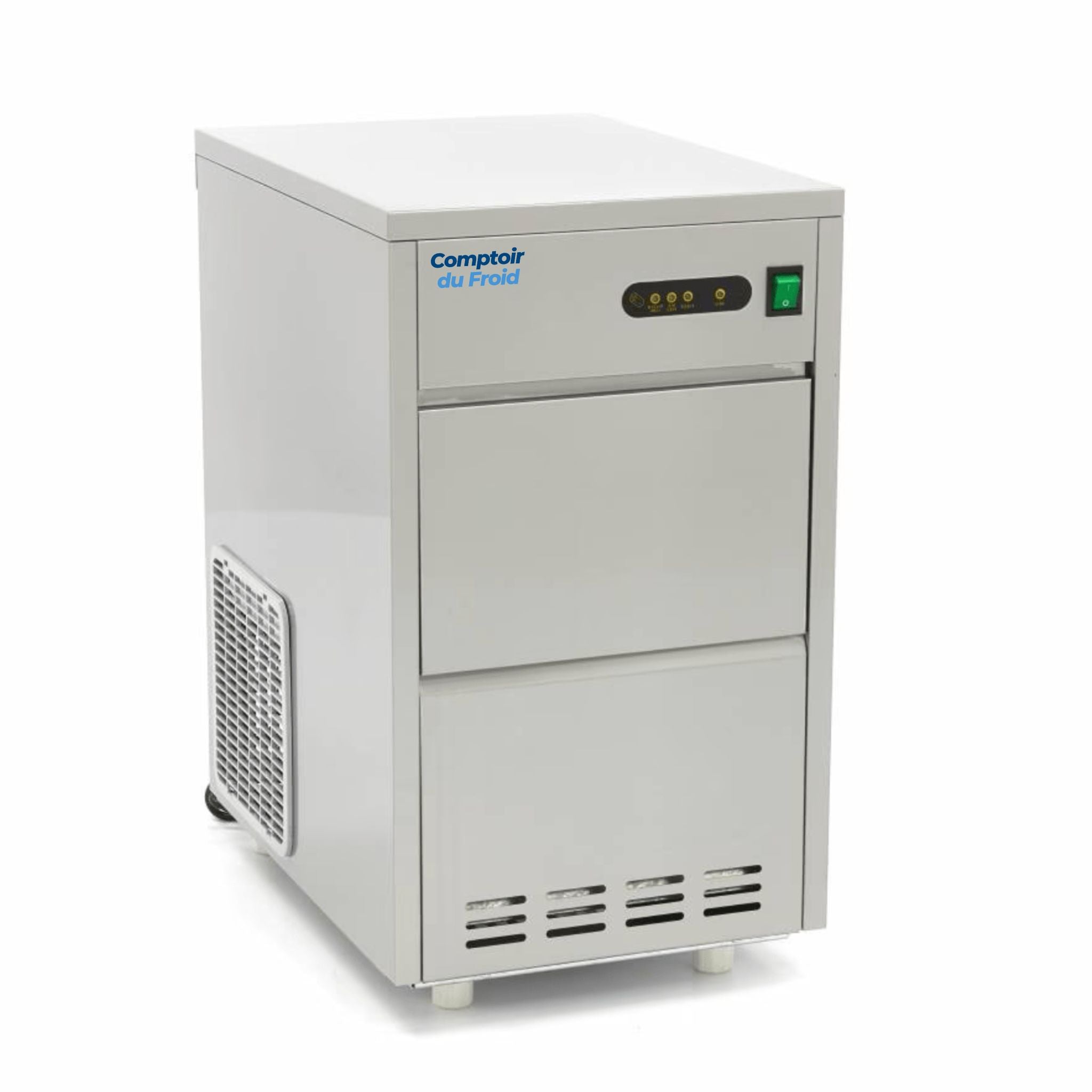
Máquina de hielo hueco profesional – 24 kg por día – Refrigeración por agua
- Producción 24 kg por día con refrigeración por agua, preferible en espacios empotrados o zonas muy calurosas
- Cubitos de hielo huecos adecuados para bares y restaurantes que desean un enfriamiento rápido de las bebidas
- Estructura de acero inoxidable 18/8, protección contra sobrecargas y tanque de ABS inyectado para una máquina más duradera en el día a día
Entrada o depósito de agua, ¿cuál es la diferencia en el terreno?
La principal diferencia es la continuidad de producción. Una máquina de tanque sigue siendo útil para un uso ocasional, pero rápidamente se vuelve limitante tan pronto como aumenta el caudal o el equipo tiene algo más que hacer que llenar el tanque.
Una máquina conectada funciona con una fuente de alimentación más estable y está mejor integrada en una lógica CHR real. Esto es especialmente cierto si ya ha leído nuestra guía para elegir una máquina de hielo profesional y todavía duda entre un pequeño equipo extra y un servicio real.
| Criterio | Máquina tanque | Máquina con entrada de agua |
|---|---|---|
| Autonomía | Limitado por llenados manuales | Mucho más estable durante el servicio |
| Caudal recomendado | Uso pequeño o extra | Uso regular a intensivo |
| Ubicación | Flexible pero a menudo menos profesional | Requiere conexión propia |
| Comodidad de funcionamiento | Más manipulaciones | Menos interrupciones y menos olvidos |
| Fiabilidad en auge | Corregir si la necesidad sigue siendo baja | Mucho más tranquilizador |
Veredicto: si el hielo forma parte del servicio diario, la conexión suele ser el mejor compromiso entre comodidad, regularidad e imagen profesional. El tanque sigue siendo especialmente defendible para un uso ocasional o muy limitado.
¿Debería elegir refrigeración por aire o agua?
La pregunta que debemos hacernos es: ¿su máquina se instalará en un ambiente cálido o empotrado? Si es así, un modelo refrigerado por agua suele ser más seguro. Si el lugar está bien ventilado, el aire generalmente sigue siendo más sencillo y económico de explotar.
La elección, por tanto, no depende sólo del número de kilos al día. Depende sobre todo de las condiciones reales de funcionamiento, del calor ambiental y del espacio disponible alrededor de la máquina.
También debemos distinguir claramente lo que llamamos entrada de agua. En nuestra gama, nuestros fabricados de hielo se conectan simplemente con una única entrada de agua y un único desagüe , sea cual sea el tipo de refrigeración elegido. Este es un punto importante, porque muchos compradores piensan erróneamente que un modelo refrigerado por agua requiere una instalación mucho más compleja.
¿Cuántas conexiones de agua se deben proporcionar?
La respuesta es sencilla, en nuestros modelos debes prever una entrada de agua y una salida de agua, no más . Ya sea que la máquina se enfríe por aire o por agua, la instalación sigue siendo legible, práctica y compatible con una instalación profesional clásica.
- Máquina de aire: una entrada y una salida de agua
- Máquina de agua: una entrada y una salida de agua
- Diferencia principal: la elección de aire o agua afecta principalmente al comportamiento de la máquina en un ambiente caluroso o en un espacio restringido, no a una multiplicación de conexiones
En otras palabras, una máquina ventilada también necesita un suministro de agua para fabricar cubitos de hielo, pero la conexión sigue siendo sencilla. Un modelo refrigerado por agua también mantiene esta lógica en las máquinas que ofrecemos, con una instalación fácil de entender e integrar en un bar, snack bar o cocina profesional.
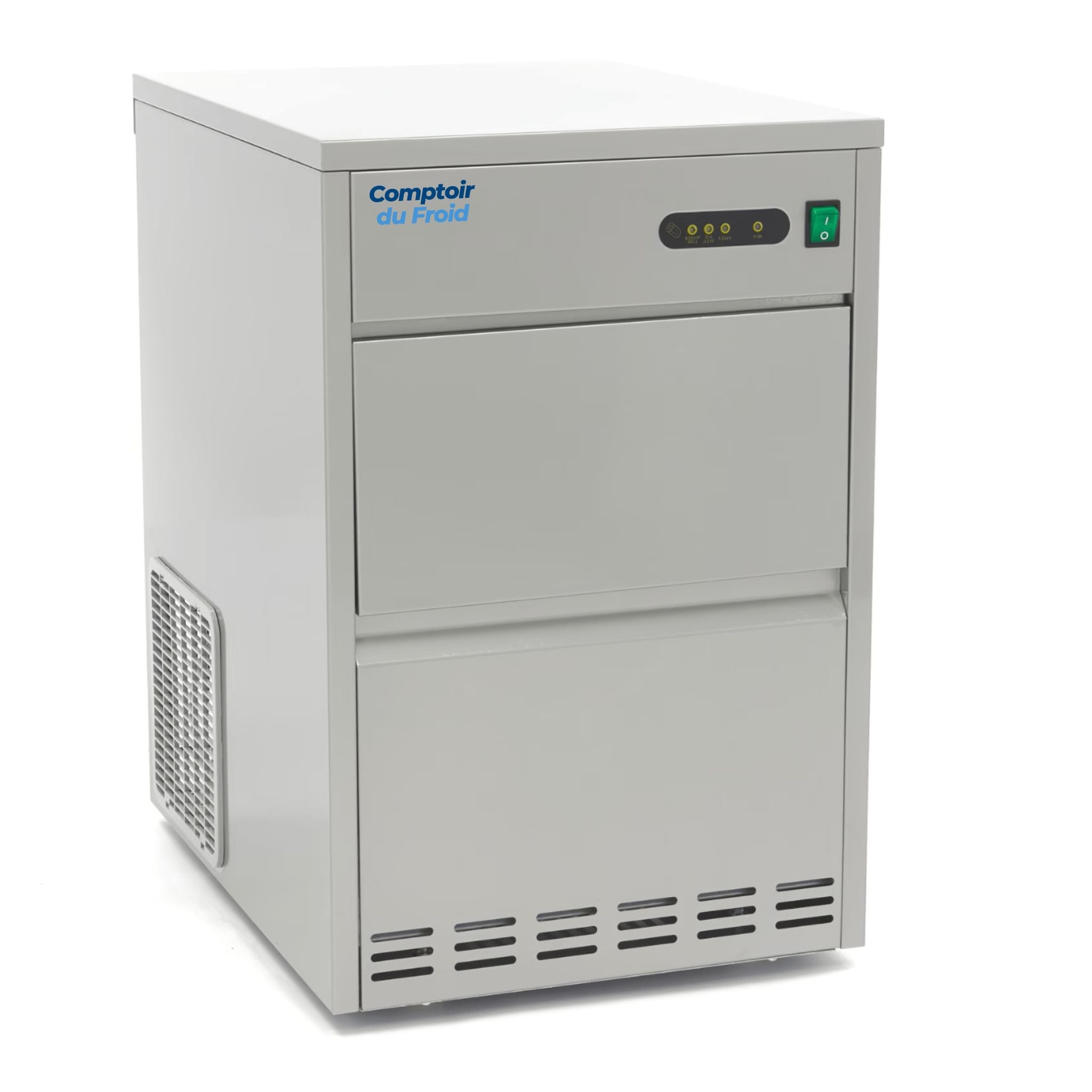
Fabricador de hielo hueco profesional – 45 kg por día – Refrigeración por agua
- Producción 45 kg por día con refrigeración por agua recomendada en barra trasera caliente o instalación empotrada
- Versión diseñada para mantener un buen rendimiento incluso cuando el ambiente térmico se vuelve perjudicial
- Cubitos de hielo huecos y estructura de acero inoxidable útiles para un servicio de bebidas más confiable en uso intensivo
Parámetros útiles para decidir
Aquí está la respuesta corta: el aire es adecuado para instalaciones abiertas y bien ventiladas, el agua es mejor para proteger ambientes difíciles. A menudo es este punto el que marca la diferencia entre una máquina que es correcta en la ficha técnica y una máquina que es fiable en el día a día.
- Refrigeración por aire si la máquina es accesible, ventilada y fuera de zona caliente
- Refrigeración por agua si la máquina está empotrada, cerca de un horno o en una barra trasera cargada de calor
- Mayor capacidad si el helado participa directamente en la venta, cócteles, refrescos, café helado o servicio continuo
Si su prioridad es la calidad del cubito de hielo servido en el vaso, el artículo sobre la máquina de hielo en cubitos para bar también puede refinar su elección entre enfriamiento rápido y rendimiento premium.
¿Qué signos muestran que un modelo conectado tiene un tamaño insuficiente?
La pregunta correcta es: ¿su máquina está produciendo lo suficientemente rápido como para reponer el stock durante la actividad? Si la respuesta es no, el problema no es la conexión sino el tamaño.
En el campo, se detecta rápidamente una máquina de dimensiones insuficientes, contenedor vacío antes de finalizar el servicio, ciclos que no pueden seguirse, equipo que compensa con hielo comprado urgentemente. El buen reflejo consiste en razonar sobre el caudal real, no sólo sobre una cifra halagadora en kg/24 h.
Para un pequeño bar, un punto de bebidas o un snack bar organizado, 24 kg/día pueden ser suficientes. En cuanto el servicio se vuelve más complicado o más largo, una base de 45 kg/día suele aportar más tranquilidad y limita las averías.
¿Necesita una máquina de hielo realmente adecuada a su servicio?
Compare los formatos conectados y elija un modelo acorde con su caudal, su ubicación y su nivel de exigencia.
Preguntas frecuentes sobre la máquina de hielo con entrada de agua
¿Es obligatoria una máquina de hielo con suministro de agua en restauración?
No, pero se vuelve muy recomendable en cuanto el helado se produce todos los días con una necesidad real de continuidad.
¿Se puede instalar una máquina conectada debajo de un mostrador?
Sí, y este es incluso uno de los casos en los que un modelo refrigerado por agua tiene sentido. Pese a todo, es necesario mantener unos accesos técnicos correctos y una evacuación bien pensada para mantener un buen rendimiento en el tiempo.
¿La refrigeración por agua consume más que un modelo de aire?
Sí, implica consumo de agua, pero a menudo sigue siendo más confiable en ambientes calurosos o en lugares reducidos.
¿A qué capacidad debería aspirar para una pequeña barra o snack bar?
Un requerimiento de luz puede soportar 24 kg/día. Si el servicio es sostenido o prolongado, suele ser mejor aspirar a 45 kg/día o más.