
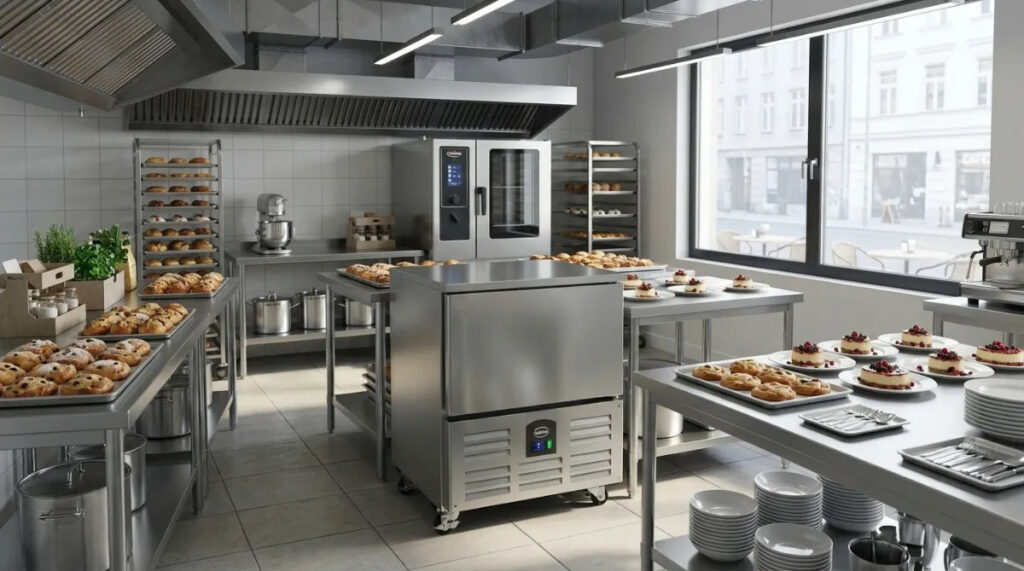
En pastelería profesional, una celda de enfriamiento no sólo se utiliza para “enfriar más rápido”. Sobre todo, permite estabilizar texturas frágiles, asegurar la cadena de frío y mantener un ritmo regular entre la cocción, el montaje, el almacenamiento y el servicio. En cuanto aumentan los volúmenes o continúan los preparativos, se convierte en una verdadera herramienta organizativa.
En el campo, es particularmente revolucionario para cremas pasteleras, ganaches, insertos, postres y galletas que deben enfriarse antes del ensamblaje y la producción anticipada. Si todavía trabaja con enfriamiento lento o soluciones de bricolaje, perderá tiempo, consistencia y un margen de seguridad HACCP.
¿Por qué la masa necesita un enfriamiento rápido?
La pregunta básica es simple: ¿por qué la pastelería requiere más control que el simple almacenamiento en frío positivo?
La respuesta es directa: porque en pastelería muchas preparaciones pasan por fases intermedias críticas. Una nata que está demasiado tiempo caliente, una galleta que espera antes de rellenarse o un postre que desciende demasiado lentamente pueden perder fijación, higiene y uniformidad de acabado.
Una celda de enfriamiento permite pasar rápidamente de una salida de cocción o de una preparación caliente a una zona de temperatura compatible con los estándares HACCP. En la práctica, esto ayuda a gestionar mejor:
- cremas, dispositivos y suplementos que deben volver a producirse sin esperas,
- serie de postres o pasteles individuales para ensamblar en un flujo estrecho,
- fabricación avanzada que requiere una calidad estable hasta su elaboración o venta.
Si ya desea enmarcar sus puntos de referencia de seguridad, el artículo Temperatura HACCP en la celda de refrigeración: los puntos de referencia que realmente aseguran su producción complementa muy bien esta lógica empresarial.
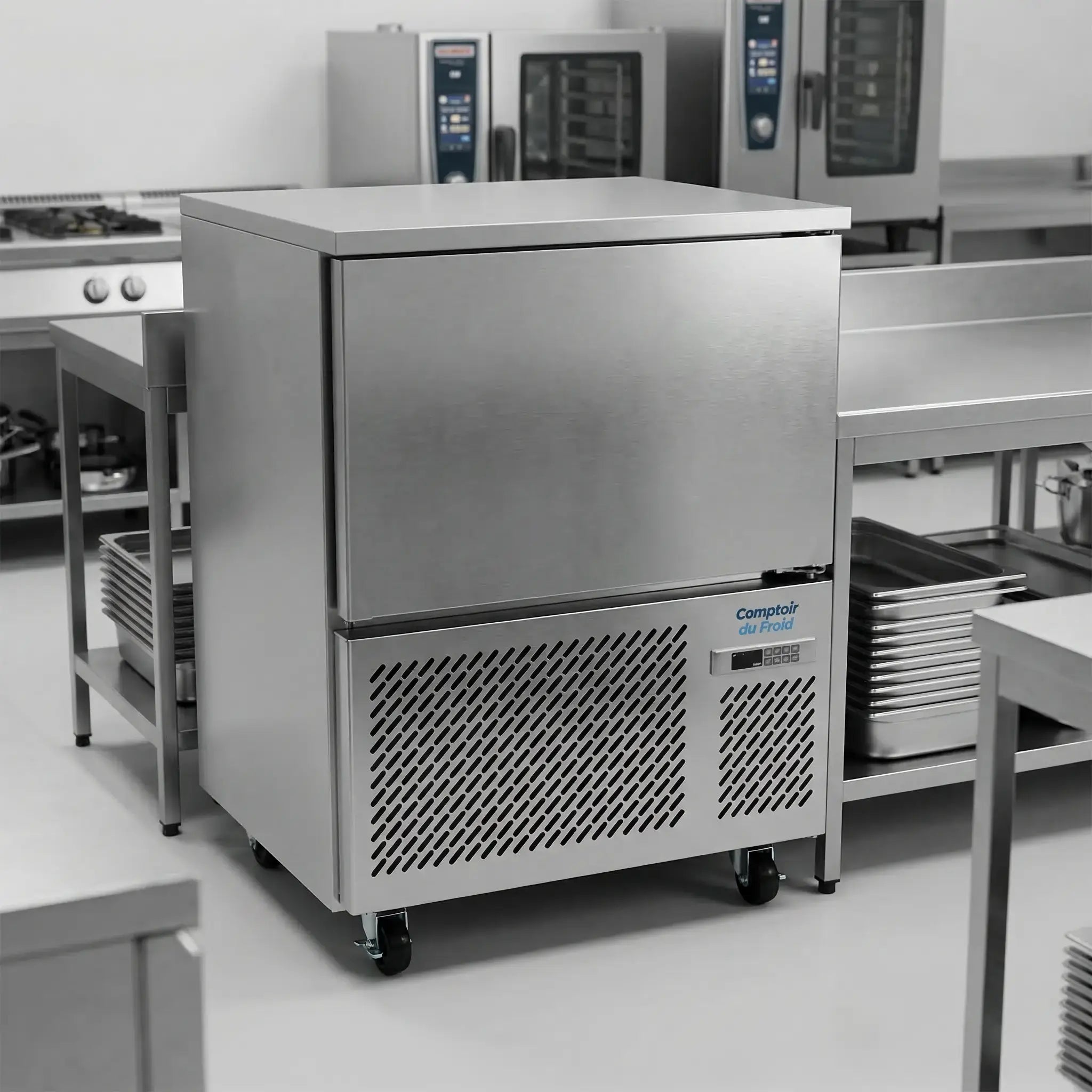
Enfriador rápido de acero inoxidable – 5 niveles
- Formato consistente para producción regular de pastelería sin sobredimensionar el taller
- Buen compromiso entre capacidad, tamaño y fluidez del trabajo de laboratorio
- Adecuado para preparaciones que se realizarán durante el día con enfriamiento controlado
¿Qué problemas concretos resuelve la celda de refrigeración en el laboratorio de pastelería?
La verdadera pregunta no es sólo “¿es útil?”, sino qué bloqueos elimina diariamente.
Respuesta corta: reduce el tiempo de inactividad, limita las aproximaciones y hace que las secuencias sean más confiables. Cuando el laboratorio trabaja con varias producciones en paralelo, a menudo es el enfriamiento el que se convierte en el cuello de botella.
1. Protege texturas
Un descenso de temperatura mejor controlado ayuda a mantener cremas más claras, un montaje más regular y productos menos expuestos a la recuperación de calor. Es especialmente útil para postres, insertos, electrodomésticos a base de crema y preparaciones delicadas antes de congelarlas o terminarlas.
2. Suaviza el ritmo
En lugar de esperar a que un producto baje “lo mejor que pueda”, puedes secuenciar de forma más ordenada las fases de montaje, esmaltado, almacenamiento o embalaje. La celda se convierte en una herramienta de planificación, no sólo en un equipo de refrigeración.
3. Reduce el riesgo para la salud
En pastelería y restauración, la zona cálida es la más incómoda de manejar. Un enfriamiento más rápido ayuda a asegurar la producción y documentar un funcionamiento más limpio en caso de un control interno o una auditoría. Para laboratorios pequeños, el artículo Pequeña celda de refrigeración: la guía para espacios pequeños también puede guiarle hacia el formato inicial correcto.
¿Qué formato de cámara de refrigeración elegir según tu volumen de masa?
La pregunta aquí es muy operativa: ¿cómo elegir un formato que sea realmente acorde con su laboratorio?
La respuesta directa es pensar primero en carga máxima, no en el promedio diario. Lo que importa no es sólo la cantidad de postres vendidos, sino la cantidad de platos, rejillas o recipientes que se absorben en el mismo período de tiempo.
| Configuración pastelería | Cuando es adecuado | Punto de vigilancia |
|---|---|---|
| Formato de 2 a 5 niveles | Laboratorio compacto, producción diaria controlada, boutique artesanal | Puede saturarse rápidamente si aumentas el número de referencias o grandes volúmenes antes del fin de semana |
| Formato 7 a 10 niveles | Producción más sostenida, equipos más estructurados, picos de fabricación regulares | Requiere un diseño bien pensado para mantener la fluidez alrededor de las estaciones |
| Formatos más grandes o soluciones móviles | Grandes volúmenes, preparación centralizada, evento o actividad multisitio | Reservarse para necesidades reales para evitar inversiones excesivas y desorden innecesario |
Veredicto: Para la pastelería artesanal más seria, el buen punto de entrada suele estar entre 5 y 10 niveles. Por debajo de eso, corre el riesgo de verse limitado rápidamente durante los períodos pico. Arriba, necesitas una lógica real de volumen u organización para rentabilizar el espacio.
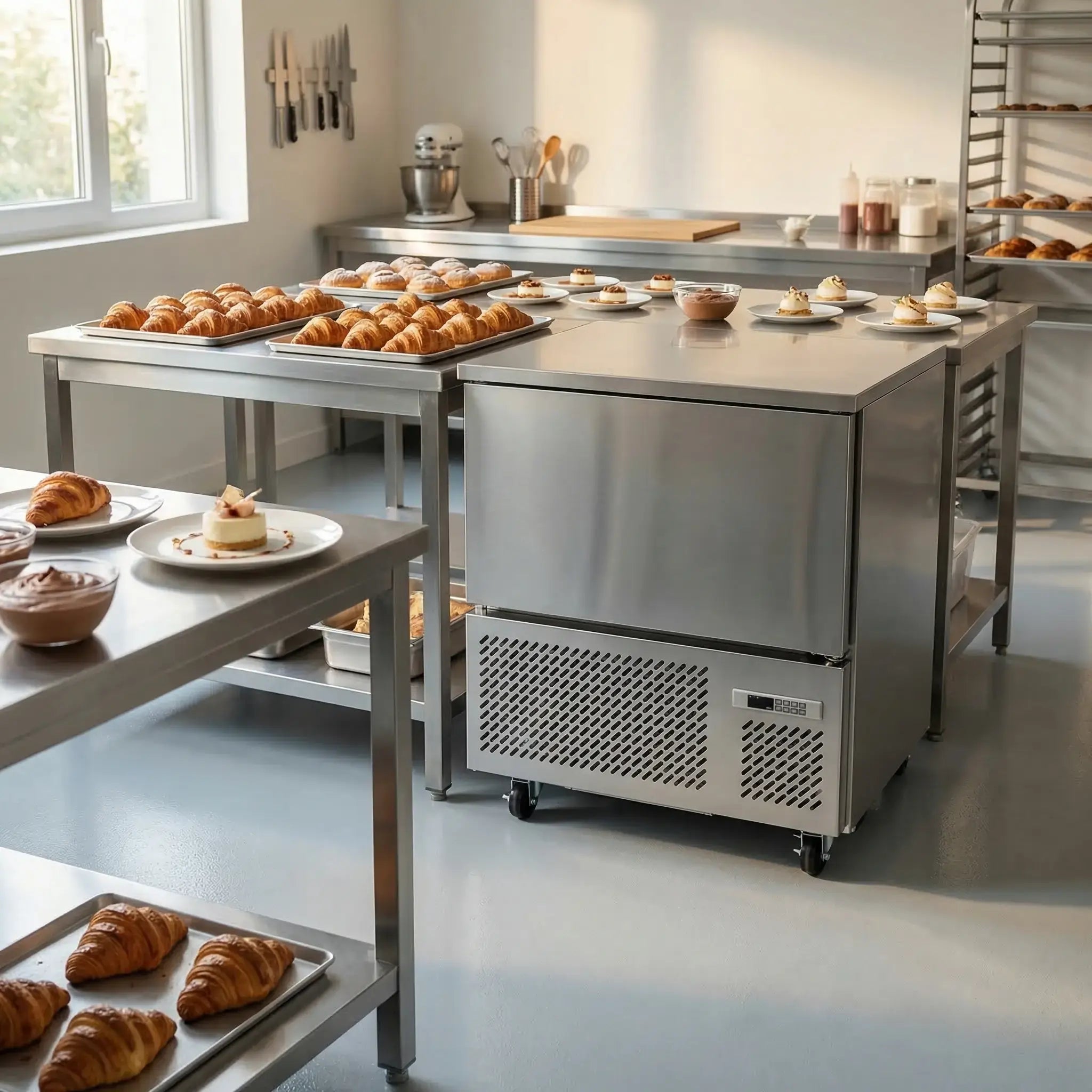
Enfriador rápido de acero inoxidable – 10 niveles
- Capacidad más cómoda para absorber picos de producción antes del servicio o la entrega
- Interesante cuando varias series deben bajar de temperatura en el mismo intervalo de tiempo
- Buena opción para talleres que buscan más espacio para maniobrar sin cambiar a equipos muy grandes
¿Cómo sabes si la inversión será rentable para tu negocio?
Siempre surge la cuestión de la rentabilidad: ¿una celda de enfriamiento de pastelería realmente genera dinero?
Sí, si le ahorra tiempo perdido, reinicios de producción, defectos de textura o bloqueos durante los períodos pico. La ganancia no proviene únicamente del cumplimiento de las normas sanitarias; también proviene de una producción más predecible y un mejor uso de las horas de trabajo.
En el campo, la rentabilidad suele verse en cuatro indicadores:
- menos esperas entre dos etapas de fabricación,
- menos productos debilitados por un enfriamiento demasiado lento,
- más capacidad para producir por adelantado sin degradar la calidad,
- una organización más estable cuando aumenta el equipo o el volumen.
En otras palabras, una celda de enfriamiento de buen tamaño ayuda a que la masa suba uniformemente antes de aumentar de volumen . A menudo es este punto el que marca la verdadera diferencia entre un laboratorio que experimenta sus picos y un laboratorio que los absorbe adecuadamente.
¿Busca una celda adaptada a su velocidad de horneado?
Compare los formatos disponibles para elegir una solución compatible con su ubicación, sus volúmenes y sus limitaciones HACCP.
Preguntas frecuentes sobre la celda de enfriamiento de pastelería
¿Es útil un abatidor para una pequeña pastelería?
Sí, siempre que deban realizarse varias producciones durante el día o los preparados sean delicados. Incluso un laboratorio pequeño puede ganar en regularidad y seguridad.
¿Qué producto de pastelería se beneficia más del enfriamiento rápido?
Las cremas, complementos, postres y preparaciones calientes que deben estabilizarse antes del montaje se encuentran entre los más afectados, porque su retención depende en gran medida de la velocidad de enfriamiento.
¿Deberías elegir uno más grande para estar seguro?
No automáticamente. Es mejor apuntar al pico de carga real correcto; de lo contrario, estará invirtiendo presupuesto y espacio sin una ganancia operativa clara.
¿Un abatidor sustituye a un armario frigorífico?
No. La celda se usa para bajar rápidamente la temperatura, mientras que el gabinete refrigerado se usa para mantener y almacenar una temperatura estable.


