
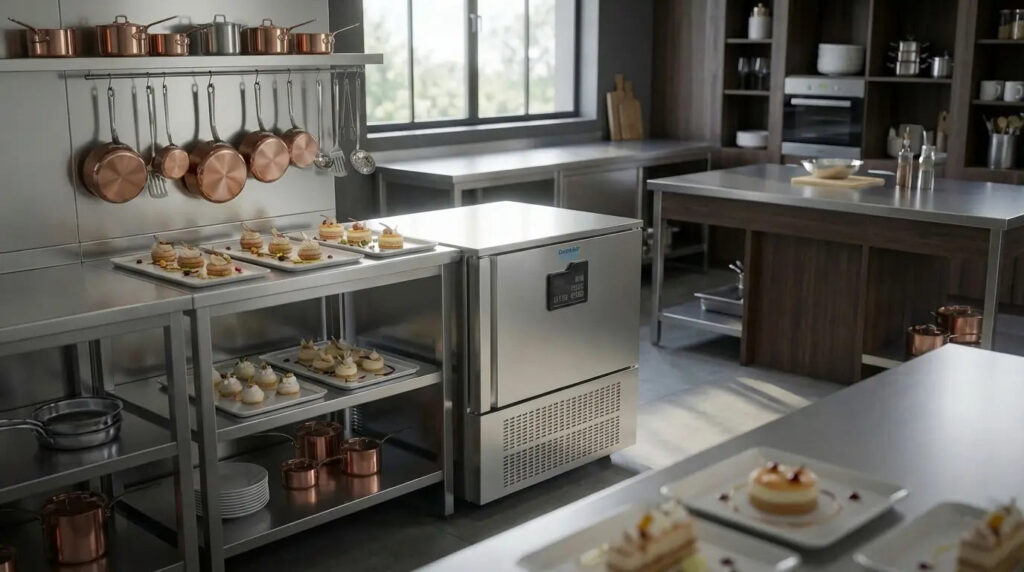
Compra uno celda de enfriamiento usada Puede parecer inteligente sobre el papel. De hecho, este cálculo suele ser más arriesgado de lo que parece, porque una célula no es un mueble pasivo: es una máquina técnica que determina directamente la seguridad sanitaria, la regularidad de la producción y la fiabilidad del frío.
Por lo tanto, el verdadero tema no es sólo “¿cuánto gano con la compra?”, sino más bien: ¿Cuánto puedo perder si la máquina está cansada, mal mantenida o mal calibrada? ?
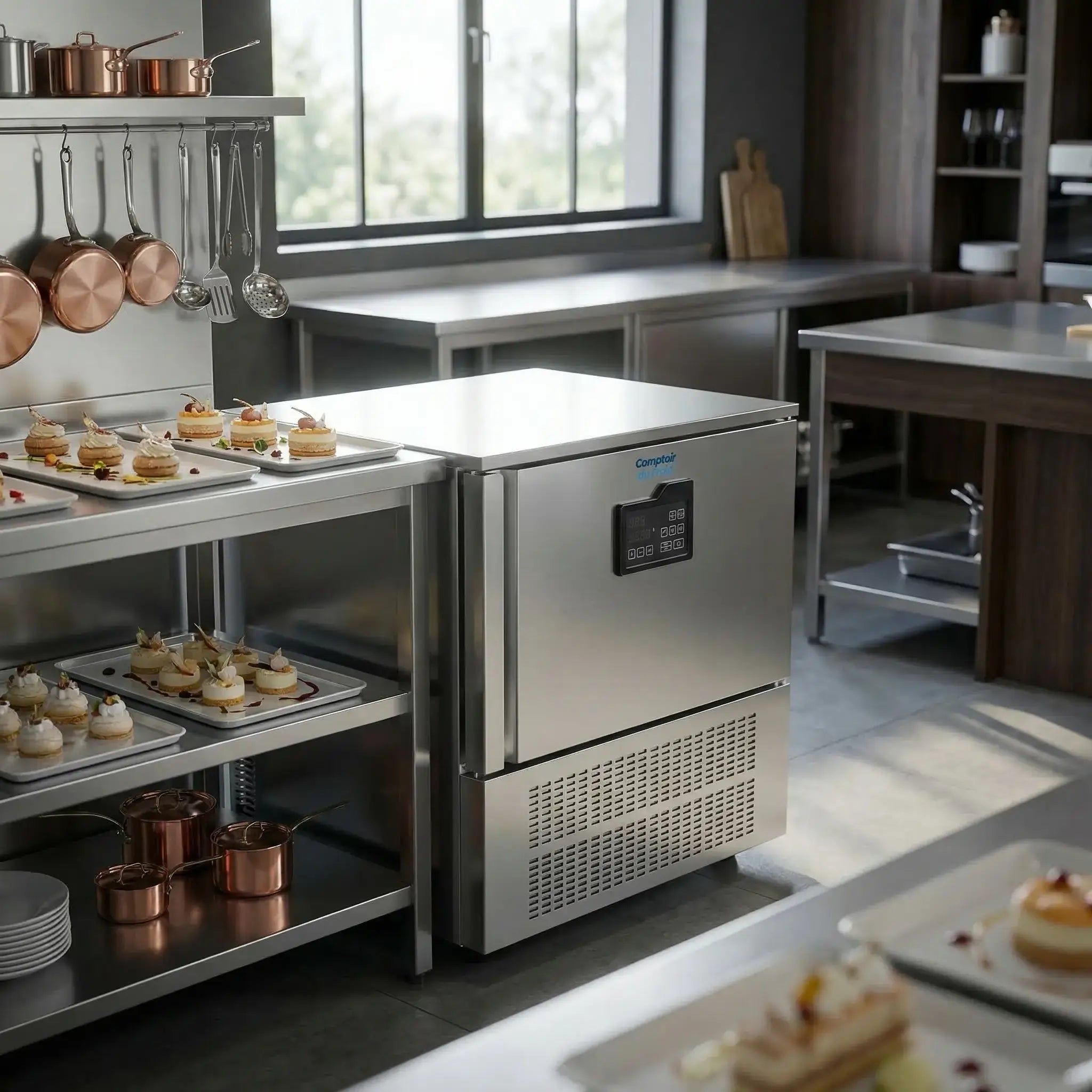
Enfriador rápido de acero inoxidable – 3 niveles
- Punto de entrada consistente para evitar una oportunidad incierta desde el principio
- Buena elección si desea una base HACCP real con un presupuesto controlado
- Más tranquilizador que los equipos antiguos sin un historial claro
1. Es posible que el compresor ya esté al final de su carrera.
En un móvil usado, casi nunca se sabe cómo ha vivido la unidad de frío. Pero este es el corazón del sistema. Una celda que ha estado funcionando mal, mal ventilada o mal mantenida puede parecer que todavía está funcionando, pero estar al borde del fracaso.
La verdadera trampa está ahí: la máquina parece un buen negocio hasta el día en que la reparación supera gran parte del ahorro inicial.
2. A menudo es imposible juzgar el estado de salud real
Una celda de segunda mano también lleva un historial de higiene que no controlas. Juntas, evaporador, zonas apenas visibles, residuos antiguos: una máquina puede estar limpia por delante y dudosa dónde se esconde realmente el riesgo.
Desde una perspectiva HACCP, esta falta de visibilidad ya es un problema en sí mismo.
3. La sonda central puede distorsionar todo el proceso
Una sonda ligeramente desajustada es suficiente para darle una falsa sensación de seguridad. Si la medición del núcleo ya no es confiable, cree que se ha enfriado correctamente cuando el producto no ha alcanzado el nivel real correcto.
Se trata de un riesgo discreto, pero muy grave, porque afecta directamente a la validez del ciclo.
4. La falta de garantía encarece mucho la más mínima avería
En una ocasión descubierta, el problema no es sólo la avería. Esta es la emergencia. Si la máquina se estropea durante la producción, usted paga no sólo por la reparación, sino también por el estrés, el tiempo de inactividad y, en ocasiones, por la mercancía comprometida.
5. Los componentes electrónicos y componentes ocultos pueden fallar sin previo aviso
Las tarjetas, pantallas y controles electrónicos suelen envejecer silenciosamente. Una célula puede funcionar durante la prueba y luego revelar sus debilidades después de moverse, recargarse o simplemente reanudar un uso intensivo.
Esto es lo que hace que la oportunidad sea tan incómoda en este tipo de equipos: rara vez se compra una máquina, también se compran todas sus incógnitas.
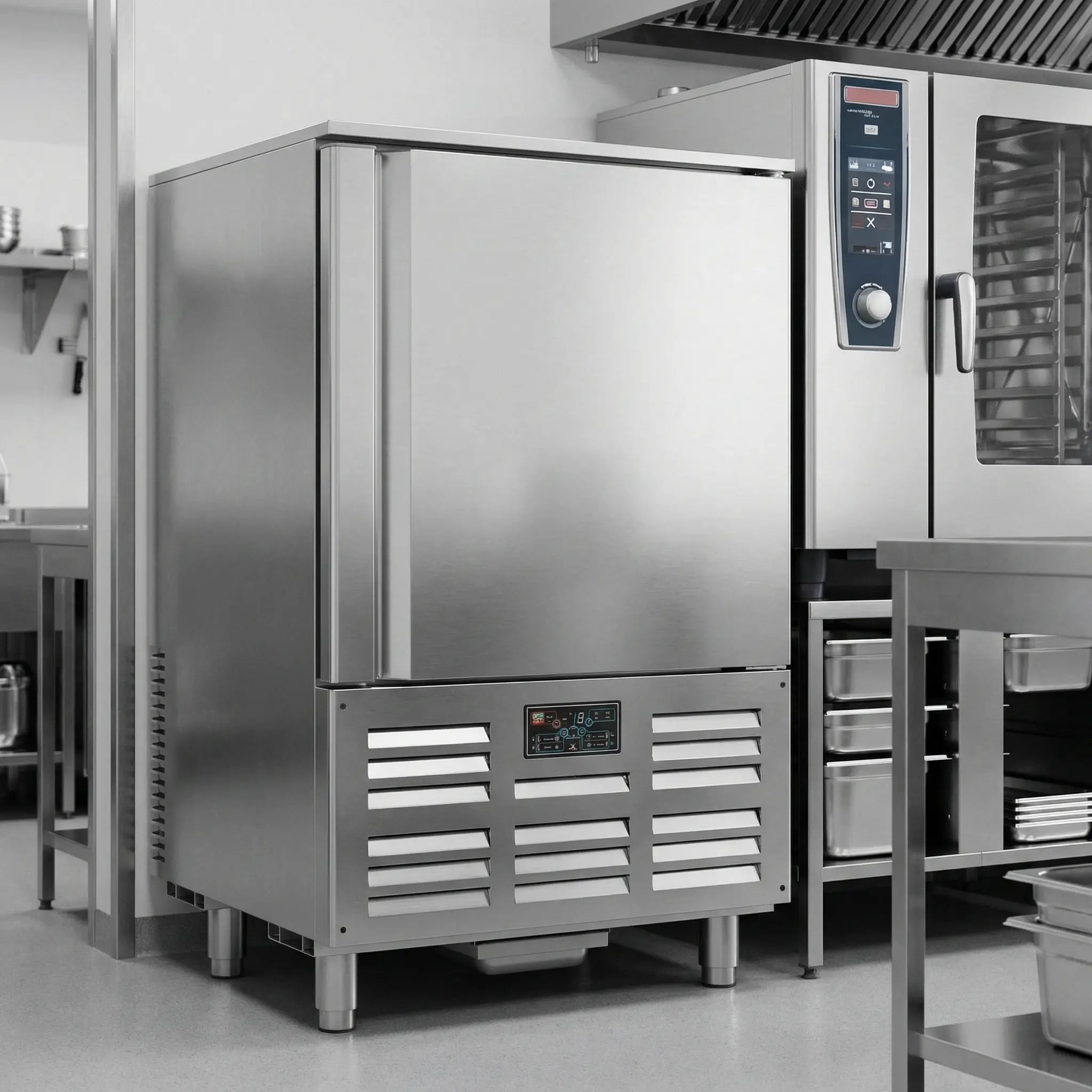
Célula de enfriamiento fija – Pro Line Acero inoxidable 304 – 7 niveles
- Elección más consistente si la celda debe hacer frente a una tasa de producción real
- Le permite evitar el falso buen plan de una oportunidad frágil en una posición crítica.
- Más tranquilizador si buscas una base duradera y más intensiva
¿Qué alternativa es la más racional?
En muchos casos, es mejor comprar un móvil nuevo bien elegido que uno opaco de segunda mano. La decisión correcta no es necesariamente optar por el modelo más grande, sino elegir un dispositivo adaptado, garantizado y acorde a tu ritmo real.
| Opción | Ventaja | Riesgo principal |
|---|---|---|
| Ocasión | Precio de compra más bajo | Incertidumbre técnica y sanitaria |
| Nuevo nivel de entrada | Un marco más seguro y un presupuesto aún manejable | Capacidad a veces limitada |
| Nuevo más robusto | Serenidad y mayor durabilidad en el tiempo. | Mayor inversión |
Si también comparas otros archivos similares, puedes leer nuestro artículo sobre enfriar un plato sin celda así como nuestra guía sobre El presupuesto para planificar una celda realmente adecuada..
¿Necesita comparar nuevas celdas sin llegar a un buen acuerdo falso?
Explora nuestra selección para elegir un modelo acorde a tu presupuesto, tu ritmo y tus necesidades de salud.
Preguntas frecuentes
¿Debe evitarse siempre una enfriadora de segunda mano?
No de manera sistemática, pero el nivel de riesgo a menudo sigue siendo alto si el historial técnico, la higiene y los controles reales no están perfectamente documentados.
¿Cuál es el riesgo más subestimado?
La combinación de fatiga mecánica invisible y falsa impresión de buen funcionamiento en el momento de la compra.
¿Por qué es tan grave una sonda central que no funciona correctamente?
Porque puede hacerte creer que un producto es seguro cuando el núcleo no ha alcanzado la temperatura real correcta.
¿Cuál es el mejor compromiso si el presupuesto es ajustado?
A menudo se trata de un móvil nuevo y de buen tamaño, en lugar de un artículo de segunda mano barato pero técnicamente incierto.