
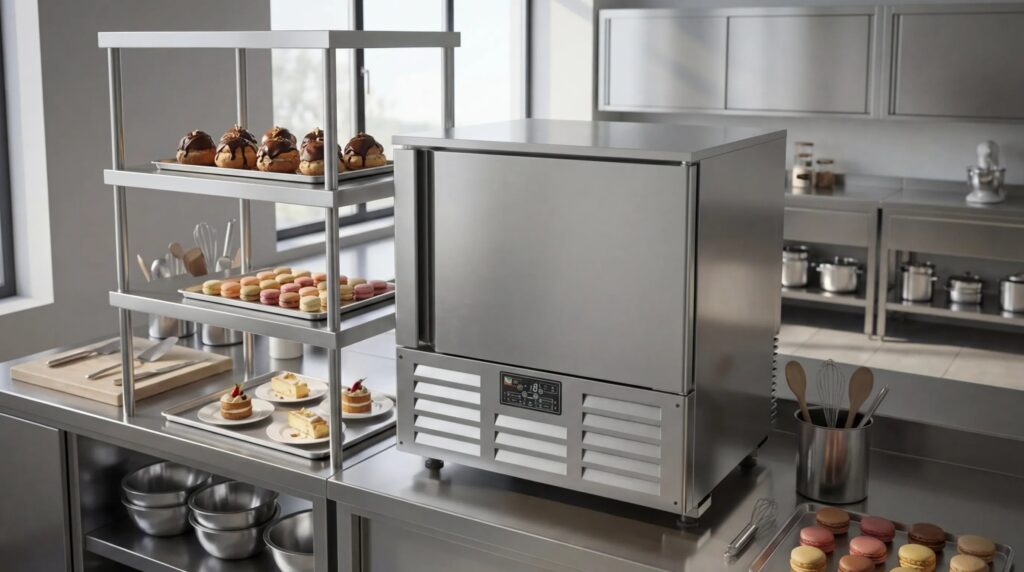
Nella cucina professionale, il raffreddare un piatto senza cella di raffreddamento è teoricamente possibile in pochi casi molto limitati, ma diventa presto difficile da difendere dal punto di vista sanitario. Non appena si verificano volumi, ripetizioni o problemi reali di HACCP, i metodi “senza macchine” mostrano rapidamente i loro limiti.
Il vero problema non è se un piatto finisce per raffreddarsi. Il vero problema è sapere quanto tempo ci vuole per attraversare la zona di rischio e se puoi dimostrare che questo passaggio è stato padroneggiato correttamente.
Perché il raffrescamento naturale è un vero problema?
Perché una pietanza calda lasciata raffreddare troppo lentamente rimane troppo a lungo nella zona in cui i batteri crescono rapidamente. Questo è proprio ciò che la logica HACCP cerca di evitare.
In pratica il raffrescamento naturale pone tre problemi:
- il calo della temperatura è troppo lento,
- aumento del rischio microbiologico,
- il metodo resta molto difficile da giustificare in caso di ispezione.
Possiamo mettere un piatto caldo nel frigorifero o nel congelatore?
Questa non è una buona soluzione. Molti ci pensano di riflesso, ma questo metodo mette sia il prodotto, gli altri beni immagazzinati e talvolta l’attrezzatura stessa in una situazione sfavorevole.
- Per il piatto: il raffreddamento spesso rimane troppo lento al cuore.
- Per l’involucro: si inietta un forte carico caldo in un volume freddo.
- Per altri prodotti: la temperatura generale potrebbe aumentare.
- Per l’apparecchiatura: l’unità fredda compensa più rapidamente.
In altre parole, il frigorifero o il congelatore non sono progettati per assorbire ripetutamente piatti molto caldi.
Esiste ancora un metodo manuale tollerabile?
Sì, ma rimane molto limitato: il bagno di ghiaccio o “bagnomaria invertito”. Per piccole quantità, come alcune salse o piccole preparazioni, questo metodo può aiutare ad accelerare l’abbassamento della temperatura.
In testo normale:
- sì per una piccola quantità, molto incorniciata,
- non come un vero e proprio metodo di produzione per una cucina professionale.
Perché la cella di raffreddamento rimane l’unica vera soluzione affidabile?
Perché è progettato proprio per fare ciò che il frigorifero non può fare: estrarre rapidamente il calore da un prodotto caldo mantenendo un ambiente igienico coerente.
| Metodo | Credibilità HACCP | Capacità effettiva nella cucina professionale |
|---|---|---|
| Raffreddamento a temperatura ambiente | Molto debole | Pessimo |
| Frigorifero classico | Basso | Insufficiente per il riscaldamento |
| Bagno di ghiaccio | Limitato | Solo piccole quantità |
| Cella di raffreddamento | Forte | L’unica vera soluzione strutturata |
Verdetto: per una vera cucina professionale, la cella di raffreddamento non è solo una comodità. È l’attrezzatura che trasforma un teorico obbligo sanitario in un metodo di lavoro realmente sostenibile.
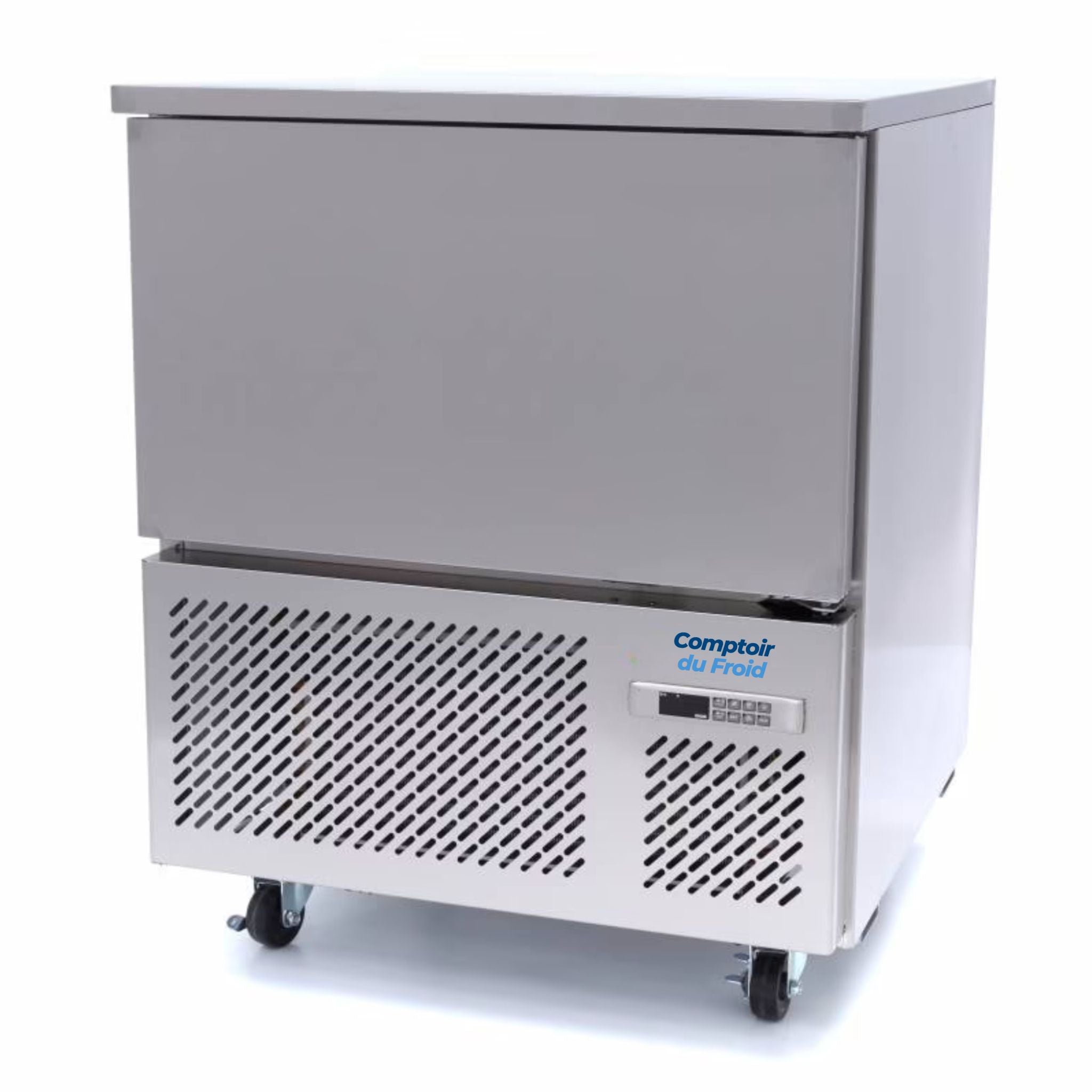
Cella mista – Gamma standard
- Soluzione coerente per ristoranti, pasticceri e cucine multiuso
- Buon equilibrio tra budget, capacità e conformità d’uso
- Compatibile con logica di raffreddamento realmente strutturata
Che livello di attrezzatura dovresti scegliere in base alla tua attività?
Tutto dipende dalla velocità di produzione. Se raffreddi poco ma regolarmente, una gamma standard potrebbe essere sufficiente. Se sei un ristoratore, una comunità o una cucina molto richiesta, devi essere più robusto.
Se vuoi approfondire il quadro e gli obblighi sanitari, puoi leggere anche il nostro articolo su il vero obbligo della cella in restauro così come la nostra guida su utilità e buon uso di un frigorifero cell.
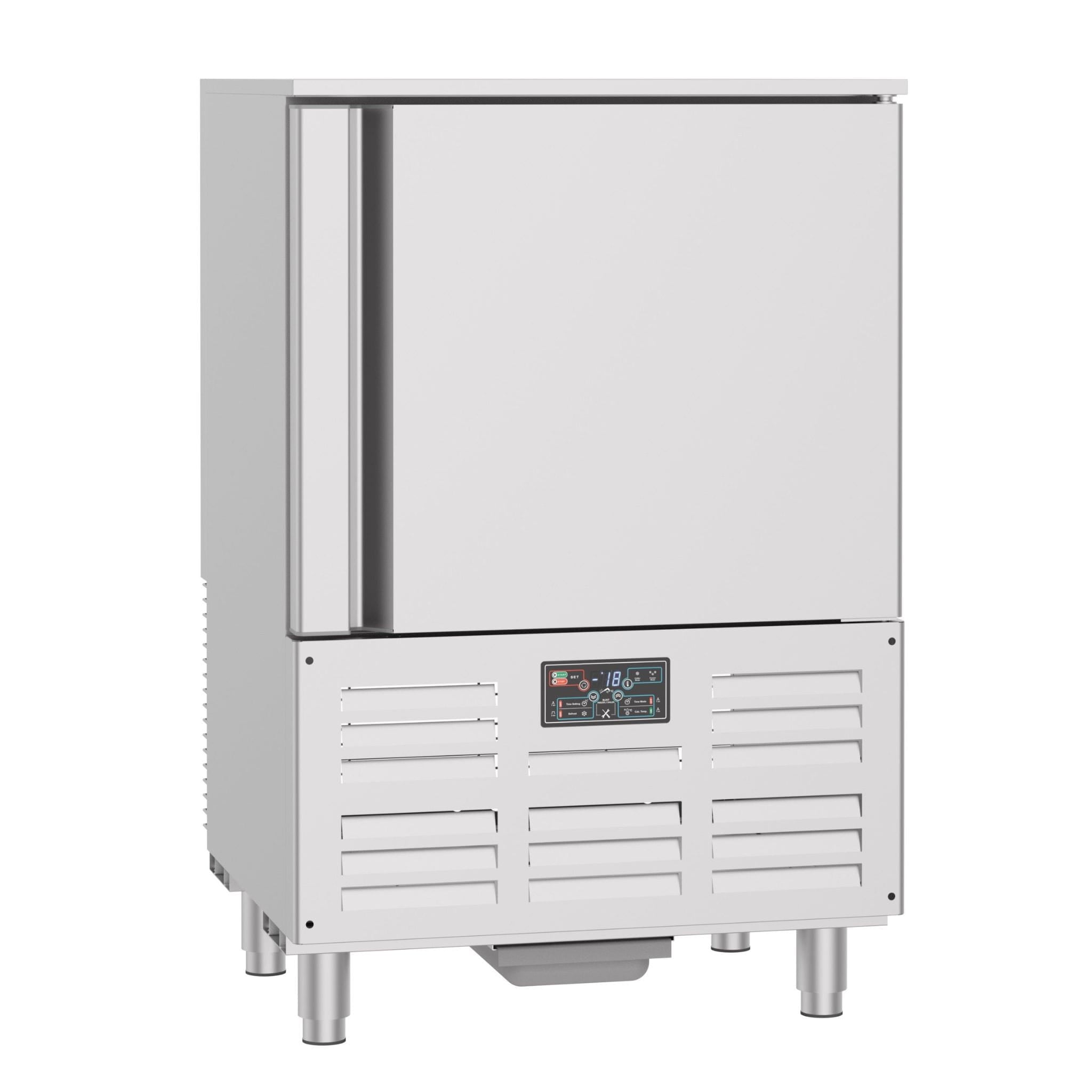
Cella di raffreddamento fissa – Pro Line in acciaio inossidabile 304
- Più adatto per produzioni sostenute e carichi termici significativi
- Scelta più coerente per ristoratori, comunità e cucine ad alto volume
- Consente di garantire un raffreddamento senza fai da te o fragili compromessi
Hai bisogno di una vera soluzione per raffreddare correttamente i tuoi piatti?
Esplora la nostra gamma di refrigeratori professionali per scegliere il giusto livello di capacità in base ai tuoi volumi e ai tuoi vincoli HACCP.
FAQ
Possiamo raffreddare un piatto a temperatura ambiente nel catering?
Questo non è un metodo affidabile per una cucina professionale, perché l’abbassamento della temperatura è troppo lento e troppo rischioso per la salute.
Il frigorifero può sostituire una cella di raffreddamento?
No, non per raffreddare adeguatamente un prodotto caldo in produzione. Non è progettato per questo e può anche disturbare il resto dello spazio di archiviazione.
Il bagno di ghiaccio può bastare?
Solo per quantità molto piccole e con grande rigore. Questa non è una vera soluzione di produzione su larga scala.
Perché la cellula resta l’unica soluzione veramente difendibile?
Perché consente un raffreddamento rapido, strutturato e molto più compatibile con le prescrizioni HACCP e con la reale organizzazione di una cucina professionale.