
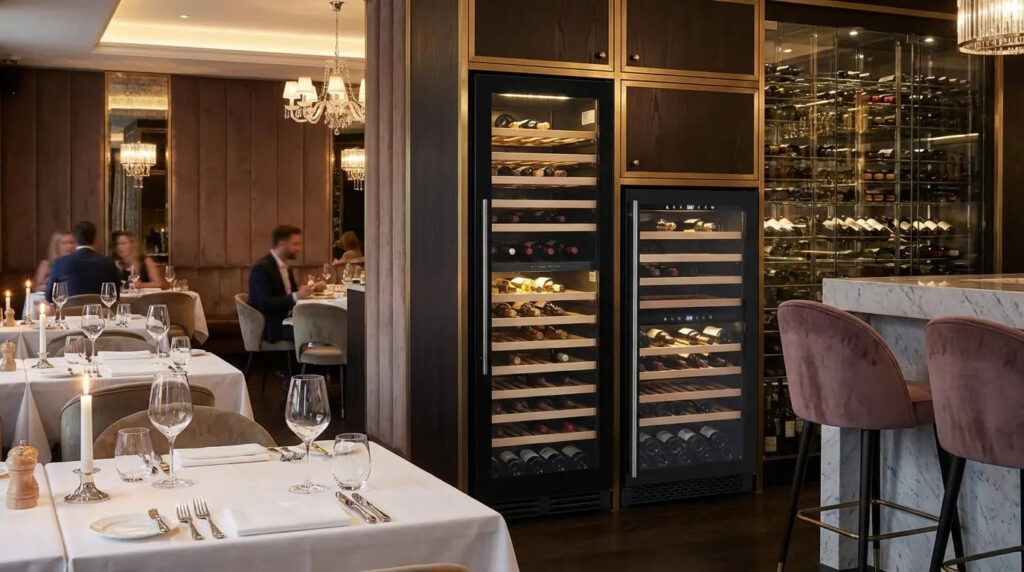
Tra una cantina di invecchiamento e una cantina di servizio , la scelta giusta dipende prima di tutto dal tuo obiettivo. Vuoi conservare le bottiglie per diversi anni in condizioni stabili, oppure tenerle pronte per essere servite ogni giorno alla giusta temperatura?
Questi due pezzi di equipaggiamento non hanno lo stesso ruolo. Uno protegge il vino nel tempo, l’altro ne favorisce la rotazione e la presentazione. Se li confondi rischi di acquistare una cantina attraente sulla carta ma inadatta al tuo utilizzo reale.
A cosa serve una cantina per l’invecchiamento?
Una cantina di invecchiamento serve a riprodurre il più fedelmente possibile le condizioni di una cantina naturale. È progettata per lasciare evolvere lentamente il vino in un ambiente stabile, discreto e protettivo.
- Temperatura: generalmente unica e costante, spesso intorno ai 12°C.
- Protezione dalla luce: porta cieca o vetro trattato anti-UV a seconda del modello.
- Igrometria: più controllato per evitare ingorghi.
- Vibrazioni limitate: indispensabili per evitare di sforzare inutilmente il vino.
Questo tipo di cantina non è concepita come strumento di manutenzione rapida. È più adatto ad un lungo stoccaggio, ad una cantina storica o ad una logica di maturazione graduale delle bottiglie.
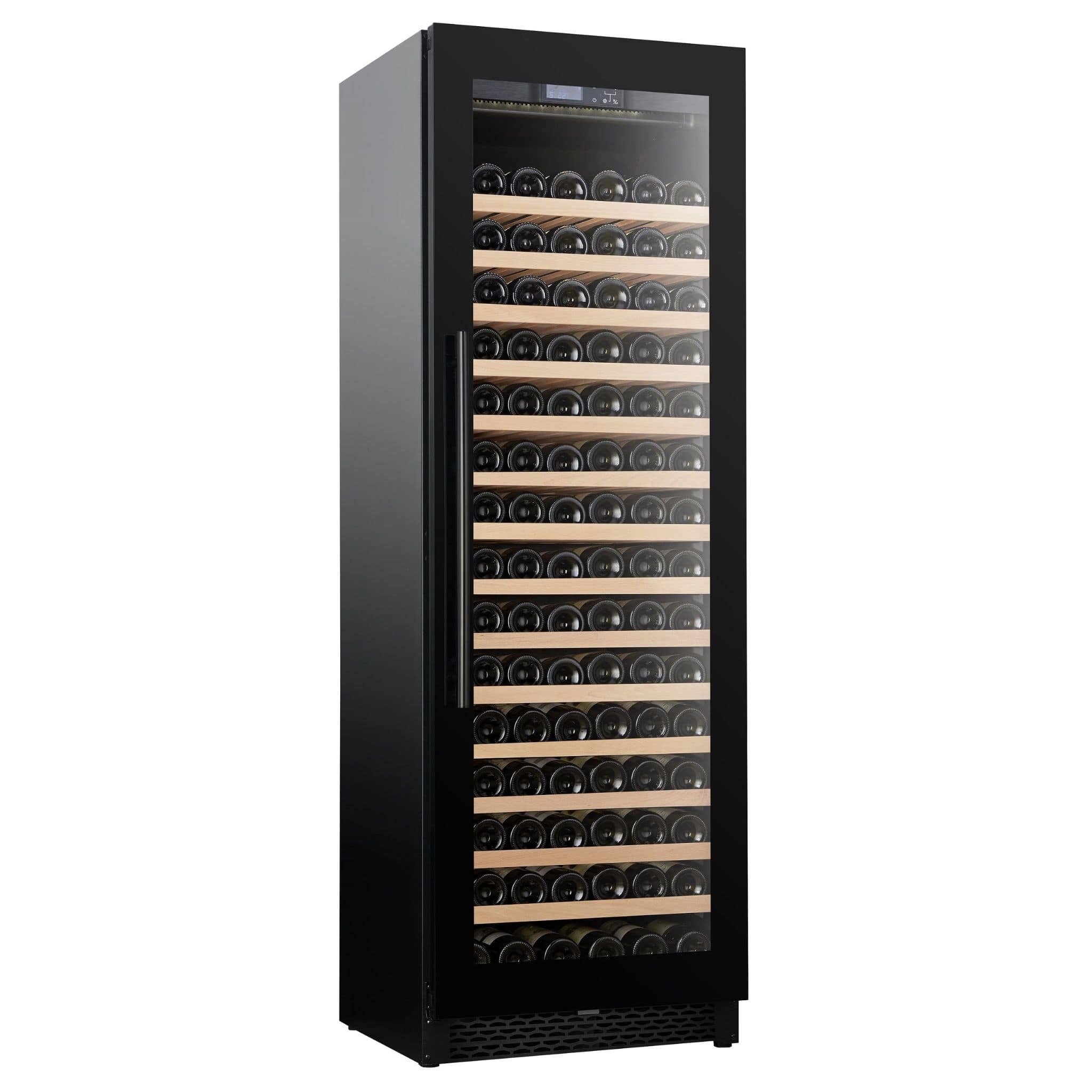
Cantina Invecchiamento – Zona Singola – 325 Litri
- Temperatura stabile adatta per la conservazione a lungo termine
- Ottima scelta per strutturare una vera riserva di bottiglie
- Più coerente di una cantina di servizio se il vino deve invecchiare davvero
A cosa serve una cantina di servizio?
Una cantina di servizio è realizzata per preparare il vino alla degustazione, non per invecchiarlo per anni. È l’attrezzatura più logica quando le bottiglie devono essere pronte per essere servite, visibili e accessibili.
In un ristorante, un wine bar o uno spazio per ricevimenti, la priorità non è la lunga maturazione ma la giusta temperatura al momento giusto. È qui che la cantina di servizio entra in gioco, soprattutto quando è multizona.
- Zona fredda per bianchi, rosati e champagne.
- Zona temperata per rossi pronti al servizio.
- Visibilità migliore grazie alle ante in vetro e all’illuminazione.
- Rotazione più adatta per bottiglie che escono regolarmente.
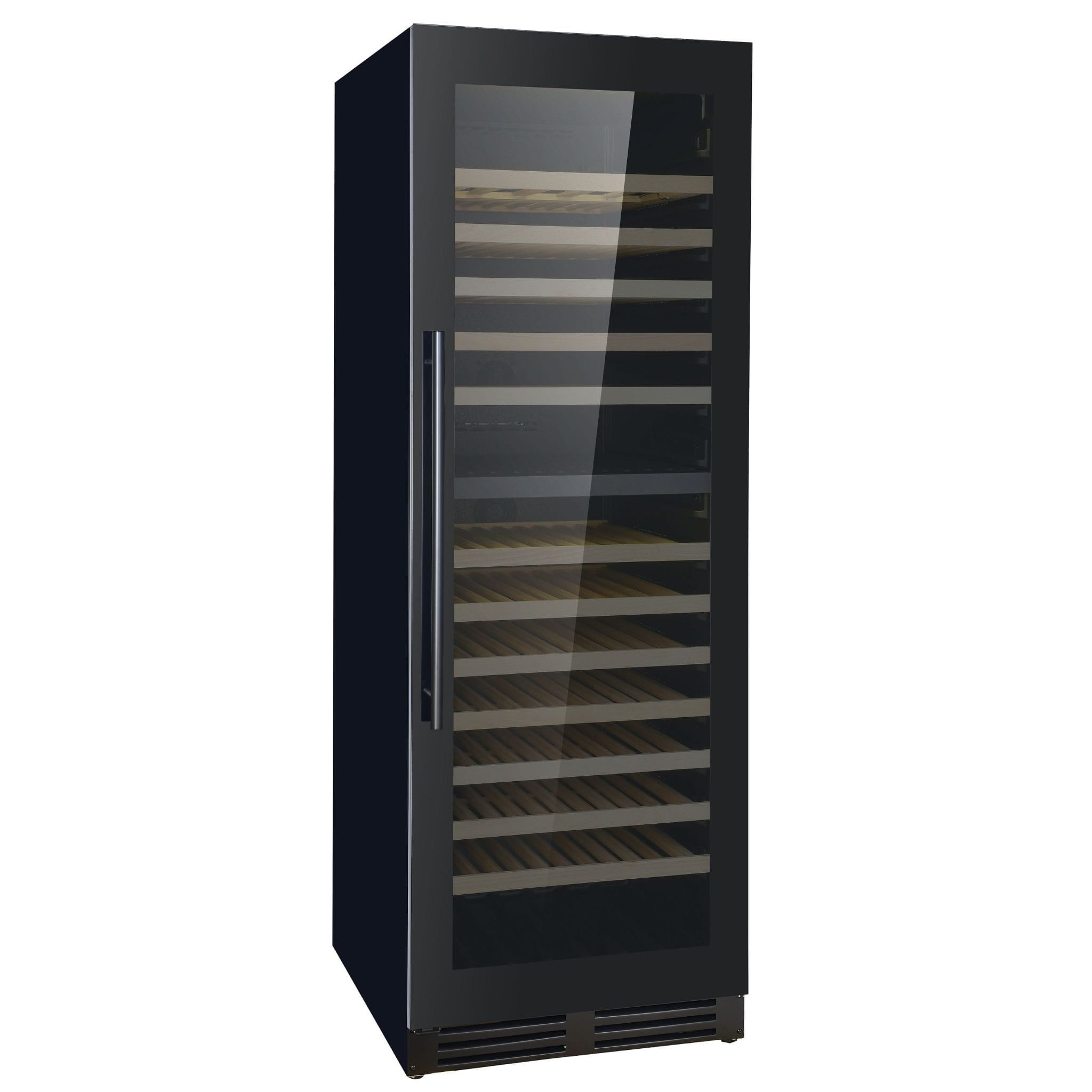
Cantina Vini di Servizio – Doppia Zona – 379 Litri
- Doppia zona utile per separare i rossi e i bianchi a temperatura di servizio
- Ottimo formato per uso ristorante o cantina visibile in camera
- Più coerente non appena la rotazione quotidiana diventa un vero argomento
Come arbitrare tra invecchiamento e servizio?
La scelta giusta dipende meno dal prestigio del vino che dal suo orizzonte di consumo. Se le vostre bottiglie sono destinate a essere conservate a lungo, la logica dell’invecchiamento è essenziale. Se devono essere pronti per essere serviti velocemente, la cantina di servizio è molto più rilevante.
| Criterio | Cantina di invecchiamento | Cantina di servizio |
|---|---|---|
| Utilizzo principale | Preservare e sviluppare il vino | Prepara il vino per la degustazione |
| Temperatura | Stabile, spesso monozona | Spesso multizona |
| Luce/presentazione | Massima protezione | Miglioramento visivo più forte |
| Rotazione bottiglia | Lento | Da veloce a medio |
| Contesto ideale | Riserva, collezione, cantina privata o professionale | Camera, bar, servizio giornaliero |
Verdetto: se conservi per l’invecchiamento, scegli una cantina di invecchiamento. Se hai bisogno di servire ogni giorno alla giusta temperatura, prendi una cantinetta. E se fai davvero entrambe le cose, devi accettare che un unico mobile sarà sempre un compromesso.
In quali casi vanno considerate due apparecchiature separate?
Quando la tua attività unisce conservazione e servizio regolare, un singolo dispositivo spesso diventa insufficiente. Questo è comune nei ristoranti che vogliono sia proteggere una piccola scorta di belle bottiglie sia servire un menu attivo in buone condizioni.
In questo caso la logica migliore può essere:
- cantina di invecchiamento per il fondo,
- una cantina di servizio per la carta attiva,
- oppure un mobile refrigerato più adatto se l’esigenza va oltre la logica del vino.
Se stai ancora confrontando gli utilizzi in base al ritmo del tuo locale, puoi leggere anche il nostro articolo su la scelta degli armadi refrigerati professionali in base al servizio.
Hai bisogno di conservare o servire le tue bottiglie in buone condizioni?
Esplora la nostra selezione di cantinette professionali per scegliere il modello giusto in base alla tua rotazione, al tuo menù e alla tua logica di conservazione.
FAQ
Una cantina di servizio può fungere da cantina di invecchiamento?
Non idealmente. Può aiutare in un breve periodo, ma non è progettato principalmente per la stabilità a lungo termine e la massima protezione del vino.
Perché una cantina di invecchiamento è spesso a zona singola?
Perché il suo ruolo è quello di mantenere una temperatura costante e stabile, più favorevole alla lenta evoluzione delle bottiglie.
Quando diventa davvero utile una cantina bizona?
Quando si servono diversi tipi di vino a temperature diverse, ad esempio bianco e rosso nello stesso flusso di servizio.
Un ristorante può aver bisogno di entrambe le tipologie di cantine?
Sì, soprattutto se vuole conservare a lungo alcune bottiglie e servirne altre quotidianamente nelle migliori condizioni.