
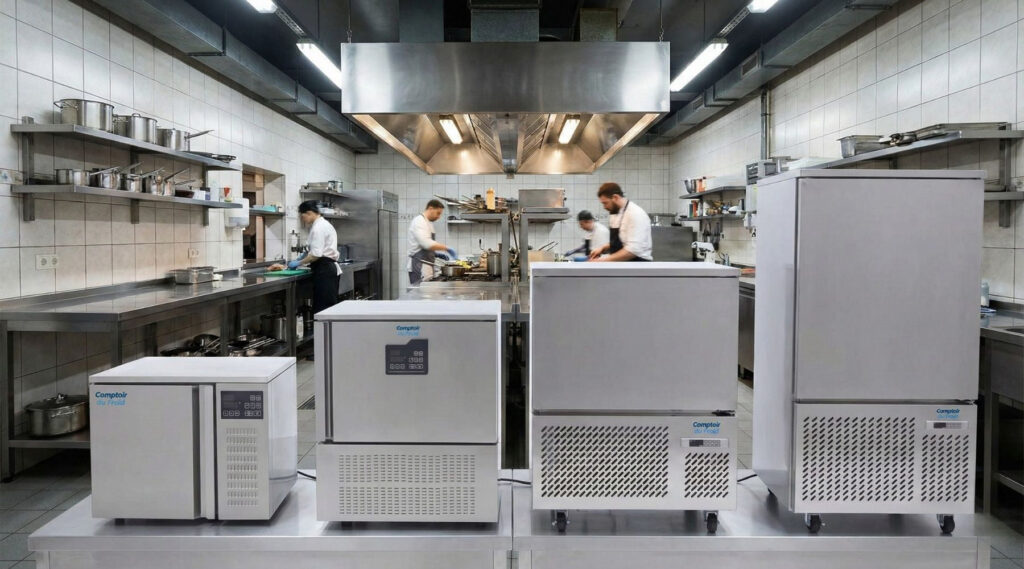
En restauración no siempre se requiere la celda de refrigeración como equipo denominado en blanco y negro . Por otro lado, el enfriamiento rápido de los alimentos calientes es efectivamente una obligación sanitaria y, en la práctica, una célula se convierte rápidamente en imprescindible para cumplir los requisitos HACCP sin correr ningún riesgo.
En otras palabras: la ley te pide un resultado mensurable, no sólo una buena intención. Si prepara platos con antelación, preparaciones delicadas o volumen, resulta muy difícil cumplir con las normas sin un verdadero equipo de enfriamiento rápido.
¿Es legalmente obligatoria la celda de refrigeración?
La respuesta más precisa es: no explícitamente como máquina denominada, pero casi sí en la práctica. El marco reglamentario exige que el enfriamiento de los alimentos sea rápido y controlado, con una verdadera lógica de seguridad sanitaria (decreto del 21 de diciembre de 2009).
El punto clave es la obligación de reducir la temperatura central de un producto caliente en un plazo compatible con los requisitos HACCP. En una cocina profesional, intentar obtener este resultado con una simple cámara frigorífica o un frigorífico clásico rara vez es defendible, sobre todo cuando aumentan los volúmenes.
- La ley impone una obligación de resultado, no de una marca o modelo específico.
- El frigorífico clásico no es suficiente para enfriar rápidamente sin alterar el resto del almacenamiento.
- Cuanto más regular es la producción, más se convierte la celda en una necesidad operativa.
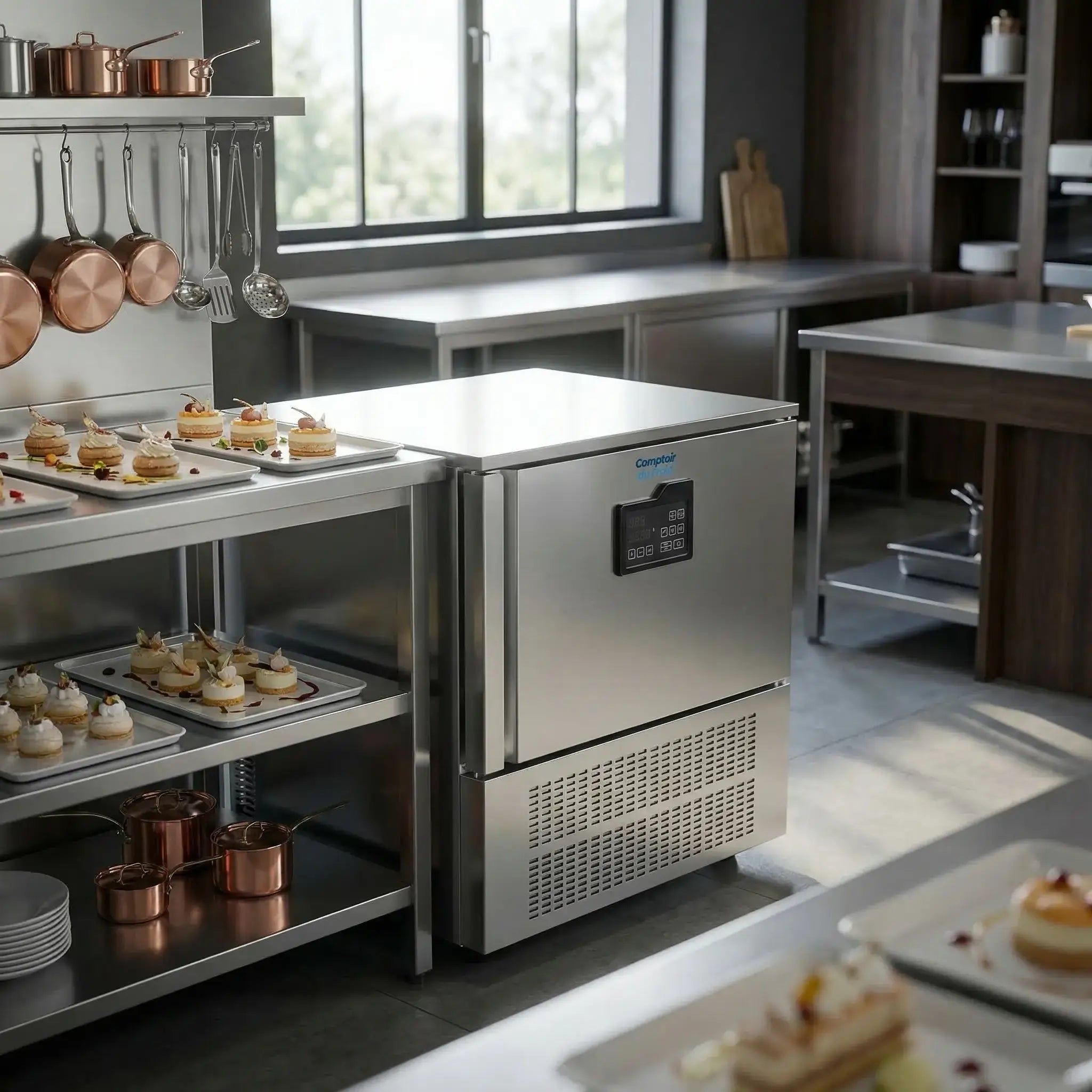
- Formato coherente para una pequeña estructura, un snack bar o una cocina con ritmo moderado
- Permite respetar el enfriamiento rápido sin improvisar con el frigorífico de almacenamiento
- Buen punto de entrada para cumplir sin sobredimensionar la inversión
¿Por qué el enfriamiento rápido es un punto crítico en HACCP?
Porque entre el final de la cocción y la temperatura de almacenamiento, el alimento pasa por una zona de peligro microbiológico. Si esta fase se prolonga demasiado, el riesgo de proliferación bacteriana aumenta significativamente.
Es por eso que la refrigeración se trata como un punto crítico en muchos planes HACCP. Una celda no sólo se utiliza para ir más rápido: se utiliza para hacer que este paso sea rastreable, repetible y defendible en caso de una inspección.
¿Qué riesgo corre un restaurador sin una cámara de refrigeración?
El riesgo real no es sólo el control sanitario: es la imposibilidad de demostrar que la refrigeración ha sido controlada. Sin un equipo adecuado, rápidamente te encuentras en una zona gris difícil de defender.
| Situación | Sin celda adaptada | Con celda de enfriamiento |
|---|---|---|
| Enfriar un plato caliente | Tiempo demasiado largo, método incierto | Enfriamiento rápido y medible |
| Impacto en el almacenamiento en frío | Riesgo de calentamiento del recinto existente | Ciclo dedicado, sin molestar al resto |
| Control DDPP | Justificación a menudo frágil | Enfoque mucho más defendible |
| Organización de producción | Cocción por lotes limitada y estresante | Producción avanzada más limpia y segura |
Veredicto: si enfrías regularmente preparaciones cocidas, la celda de enfriamiento no es un lujo. Son los equipos los que transforman una teórica obligación sanitaria en un proceso verdaderamente sostenible.
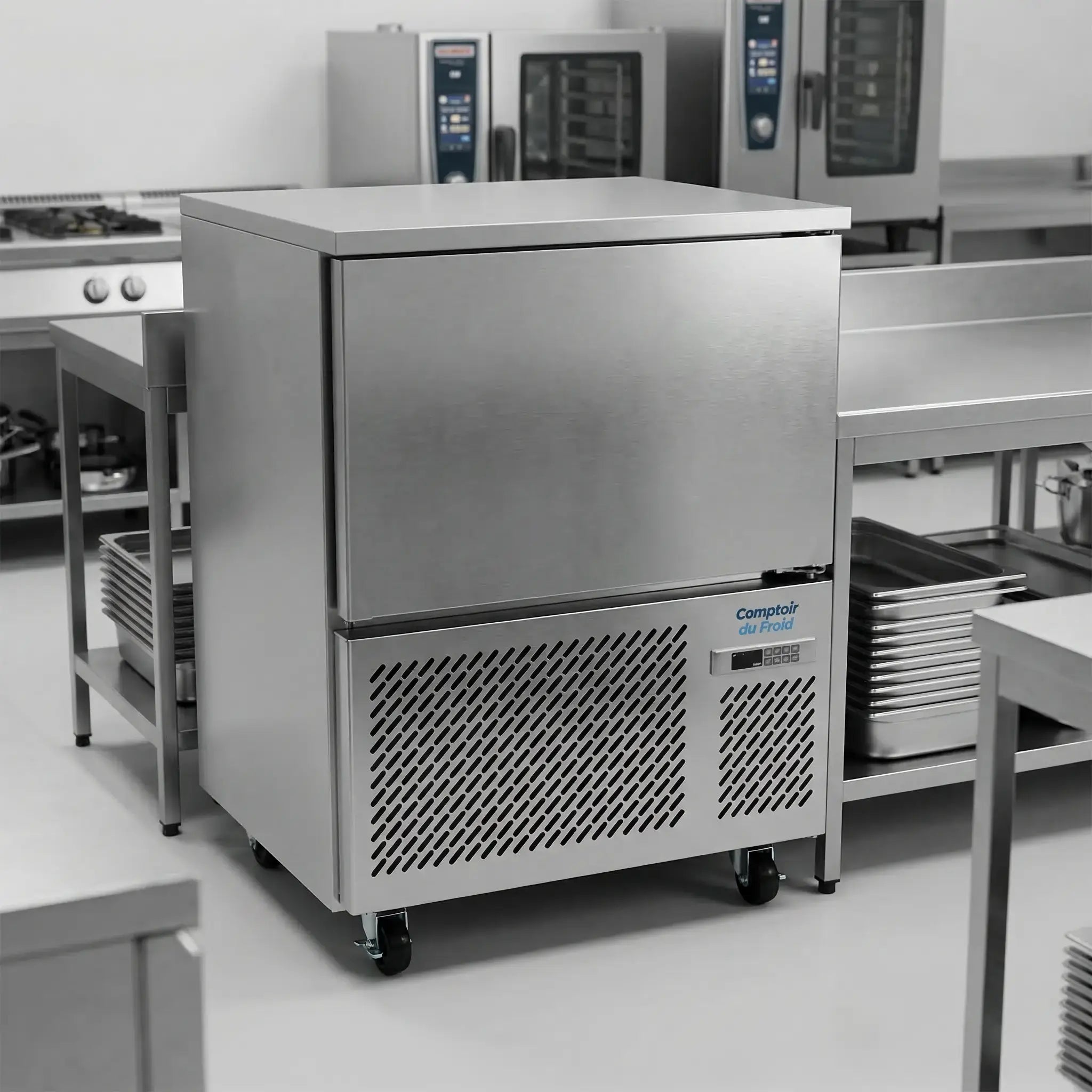
- Formato más consistente para una restauración con volumen regular y colocación verdadera
- Permite enfriar sin bloquear toda la organización en la cocina
- Buena elección si la celda forma parte del flujo diario y no para uso ocasional
Más allá del cumplimiento, ¿por qué este equipo se vuelve rentable?
Una celda de refrigeración no sólo se utiliza para evitar un problema de salud. También mejora la organización, limita el desperdicio y hace que el trabajo en producción sea más predecible.
- Menos pérdidas: los preparados se enfrían limpiamente y se pueden conservar mejor.
- Mejor organización: puedes cocinar con antelación y suavizar la carga de trabajo.
- Calidad más estable: se controlan mejor las texturas, la fijación y la seguridad sanitaria.
- Proceso más pro: en caso de crecimiento, se parte de una base ya sana.
Si todavía estás comparando varios enfoques, también puedes leer nuestro artículo sobre la diferencia entre un congelador y un abatidor así como nuestra guía sobre la aplicación del protocolo HACCP con una célula blástica refrigeración.
¿Necesita un modelo acorde con su producción?
Explore nuestra selección de celdas de refrigeración profesionales para elegir la capacidad adecuada según su ritmo, sus volúmenes y sus limitaciones HACCP.
Preguntas frecuentes
¿Es obligatoria una cámara de refrigeración en la restauración?
No siempre como equipo denominado en blanco y negro, pero el enfriamiento rápido de los alimentos es obligatorio. En la práctica, la célula suele resultar esencial para cumplir este requisito.
¿Por qué un frigorífico clásico no es suficiente?
Porque no está diseñado para bajar rápidamente la temperatura de platos calientes sin alterar el resto del almacenamiento en frío.
¿Qué establecimientos necesitan más un móvil?
Quienes cocinan por adelantado, trabajan en volumen, cocinan por lotes o manipulan preparaciones sensibles a problemas de salud.
¿Es mejor tener un modelo pequeño o una celda de mayor capacidad?
Todo depende del volumen real a enfriar. Un modelo pequeño puede ser suficiente para empezar, pero debes ser coherente con tu ritmo de producción y tus contenedores GN.