
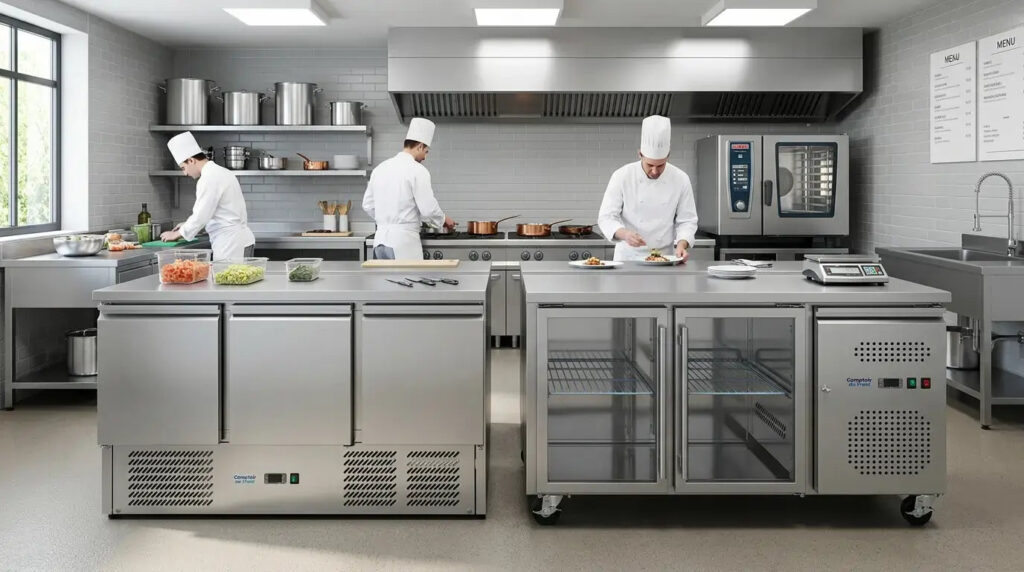
A positivo e negativo non risponde alla stessa logica aziendale a seconda dei prodotti, del ritmo del servizio e del livello di preparazione in cucina. In pratica il positivo serve a mantenere gli alimenti freschi immediatamente utilizzabili sulla stazione, mentre il negativo mette al sicuro le riserve congelate o i prodotti che non devono entrare troppo presto nella fase di servizio.
Un buon arbitrato quindi non è “quale tavolo è il migliore?” ma dove posizionare il freddo positivo, dove mantenere il freddo negativo e quando passare da una zona all’altra. È questa distribuzione che migliora la fluidità del servizio, limita gli errori HACCP ed evita di utilizzare un’unità di preparazione come semplice deposito tampone.
Hai bisogno di un tavolo refrigerato positivo o negativo, o entrambi in una cucina professionale?
La vera domanda è semplice: hai bisogno di un armadio di preparazione, di un armadio di congelamento o di una combinazione di entrambi? La risposta dipende da quando i tuoi prodotti devono essere disponibili e dalla temperatura a cui devono rimanere durante il servizio.
Una tabella positiva è pensata per ingredienti freschi già utilizzati in produzione: basi fredde, contorni, latticini, carni o salse in uso. Per i surgelati, i pretagli tenuti al sicuro o i flussi dove l’uscita del negativo deve rimanere controllata fino all’ultimo momento, subentra un tavolo negativo.
- Scegli un tavolo positivo se la posizione deve preparare, assemblare e allestire continuamente con prodotti freschi.
- Scegli una tabella negativa se hai bisogno di conservare gli alimenti congelati il più vicino possibile ad una zona di cottura o rielaborazione.
- Scegli entrambi se la tua linea combina implementazione a freddo, rotazione rapida e dipendenza da riferimenti congelati.
- Evita il singolo mobile “piccatutto”: spesso è qui che nascono confusione nello stoccaggio e differenze di temperatura.
Per gettare le basi per il dimensionamento di una postazione di lavoro, puoi leggere anche il nostro articolo sulla scelta di un tavolo refrigerato in base al formato della tua cucina professionale.
Come distribuire i prodotti tra freddo positivo e freddo negativo senza creare attriti durante il servizio?
La domanda operativa è: quali prodotti devono essere immediatamente disponibili e quali devono rimanere in attesa controllata? La risposta consiste nel pensare per tempo di servizio, non solo per famiglia di mobili.
Nella cucina del catering, il tavolo positivo deve accogliere i prodotti alimentari che fuoriescono regolarmente durante la cottura. Il tavolo negativo deve restare una breve zona di conservazione o una riserva vicina per i prodotti ancora congelati, per evitare spostamenti verso un armadio lontano e una movimentazione disordinata.
| Situazione del servizio | Tabella positiva | Tabella negativa |
|---|---|---|
| Installazione e vestizione a freddo | Sì, per mantenere i prodotti pronti all’uso tra 0 e +8°C | No, a meno che non vi sia un’esigenza molto specifica di stoccaggio temporaneo |
| Riserva di prodotti surgelati nei pressi di una stazione calda | No, rischio di rottura della logica del prodotto | Sì, per limitare l’uscita prematura del negativo |
| Snack o fast food con mix fresco + congelato | Sì, per ingredienti di assemblaggio ad alta rotazione | Sì, se parte del menu prevede cibi surgelati a intervalli regolari |
| Cancella organizzazione HACCP | Ottimo se il contenuto è riservato ai prodotti freschi di servizio | Ottimo se il contenuto rimane strettamente dedicato ai surgelati |
Verdetto: se la vostra cucina prepara principalmente cibi freschi, il positivo deve rimanere al centro della stazione. Se si gestiscono una porzione significativa di alimenti surgelati, il negativo diventa un complemento d’arredo strategico. I due sono complementari quando servono orari diversi del flusso, non quando immagazzinano la stessa cosa “per ogni evenienza”.
Consiglio sul campo: l’errore più comune consiste nel trasformare la tabella positiva in una mini-riserva o la tabella negativa in una camera di sbrinamento. Sul campo, ciò peggiora la leggibilità della stazione, sovraccarica le aperture e complica il rispetto delle norme HACCP.
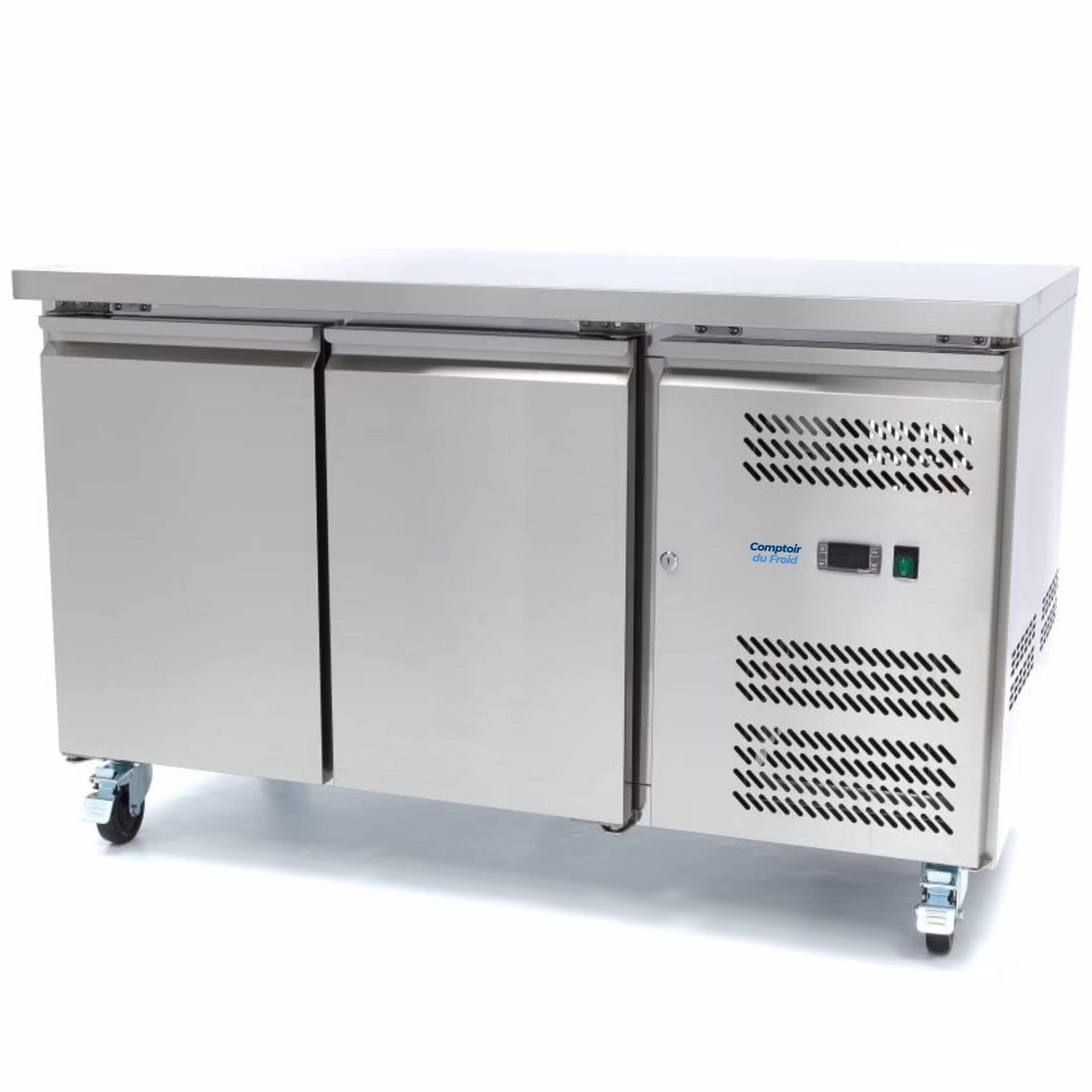
Tavolo Refrigerato Positivo 2 Porte 136cm (GN 1/1)
- Perfetto per tenere gli ingredienti freschi a portata di mano del preparatore.
- Formato GN 1/1 utile per strutturare un layout pulito e leggibile.
- Piano coerente in acciaio inossidabile per una versatile stazione di preparazione per il catering.
In quali casi una tabella negativa migliora davvero l’organizzazione di una postazione CHR?
La domanda da porsi è: la tabella negativa porta un reale guadagno di flusso o solo una duplicazione delle attrezzature? La risposta è che diventa rilevante quando una stazione consuma cibo congelato regolarmente, velocemente e ripetutamente.
In una cucina che lavora con basi già porzionate, prodotti impanati, gelati, basi pasticceria o alcuni riferimenti per la risoluzione dei problemi, posizionare un tavolo negativo vicino al punto di utilizzo riduce i movimenti ed evita le aperture ripetute di un mobile principale. Serve anche a separare meglio i circuiti tra fresco pronto da condire e congelato ancora in attesa.
- Identificare i prodotti effettivamente ritirati durante il servizio.
- Verificare se devono rimanere rigorosamente negativi fino all’utilizzo.
- Misura i viaggi di andata e ritorno evitati rispetto alla memoria principale.
- Confermare che i mobili avranno un ruolo chiaro e non traboccare.
Se la tua esigenza riguarda principalmente la conservazione a bassa temperatura in stazione, la nostra guida sulla scelta di un tavolo refrigerato negativo dettaglia i punti specifici di vigilanza.
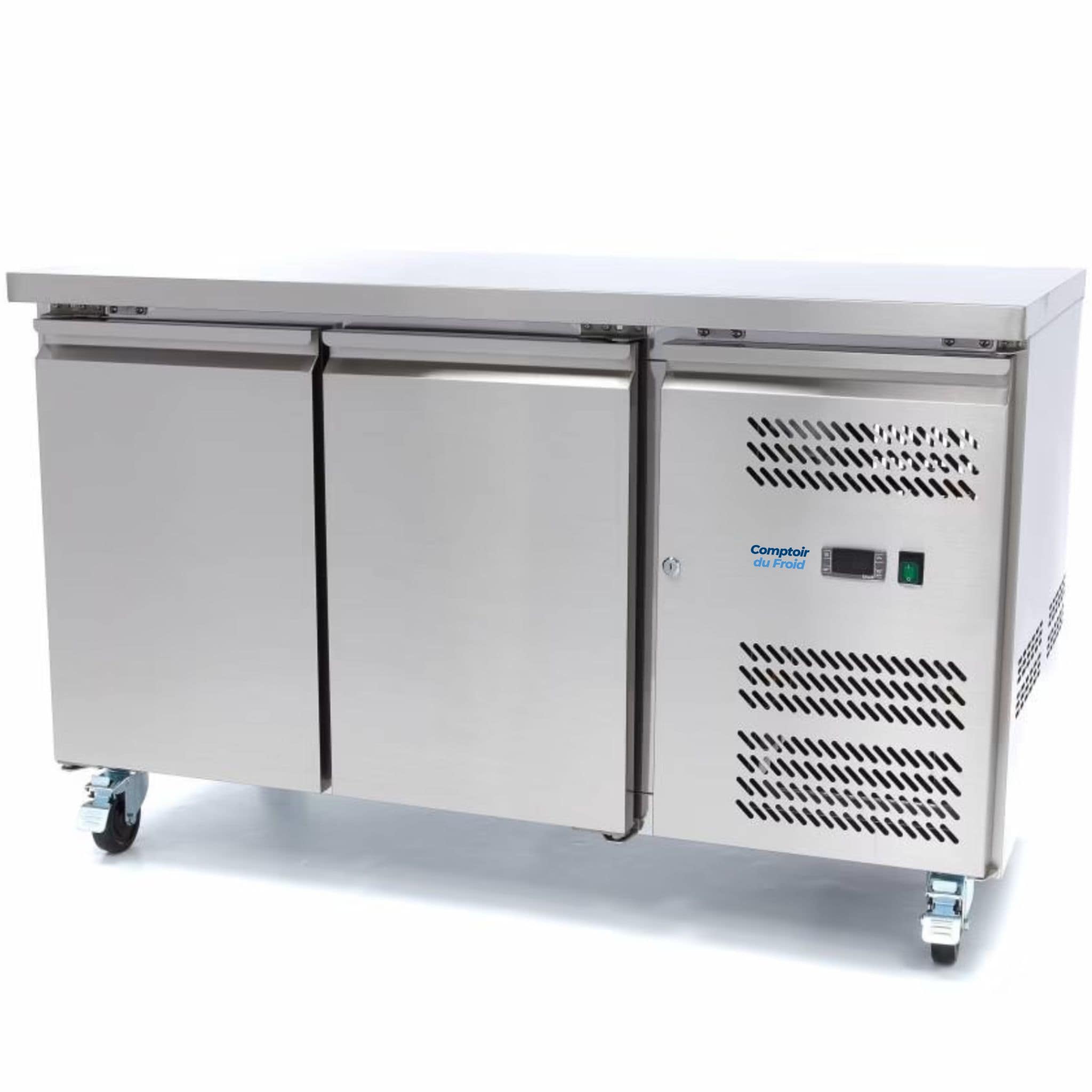
Tavolo congelatore a 2 porte 136 cm GN 1/1 (piano in acciaio inox)
- Fornisce una vera riserva congelata locale per postazioni di lavoro ad alta velocità.
- Consente di separare chiaramente il flusso congelato da quello fresco in preparazione.
- Piano in acciaio inox utile qualora il mobile diventi un supporto funzionale sulla linea.
Quale implementazione ti consente di rimanere fluido e conforme al sistema HACCP?
La domanda giusta è: dove dovrebbe essere posizionato ogni mobile per risparmiare tempo senza interrompere la catena del freddo? La risposta è allineare il layout con le azioni reali della postazione: accoglienza interna, preparazione, eventuale cottura, vestizione, pulizia.
Un tavolo positivo deve generalmente essere posizionato il più vicino possibile al piano di preparazione o di montaggio. Un tavolo negativo deve essere accessibile ma leggermente sfalsato se alimenta una stazione calda o una stazione di finitura, per evitare che diventi il punto centrale dell’intero servizio. L’obiettivo non è quello di incollare due mobili identici uno accanto all’altro, ma di costruire una distribuzione leggibile delle temperature e degli usi.
- mantieni il positivo al centro dell’ambiente fresco;
- riserva il negativo per le referenze congelate effettivamente utilizzate in stazione;
- evitare di mescolare prodotti crudi, semilavorati e pronti da servire senza logica di zona;
- verificare le effettive temperature e lo stato delle giunzioni, soprattutto nelle posizioni più aperte.
In pratica, spesso il layout migliore è quello che riduce il numero di aperture non necessarie e chiarisce subito la destinazione di ogni merce. Questo è anche ciò che riduce il rischio di errori di squadra durante i servizi tesi o le sostituzioni.
Hai bisogno di una stazione di freddo positivo davvero adatta ai tuoi ritmi?
Confronta i nostri tavoli e torri refrigerati positivi per costruire una linea di preparazione più fluida, pulita e facile da utilizzare quotidianamente.
FAQ
Possiamo memorizzare gli stessi prodotti in una tabella positiva e in una tabella negativa?
No, il loro ruolo non è lo stesso: quello positivo viene utilizzato per il fresco pronto all’uso, quello negativo per la conservazione congelata o per una riserva locale dedicata.
Un tavolo negativo sostituisce un congelatore verticale?
Non sempre. Soprattutto, integra lo stoccaggio principale quando una stazione necessita di un rapido accesso agli alimenti surgelati durante il servizio.
Quale tavolo installare per primo in una piccola cucina per catering?
Nella maggior parte dei casi la tabella positiva viene prima, perché supporta direttamente il posizionamento e il condimento dei prodotti freschi.
Perché separare il freddo positivo e il freddo negativo sulla stazione?
Perché questa separazione rende i gesti più leggibili, limita gli errori di memorizzazione e aiuta a mantenere una logica HACCP più pulita in servizio.