
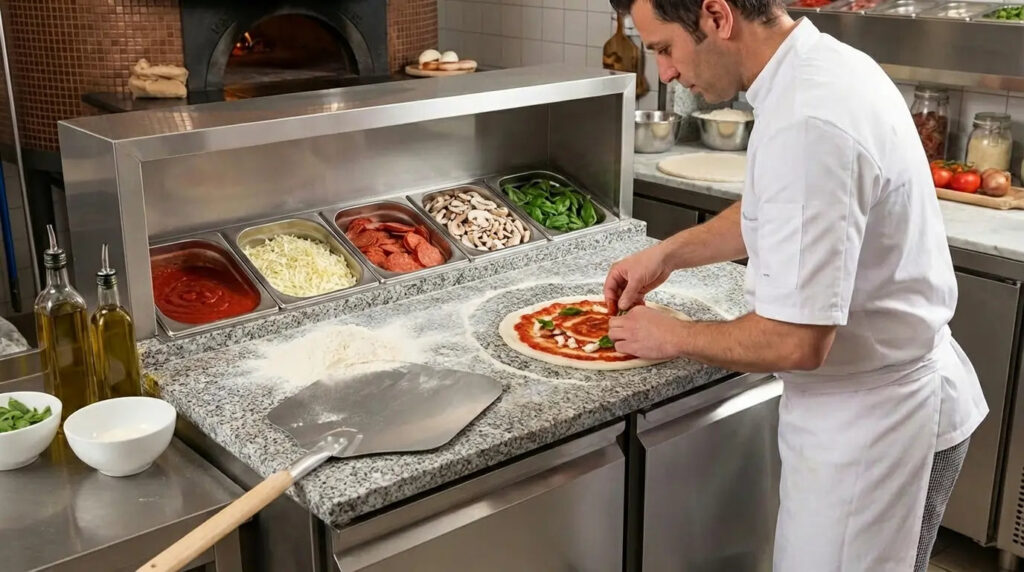
A è molto più di un semplice mobile freddo. In pizzeria è il cuore della postazione di lavoro: lì stendiamo l’impasto, teniamo gli ingredienti a portata di mano e li utilizziamo per mantenere il ritmo del servizio senza perdere fluidità.
Per scegliere bene, devi pensare in termini di postazione di lavoro completa: superficie di lavoro, stoccaggio basso, numero di contenitori, spazio disponibile e logica di produzione. Il modello giusto non è necessariamente il più grande, ma quello che si adatta davvero al tuo ritmo.
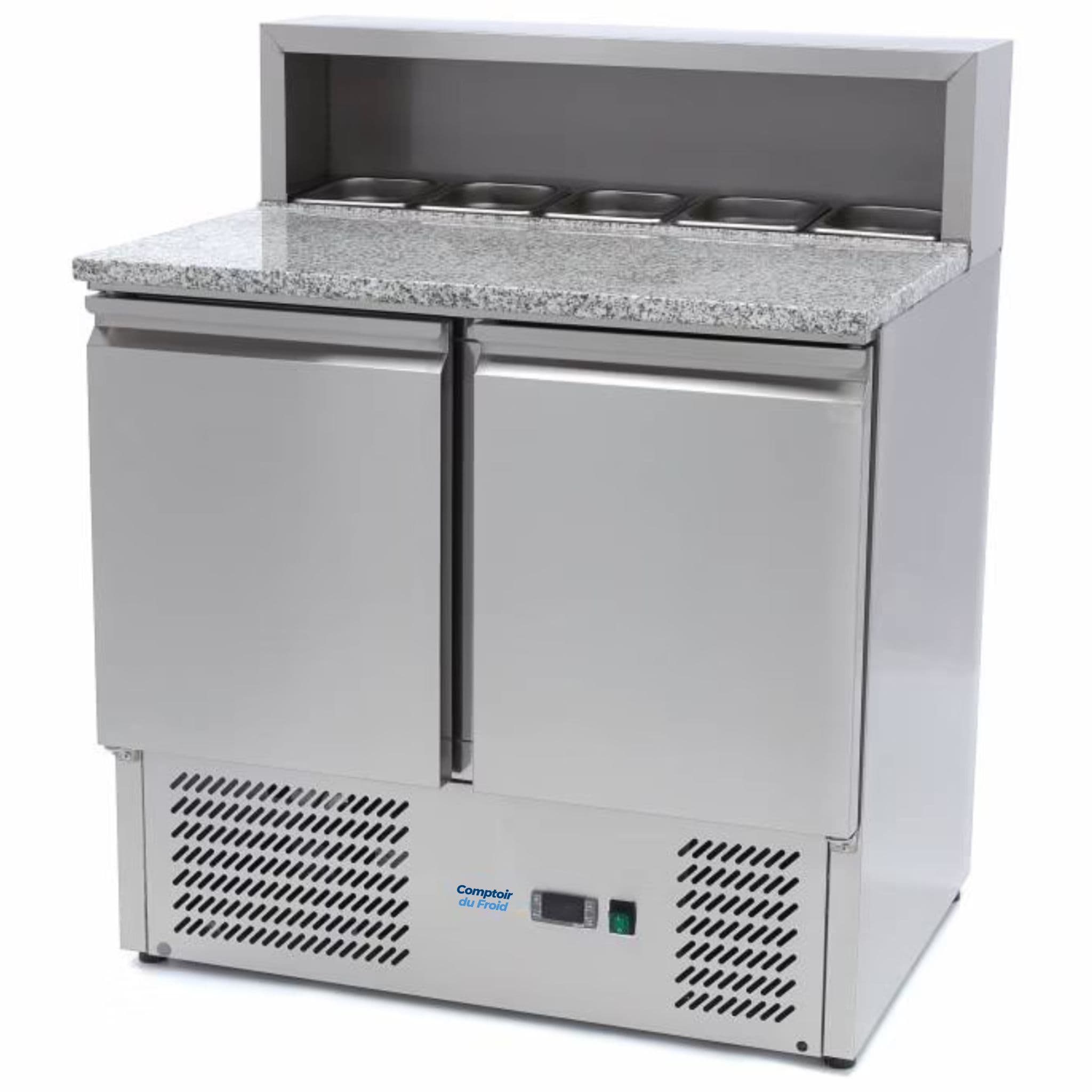
Insalata Pizza 2 Porte (90 cm)
- Ottima scelta per camion di cibo, piccola pizzeria o cucina ristretta
- Piano in granito + vetrina integrata in formato compatto
- Permette di strutturare una vera e propria pizzeria senza occupare spazio
Perché scegliere un vero tavolo pizza piuttosto che una semplice torre refrigerata?
Perché un tavolo pizza riunisce in un’unica postazione ciò di cui un pizzaiolo ha bisogno in servizio. Non fa solo bella: organizza il lavoro.
- Piano in granito: più consistente per la lavorazione dell’impasto.
- Conservazione bassa: utile per pezzi di pasta, riserve e prodotti delicati.
- Vetrina ingredienti: accesso rapido alle guarnizioni durante il servizio.
Questa logica 3 in 1 cambia davvero il comfort, soprattutto non appena la portata aumenta.
Conviene scegliere un tavolo pizza a 2 o 3 porte?
La scelta dipende soprattutto dal volume di servizio e dall’ampiezza della cucina. Per un’attività compatta può essere sufficiente una 2 ante. Una 3 porte diventa logica non appena l’offerta si espande o i volumi aumentano.
| Formato | Quando è rilevante | Limite principale |
|---|---|---|
| 2 ante | Spazio piccolo, flusso moderato, carta corta | Capacità raggiunta più rapidamente |
| 3 ante | Pizzeria più attiva, più impasti e più condimenti | Occupa più spazio |
Verdetto: se stai cercando una posizione compatta e seria, la 2 porte rimane molto difendibile. Se la pizza è una vera attività fondamentale, la 3 porte offre subito un comfort superiore.
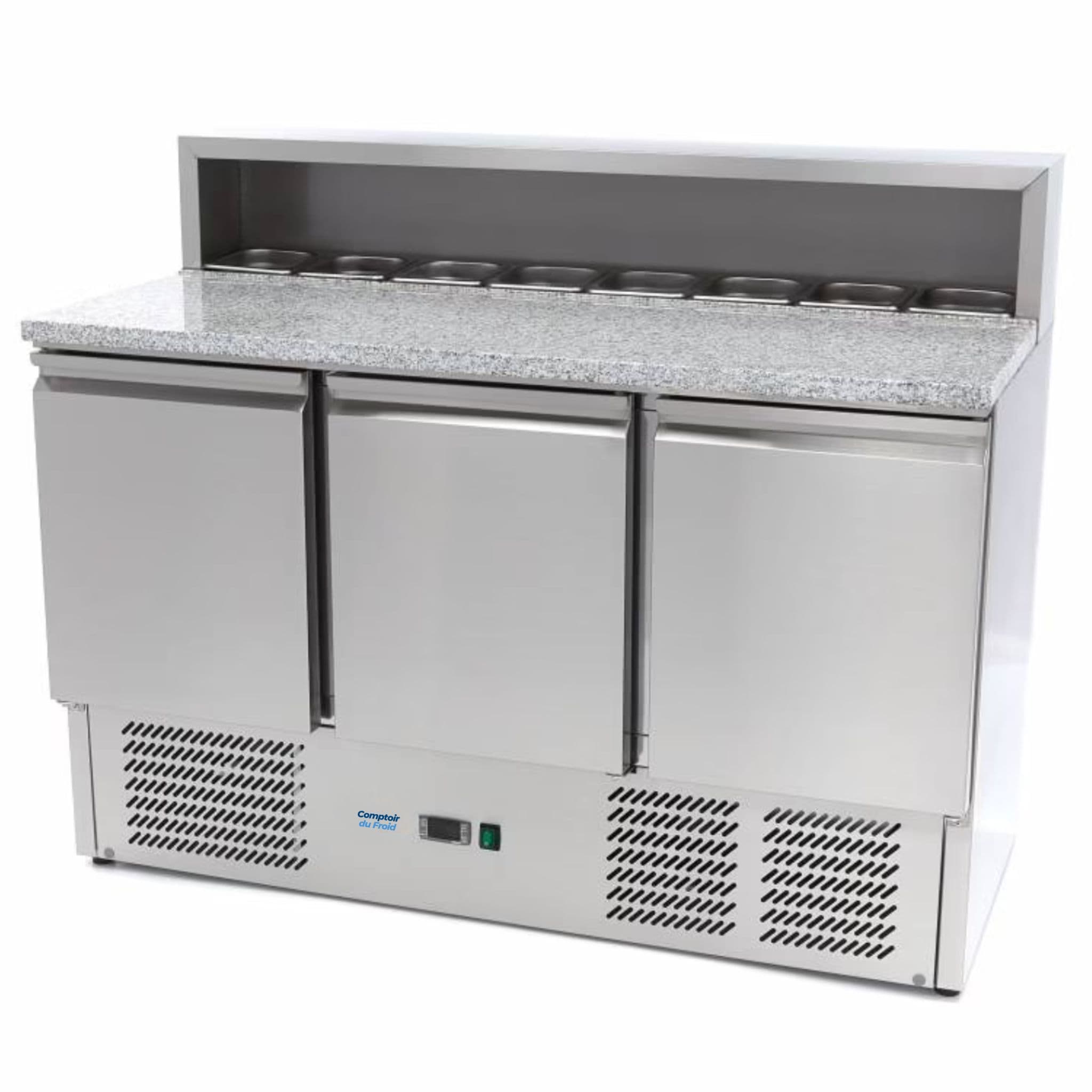
Insalata Pizza 3 Porte (137 cm)
- Più spazio per impasti, contenitori e mise en place
- Formato molto buono per una pizzeria da asporto o una vera postazione attiva
- Buon equilibrio tra capacità ed ergonomia del servizio
Il piano in granito è davvero importante?
Sì, perché la qualità del piano di lavoro cambia direttamente il comfort di utilizzo. Il granito si apprezza per la sua tenuta, la sua stabilità e il suo comportamento più coerente con il lavoro dell’impasto rispetto ad un semplice piano in acciaio inox standard.
In una pizzeria la planimetria non è un dettaglio estetico. È un elemento che influenza la fluidità del gesto, la pulizia della postazione e il comfort nel tempo.
Ante o cassetti: dobbiamo andare oltre?
Le ante rimangono la base, ma i cassetti possono diventare molto interessanti se si gestiscono molti soldi. Facilitano l’organizzazione ed evitano di cercare in fondo all’armadio durante il servizio.
Per usi più avanzati, alcune configurazioni dei cassetti consentono una struttura molto migliore per la spinta, lo stoccaggio intermedio e la logica di rotazione.
Se stai ancora confrontando diversi formati di stazioni di raffreddamento, puoi anche leggere il nostro articolo su l’impatto di un’insalata di pizza sulla velocità di una stazione così come la nostra guida su la scelta di un professionista insalata refrigerata.
Hai bisogno di una pizzeria coerente con il tuo flusso?
Esplora la nostra selezione di insalate e tavoli di preparazione per scegliere il formato giusto in base al tuo locale, al tuo menu e al ritmo del tuo servizio.
FAQ
Un tavolo pizza è davvero diverso da una torre refrigerata?
Sì. Unisce piano di lavoro, cella frigorifera e accesso rapido agli ingredienti in una logica pensata per la pizza station.
Per una pizzeria può bastare una 2 porte?
Sì, soprattutto per una piccola struttura, un food truck o un’attività con un flusso ancora moderato.
Perché passare a 3 porte?
Per ottenere comfort di stoccaggio, larghezza della postazione e capacità di installazione quando l’attività diventa più intensa.
I cassetti sono essenziali?
No, ma diventano interessanti se la gestione dell’impasto e la fluidità del servizio assumono reale importanza nella tua organizzazione.