
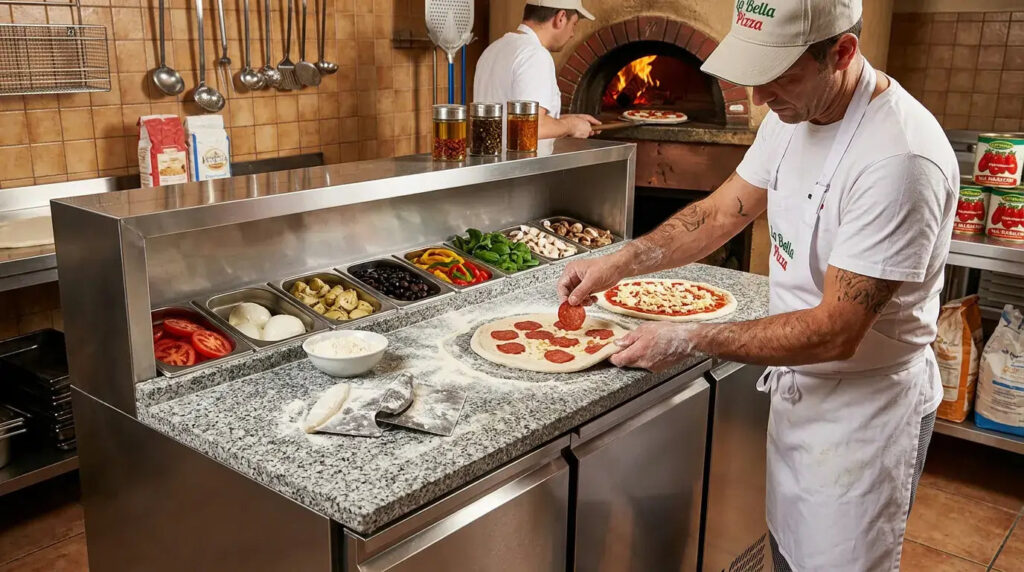
A pizza insalate migliora davvero il ritmo quando riunisce i contenitori degli ingredienti, la riserva refrigerata e un piano di lavoro stabile per stenderlo nella stessa stazione. Nelle pizzerie non serve solo per mantenere il freddo: riduce i movimenti inutili, limita le rotture durante il tiro e aiuta a mantenere la mise en place più pulita.
La scelta giusta dipende quindi meno dal semplice numero di porte che dal flusso del servizio, dallo spazio disponibile dietro il bancone e dalla logica di preparazione. È proprio questo trio che fa la differenza tra una posizione fluida e una che rallenta la produzione.
Perché un’insalata di pizza è diversa da un’insalata classica?
La vera domanda è semplice: perché non accontentarsi di un’insalata refrigerata standard? La risposta è che una pizzeria impone vincoli più specifici: impasto a portata di mano, ingredienti altamente segmentati, farina, ritmi ripetitivi e la necessità di un piano di lavoro più adatto.
In pratica un’insalata di pizza si distingue per diversi elementi utili nel quotidiano:
- una superficie in granito, più comoda per modellare i pezzi di pasta e più stabile nell’uso;
- un’organizzazione pensata per contenitori GN, per sequenziare riempimento e servizio senza interruzioni;
- una riserva refrigerata bassa per riempire prodotti, pezzi di pasta o ingredienti delicati.
Se stai ancora esitando tra i diversi formati di stazioni del freddo, puoi anche leggere il nostro articolo su l’insalatiera refrigerata a 2 porte per una stazione compatta e quello su l’insalatiera refrigerata a 3 porte per servizi più prolungati. Queste due letture aiutano a situare chiaramente l’uso della pizza in relazione ad una stazione di preparazione più generale.
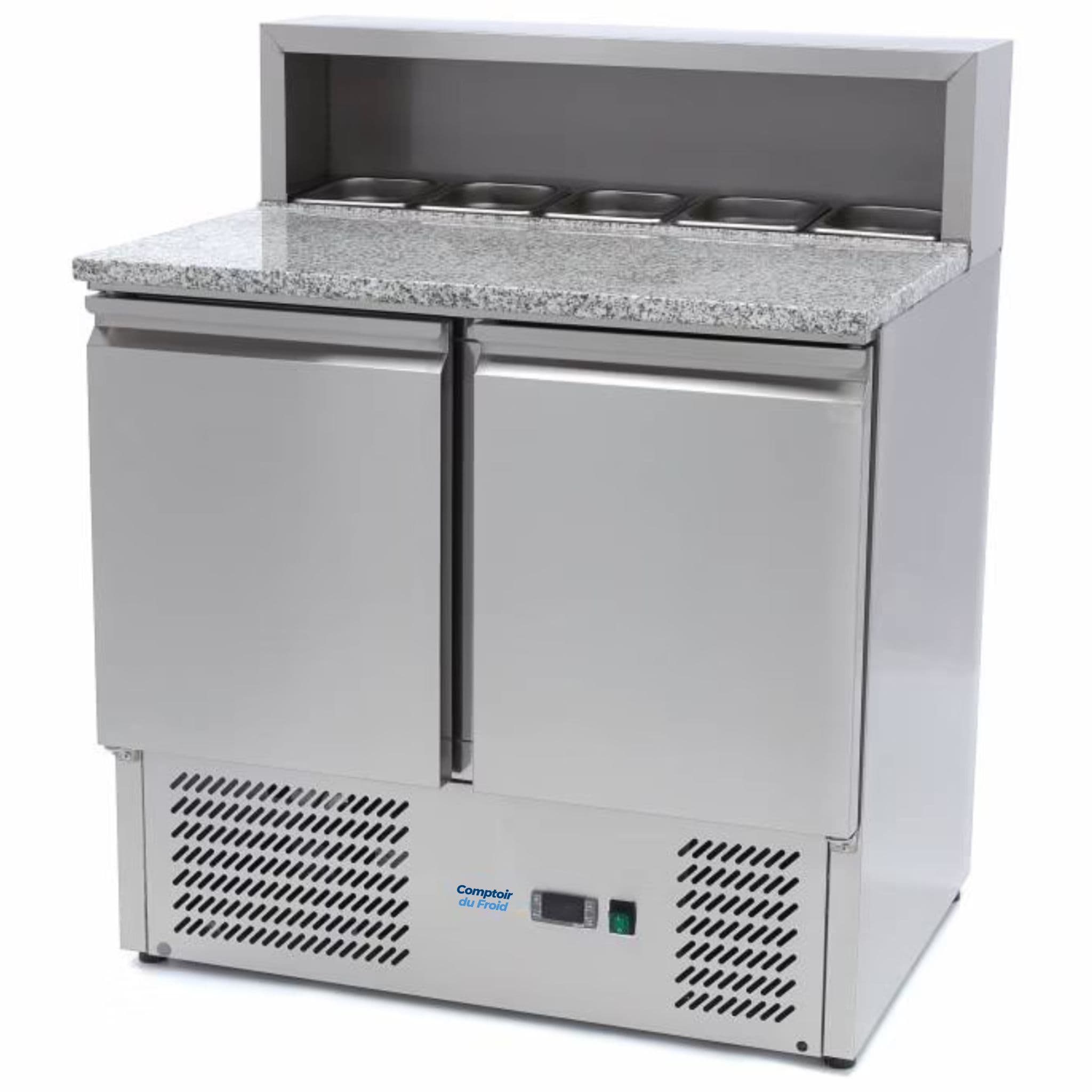
Insalata pizza a 2 porte 90 cm (piano in granito)
- Formato compatto molto consistente per una piccola pizzeria o una pizza snack
- Pratico piano in granito per abbassare e stirare velocemente
- Doppia anta utile per tenere un buffer appena sotto il piano di lavoro
Come dimensionare un’insalata di pizza in base al tuo flusso?
La questione da decidere qui è: quanta capacità ti serve effettivamente durante il servizio? La risposta dipende dal numero di pizze in uscita, dalla varietà del tuo menu e dal numero di operatori presenti alla postazione.
Per incorniciare la scelta guarda in particolare:
- il numero di ricette contemporanee da assemblare;
- il volume dei pezzi di pasta e gli ingredienti da tenere immediatamente disponibili;
- la frequenza di rifornimento possibile durante il servizio;
- la lunghezza utile del piano per lavorare senza intralciare.
| Configurazione | Quando è adatto | Evidenzia | Limite di sapere |
|---|---|---|---|
| 2 ante 90 cm | Flusso moderato, scheda piccola, spazio ristretto | Eccellente compromesso spazio/efficienza | Riserva saturata più velocemente se la carta è grande |
| 3 ante 137 cm | Servizio costante, numerose referenze, team più dinamico | Più comfort di lavoro e meno ricariche | Richiedi un vero lineare disponibile |
| Grande formato con cassetti portaimpasto | Pizzeria ad alto volume o produzione molto strutturata | Più organizzazione industriale della posizione | Investimenti e implementazioni più impegnativi |
Verdetto: se la tua posizione è ristretta o se inizi con una carta corta, una 2 porte ben organizzata è più che sufficiente. Non appena il servizio aumenta d’intensità o le referenze si moltiplicano, la 3 porte diventa più redditizia perché riduce ricariche e micro-pause.
Consigli sul campo: nelle pizzerie l’errore più comune è scegliere la lunghezza dei mobili esclusivamente in base allo spazio a terra. È necessario inoltre prevedere l’apertura delle porte, della zona lavorazione, il passaggio del personale e lo spazio necessario per il rifornimento dei bins durante la cottura.
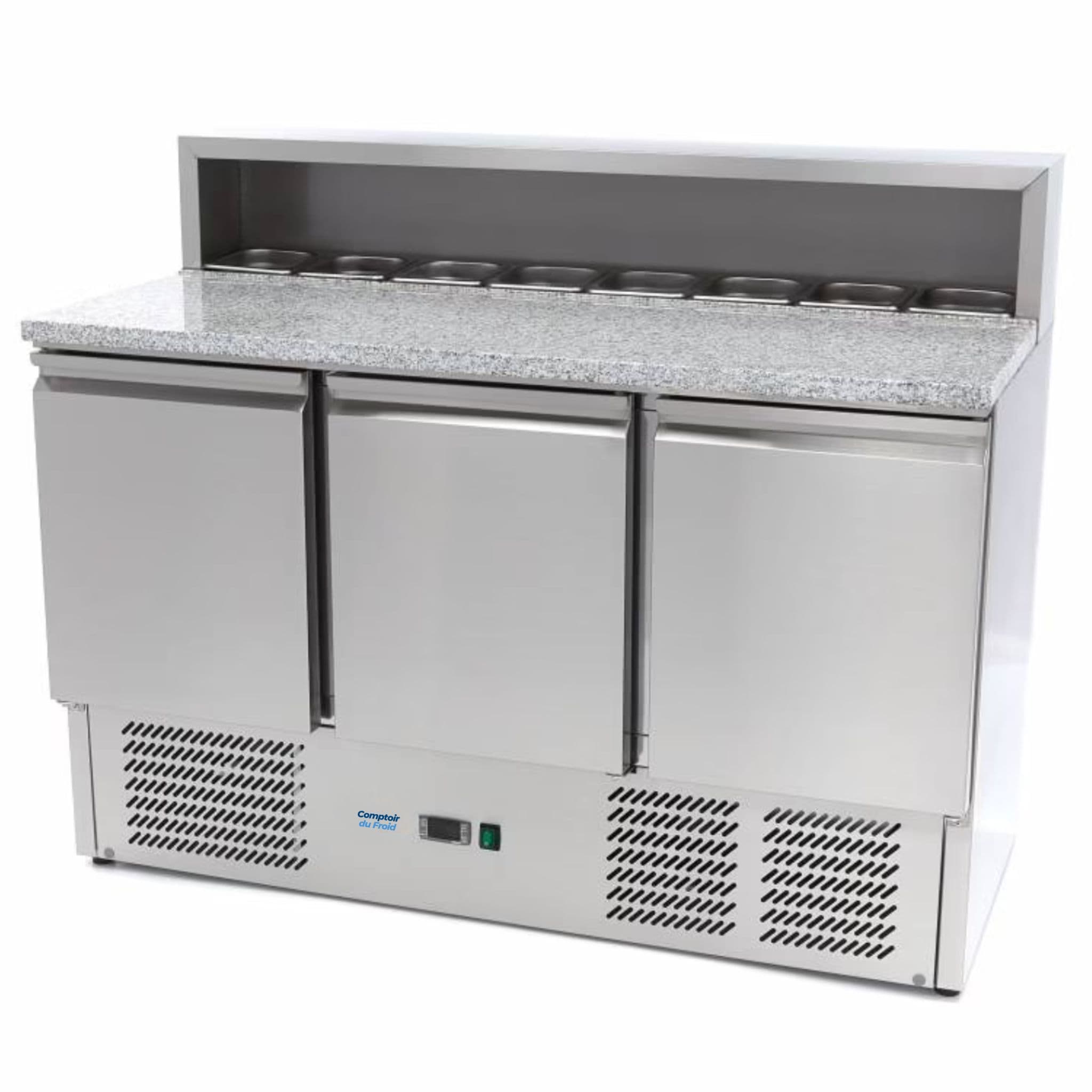
Insalata pizza a 3 porte 137 cm (piano in granito)
- Piano di lavoro più confortevole per mantenere una portata sostenuta
- Tre sportelli utili per separare meglio impasto, formaggio e rifornimento
- Formato coerente per una mappa più grande o un team più veloce
Quali criteri tecnici contano davvero prima dell’acquisto?
La domanda qui è: quali criteri evitano un cattivo acquisto oltre al semplice volume? La risposta sta nella compatibilità tra il flusso di lavoro, l’igiene della stazione e la facilità di ricarica durante il servizio.
Prima di convalidare un modello, controllare in particolare:
- la capacità nei contenitori GN sulla parte superiore per tenere a portata di mano gli ingredienti più utilizzati;
- la qualità del piano di lavoro, soprattutto se lo abbassi o lo superi direttamente sopra;
- circolazione dell’aria e stabilità al freddo per rimanere coerenti con i requisiti HACCP;
- la praticità della pulizia, perché una postazione pizza accumula velocemente farina, sugo e schizzi.
In campo, una buona pizza insalata non deve solo mantenere i prodotti alla giusta temperatura. Deve anche rendere la posizione più redditizia, vale a dire risparmiare tempo su ogni pizza, ridurre le movimentazioni e assorbire meglio i picchi di attività.
Quando l’insalata di pizza diventa una vera leva per la redditività?
La domanda fondamentale è: è una semplice unità di raffreddamento o un vero e proprio strumento di produzione? In una pizzeria la risposta è chiara: non appena il servizio si intensifica, la postazione di preparazione diventa un vero e proprio centro di performance.
Un’insalata di pizza ben scelta aiuta concretamente:
- mantenere un’implementazione più regolare di in tutto il servizio;
- ridurre gli spostamenti in una cella frigorifera o in un armadio annesso;
- limite tempo perso durante il riempimento;
- meglio preservare gli ingredienti delicati tra due giunchi.
Per un bar che vende poche pizze all’ora il profitto può sembrare discreto. Per una pizzeria con picchi produttivi reali, lo si vede subito dalla fluidità del servizio, dalla fatica del team e dalla regolarità dei gesti.
Stai cercando la cella frigorifera giusta per il tuo laboratorio di pizza?
Scopri la nostra selezione di insalatiere e tavoli da preparazione pensati per gli usi CHR più esigenti.
FAQ sull’insalata di pizza
L’insalata di pizza è obbligatoria in pizzeria?
No, non è obbligatorio in quanto tale. D’altra parte, diventa molto rilevante quando è necessario mantenere una stazione di preparazione rapida, pulita e coerente con la catena del freddo.
Per una pizzeria dovresti scegliere 2 ante o 3 ante?
Una porta a 2 porte è spesso sufficiente per un piccolo addebito o una carta corta. Una 3 porte è migliore se hai più ingredienti, più fatturato e meno tempo per riempire nuovamente durante il servizio.
Il piano in granito è davvero utile su un’insalata di pizza?
Sì, soprattutto se lavori l’impasto direttamente in postazione. Il granito fornisce una superficie stabile e durevole che ben si adatta a ripetute operazioni di modellatura e riempimento.
Possiamo utilizzare l’insalata di pizza per preparazioni diverse dalla pizza?
Sì, ma il suo massimo interesse resta la pizzeria. Per un utilizzo più versatile come spuntino o panino, una classica insalata refrigerata a volte può essere più consistente.