
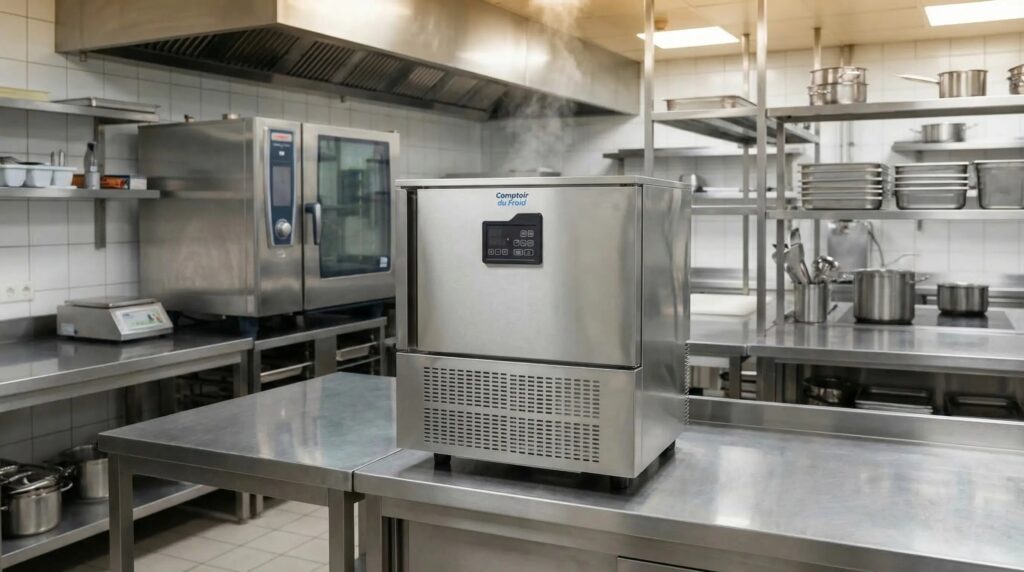
Nella ristorazione collettiva, in un catering o in una cucina centrale, il protocollo HACCP di una cella di raffreddamento non si limita a “mettere un piatto al freddo”. L’obiettivo è abbassare rapidamente la temperatura delle preparazioni per limitare la proliferazione batterica, garantire la connessione fredda e proteggere la qualità dei prodotti.
In pratica la cella di raffreddamento è parte di un metodo completo: porzionatura, carico, controllo della temperatura, tracciabilità e manutenzione. Se vuoi prima capire il ruolo preciso dell’attrezzatura puoi leggere il nostro articolo a cosa serve un abbattitore e come usarlo. E se stai ancora esitando tra diversi formati, la nostra guida sulla cella di raffreddamento a 5 livelli fornisce buone linee guida per il dimensionamento.
Perché il protocollo HACCP prevede il raffreddamento rapido
Il pericolo principale dopo la cottura è mantenere il cibo per troppo tempo nella zona di temperatura favorevole allo sviluppo microbico. Un raffreddamento troppo lento aumenta il rischio per la salute e indebolisce il piano di controllo sanitario. La cella di raffreddamento rapido serve quindi ad abbreviare notevolmente questa fase critica.
- Sicurezza alimentare: riduzione del tempo trascorso in aree sensibili.
- Conformità HACCP: controllo più affidabile delle fasi critiche.
- Qualità del prodotto: migliore tenuta di consistenze, salse, carni e dolci.
- Organizzazione: preparazione anticipata, stoccaggio controllato e servizio più fluido.
Le principali fasi del protocollo HACCP con cella di raffreddamento
1. Preparare correttamente i pasti prima di entrare nella cella
Il protocollo inizia prima ancora di iniziare il ciclo. I preparati devono essere distribuiti in contenitori idonei, di adeguato spessore per favorire lo scambio termico. I contenitori GN in acciaio inox sono generalmente preferibili ai contenitori troppo profondi che rallentano l’abbassamento della temperatura.
Si consiglia inoltre di evitare di caricare la cella con stoviglie troppo strette o poco ventilate. L’aria fredda deve circolare liberamente attorno ai prodotti. Il carico eccessivo riduce l’efficienza reale, anche su una macchina potente.
2. Avvia il ciclo corretto in base alla tipologia di produzione
Il corretto protocollo HACCP consiste nella scelta di un ciclo coerente con il volume, la natura del prodotto e il ritmo di produzione.
| Situazione | Buona pratica |
|---|---|
| Piccole produzioni giornaliere | Cella compatta, contenitori poco profondi, semplice controllo manuale |
| Cucina di produzione normale | Modello a 5 livelli, cicli ripetuti, letture sistematiche della temperatura |
| Connessione a freddo o volume sostenuto | Cella su carrello o grande capacità, procedure scritte e tracciabilità rafforzata |
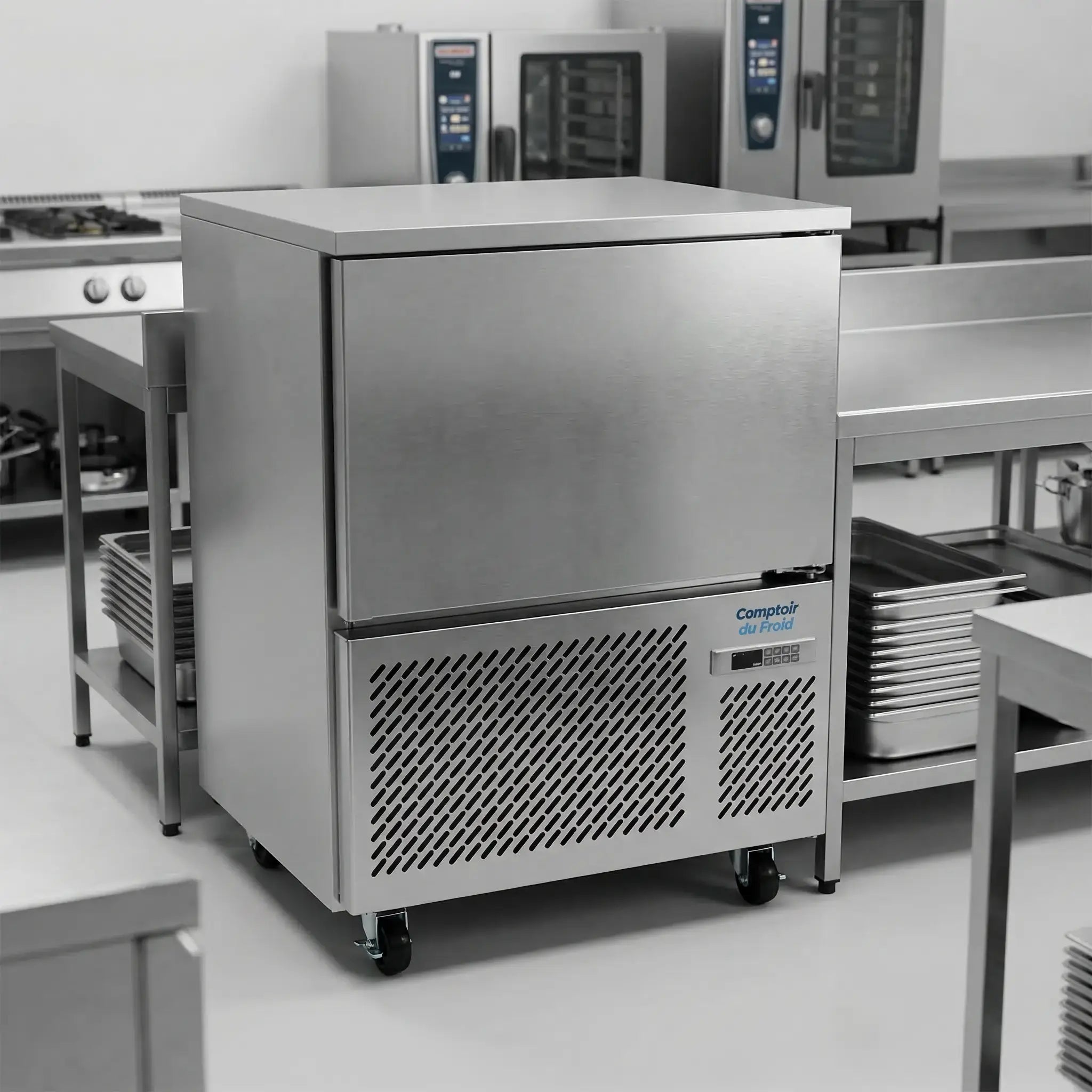
- Formato versatile per ristoranti, pasticcerie e laboratori con produzione regolare
- Capacità coerente di formalizzare cicli HACCP senza sovradimensionare l’investimento
- Ottimo compromesso tra dimensioni, produttività e controllo della connessione a freddo
3. Monitora e registra le temperature
Il punto critico HACCP non è limitato al pulsante “start”. È necessario verificare che il raffreddamento desiderato venga effettivamente raggiunto entro i limiti di tempo definiti dal metodo interno. Ciò implica letture affidabili, una sonda pulita e la registrazione su una scheda o un supporto digitale.
- Nome del preparato
- Data e ora uscita cottura
- Data e ora di posizionamento della cella
- Temperatura iniziale e temperatura finale
- Nome operatore
- Azione correttiva in caso di deviazione
4. Conservare senza interrompere la catena del freddo
Una volta completato il ciclo, le stoviglie devono essere rapidamente trasferite in idonei contenitori positivi, etichettate e integrate nella rotazione delle scorte. Una cella di raffreddamento non sostituisce un armadio di stoccaggio: garantisce l’abbassamento della temperatura, poi il relè deve essere sostituito da adeguate apparecchiature di conservazione.
Gli errori più frequenti in un protocollo di raffreddamento HACCP
Molte variazioni derivano meno dal materiale che dalle abitudini di produzione.
- Mettere le teglie troppo profonde che rallentano il raffreddamento al centro del prodotto.
- Sovraccaricare la cella pensando di risparmiare tempo.
- Lasciare aspettare troppo a lungo i piatti prima di metterli nella cella.
- Dimentica le dichiarazioni o compila i moduli in seguito.
- Pulizia trascurata di pareti, guide, maniglie e sonde.
Su quest’ultimo punto, un colloquio rigoroso è parte integrante del protocollo. Approfondiamo questo argomento nella nostra guida come pulire una cella di raffreddamento.
Quale attrezzatura scegliere per applicare un vero protocollo HACCP?
La scelta giusta dipende dal volume giornaliero, dal numero di servizi, dal formato del contenitore utilizzato e dalla logica di produzione. Una piccola struttura non ha gli stessi vincoli di un laboratorio di ristorazione o di una cucina collettiva.
Per i siti con una produttività più elevata, più contenitori o esigenze di movimentazione interna, è rilevante passare a un modello mobile con maggiore capacità al fine di standardizzare i processi e ridurre la movimentazione.
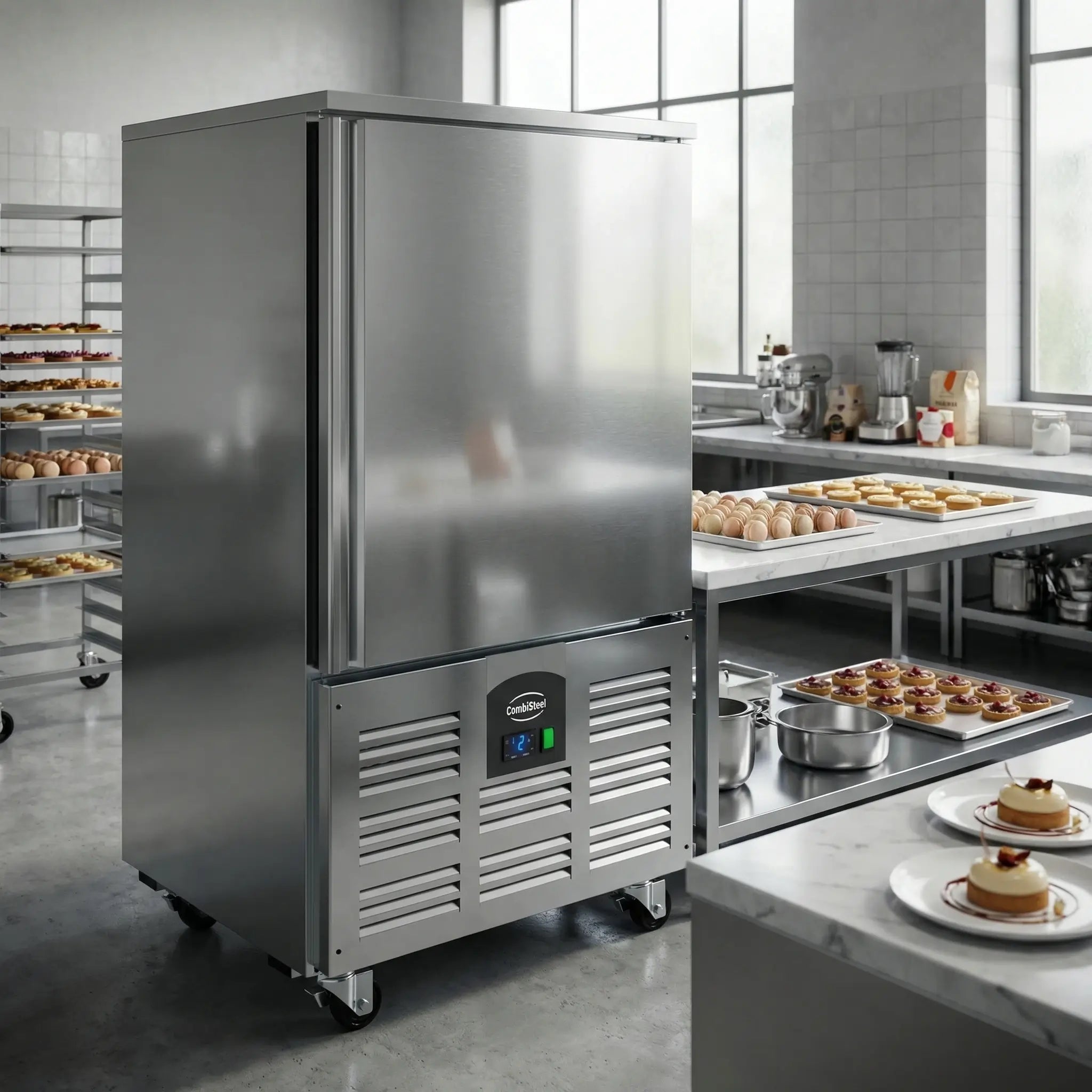
- Ideale per cucine che effettuano diverse produzioni con severi requisiti di tracciabilità
- Pratica configurazione mobile per ottimizzare i flussi tra preparazione, raffreddamento e conservazione
- Soluzione robusta per aumentare la produzione mantenendo un protocollo HACCP leggibile
Semplice lista di controllo HACCP per il refrigeratore
- Verificare che la cella sia pulita, libera e alla corretta temperatura di funzionamento.
- Distribuire i preparati in contenitori idonei e non sovraccarichi.
- Identifica ogni produzione prima o subito dopo il raffreddamento.
- Misura la temperatura in base alla procedura interna.
- Traccia i risultati su un foglio o un software.
- Trasferire rapidamente in un luogo di conservazione refrigerato.
- Correggere qualsiasi discrepanza osservata e registrare l’azione intrapresa.
Un protocollo HACCP efficace si basa tanto sul metodo quanto sulla macchina
Un refrigeratore ad alte prestazioni migliora chiaramente la sicurezza e l’organizzazione, ma non garantisce solo la conformità. Il vero livello professionale nasce dalla combinazione tra attrezzature adeguate, squadre addestrate e tracciabilità regolare.
Hai bisogno di una cella adattata al tuo protocollo HACCP?
Scopri la nostra selezione di celle di raffreddamento professionali per strutturare una connessione fredda reale, sicura e leggibile.
FAQ
Che cos’è la funzione HACCP di un abbattitore?
Permette di abbassare rapidamente la temperatura delle pietanze dopo la cottura per limitare i rischi microbiologici durante la fase più delicata.
Le temperature devono essere registrate ad ogni ciclo?
Sì, la tracciabilità rientra nelle buone pratiche HACCP. La frequenza esatta dipende quindi dalla tua organizzazione, dal tuo PMS e dalla tua attività.
Una cella di raffreddamento sostituisce un armadio refrigerato?
No. La cella viene utilizzata per il raffreddamento rapido, mentre l’armadio refrigerato garantisce la conservazione dei prodotti una volta raggiunta la temperatura.
Quale formato scegliere per un ristorante tradizionale?
In molti casi è sufficiente una cella di livello da 3 a 5. Oltre a ciò, dobbiamo considerare il numero di posti, i picchi di produzione e l’utilizzo della connessione fredda.