

Pulire una cella di raffreddamento non significa solo mantenere una macchina visivamente pulita. Questo è un gesto fondamentale per proteggere l’igiene, mantenere buone prestazioni di raffreddamento ed evitare che un dispositivo costoso si ostruisca o si stanchi troppo rapidamente.
Nella ristorazione, una cella lavora in un ambiente esigente: vapore, spruzzi, residui di cibo, variazioni termiche e uso ripetuto. Una manutenzione leggera ma regolare è quindi molto meglio di una pulizia approfondita dimenticata per settimane.
Cosa dovrebbe essere pulito ogni giorno?
La pulizia quotidiana dovrebbe riguardare principalmente la vasca, i supporti e la sonda al cuore. Queste sono le zone più esposte agli schizzi e al contatto diretto con i prodotti.
- Pareti e fondo vasca: per eliminare residui, condense e tracce di grasso.
- Griglie e scalette: rimuovere per pulire adeguatamente senza lasciare zone morte.
- Sonda al cuore: disinfettare accuratamente dopo l’uso.
- Porta: lasciare socchiusa fuori servizio se il protocollo interno lo consente, per evitare odori e umidità stagnante.
La buona idea è utilizzare prodotti compatibili con l’acciaio inossidabile per uso alimentare e azioni semplici, senza inutili aggressioni alle superfici.
Perché la sonda al cuore è un punto critico?
Perché entra direttamente nel cuore del cibo. Se viene pulito male, si trasporta un rischio microbiologico da un prodotto all’altro.
Su una cella la sonda non è un accessorio secondario. È un punto di contatto sensibile che merita una pulizia sistematica e pulita tra un utilizzo e l’altro, soprattutto in una seria logica HACCP.
Quale manutenzione dovrebbe essere pianificata ogni settimana?
La pulizia settimanale va oltre la semplice pulizia. Deve comprendere giunti, zone visibili di circolazione dell’aria e punti che influenzano una buona resistenza al freddo.
- Guarnizioni porta: per evitare perdite di freddo e usura prematura.
- Ventilatore/zona evaporatore accessibile: per rimuovere polvere o detriti visibili senza forzare.
- Controllo generale: assenza di carta, pellicola o sporco che ostruisca la circolazione dell’aria.
L’obiettivo non è trasformare la cucina in un laboratorio di refrigerazione, ma individuare tempestivamente i segni di intasamento prima che danneggino la macchina.
Perché il condensatore è così importante nel tempo?
Perché un condensatore sporco forza la macchina. Quando questa parte si sporca, la cella evacua meno bene il calore, raffredda meno efficacemente e consuma di più.
Un semplice controllo mensile, con un’aspirazione delicata della polvere nelle aree accessibili, può già fare davvero la differenza nella longevità dell’apparecchiatura.

- Ruote utili per pulire più facilmente intorno e sotto la macchina
- Molto interessante se l’igiene del pavimento è un tema importante nella tua cucina
- Buona scelta per ristoratori e team che spostano spesso le attrezzature
Quali errori dovresti assolutamente evitare?
Prodotti scadenti e cattive azioni danneggiano rapidamente una cella. Una pulizia semplice e regolare è migliore di uno “smontaggio maggiore” aggressivo.
- Evitare cloro/candeggina su acciaio inossidabile.
- Evitare spugne metalliche che graffiano e quindi complicano l’igiene.
- Evitare getti d’acqua aggressivi su parti sensibili e tecniche.
Se vuoi approfondire le logiche di utilizzo e di conformità, puoi leggere anche il nostro articolo su l’utilità di un abbattitore nonché la nostra guida sui benchmark di temperatura HACCP in cella di raffreddamento.
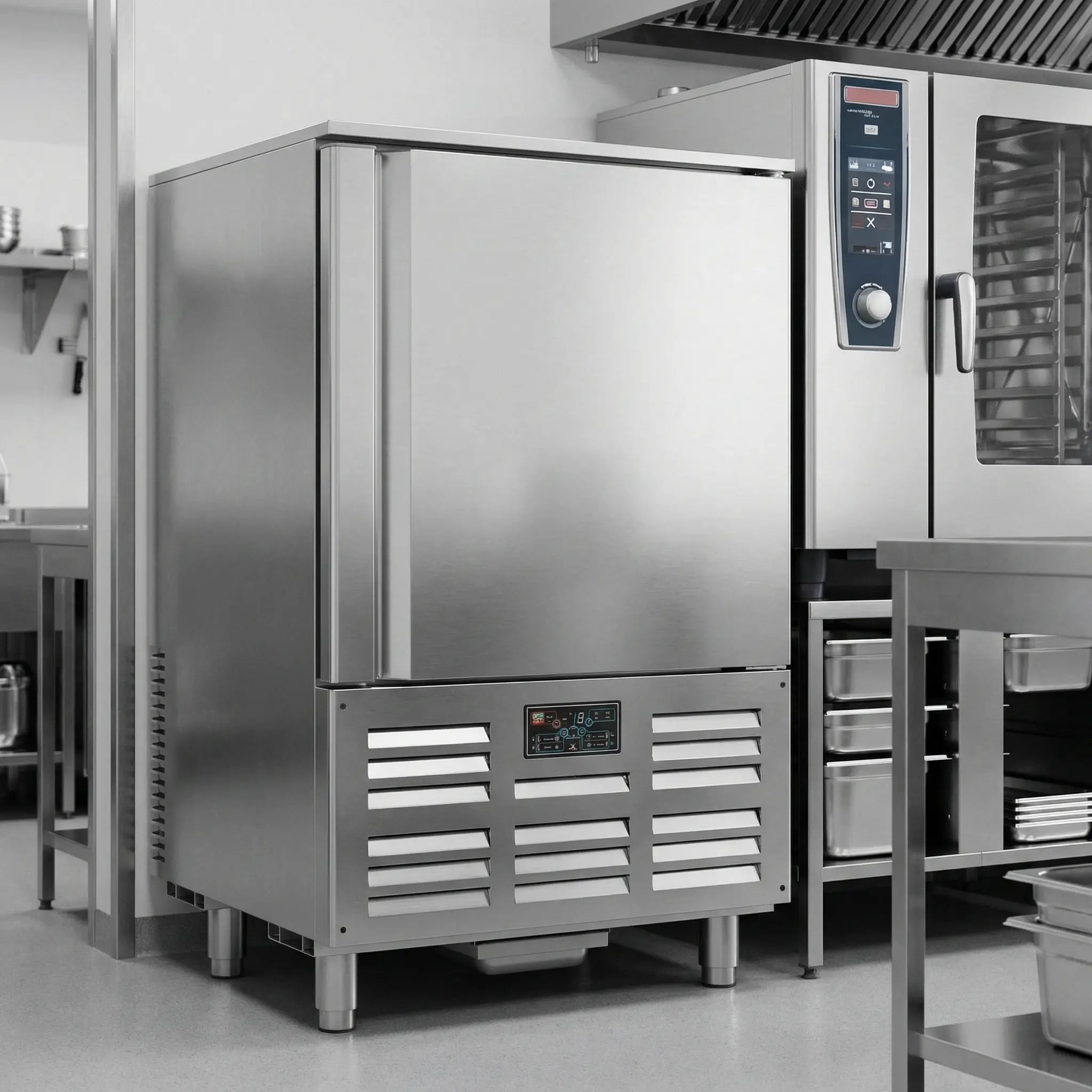
- Più adatto se il protocollo di manutenzione deve supportare una produzione più sostenuta
- Permette di confrontare un formato mobile con una cella reale con maggiore capacità
- Buona scelta se la cella fa parte di un flusso quotidiano più intenso
Hai bisogno di una cella più semplice da utilizzare e manutenere?
Esplora la nostra selezione di celle di raffreddamento professionali per scegliere un modello adatto ai tuoi ritmi, al tuo spazio e alle tue esigenze di igiene.
FAQ
È necessario pulire un refrigeratore ogni giorno?
Sì, almeno sulle zone a diretto contatto con l’attività: vasca, supporti, sonda e superfici esposte a proiezioni.
Perché la sonda al cuore deve essere disinfettata sistematicamente?
Perché penetra negli alimenti e, se trascurato, può diventare un vero e proprio vettore di contaminazione crociata.
Anche il condensatore necessita di manutenzione?
Sì, perché un condensatore sporco stanca la macchina, peggiora le prestazioni e aumenta il consumo energetico.
Una cella su ruote aiuta davvero con l’igiene?
Sì, soprattutto per pulire più facilmente i pavimenti e il retro della macchina senza difficoltà di movimentazione.