
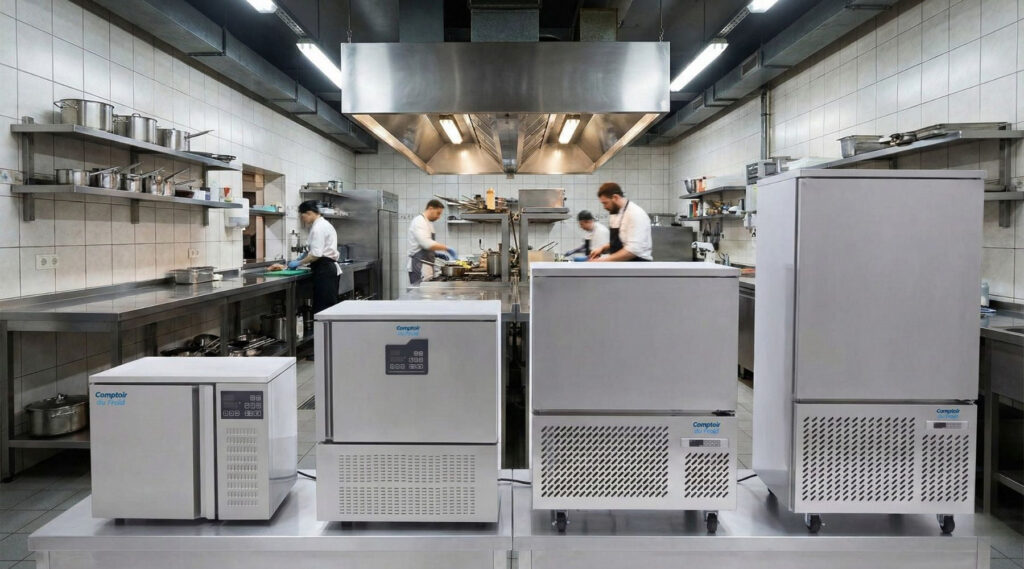
Limpiar una celda de enfriamiento no se trata solo de mantener una máquina visualmente limpia. Este es un gesto clave para proteger la higiene, mantener un buen rendimiento de refrigeración y evitar que un dispositivo costoso se obstruya o se canse demasiado rápido.
En restauración, una célula trabaja en un entorno exigente: vapor, salpicaduras, restos de comida, variaciones térmicas y uso repetido. Por lo tanto, un mantenimiento ligero pero regular es mucho mejor que una limpieza profunda olvidada durante semanas.
¿Qué se debe limpiar todos los días?
La limpieza diaria debe centrarse principalmente en el depósito, los soportes y la sonda al corazón. Son las zonas más expuestas a salpicaduras y contacto directo con los productos.
- Paredes y fondo del depósito: para eliminar residuos, condensaciones y restos de grasa.
- Rejas y escaleras: retirar para limpiar adecuadamente sin dejar zonas muertas.
- Sonda central: desinfectar cuidadosamente después de su uso.
- Puerta: dejar entreabierta fuera de servicio si el protocolo interno lo permite, para evitar olores y humedad estancada.
El buen reflejo es utilizar productos compatibles con el acero inoxidable de calidad alimentaria y acciones sencillas, sin agresiones innecesarias a las superficies.
¿Por qué la sonda central es un punto crítico?
Porque va directamente al corazón del alimento. Si se limpia mal llevas un riesgo microbiológico de un producto a otro.
En una celda, la sonda no es un accesorio secundario. Es un punto de contacto sensible que merece una limpieza sistemática y limpia entre usos, especialmente en una lógica HACCP seria.
¿Qué mantenimiento se debe planificar cada semana?
La limpieza semanal va más allá de una simple limpieza. Debe incluir juntas, áreas visibles de circulación de aire y puntos que influyan en una buena resistencia al frío.
- Juntas de puertas: para evitar pérdidas de frío y desgaste prematuro.
- Ventilador/zona accesible del evaporador: para eliminar polvo o residuos visibles sin forzar.
- Comprobación general: ausencia de papel, película o suciedad que obstruyan la circulación del aire.
El objetivo no es transformar la cocina en un taller de refrigeración, sino detectar tempranamente signos de obstrucción antes de que dañen la máquina.
¿Por qué el condensador es tan importante a lo largo del tiempo?
Porque un condensador sucio fuerza la máquina. Cuando esta pieza se ensucia, la celda evacua peor el calor, enfría menos eficientemente y consume más.
Una simple revisión mensual, con una suave aspiración del polvo en las zonas accesibles, ya puede marcar una diferencia real en la longevidad del equipo.
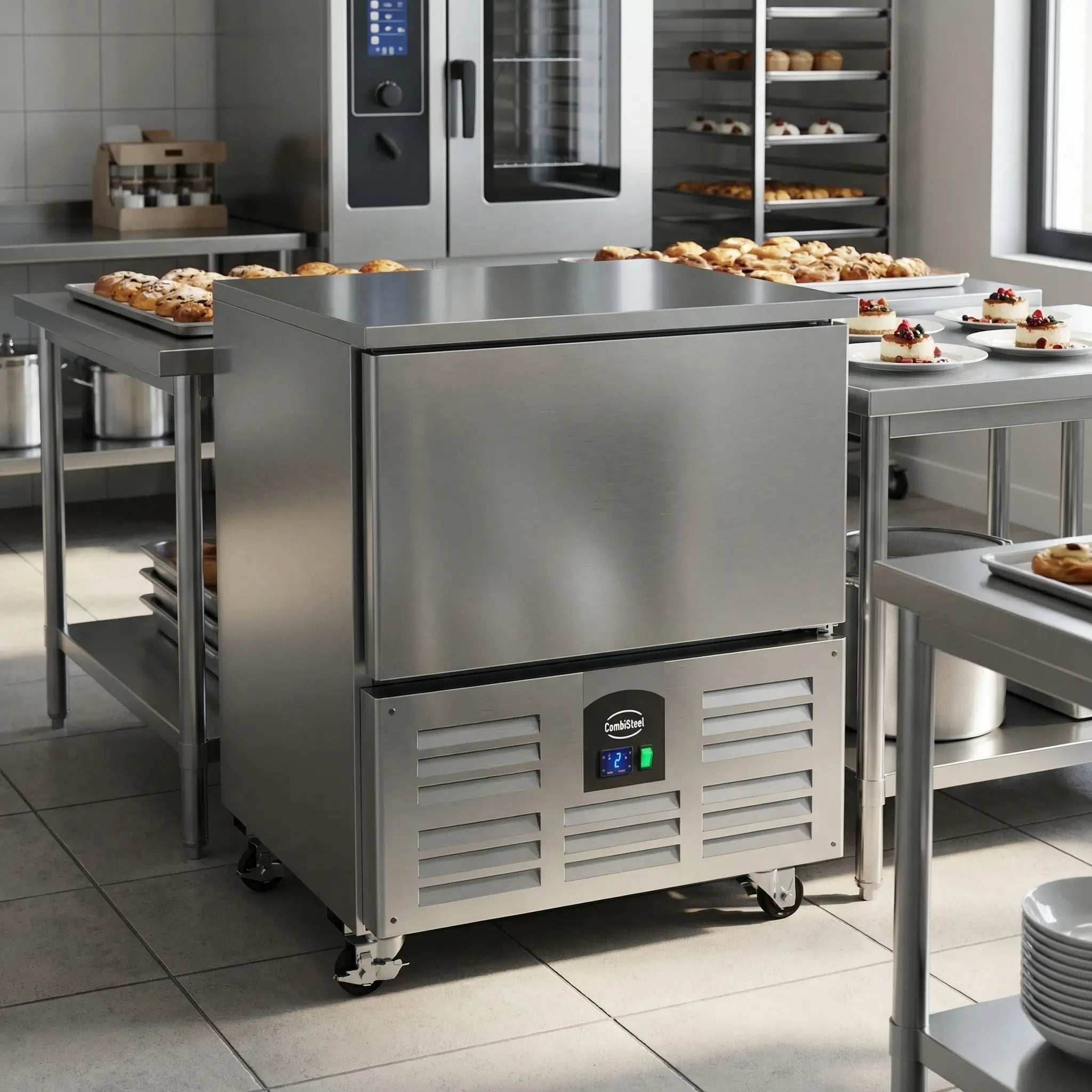
- Ruedas útiles para facilitar la limpieza alrededor y debajo de la máquina
- Muy interesante si la higiene del suelo es un tema real en tu cocina
- Buena opción para proveedores de catering y equipos que mueven equipos con frecuencia
¿Qué errores debes evitar por completo?
Los malos productos y las malas acciones dañan rápidamente una celda. Una limpieza simple y regular es mejor que un “desmontaje importante” agresivo.
- Evite el cloro/lejía en acero inoxidable.
- Evitar las esponjas metálicas que rayan y luego complican la higiene.
- Evitar chorros de agua agresivos en piezas sensibles y técnicas.
Si quieres profundizar en la lógica de uso y cumplimiento, también puedes leer nuestro artículo sobre la utilidad de un abatidor así como nuestra guía sobre Parámetros de referencia de temperatura HACCP en refrigeración celda.
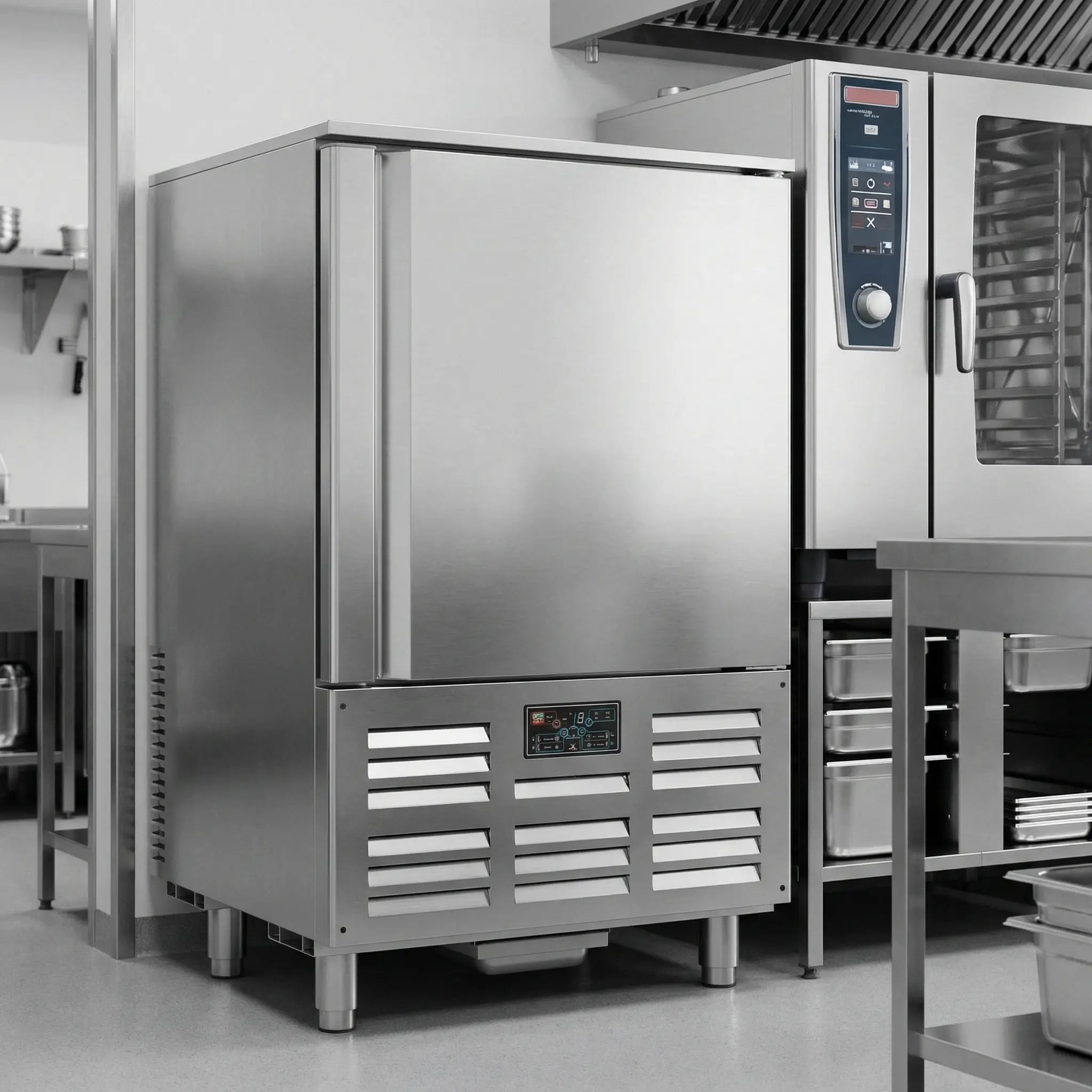
- Más adecuado si su protocolo de mantenimiento debe soportar una producción más sostenida
- Permite comparar un formato de móvil con un celular real con más capacidad
- Buena elección si la celda forma parte de un flujo diario más intensivo
¿Necesita una celda que sea más sencilla de operar y mantener?
Explore nuestra selección de células frigoríficas profesionales para elegir un modelo adaptado a su ritmo, su espacio y su nivel de higiene.
Preguntas frecuentes
¿Se debe limpiar una enfriadora todos los días?
Sí, al menos en zonas en contacto directo con la actividad: depósito, soportes, sonda y superficies expuestas a proyecciones.
¿Por qué se debe desinfectar sistemáticamente la sonda central?
Porque penetra en los alimentos y puede convertirse en un verdadero vector de contaminación cruzada si se descuida.
¿También es necesario mantener el condensador?
Sí, porque un condensador sucio cansa la máquina, degrada el rendimiento y aumenta el consumo de energía.
¿Una celda con ruedas realmente ayuda a la higiene?
Sí, especialmente para limpiar más fácilmente los suelos y la parte trasera de la máquina sin manipulación difícil.