
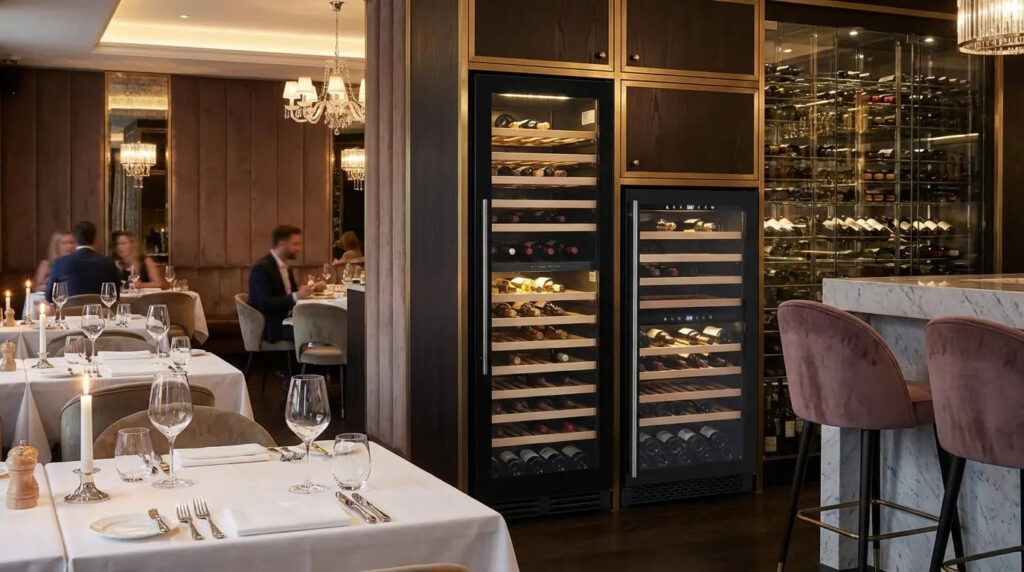
Entre una bodega de crianza y una cadera de servicio, la elección correcta depende ante todo de su objetivo. ¿Quieres almacenar las botellas durante varios años en condiciones estables o mantenerlas listas para servir a la temperatura adecuada todos los días?
Estos dos equipos no tienen la misma función. Uno protege el vino en el tiempo, el otro favorece la rotación y la presentación. Si los confundes, corres el riesgo de comprar una bodega atractiva sobre el papel pero inadecuada para tu uso real.
¿Para qué se utiliza una bodega de envejecimiento?
Una bodega de crianza sirve para reproducir lo más fielmente posible las condiciones de una bodega natural. Está diseñada para dejar que el vino evolucione lentamente en un ambiente estable, discreto y protector.
- Temperatura: generalmente única y constante, a menudo alrededor de 12°C.
- Protección contra la luz: puerta maciza o acristalamiento con tratamiento anti-UV según modelo.
- Hygrometría: más controlada para ayudar a preservar los atascos.
- Vibraciones limitadas: imprescindible para evitar colar innecesariamente el vino.
Este tipo de bodega no está diseñado como una herramienta de servicio rápido. Es más adecuado para una conservación prolongada, una bodega patrimonial o una lógica de maduración gradual de las botellas.
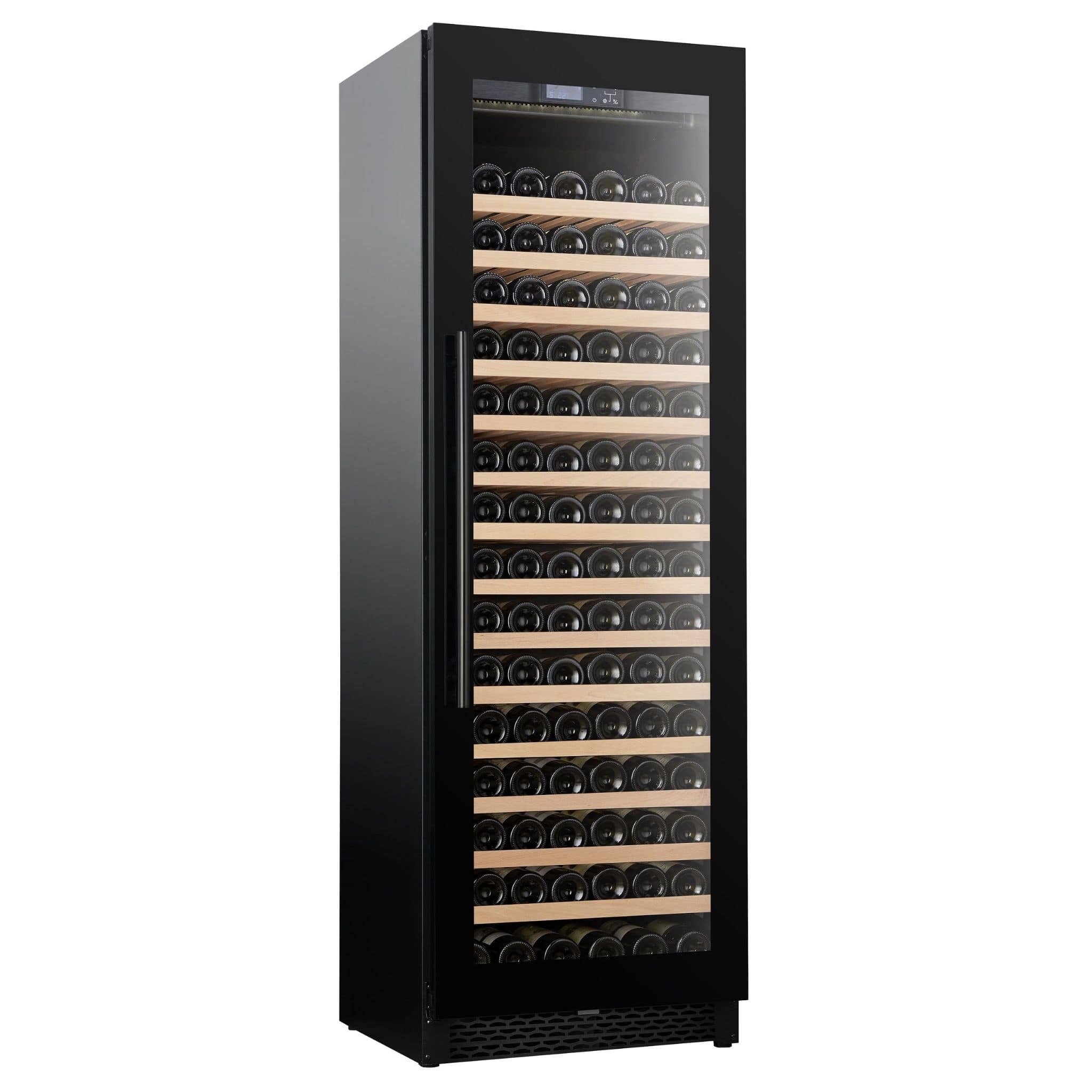
Bodega de Crianza – Zona Única – 325 Litros
- Temperatura estable adecuada para almacenamiento a largo plazo
- Muy buena elección para estructurar una auténtica reserva de botellas
- Más coherente que una bodega de servicio si el vino realmente debe envejecer
¿Para qué se utiliza una vinoteca de servicio?
Una bodega de servicio está hecha para preparar el vino para la cata, no para envejecerlo durante años. Es el equipamiento más lógico cuando las botellas deben estar listas para ser servidas, visibles y accesibles.
En un restaurante, una vinoteca o un espacio de recepción, la prioridad no es una larga maduración sino la temperatura adecuada en el momento adecuado. Aquí es donde la bodega de servicio cobra importancia, especialmente cuando es multizona.
- Zona fría para blancos, rosados y champagnes.
- Zona templada para tintos listos para el servicio.
- Visibilidad mejor gracias a las puertas de vidrio y la iluminación.
- Rotación más adecuado para botellas que salen con regularidad.
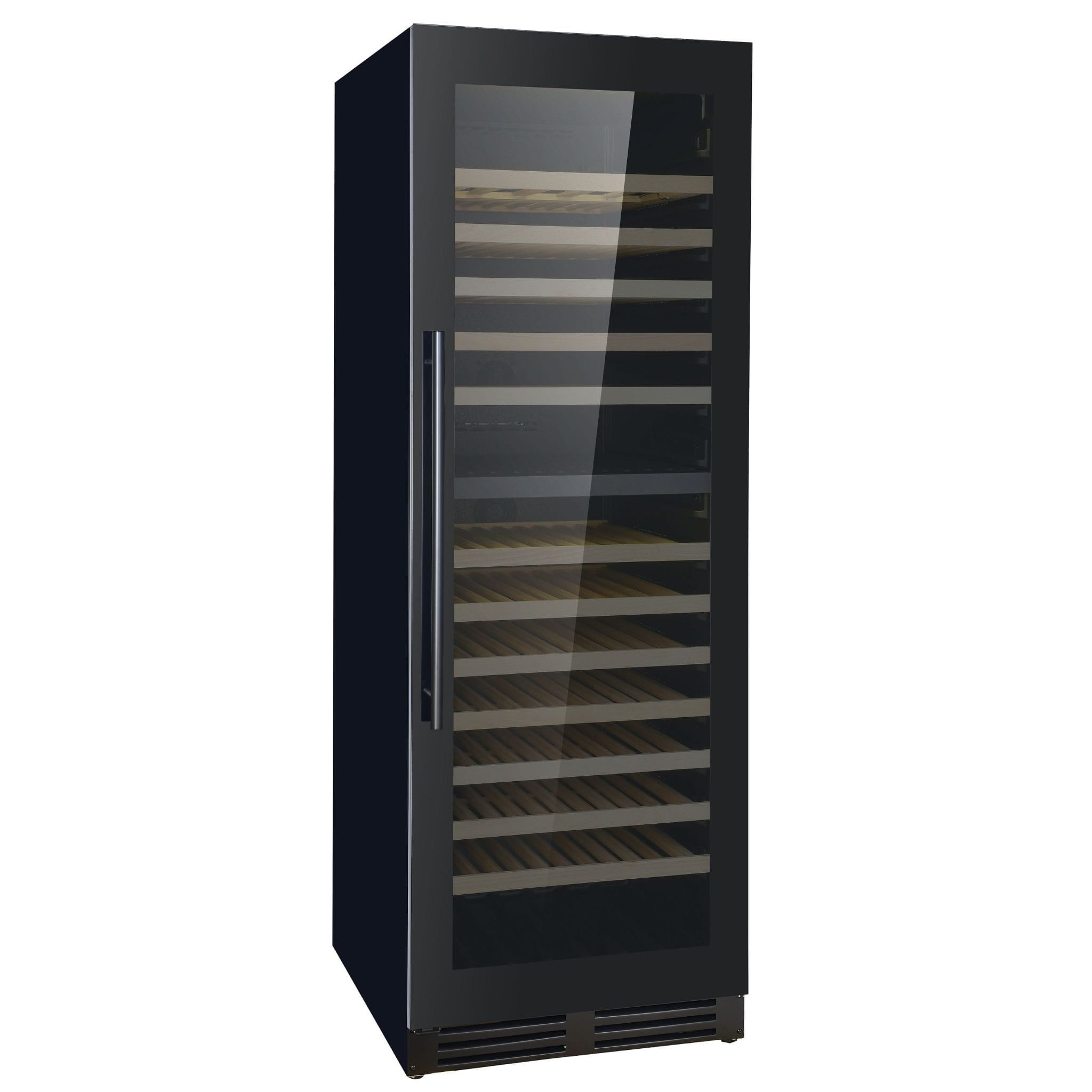
Servicio Bodega – Doble Zona – 379 Litros
- Doble zona útil para separar tintos y blancos a temperatura de servicio
- Muy buen formato para uso en restaurante o bodega visible en la habitación
- Más coherente en cuanto la rotación diaria se convierte en un tema real
¿Cómo arbitrar entre antigüedad y servicio?
La elección correcta depende menos del prestigio del vino que de su horizonte de consumo. Si sus botellas están destinadas a una conservación prolongada, la lógica de la crianza es fundamental. Si necesitan estar listos para ser servidos rápidamente, la bodega de servicio es mucho más relevante.
| Criterio | Envejecimiento en bodega | Bodega de servicio |
|---|---|---|
| Uso principal | Conservar y desarrollar el vino | Preparar el vino para degustar |
| Temperatura | Estable, a menudo de zona única | A menudo multizona |
| Luz / presentación | Máxima protección | Mejora visual más fuerte |
| Rotación de botella | Lento | Rápido a medio |
| Contexto ideal | Reserva, colección, bodega particular o profesional | Habitación, bar, servicio diario |
Veredicto: si almacena para añejamiento, elija una bodega de añejamiento. Si necesita servir a la temperatura adecuada todos los días, contrate una cava para servir. Y si realmente haces ambas cosas, debes aceptar que un solo mueble siempre será un compromiso.
¿En qué casos se deben considerar dos equipos separados?
Cuando su actividad combina mantenimiento y servicio regular, un solo dispositivo a menudo resulta insuficiente. Esto es común en restaurantes que quieren proteger un pequeño stock de hermosas botellas y servir un menú activo en buenas condiciones.
En este caso, la mejor lógica puede ser:
- una bodega de envejecimiento para el fondo,
- una bodega de servicio para la tarjeta activa,
- o un mueble frigorífico más adecuado si la necesidad va más allá de la lógica del vino.
Si todavía estás comparando los usos según el ritmo de tu establecimiento, también puedes leer nuestro artículo sobre la elección de muebles frigoríficos profesionales según el servicio.
¿Necesitas almacenar o servir tus botellas en buenas condiciones?
Explore nuestra selección de vinotecas profesionales para elegir el modelo adecuado según su rotación, su menú y su lógica de conservación.
Preguntas frecuentes
¿Puede una bodega de servicio servir como bodega de envejecimiento?
No idealmente. Puede ayudar en un período corto, pero no está diseñado principalmente para la estabilidad a largo plazo y la máxima protección del vino.
¿Por qué una bodega de envejecimiento suele ser de zona única?
Porque su función es mantener una temperatura constante y estable, más favorable a la lenta evolución de las botellas.
¿Cuándo resulta realmente útil una bodega de doble zona?
Si sirve varios tipos de vino a diferentes temperaturas, por ejemplo blanco y tinto en el mismo flujo de servicio.
¿Un restaurante puede necesitar ambos tipos de bodegas?
Sí, sobre todo si quiere conservar determinadas botellas durante mucho tiempo y servir otras diariamente en las mejores condiciones.