
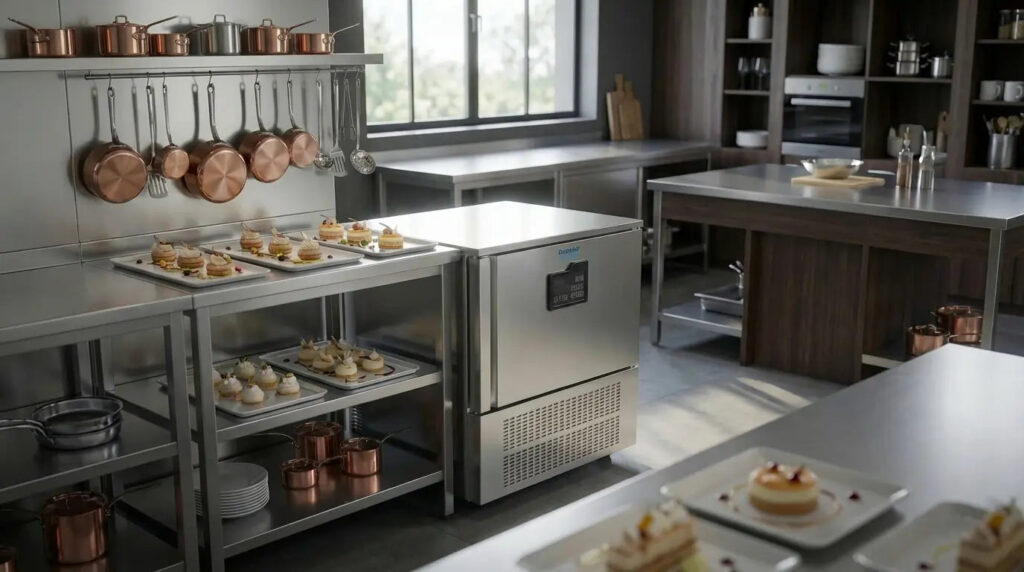
A per cucine professionali diventa rapidamente essenziale non appena si produce in anticipo, si lavora in collegamento con il freddo o si ha bisogno di garantire volumi regolari senza interrompere la catena del freddo. In pratica serve meno per “raffreddare” che per abbassare velocemente la temperatura al momento giusto, per tutelare la qualità delle pietanze, rispettare i requisiti HACCP e mantenere la cucina più fluida.
La scelta giusta dipende soprattutto dalla vostra portata effettiva, dal formato GN o pasticceria utilizzato e dallo spazio disponibile intorno alla stazione. Se non sei ancora sicuro dell’esatto ruolo di questa attrezzatura, puoi leggere anche a cosa serve un abbattitore e la differenza tra un congelatore e un abbattitore.
Perché una cucina professionale ha davvero bisogno di un abbattitore?
La vera domanda è semplice: puoi raffreddare velocemente e in modo pulito senza bloccare la tua produzione. In una cucina professionale spesso la risposta è no non appena i volumi aumentano un po’.
Una cella di raffreddamento evita di lasciare raffreddare troppo a lungo le preparazioni, limita le manipolazioni improvvisate e garantisce il passaggio tra cottura, conservazione e rimessa in servizio. È particolarmente utile per salse, piatti pronti, preparazioni per catering, dessert già pronti e produzione di pasticceria.
- Risparmi tempo sulle prime implementazioni.
- Riduci il rischio microbiologico su produzioni sensibili.
- È meglio stabilizzare la consistenza, la tenuta e la qualità visiva dei piatti.
- Allevi gli armadi freddi, che non sono fatti per assorbire molto calore.
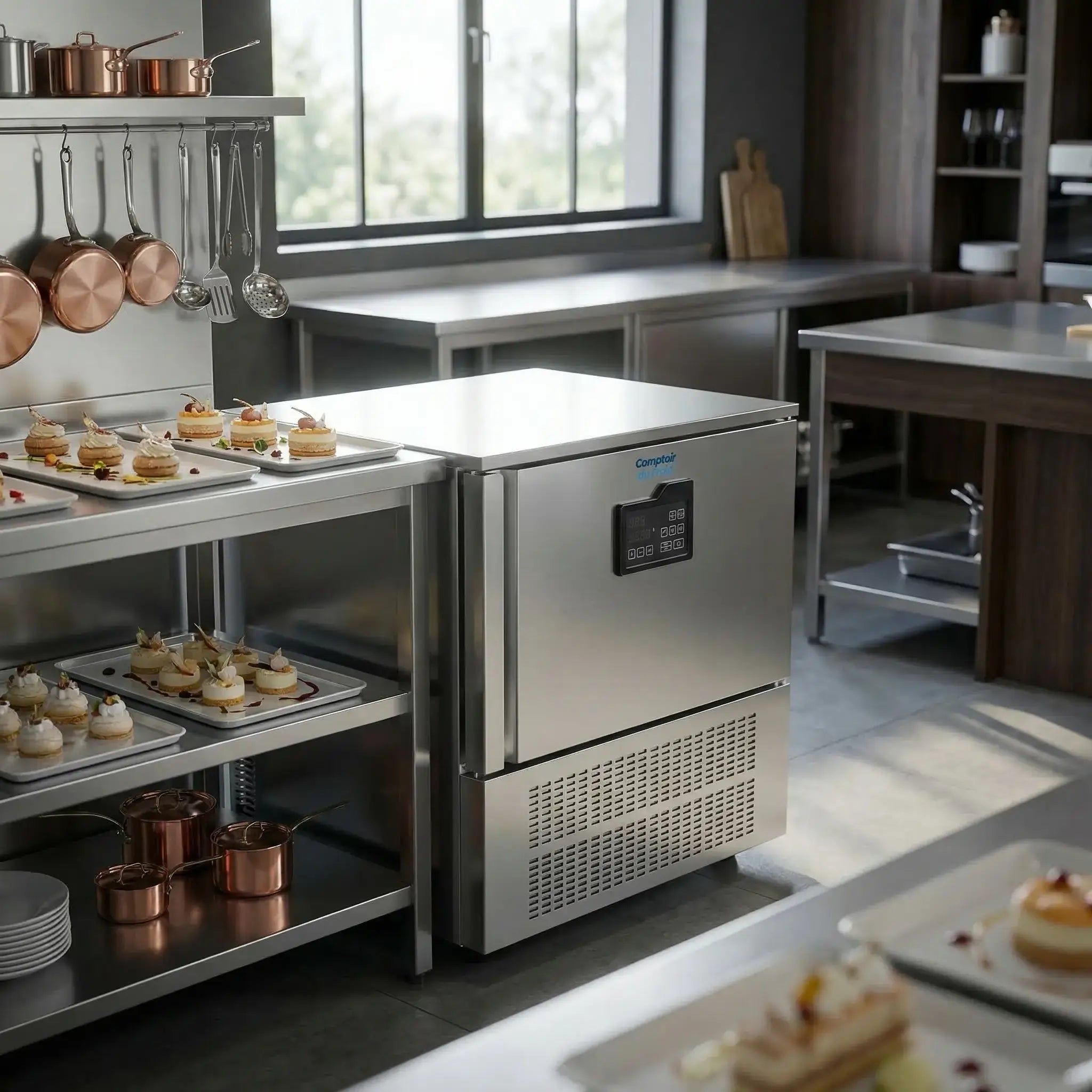
Raffreddatore rapido in acciaio inox – 3 livelli
- Compatibilità mista GN 1/1 e piastre 60 x 40 per servire sia la cottura che la cottura al forno
- Costruzione in acciaio inox AISI 304 con sonda al cuore per un uso professionale più duraturo e meglio controllato
- Versione compatta a 3 livelli, indicata per 10 kg in raffreddamento e 5 kg in congelamento per ciclo
Quale formato di cella di raffreddamento dovresti scegliere in base alla tua routine di cucina?
Devi scegliere un formato che assorba il tuo picco di produzione, non solo la media. Una cella troppo piccola crea code interne, una cella troppo grande impegna inutilmente budget e spazio.
Il buon riflesso consiste nel partire dal volume per ciclo, dal numero di piatti o vassoi da trattare e dalla frequenza dei giri di servizio. È questa logica che fa la differenza tra un’attrezzatura redditizia e una macchina rapidamente aggirata dal team.
| Profilo cucina | Formato consigliato | Perché |
|---|---|---|
| Piccolo ristorante, snack premium, laboratorio compatto | 3 livelli | Buon punto di ingresso per rendere sicuri i preparativi senza sovraccaricare una piccola stanza. |
| Ristorante strutturato, catering regolare, produzione più varia | 5 livelli | Miglior compromesso tra portata, versatilità e comfort lavorativo quotidiano. |
| Brigade, grandi volumi, elevata aspettativa di produzione | Da 7 a 10 livelli e superiori | Permette di assorbire più lotti senza rallentare la velocità di cottura o rimetterli a posto. |
Verdetto: se la tua cucina ha diverse preparazioni calde da raffreddare nella stessa fascia oraria, i 5 livelli sono spesso il miglior punto di equilibrio. I 3 livelli rimangono rilevanti quando manca lo spazio o l’attività inizia.
Consiglio sul campo: la cella deve essere dimensionata per lo scatto di produzione, non per le giornate calme. È qui che entra davvero in gioco la fluidità della cucina e non solo sulla scheda tecnica.
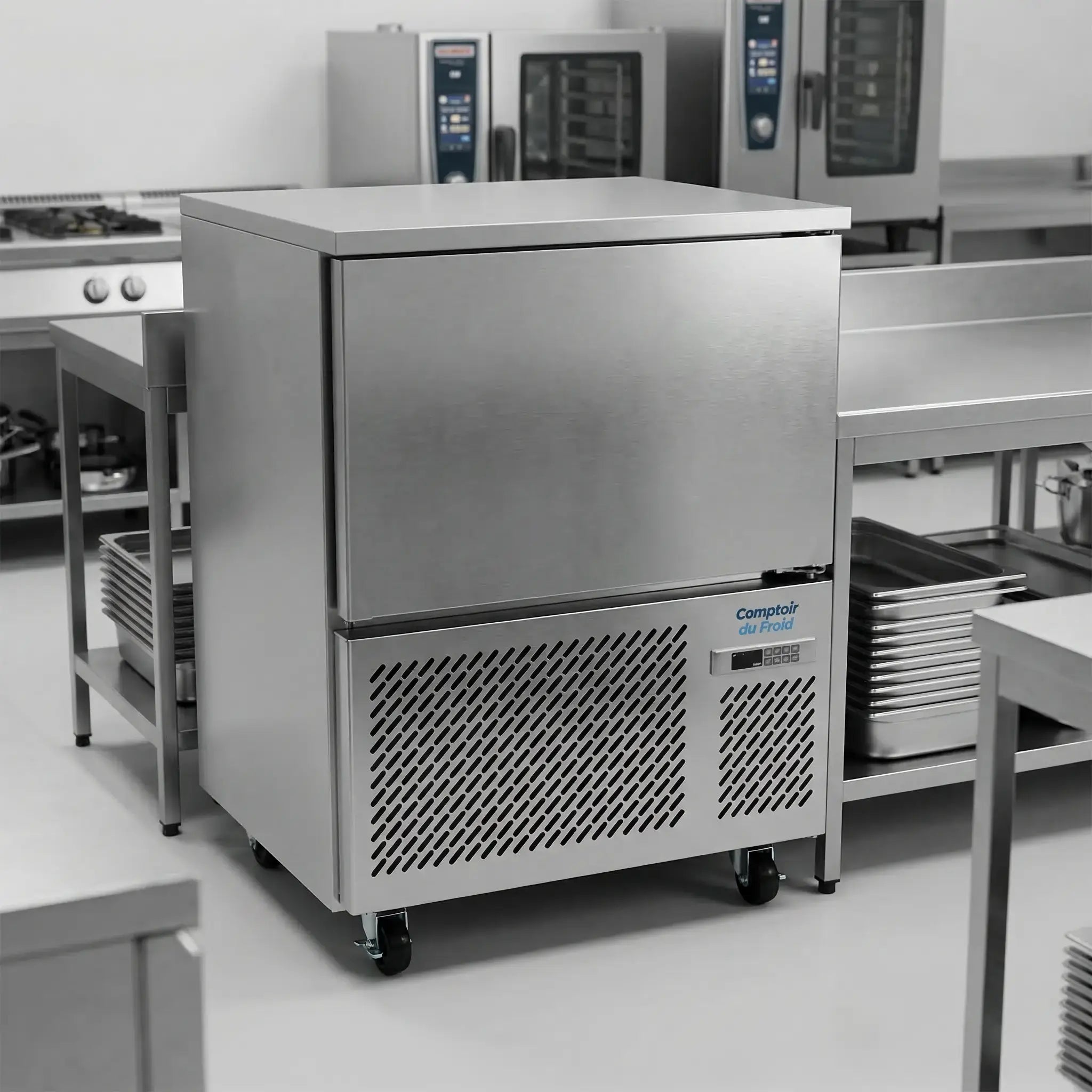
Raffreddatore rapido in acciaio inox – 5 livelli
- Compatibilità GN 1/1 e 60 x 40, pratico per alternare contenitori da cucina e teglie da forno senza adattatore
- Costruzione in acciaio inox AISI 304 con sbrinamento automatico e guarnizioni antibatteriche per semplificare la manutenzione quotidiana
- Formato mobile a 5 livelli su rotelle, pubblicizzato per 20 kg in raffreddamento e 15 kg in congelamento per ciclo
Quali criteri tecnici dovresti considerare prima di acquistare?
La domanda da porsi è la seguente: l’attrezzatura sarà compatibile con il tuo reale modo di produrre. Dobbiamo considerare i criteri che influenzano l’operazione, non solo la capacità grezza.
Nella cucina professionale, i punti che contano di più sono spesso i seguenti:
- Compatibilità formati: piatti GN 1/1, 600 x 400 o uso misto.
- Capacità per ciclo: deve corrispondere ai volumi caldi effettivi.
- Sonda al cuore: utile per gestire al meglio i cicli e rassicurare sul monitoraggio HACCP.
- Dimensioni e mobilità: porta di accesso, circolazione, pulizia, installazione stazione di refrigerazione.
- Facilità di manutenzione: acciaio inox, guarnizioni, sbrinamento, pulizia ergonomica.
Sul campo, una macchina ben integrata nel tuo flusso di lavoro è migliore di un modello sovradimensionato mal posizionato. Questo è anche il motivo per cui una cella compatta ben scelta può essere più redditizia di una macchina grande e sottoutilizzata.
Quando diventa redditizia la cella nella cucina professionale?
Diventa redditizio non appena si evitano perdite di produzione, perdite di tempo e raffreddamenti improvvisati. Nella ristorazione, la redditività raramente deriva da un unico argomento, ma da un insieme di guadagni molto concreti.
Ci guadagni in anticipo nella produzione, nella regolarità del servizio, nella sicurezza sanitaria e nel comfort organizzativo. Ciò consente anche di separare meglio i tempi di cottura, raffreddamento e riscaldamento, il che aiuta molto quando la brigata lavora sotto pressione.
Se il tuo team anticipa le preparazioni il giorno prima, gestisce cotture batch, collegamenti freddi o dessert delicati, la cella non è più un lusso. Diventa un elemento organizzativo.
Hai bisogno di confrontare le misure giuste per la tua cucina?
Esplora la selezione completa di abbattitori professionali per trovare il livello di capacità veramente adatto alla tua produzione.
FAQ sull’abbattitore di temperatura da cucina professionale
Una cella di raffreddamento sostituisce un armadio frigorifero?
No. Viene utilizzato per abbassare rapidamente la temperatura di un prodotto caldo, quindi viene conservato in apparecchiature di conservazione.
Il formato a 3 livelli è sufficiente per un ristorante?
Sì, per piccole produzioni regolari o spazi compatti. Oltre a ciò, il livello 5 offre spesso un vero comfort.
Perché non posizionare semplicemente i piatti caldi in una stanza fredda?
Perché una cella frigorifera non è progettata per assorbire rapidamente un grande carico caldo e questo può degradare il resto delle scorte.
La sonda al cuore è davvero utile?
Sì, soprattutto per seguire più da vicino i cicli e proteggere meglio le procedure HACCP sulle produzioni sensibili.