
For a small bar service, the right ice crusher Maynly depends on how often it is used. A manual model is enough for occasional needs, an electric crusher speeds up repeated requests, and a 3 L professional crusher becomes more comfortable when crushed ice comes back often at the counter.
The goal is not to replace a crushed-ice production machine: it is to turn existing ice cubes into crushed ice on demand, without over-equipping the station.
Manual or electric ice crusher: how to choose correctly?
Choose a manual crusher if crushed ice remains occasional. Move to an electric crusher if the team prepares it several times per service, because manual effort quickly becomes the real bottleneck.
The first question is simple: how many glasses or small preparations need crushed ice during the rush? If the answer is only a few isolated requests, manual remains rational. If demand returns throughout service, electric avoids repetitive effort.
- Occasional use: event service, buffet, small counter, mobile bar.
- Regular use: cocktails, cold drinks, terrace service, snacks.
- Sustained use: a structured bar station where crushed ice appears in each order series.
If you are still comparing the basic methods, our guide on how to make crushed ice explains the limits of a towel, blender and professional crusher.
Which ice crusher for which service rhythm?
The manual model is for backup, the 12 kg/h electric model streamlines a small bar, and the 3 L crusher adds comfort when the counter wants to work cleanly on demand. The choice depends on pace, available space and the level of effort the team can accept.
| Real need | Recommended format | Why | Limit to know |
|---|---|---|---|
| A few glasses, event use, backup | Manual ice crusher | Simple, compact, no electricity. | Tiring when requests follow one another. |
| Small bar with regular requests | 12 kg/h electric ice crusher | Reduces effort and speeds preparation. | Still requires ice cubes to crush. |
| Organised counter, more frequent service | 3 L professional ice crusher | More comfortable capacity for on-demand work. | Does not replace continuous production equipment. |
Verdict: do not choose the biggest appliance by reflex. For a small service, the best crusher is the one that removes the Mayn friction point: manual effort, preparation speed or lack of counter capacity.
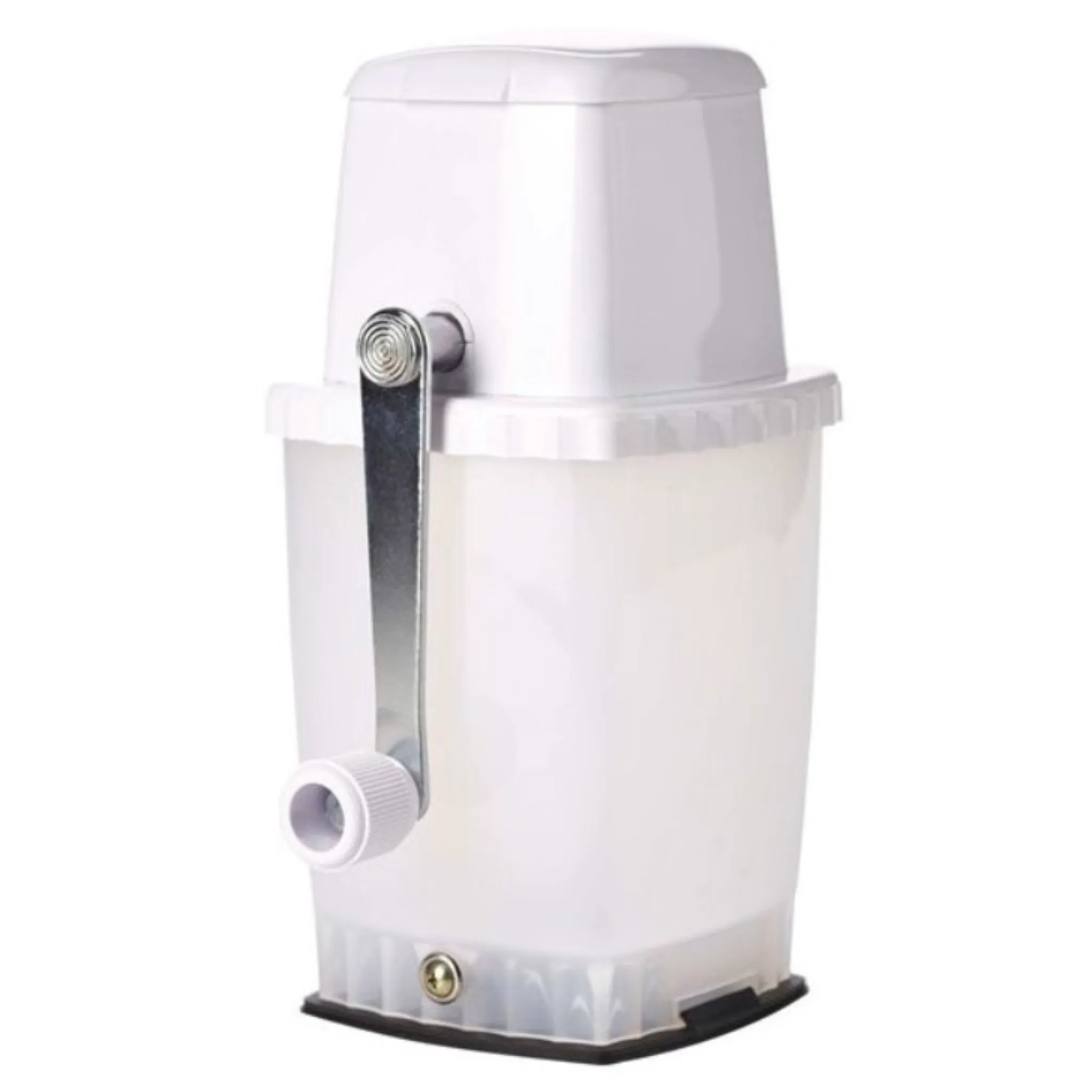
- Manual operation without electricity, practical for mobile bars, buffets and small counters
- Compact ABS format with AISI 430 stainless-steel elements, easy to place and clean after service
- Economical backup solution for preparing small amounts of crushed ice on demand
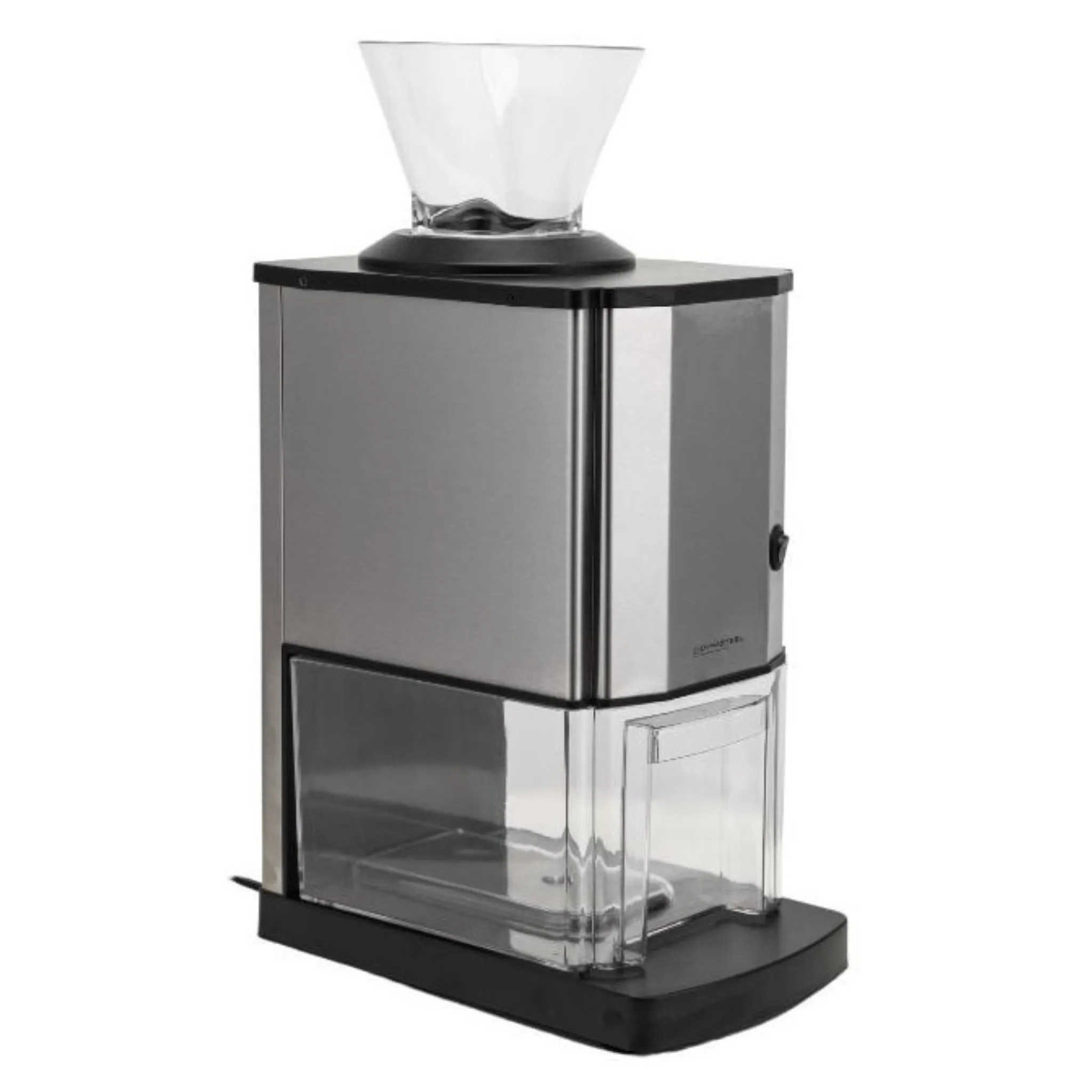
- 12 kg/h output to prepare crushed ice quickly without manual effort
- Stainless-steel housing with removable ice bin and funnel for simple use behind the counter
- 2 safety switches and 4 suction feet for more stable operation during service
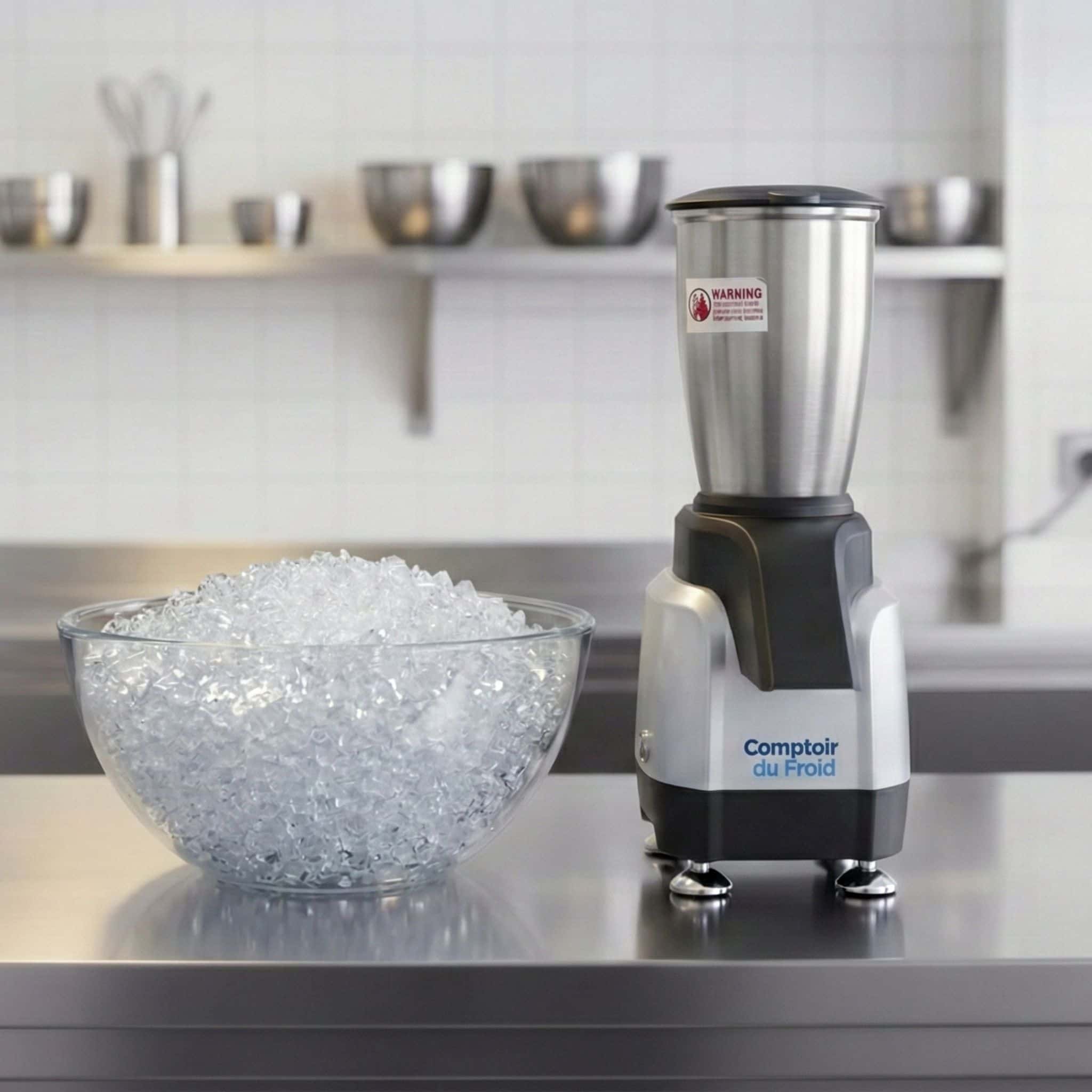
- 3 litre capacity for preparing crushed ice more comfortably at the counter
- Table-top format suited to bars, cafés, snack bars and buffets working on demand
- A good compromise before moving to a dedicated crushed-ice machine for high volumes
When is a crusher no longer enough?
A crusher transforms ice cubes that have already been produced. It becomes insufficient when you need crushed ice all day, in high volume, or with continuous production organisation.
In that case the question is no longer “manual or electric”, but dedicated production, storage bin and daily output. For that scenario, it is better to switch to equipment designed to produce crushed ice directly rather than multiplying crushing cycles during the rush.
Field tip: if the team crushes before each order series, a crusher is still suitable. If it must prepare whole volumes in advance to keep up with service, the need is beyond a small counter crusher.
To organise a full station with ice-cube production and crushed ice on demand, the article on ice machines and crushed ice for drinks service explains the broader logic.
Mistakes to avoid in a small bar service
The Mayn mistake is buying a crusher that is too light for repeated use. The opposite trap is choosing a solution that is too heavy when crushed ice is only an occasional complement.
- Do not confuse ice-cube production with crushing: the crusher does not make ice cubes.
- Do not size only by price: effort and preparation time matter during the rush.
- Do not block the worktop with an oversized appliance if the need is occasional.
- Do not leave prepared crushed ice too long at room temperature: work on demand.
Need a crushed-ice station adapted to your counter?
Compare our professional ice crushers according to your real rhythm: manual backup, electric crusher or more comfortable 3 L format.
FAQ
Is a manual ice crusher enough for a bar?
Yes, if crushed ice remains occasional. For repeated requests, an electric model becomes more comfortable.
Does an electric crusher make ice cubes?
No. It crushes existing ice cubes, so you need an upstream source of ice cubes.
What is the difference between a 12 kg/h electric crusher and a 3 L crusher?
The 12 kg/h model focuses on speed without manual effort. The 3 L model brings more comfortable working capacity at the counter.
When should you move to a dedicated crushed-ice machine?
When crushed ice becomes a continuous or high-volume need, not only an on-demand preparation.