
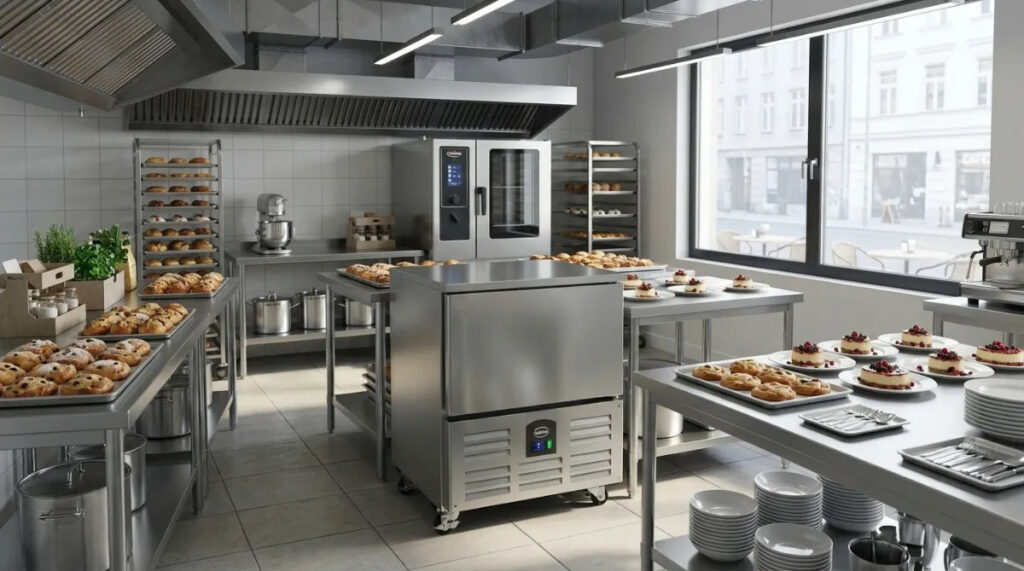
In professional pastry, a blast chiller is not just for “cooling faster”. It primarily serves to stabilize fragile textures, secure the cold chain, and maintain a steady pace between baking, assembling, storing, and serving. As volumes increase or preparations follow one another, it becomes a true organizational tool.
In practice, it particularly makes a difference for pastry creams, ganaches, inserts, entremets, biscuits to be cooled before assembly, and pre-made productions. If you are still working with slow cooling methods or makeshift solutions, you are losing time, consistency, and a margin of HACCP safety.
Why does pastry need rapid cooling?
The fundamental question is simple: why does pastry require more control than simple positive cold storage?
The answer is direct: because in pastry, many preparations go through critical intermediate phases. A cream that stays lukewarm for too long, a biscuit waiting to be filled, or an entremet that cools too slowly can lose its consistency, hygiene, and finishing regularity.
A blast chiller allows for a quick transition from baking or a hot preparation to a temperature zone compatible with HACCP standards. In practice, this helps to better manage:
- creams, batters, and inserts that need to cool down without delay during production,
- batches of entremets or individual pastries to be assembled in a tight flow,
- pre-made items that require stable quality until plating or sale.
If you want to set your safety benchmarks, the article HACCP Temperature in a Blast Chiller: the benchmarks that truly secure your production complements this business logic very well.
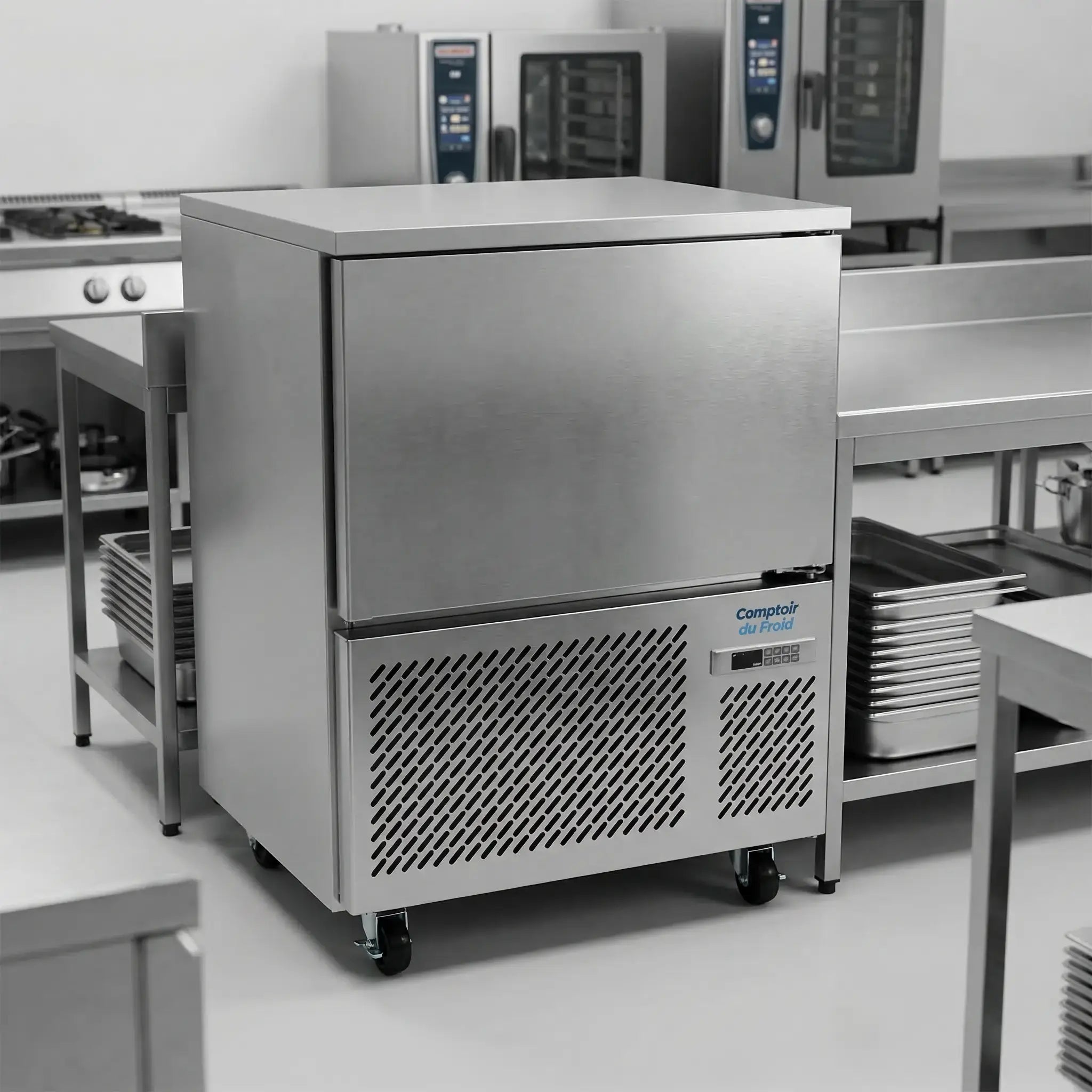
Stainless Steel Blast Chiller – 5 levels
- Consistent format for regular pastry production without oversizing the workshop
- Good compromise between capacity, footprint, and smooth workflow in the laboratory
- Suitable for preparations to be chained throughout the day with controlled chilling
What concrete problems does the blast chiller solve in a pastry laboratory?
The real question isn’t just “is it useful?”, but what bottlenecks it eliminates daily.
Short answer: it reduces downtime, limits approximations, and makes sequences more reliable. When the laboratory runs with several parallel productions, chilling often becomes the bottleneck.
1. It protects textures
Better controlled temperature reduction helps maintain neater creams, more consistent assemblies, and products less exposed to heat recovery. This is particularly useful for entremets, inserts, cream-based preparations, and sensitive preparations before freezing or finishing.
2. It streamlines the pace
Instead of waiting for a product to cool down “as best it can”, you can more cleanly link the assembly, glazing, storage, or packaging phases. The chiller becomes a planning tool, not just refrigeration equipment.
3. It reduces health risk
In pastry as in catering, the lukewarm zone is the most uncomfortable to manage. Faster chilling helps secure productions and document cleaner operations in case of inspection or internal audit. For small laboratories, the article Small blast chiller: the guide for small spaces can also guide you to the right starting format.
Which blast chiller format to choose based on your pastry volume?
The question here is very operational: how to choose a format that is truly consistent with your laboratory?
The direct answer is to first consider peak load, not average daily. What matters is not just your number of desserts sold, but the quantity of trays, grids, or containers to absorb within the same time window.
| Pastry configuration | When it is suitable | Point of vigilance |
|---|---|---|
| 2 to 5 level format | Compact laboratory, controlled daily production, artisan shop | Can quickly saturate if you multiply references or large volumes before the weekend |
| 7 to 10 level format | More sustained production, more structured teams, regular production peaks | Requires well-thought-out placement to maintain fluidity around workstations |
| Larger formats or mobile solutions | Large volumes, centralized preparation, event or multi-site activity | To be reserved for real needs to avoid over-investment and unnecessary clutter |
Verdict: for most serious artisanal bakeries, the sweet spot often lies between 5 and 10 levels. Below that, you risk being quickly limited during peak periods. Above that, you need a clear volume or organizational logic to justify the footprint.
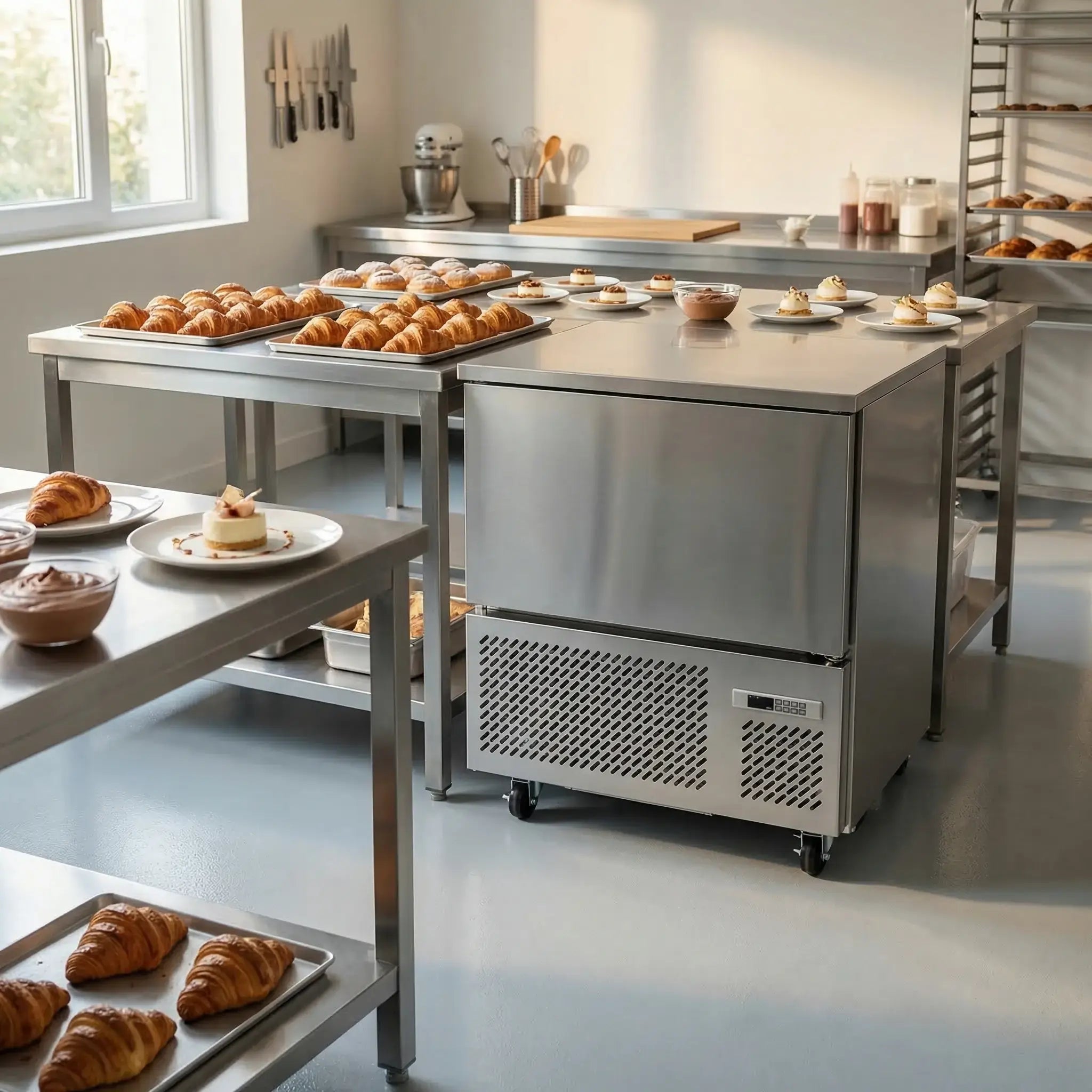
Stainless Steel Blast Chiller – 10 levels
- More comfortable capacity to absorb production peaks before service or delivery
- Useful when several batches need to cool down during the same time slot
- Good choice for workshops looking for more leeway without moving to very large equipment
How do you know if the investment will be profitable for your business?
The question of profitability always comes up: does a blast chiller in pastry really pay off?
Yes, if it saves you time, production rework, texture defects, or bottlenecks during rush periods. The gain comes not only from sanitary compliance; it also comes from more predictable production and better use of working hours.
In practice, profitability is often seen in four indicators:
- less waiting between two manufacturing steps,
- fewer products weakened by slow cooling,
- greater ability to produce in advance without degrading quality,
- a more stable organization when the team or volume increases.
In other words, a properly sized blast chiller helps the pastry shop increase consistency before increasing volume. This is often what makes the real difference between a laboratory that suffers its peaks and one that absorbs them cleanly.
Looking for a chiller adapted to your pastry production pace?
Compare available formats to choose a solution consistent with your setup, volumes, and HACCP constraints.
FAQ on blast chillers in pastry
Is a blast chiller useful for a small pastry shop?
Yes, as soon as several productions need to follow one another during the day or if preparations are sensitive. Even a small laboratory can gain in consistency and safety.
Which pastry product benefits most from rapid cooling?
Creams, inserts, entremets, and hot preparations to be stabilized before assembly are among the most concerned, as their stability heavily depends on the cooling rate.
Should I choose a larger size to be safe?
Not automatically. It’s better to aim for the actual peak load; otherwise, you’ll tie up budget and space without a clear operational gain.
Does a blast chiller replace a refrigerated cabinet?
No. The chiller is for rapid temperature reduction, while the refrigerated cabinet is for maintaining and storing at a stable temperature.