
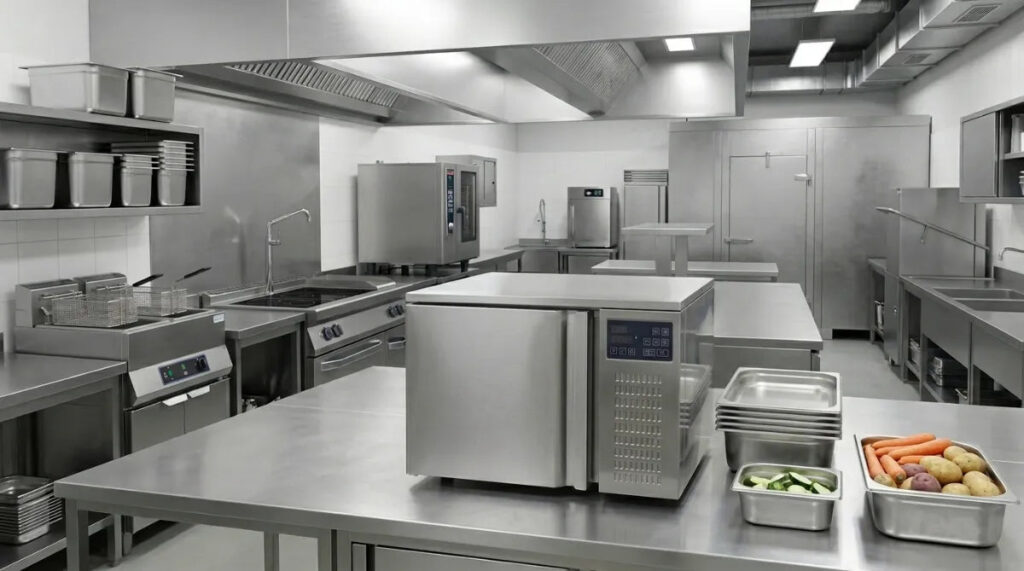
In cramped kitchens, food trucks, or small pastry labs, every square inch counts. Yet, adherence to hygiene standards and cold chain maintenance remains an obligation, regardless of the establishment’s size.
This is where the small blast chiller comes in. It provides the safety of true rapid chilling while remaining compatible with tight spaces. The right choice primarily involves finding the format that secures your production without unnecessarily complicating your setup.
Why opt for a compact model?
The use of a blast chiller is not exclusive to large central kitchens. Independent restaurateurs, small laboratories, and caterers also need to ensure the safety of their preparations.
- Obvious space saving: compact models can be placed on a countertop or integrated into an already dense workspace.
- More consistent consumption: no need to run a large volume for small daily quantities.
- Simpler installation: small formats are often easier to integrate electrically and physically.
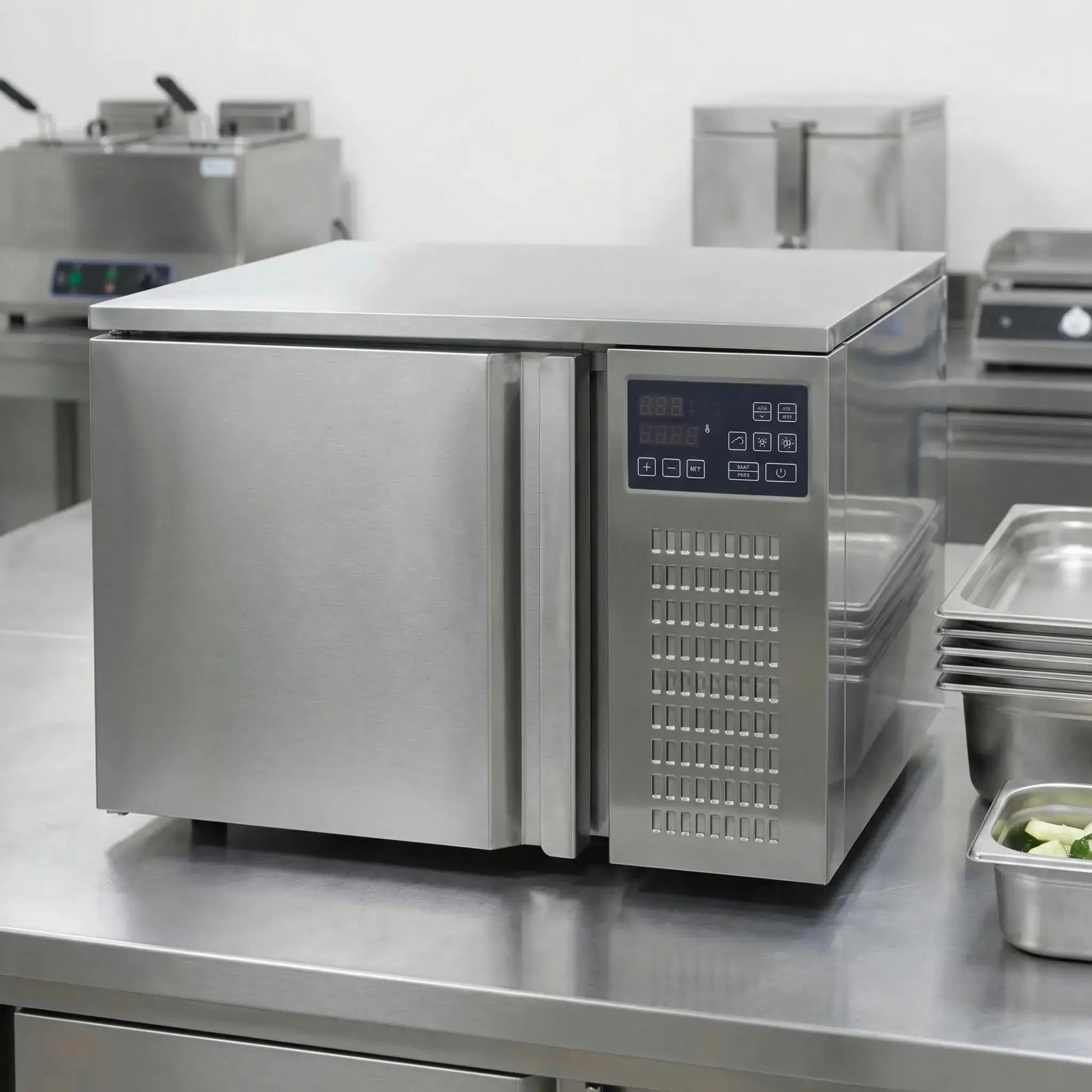
- Ultra-compact and easy to place on a standard countertop
- Capacity adapted for small productions, sauces, creams, or targeted top-ups
- Excellent choice if you lack space but need to remain compliant
What criteria for choosing your small blast chiller?
Even in a reduced format, not all mini blast chillers are equal. The points to check are always the same: useful capacity, pan format, actual yield, and ease of installation.
Capacity and GN format
On very small models, the GN 2/3 format is often found. If you already work with GN 1/1, it might be more consistent to aim directly for a small, standardized 3-level format, even if slightly wider.
Actual yield
The issue is not just the number of levels, but the actual ability to reduce temperature within the expected time. This is what guarantees food safety.
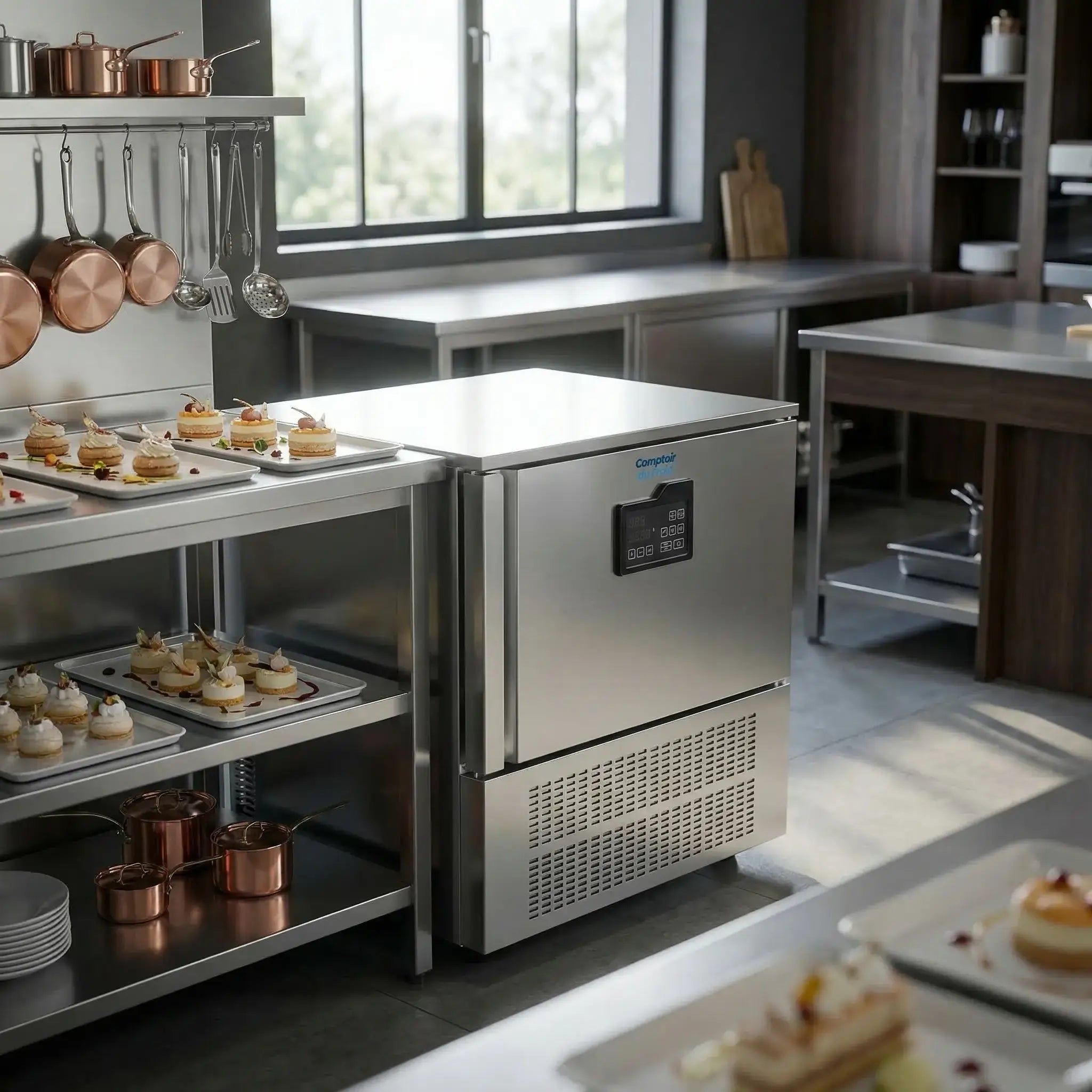
- More standardized format for working with GN 1/1
- Interesting versatility if you want to keep a small format but with more flexibility
- Good solution if the table-top model becomes too limited for your production
Installing a small model
The Mayn advantage of a small blast chiller is its ease of installation. Most compact models operate on a simple 230V single-phase outlet, which greatly facilitates integration into a small premises.
However, vigilance is required regarding ventilation. Even a small machine must properly discharge hot air. Always leave sufficient clearance around the grilles to prevent compressor overheating and reduced performance.
To learn more about hygiene requirements, you can also consult our article: Is a blast chiller mandatory?
Need a blast chiller adapted for a small space?
Compare our blast chillers to choose the right compromise between compactness, safety, and actual capacity.