
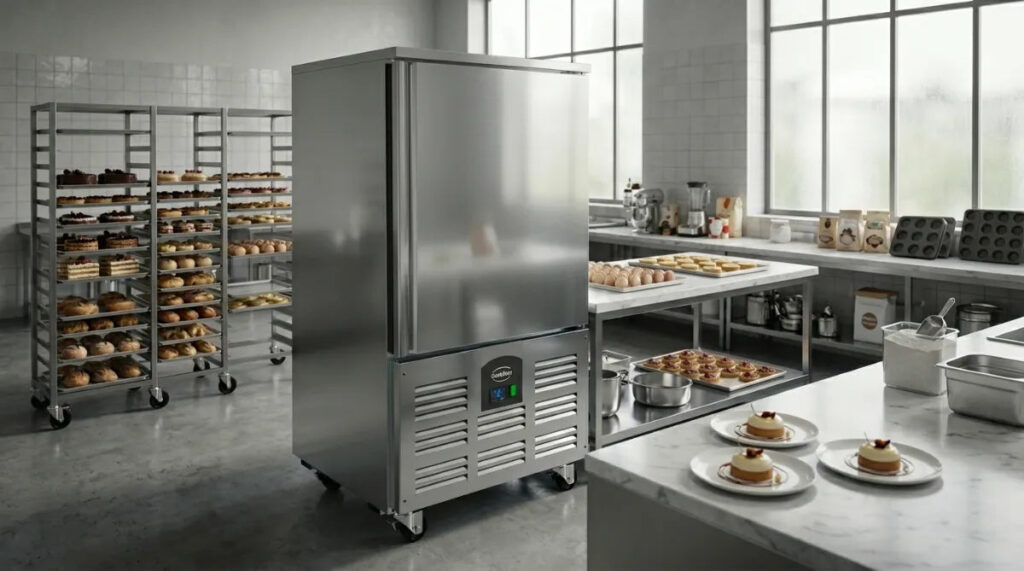
In a blast chiller, the HACCP logic is simple: the temperature of preparations must be rapidly reduced to avoid the bacterial proliferation zone. In practice, an efficient unit must help you bring a hot dish down to a safe temperature within a short, traceable, and reproducible timeframe.
The real issue is therefore not just the temperature displayed on the screen, but the core temperature drop speed, the actual load, the GN format used, and production discipline. This is what makes the difference between a kitchen that is compliant on paper and one that is truly safe on a daily basis.
What HACCP temperature should be aimed for with a blast chiller?
The question to ask is clear: what temperature target must be reached to ensure a solid HACCP approach?
The short answer: a blast chiller is used to quickly lower the temperature of hot products to limit the time spent in the critical zone. The practical objective is to bring preparations down to a safe storage temperature, without disrupting service organization.
To meet this requirement, three benchmarks must be monitored simultaneously:
- the product’s core temperature, not just the air in the chamber;
- the actually measured total cooling time;
- the final storage temperature before transfer to the cold cabinet or cold room.
An undersized unit may show good performance when empty but fail as soon as you load several GN pans, dense sauces, or deep preparations. This is why the sizing of the equipment remains as important as the HACCP rule itself.
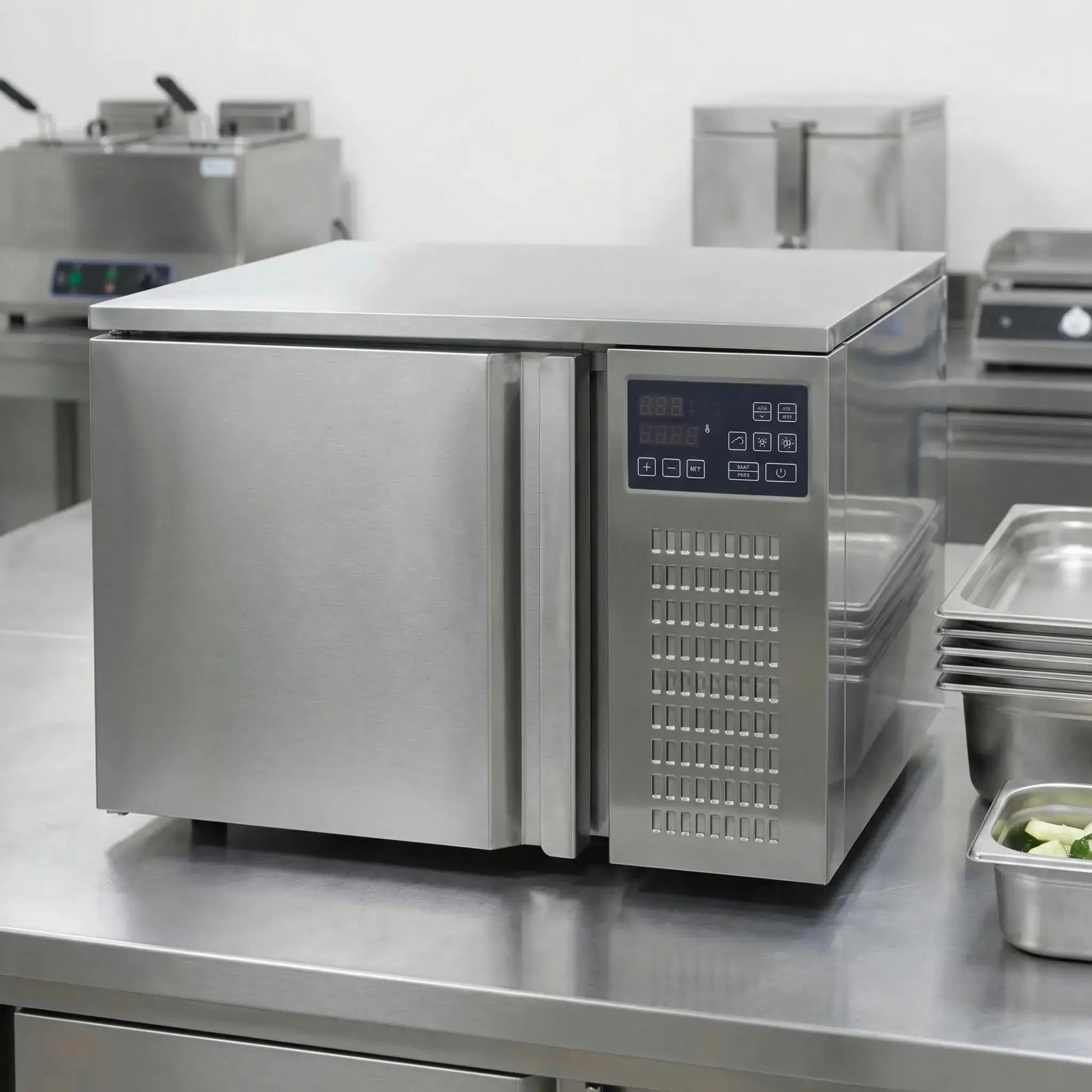
Mini Blast Chiller – Table-Top Format (2x GN 2/3)
- Compact format for small kitchens, laboratories, and tight hot spots
- Highly relevant for securing sauces, garnishes, and small-volume productions
- Allows for the introduction of a true HACCP logic without reorganizing the entire line
Why is temperature alone not enough to be compliant?
The real question here is: can we be satisfied with a compliant displayed temperature?
No. A serious HACCP reading requires linking temperature, time, and loading method. A unit can be excellent, but if the pans are too deep, if products are wrapped too early, or if the probe is not used in the right place, the core temperature drop will be inaccurate.
In practice, discrepancies often arise from four recurring errors:
- overfilled pans, which significantly slow down cooling;
- dishes still stacked or stuck together, with poor air circulation;
- loading exceeding the unit’s actual capacity;
- lack of core temperature control for the most sensitive productions.
In other words, HACCP compliance depends as much on the process as on the machine. If you need to clarify the exact role of the device in your sanitary control plan, you can also read our article What is a blast chiller used for and how to use it?.
Field Tip: For dense preparations such as sauces, purees, or cold-link dishes, prefer thinner layers in several pans rather than a single deep pan. You gain in cooling speed and HACCP consistency.
Which unit format to choose according to your production volume?
The operational question is simple: how many levels are needed to maintain your HACCP temperatures without blocking production?
The answer depends on the pace of preparation output, the number of pans to be chilled together, and your re-heating or storage logic. A small establishment can secure its production with a table-top format, while a busier kitchen will need a multi-level unit to avoid queues between cooking and chilling.
| Production Context | Recommended Format | Why |
|---|---|---|
| Snack bar, small restaurant, compact lab | 2 to 3 levels | Good compromise for small batches, sauces, desserts, daily preparations |
| Structured restaurant, light catering, regular caterer | 5 levels | Allows for handling several items in succession without disrupting flow |
| Sustained production, central kitchen, large volume | 10 levels and more | Reduces bottlenecks and ensures reliable temperature drop for multiple batches |
Verdict: if your team is waiting for the unit to become free to start a second batch, you are already under-capacity. In HACCP, a well-sized unit is primarily a tool for consistency, not just a refrigeration equipment.
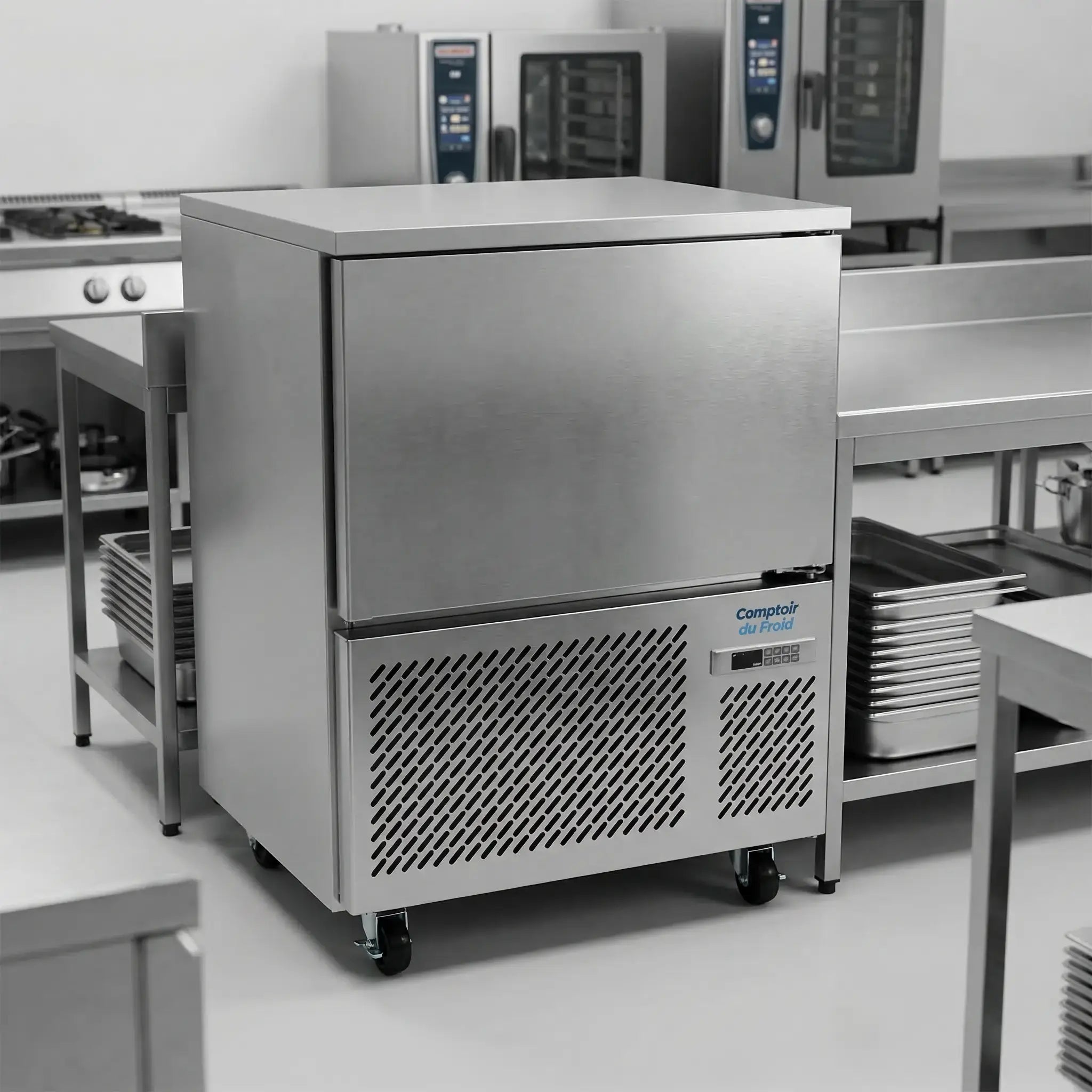
Stainless Steel Blast Chiller – 5 Levels
- Consistent capacity for restaurants, caterers, and regular productions
- Good balance between footprint, throughput, and daily HACCP control
- Relevant format when several GN pans need to be processed in the same cycle
How to prove that your cooling is truly under control?
The question is no longer just about cooling, but about being able to demonstrate that cooling is under control.
The short answer: a simple, repeatable, and documented method is needed. This involves taking core temperatures, recording times for sensitive productions, and having a procedure known by the team.
For a professional kitchen, the correct approach is to standardize:
- the types of products that need to be prioritized;
- the maximum filling depth of the pans;
- the control times for each cycle;
- the rapid transfer to cold storage once the target is reached.
If you are already working on your HACCP plan, our article How to apply the HACCP protocol with a blast chiller complements this approach very well by detailing the documentary organization and points of vigilance.
Current standards are pushing in the same direction: less approximation, more traceability, and cooling cycles adapted to the actual volume produced. This also protects the organoleptic quality of the dishes, not just food safety.
Need a unit truly adapted to your pace?
Compare available formats to meet your HACCP objectives without hindering production.
FAQ
What temperature should be prioritized in a blast chiller?
The priority is the product’s core temperature, as it truly reflects the sanitary safety of the preparation.
Is a blast chiller sufficient to guarantee HACCP compliance?
No. It must be accompanied by proper loading, time monitoring, core temperature control, and a clear procedure for the team.
What format should be chosen for a small professional kitchen?
A compact 2 to 3-level model is often sufficient for modest daily productions, provided the pans are not overloaded.
Why is an undersized unit problematic?
Because it extends cooling times, creates waiting periods between batches, and compromises HACCP consistency during busy services.