
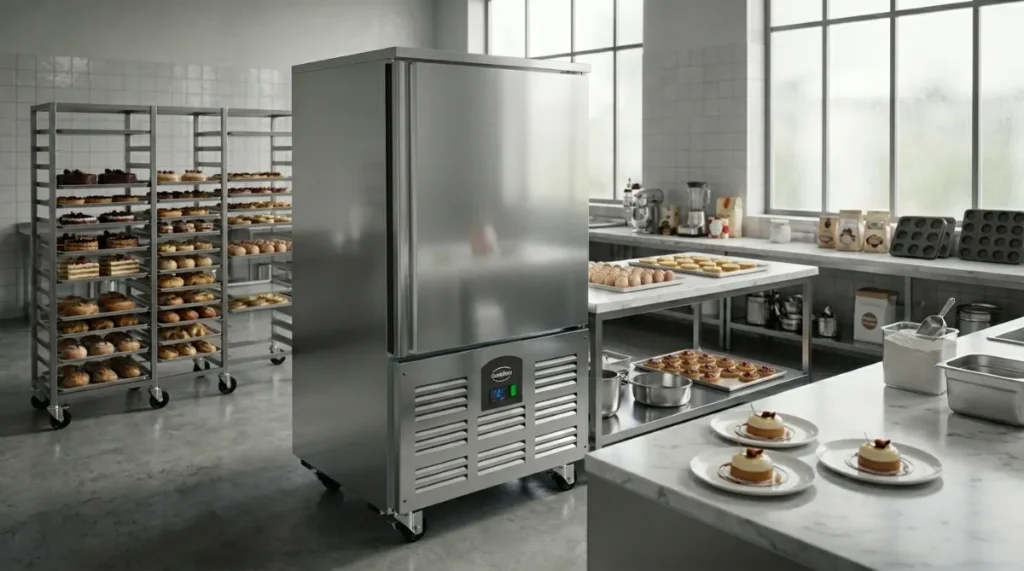
A blast chiller quickly lowers a hot dish to a positive safety temperature. An fast freezing cell, often called a deep freeze cell, goes lower to freeze the product and prepare for negative storage. The difference is therefore not only the final temperature: it is the production objective, the shelf life and the work rate.
What is the Mayn difference between the two machines?
The blast chiller is used to secure a dish before positive storage; the freezing cell is used to quickly pass the product to negative cold. In both cases, the challenge is to avoid a slow drop in temperature, but the expected result is not the same.
In professional kitchens, rapid cooling occurs after cooking to limit the time spent in the critical zone. Rapid freezing aims for longer storage or organization in batches: pastry preparations, sauces, catering portions, production bases or perfectly controlled surpluses.
- Rapid cooling: short-term objective, positive cold storage, rapid return to service.
- Rapid freezing: long-term objective, transition to negative cold, better control of the texture.
- Combined machine: the same equipment can manage both cycles if its negative capacity is actually sized.
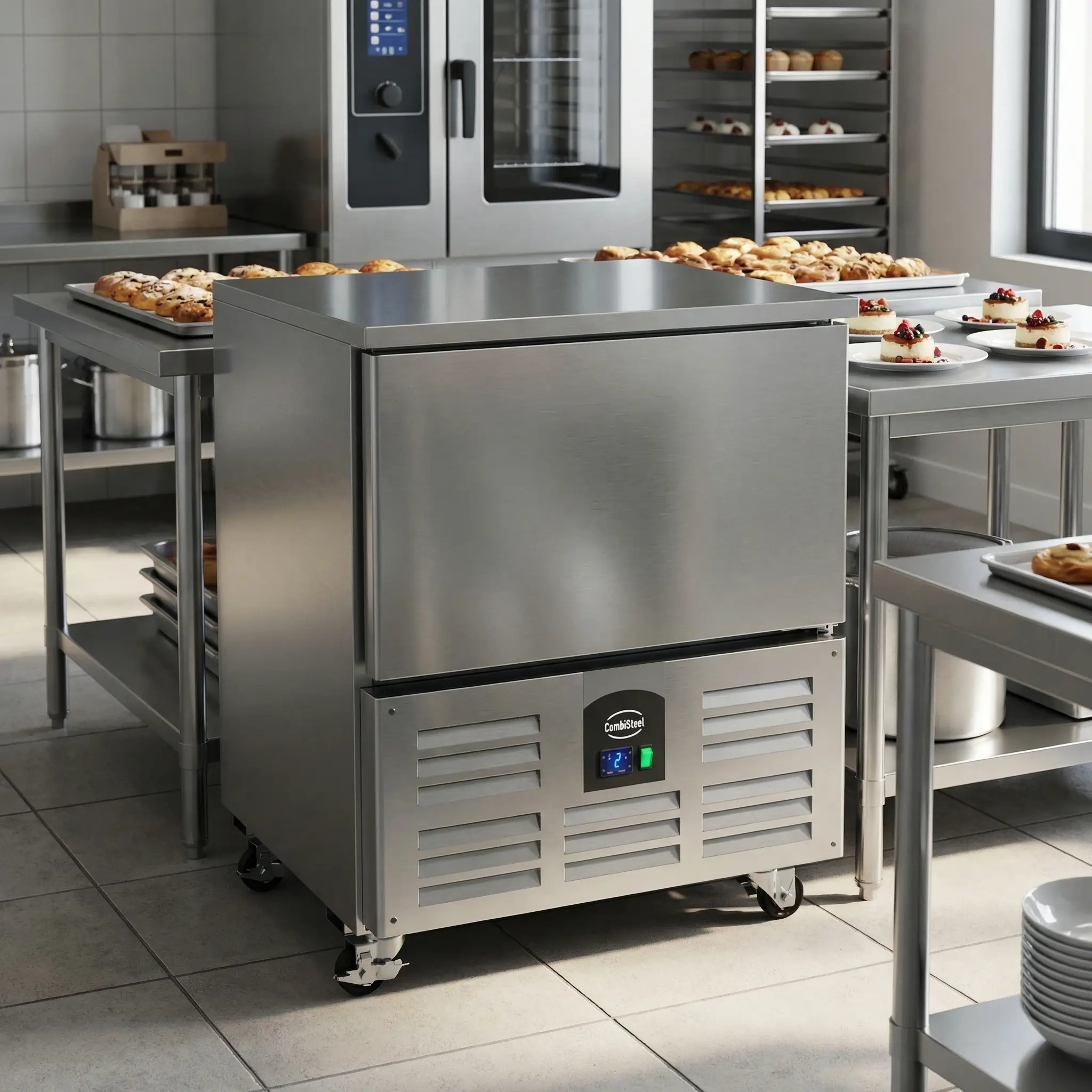
Mobile Chiller & Freezer – 5 levels
- Mobile chassis on 4 casters, 2 of which have brakes to easily move the cell and clean the station
- GN 1/1 and 600 x 400 compatibility useful for a versatile catering or pastry activity
- 5 level version given for 20 kg in cooling and 15 kg in freezing per cycle
Cool or freeze: what happens in the product?
Cooling involves removing heat quickly; freezing consists of changing the water from the product to the solid state. This difference explains why a rapid freezing cell must be more demanding than simple negative storage equipment.
During rapid cooling, the product remains intended for immediate use: deferred service, placing in trays, positive cold storage or preparation for the next day. During rapid freezing, the descent speed limits the formation of large ice crystals, which helps preserve the texture after defrosting.
Field advice: do not confuse storage freezer and rapid freezing cell. The freezer keeps a product already cold; the cell quickly reduces the temperature of a product that is still hot or temperate.
For the health aspect, our guide on HACCP temperatures in blast chillers details the benchmarks to know. And if your question relates more to classic negative storage, the article on difference between freezer and blast chiller usefully completes this comparison.
Comparison table: blast chiller or freezing cell?
The right choice depends on the expected result at the end of the cycle. If you want to produce today to serve tomorrow, rapid cooling is often enough. If you want to store several weeks or organize production in advance, rapid freezing becomes strategic.
| Criterion | Cooling cell | Quick freezing/deep freezing cell |
|---|---|---|
| Main objective | Quickly lower a hot preparation to positive cold | Bring the product to negative cold for longer storage |
| Typical use | Ready meals, sauces, garnishes, production the next day | Portions, pastry bases, catering batches, surplus production |
| HACCP logic | Limit the time spent in the critical zone after cooking | Secure the passage to negative storage without slow freezing |
| Impact on texture | Preserves quality by avoiding too long waiting at room temperature | Limits large ice crystals and better protects the texture after defrosting |
| Frequent error | Choose it too small for peak production | Replace it with a storage freezer, too slow to slaughter correctly |
Verdict: for a kitchen that Maynly cools daily preparations, prioritize a well-sized rapid cell. For a laboratory that regularly freezes its production, choose a cell capable of ensuring a true negative cycle with a capacity margin.
When to choose a cell that does both?
A combined cell becomes relevant when your teams alternate positive cooling and rapid freezing in the same week. It avoids having to multiply machines, but it must be chosen on the most demanding cycle: the negative cycle.
Always look at the advertised cooling and freezing capacity. Many models deal with less weight in freezing than in cooling, because the work required of the compressor is greater. This is normal, but it must be included in the sizing.
- A restaurant that Maynly cools daily specials can remain in a compact format.
- A caterer who prepares portions in advance must keep a margin on the negative cycle.
- A pastry shop that regularly freezes bases must check compatibility with its plates.
- A central kitchen must consider weight per cycle, not just the number of levels.
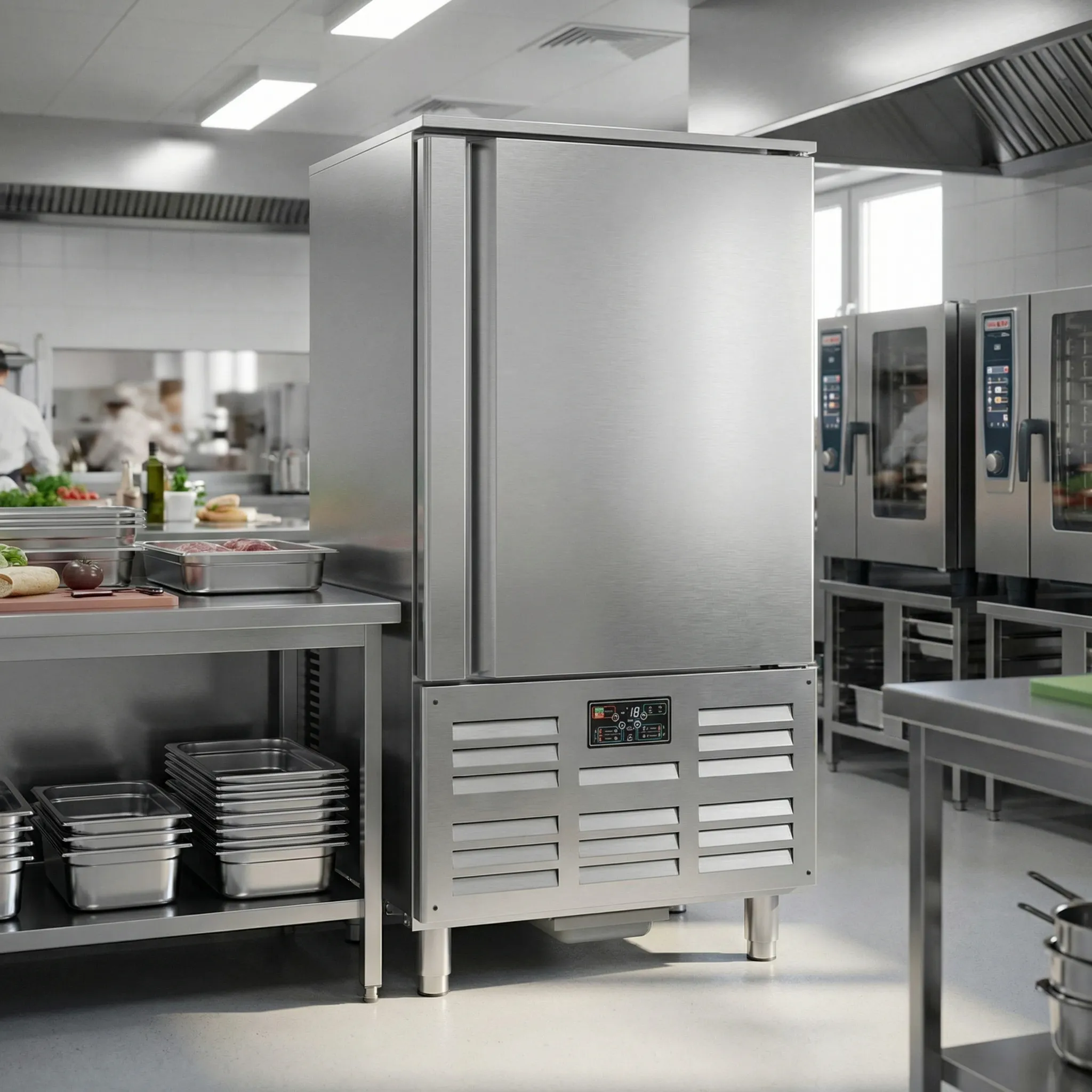
Fixed Cooling Cell – 304 Stainless Steel – 10 levels
- AISI 304 stainless steel construction and 2.2 kW power for a true professional kitchen production format
- 10 level version announced for 30 kg in cooling and 25 kg in freezing per cycle
- Relevant model for caterers and restaurants who must absorb a larger volume
Mistakes to avoid before choosing
The first mistake is buying a machine that “freezes” without checking its actual capacity per cycle. A cell can be versatile, but it should not be sized like a simple upright freezer.
Also check your containers, the depth of the bins, the ventilation space, access to the probe, ease of cleaning and the actual path between cooking, cell and storage. In production, a good cell is a machine that the team uses at the right time, without bypassing the procedure.
Simple rule: size to your largest realistic batch, then check kilograms in chilling and kilograms in quick freezing separately. The smaller of the two numbers is often the one that decides.
Need to compare the right formats?
Explore professional cells according to the number of levels, mobility and cooling or freezing capacities per cycle.
FAQ
Is a freezer the same thing as a freezer?
No. The rapid freezing cell quickly lowers the temperature of the product; the freezer then maintains this product at negative temperature.
Can a blast chiller also freeze?
Yes, some combination models offer a freezing cycle. You must then check the capacity in kilograms for this cycle, not just the number of levels.
When is rapid cooling enough?
It is sufficient if your preparations are intended for short positive storage: deferred service, setting up the next day or conservation for a few days.
When should rapid freezing be preferred?
Choose it if you are preparing batches in advance, catering portions, pastry bases or products intended for longer storage.