
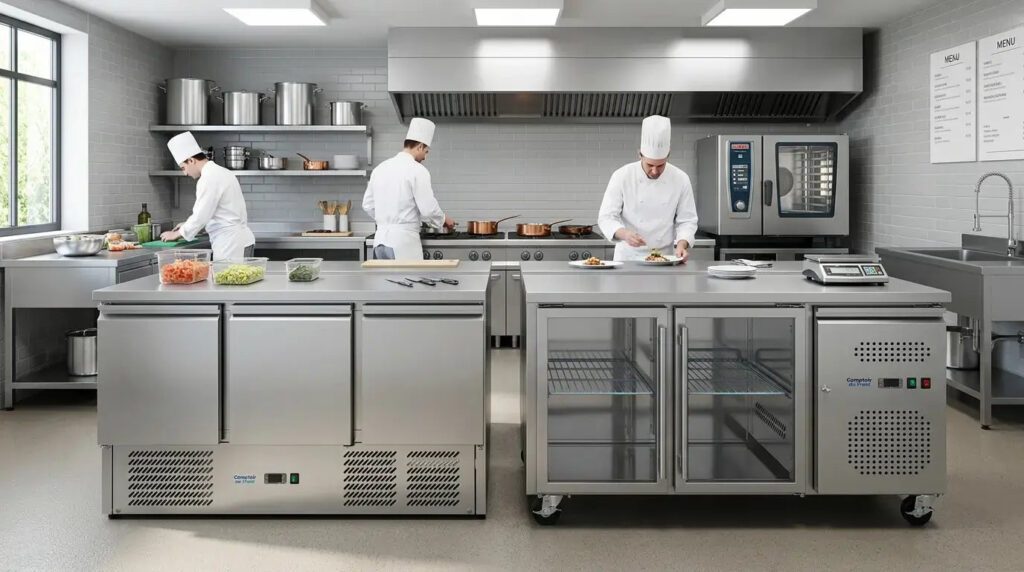
The professional refrigerated counter is one of the most strategic pieces of furniture in a kitchen. It combines a worktop and cold storage in a single unit, directly improving the fluidity of setup, circulation in the preparation line, and adherence to the cold chain.
To choose well, you need to consider real use: do you work Maynly with positive temperatures? negative temperatures? on a compact station? on a heavier line? The right refrigerated counter is not just a question of doors, but of operational logic.
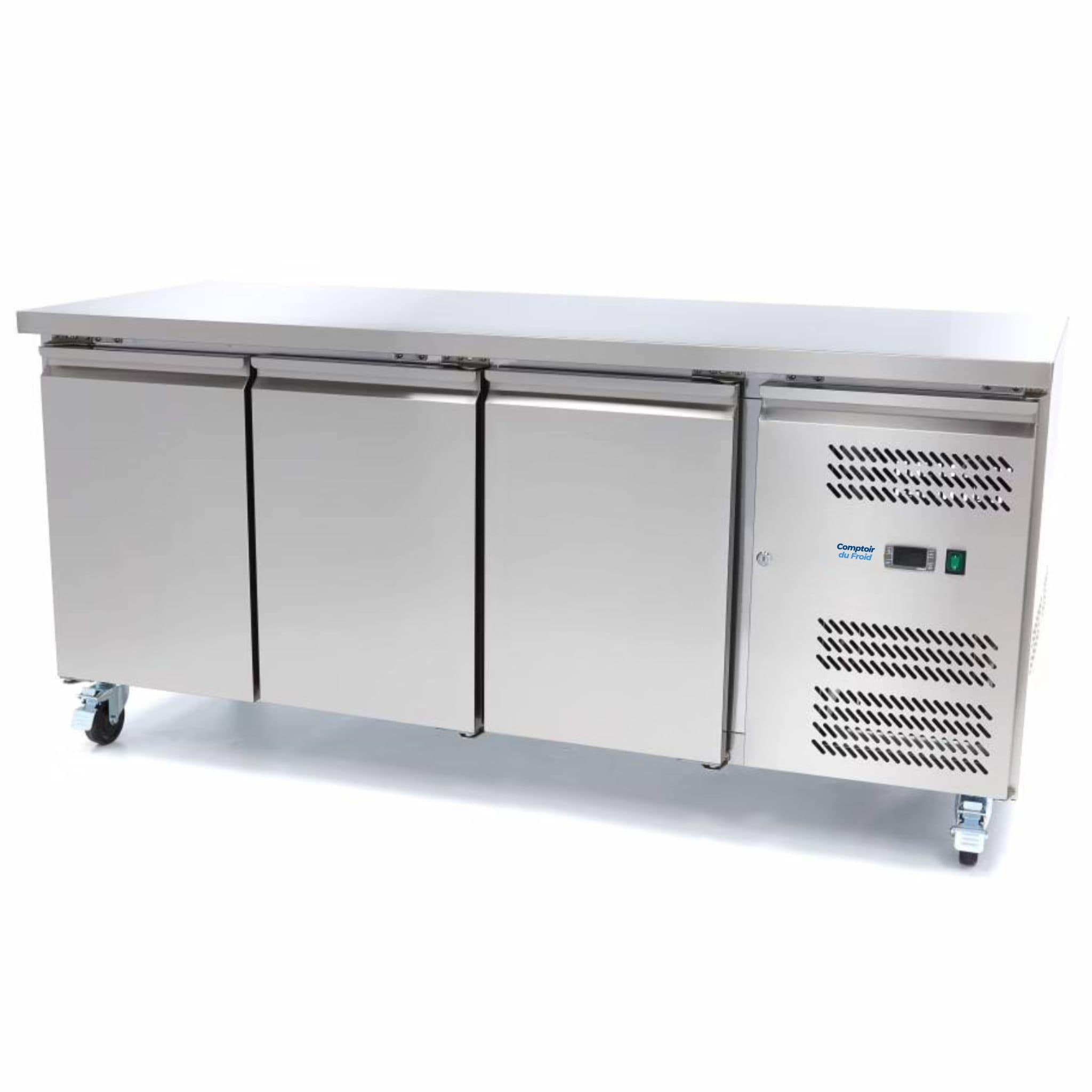
3-Door Positive Refrigerated Counter 180cm (GN 1/1)
- Excellent format for a versatile preparation line
- The 3-door model often offers the best balance between capacity and footprint
- GN 1/1 compatible for a smoother kitchen operation
Why invest in a refrigerated counter rather than a cabinet?
Because the refrigerated counter immediately brings storage closer to the preparation process. You save on movement, increase comfort, and speed up work, especially if the station operates continuously.
- The top surface is used directly for preparation.
- Products remain accessible just below.
- The station becomes more compact and logically efficient.
In many kitchens, this type of equipment genuinely improves the pace of work.
Should you choose positive or negative temperature?
The choice primarily depends on the nature of your products. A positive counter is suitable for daily setup, while a negative counter meets needs for frozen storage or specific very low-temperature work.
| Type | When it’s relevant | Main use |
|---|---|---|
| Positive counter | Daily preparation, fresh ingredients, classic cuisine | Setup and daily service |
| Negative counter | Frozen products, ice cream, specific environments | Integrated negative storage at the workstation |
Verdict: Positive is the most common. Negative becomes relevant only if your workstation genuinely needs to handle frozen items or maintain an immediately available negative reserve.
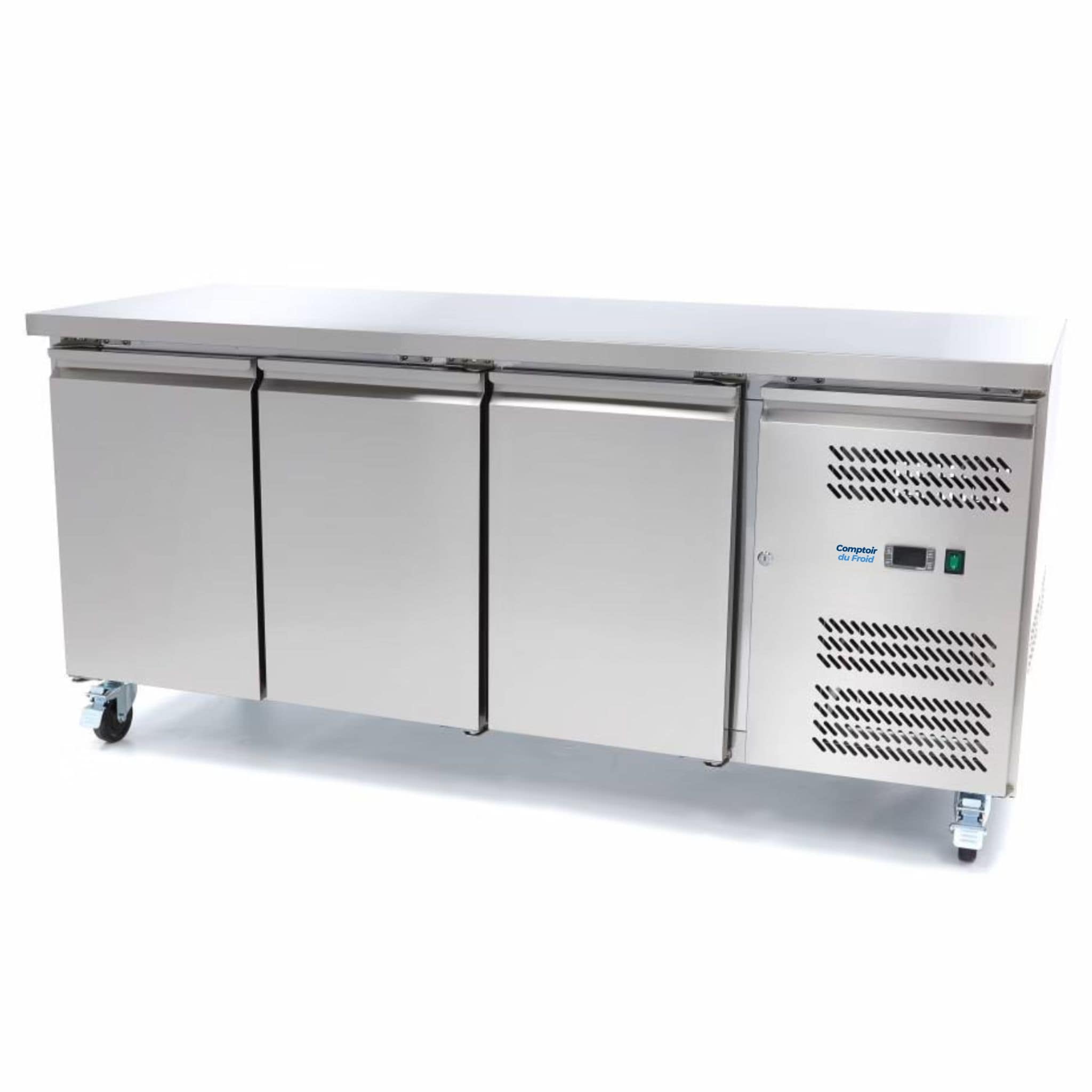
3-Door Negative Refrigerated Counter 180cm (Stainless Steel Top)
- More suitable if the workstation needs to keep frozen products readily available
- Useful solution for certain specific environments or organizations
- To be chosen only if negative logic is truly part of the daily workflow
How many doors do you really need?
The number of doors changes work comfort much more than you might think. It influences usable capacity, available worktop width, and how you organize your setup.
- 2 doors: good choice for compact kitchens or lighter needs.
- 3 doors: often the best standard for a professional kitchen.
- 4 doors: relevant if the team genuinely lacks volume or if the line is very busy.
Is a stainless steel top always sufficient?
In most kitchens, yes. The stainless steel top remains the standard because it is robust, easy to clean, and very versatile. But some activities benefit from other formats, especially for pizza or certain pastry uses.
If you are comparing workstations based on your trade, you can also consult our article on refrigerated pizza tables and our guide on choosing a refrigerated table according to the right kitchen format.
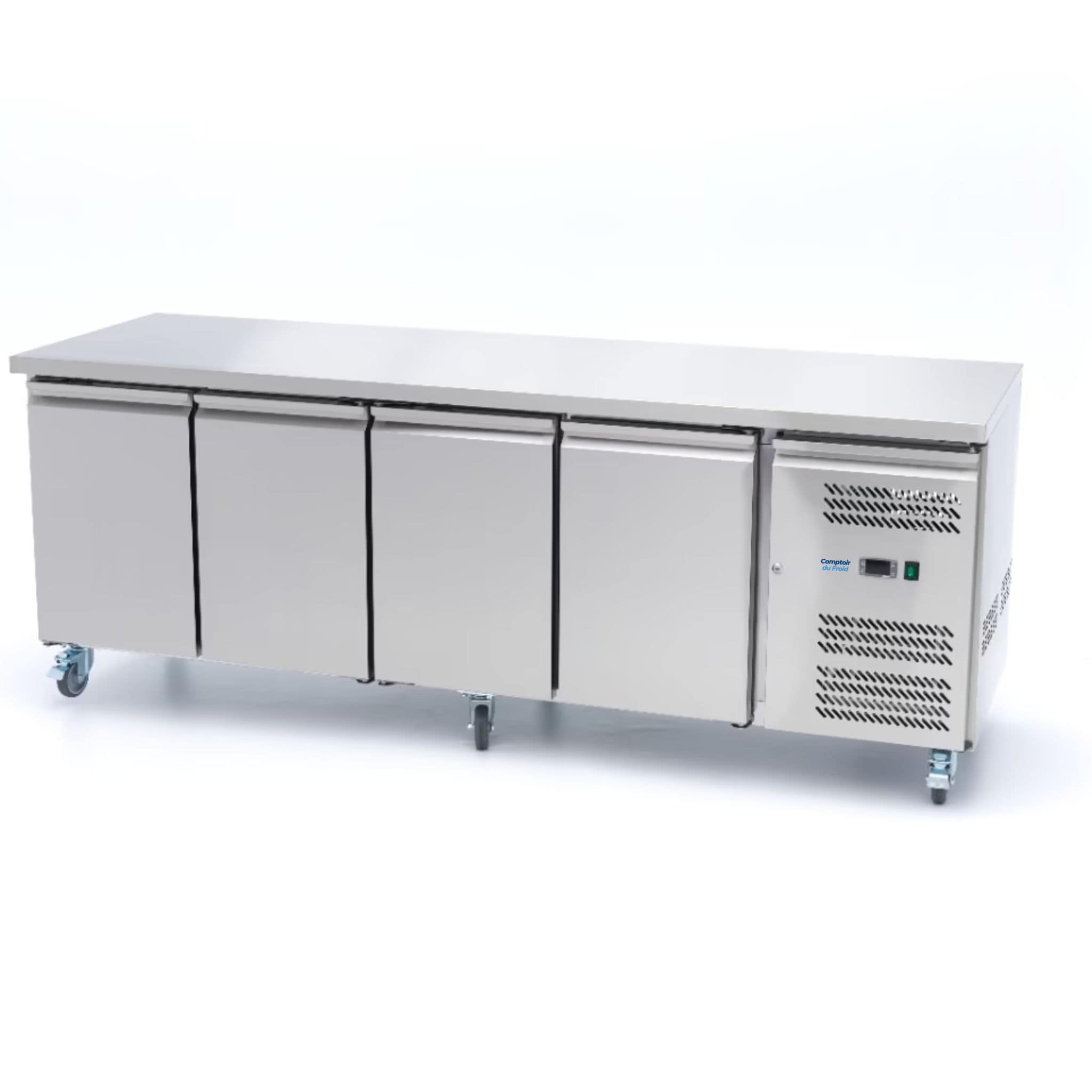
Large 4-Door Refrigerated Counter 223cm (XXL)
- Excellent choice if your workstation truly lacks width and storage capacity
- More suitable for a larger team or heavier production
- To be preferred if the extra volume will truly be utilized daily
Need a refrigerated counter that fits your workstation?
Compare our models based on the number of doors, working temperature, and the volume actually useful for your kitchen.
FAQ
What is the difference between a refrigerated counter and a saladette?
A counter has a smooth worktop, while a saladette is designed to integrate or display ingredient containers directly.
Is forced-air cooling preferable for a refrigerated counter?
Often yes, especially with intensive use, as it provides better homogeneity and recovers more quickly after opening.
Is a negative counter common in kitchens?
It exists, but it is more specific than a positive one. It only makes sense if your workstation truly operates at negative temperatures.
Is the 3-door format the best?
In many cases, yes, because it offers a good balance between footprint, capacity, and preparation comfort.