
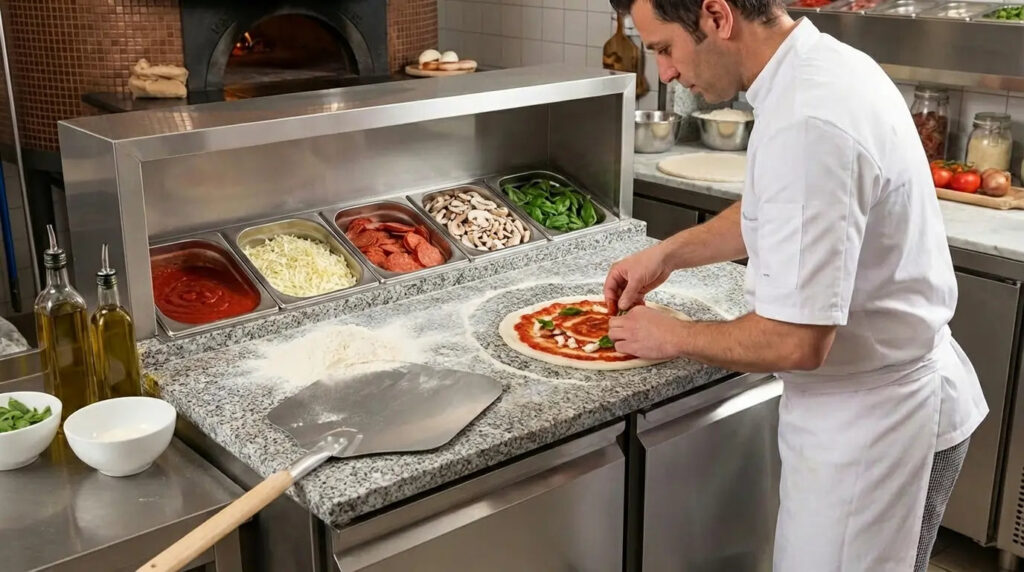
A refrigerated pizza table is much more than just a cold piece of furniture. In a pizzeria, it’s the heart of the workstation: dough is stretched on it, ingredients are kept within reach, and it’s used to keep service flowing smoothly without losing pace.
To choose wisely, you need to think of the entire workstation: work surface, under-counter storage, number of pans, available space, and production logic. The right model isn’t necessarily the largest, but the one that truly matches your workflow.
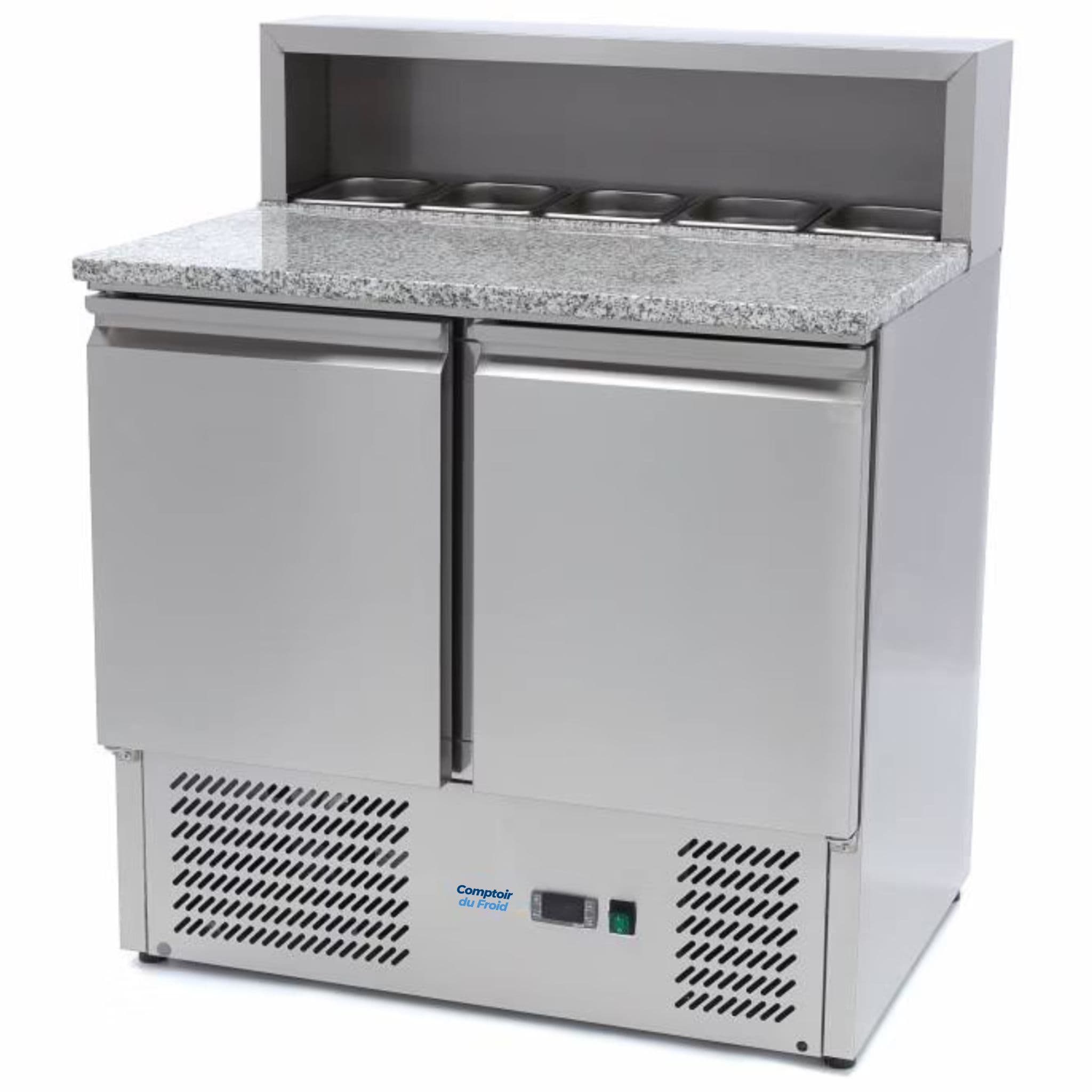
2-Door Pizza Prep Table (90 cm)
- Excellent choice for food trucks, small pizzerias, or confined kitchens
- Granite top + integrated display in a compact format
- Allows for structuring a real pizza station without excessive bulk
Why choose a dedicated pizza table rather than a simple refrigerated counter?
Because a pizza table combines everything a pizzaiolo needs during service in a single workstation. It doesn’t just cool; it organizes the work.
- Granite top: more suitable for working with dough.
- Under-counter storage: useful for dough balls, reserves, and sensitive products.
- Ingredient display: quick access to toppings during service.
This 3-in-1 logic truly enhances comfort, especially as throughput increases.
Should you choose a 2-door or 3-door pizza table?
The choice Maynly depends on service volume and menu breadth. A 2-door unit may suffice for a compact operation. A 3-door unit becomes logical as the offering expands or volumes increase.
| Format | When it is relevant | Main limitation |
|---|---|---|
| 2 doors | Small space, moderate throughput, short menu | Capacity reached more quickly |
| 3 doors | Busier pizzeria, more dough balls and more toppings | Takes up more space |
Verdict: if you’re looking for a compact and serious workstation, the 2-door remains a very defensible option. If pizza is a true core activity, the 3-door quickly offers superior comfort.
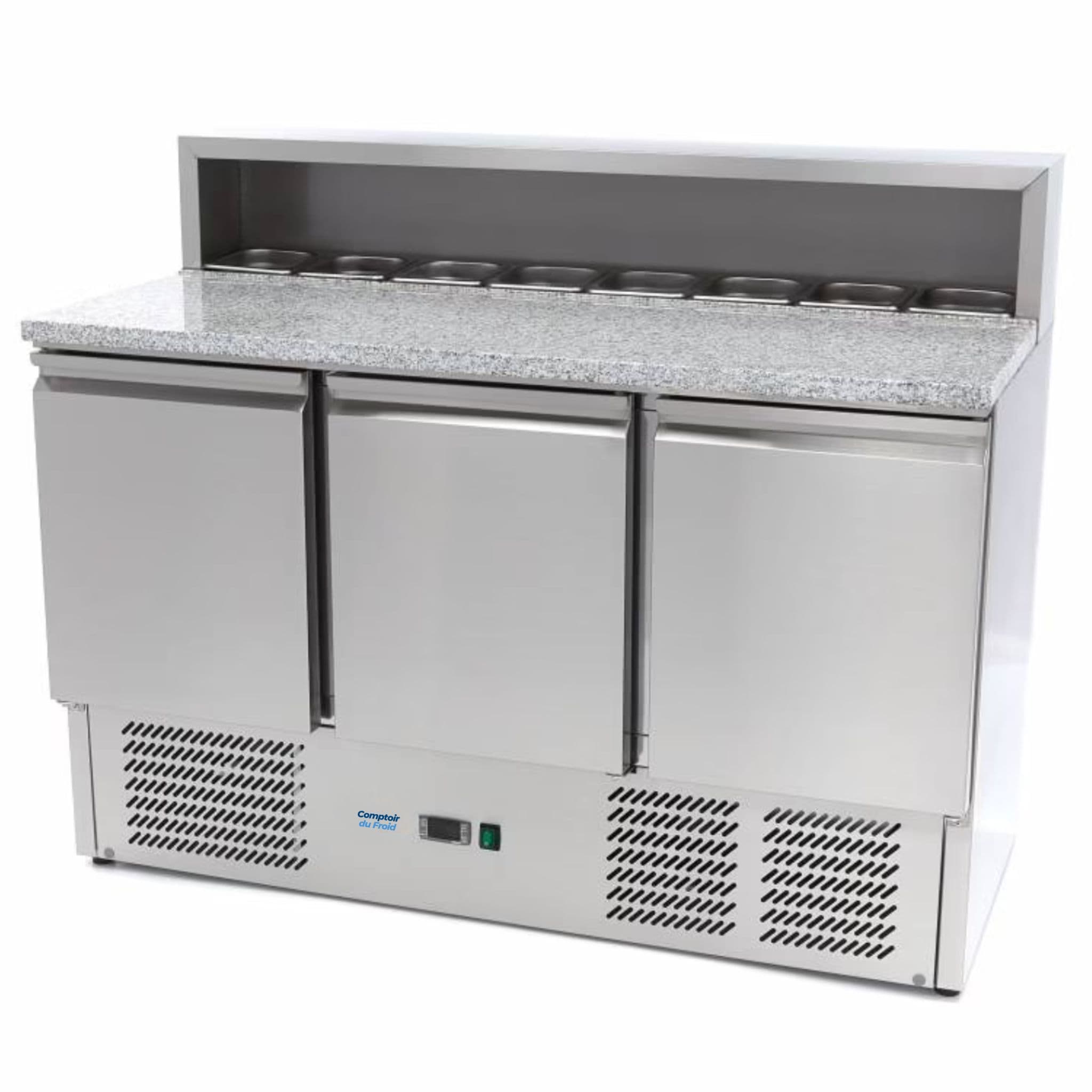
3-Door Pizza Prep Table (137 cm)
- More space for dough balls, pans, and prep
- Excellent format for a takeaway pizzeria or an active workstation
- Good balance between capacity and service ergonomics
Is a granite top really important?
Yes, because the quality of the work surface directly affects user comfort. Granite is valued for its durability, stability, and its more consistent performance with dough work compared to a standard stainless steel top.
For a pizza workstation, the surface isn’t an aesthetic detail. It’s an element that influences the fluidity of movement, the cleanliness of the station, and long-term comfort.
Doors or drawers: should you go further?
Doors remain the basic option, but drawers can be very useful if you manage a lot of dough balls. They facilitate organization and prevent searching in the back of a cabinet during service.
For more advanced uses, some drawer configurations can better structure proofing, intermediate storage, and rotation logic.
If you are still comparing different types of cold prep stations, you can also read our article on the impact of a pizza prep table on workstation speed as well as our guide on choosing a professional refrigerated prep table.
Need a pizza station that matches your throughput?
Explore our selection of prep tables and worktops to choose the right size for your space, menu, and service pace.
FAQ
Is a pizza table really different from a refrigerated counter?
Yes. It combines a work surface, cold storage, and quick access to ingredients in a design specifically for the pizza workstation.
Can a 2-door unit be sufficient for a pizzeria?
Yes, especially for a small establishment, a food truck, or an operation with still moderate throughput.
Why upgrade to a 3-door unit?
To gain storage comfort, workstation width, and prep capacity when activity becomes more sustained.
Are drawers essential?
No, but they become advantageous if dough ball management and service fluidity become truly important in your organization.