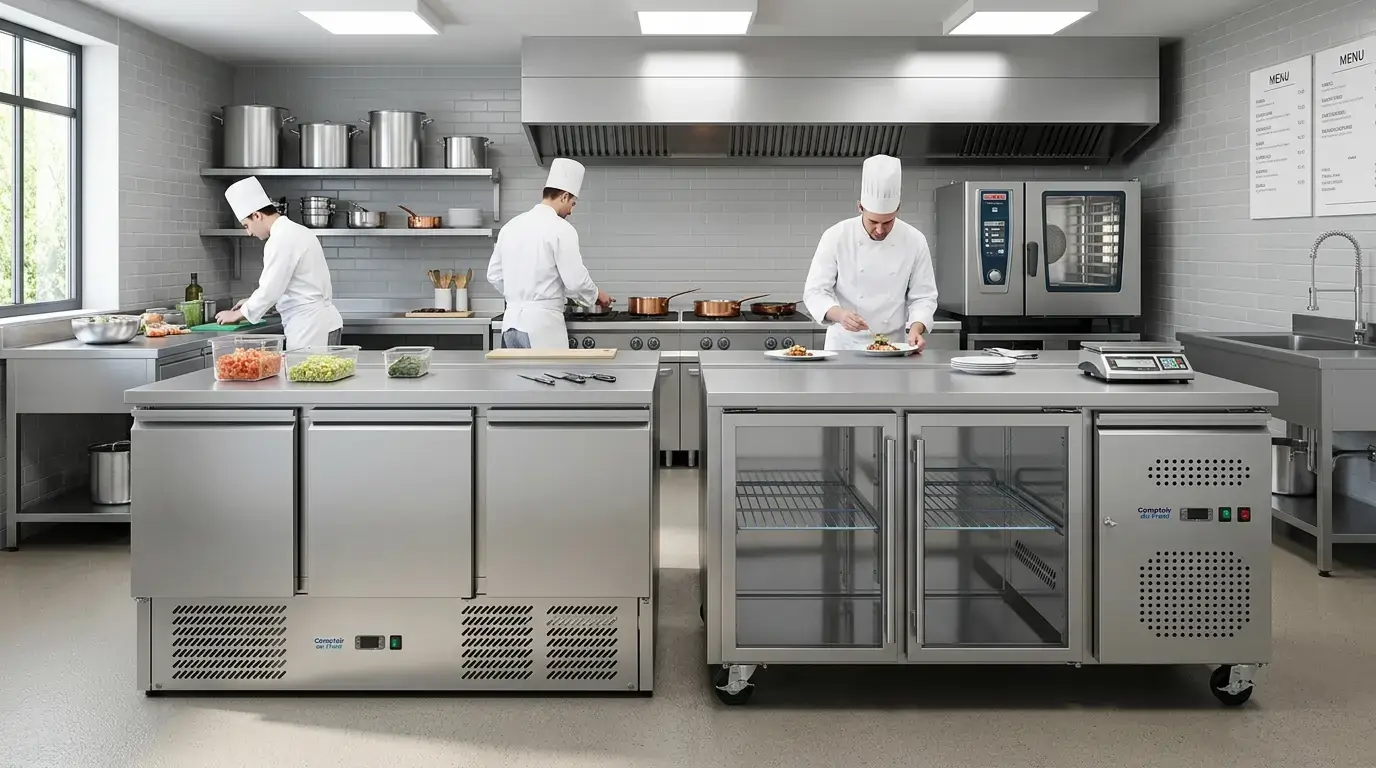
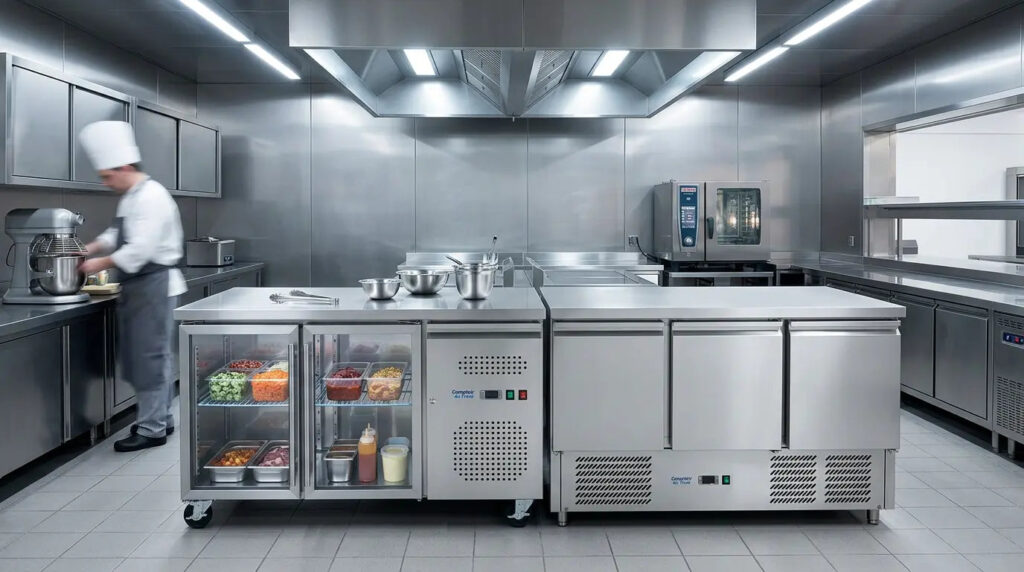
A refrigerated counter combines a work surface and cold storage in a single piece of equipment, making it a very cost-effective choice for restaurant kitchens where every square meter counts. To choose the right one, you Maynly need to consider the number of doors, the GN format, the type of refrigeration, the kitchen layout, and the actual pace of service.
In practice, a good refrigerated counter reduces movement, secures the cold chain, and streamlines setup. The right model is therefore not necessarily the largest, but the one that fits neatly into your production station.
What is the real purpose of a refrigerated counter in a professional kitchen?
The fundamental question is simple: why install a refrigerated counter rather than a classic cold cabinet? The short answer is that a refrigerated counter is used for working and cold storage in the same place, with less time lost during preparation.
In the field, it is particularly relevant for kitchens that handle continuous services, minute preparations, or specialized workstations. The upper stainless steel top becomes a useful work surface, while food remains immediately accessible in the lower cabinet. This limits back-and-forth trips to a refrigerated cabinet, reduces repeated opening of multiple pieces of equipment, and improves production ergonomics.
It finds its place in many environments:
- traditional restaurants with high plating demands;
- snack bars and sandwich shops where speed of execution is crucial;
- brasseries and bars with continuous service;
- pizzerias with storage needs near the workstation;
- laboratories or preparation kitchens with high hygiene constraints.
If you are still hesitating between different low cabinet formats, you can also consult our article on the professional refrigerated undercounter, useful for comparing uses depending on the workstation.
How to choose the right refrigerated counter format?
The real question here is: how many doors, what length, and what capacity do you need for your business? The direct answer: first choose according to your service flow and your daily volume, not just according to the available space.
A counter that is too small will quickly become saturated and lose the advantage of proximity. Conversely, an oversized counter can obstruct circulation, increase purchase costs, and consume more than necessary.
| Format | Recommended use | Main advantage | Caution point |
|---|---|---|---|
| 2 doors | small kitchens, bars, snacking | compact and easy to integrate | more limited storage during intense service |
| 3 doors | restaurant with regular pace | good balance between footprint and capacity | requires well-thought-out placement |
| 4 doors | high volume, brigade, continuous preparation | large cold reserve at the workstation | heavier, more expensive, more cumbersome |
Before purchasing, especially check the number of doors, GN compatibility, overall length, usable depth, and actual usable storage capacity.
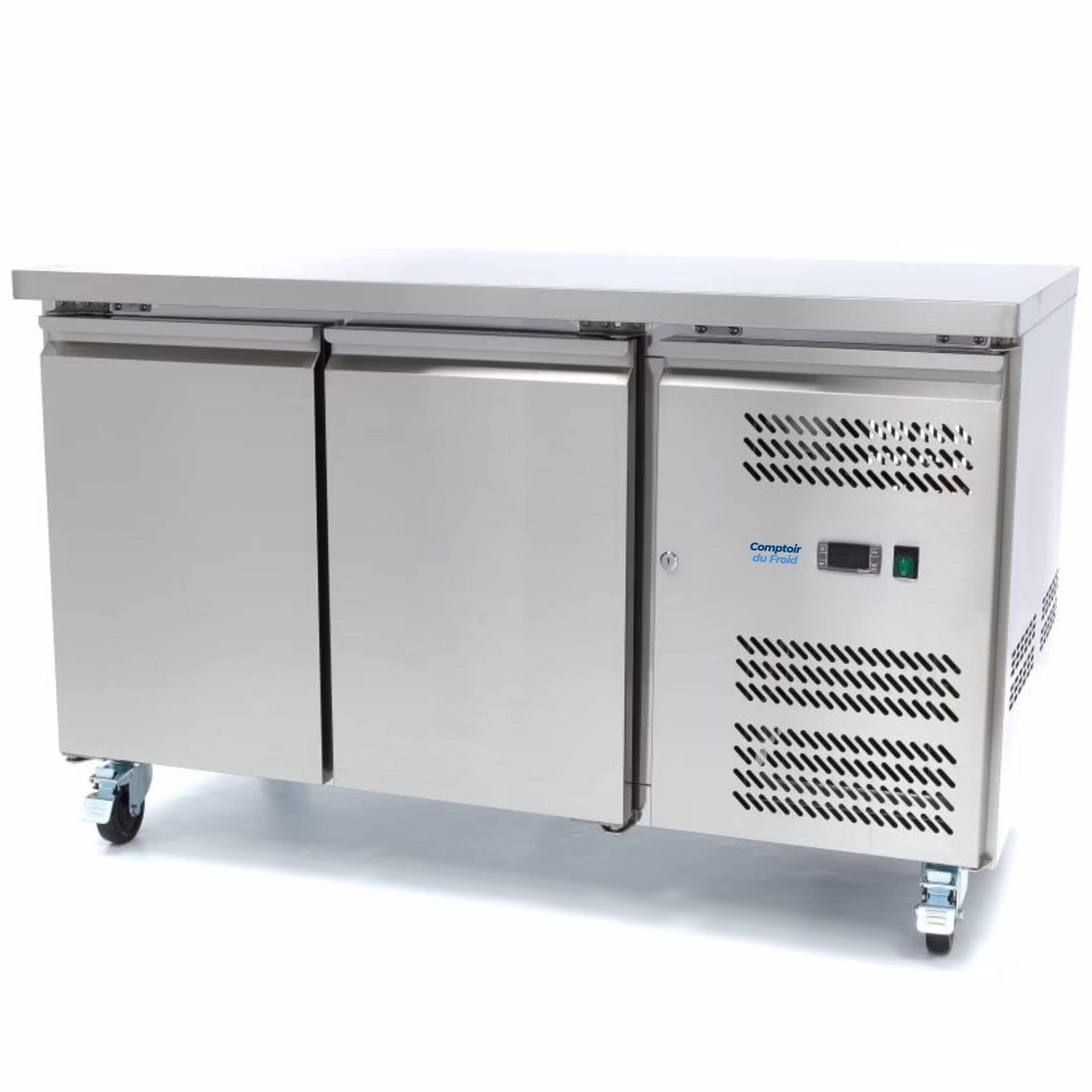
2-Door Positive Refrigerated Counter 136cm (GN 1/1)
- Compact format ideal for a versatile preparation station
- GN 1/1 compatibility convenient for standardizing containers
- Good compromise between footprint, storage, and working comfort
Ventilated refrigeration, stainless steel top, GN format: what technical criteria really matter?
When looking for a refrigerated counter, the question is not just “does it cool?”, but can it keep up with the pace of a real restaurant service? The short answer: the decisive criteria are temperature stability, manufacturing quality, and compatibility with your on-site uses.
Ventilated refrigeration is often the best choice for professional kitchens because it ensures better temperature uniformity and quicker recovery after opening the doors. This is valuable when teams frequently open the unit during peak hours. Stainless steel, on the other hand, remains the benchmark for hygiene, durability, and daily cleaning.
The technical points to prioritize:
- Temperature range suitable for positive cold and your product type;
- GN 1/1 compatibility to streamline containers and setup;
- Quality of the stainless steel worktop to withstand actual production;
- Casters or adjustable feet according to your cleaning and leveling constraints;
- Access to the unit and maintenance to limit downtime.
Refrigerated counter or refrigerated undercounter: which solution to choose for your workstation?
Many professionals wonder whether a refrigerated counter or a refrigerated undercounter is better. The direct answer: choose a refrigerated counter if you need an active work surface, and a refrigerated undercounter if you primarily prioritize storage volume accessible from the front.
The refrigerated counter is remarkably efficient for preparation, plating, garnishing, or short service stations. The refrigerated undercounter, on the other hand, is often more suitable for use as a low-level reserve with frequent access to many products over a longer length. Both can also be complementary in a well-structured kitchen.
To further explore this logic of placement, our guide on professional refrigerated saladettes also helps compare specialized preparation stations.
- Refrigerated counter: best if you work directly on top of the unit;
- Refrigerated undercounter: preferable if you are primarily looking for a low-level continuous storage unit;
- Saladette: ideal for preparation with direct access to ingredients in containers;
- Glass version: useful for certain bar uses or short display, less priority in a hot kitchen.
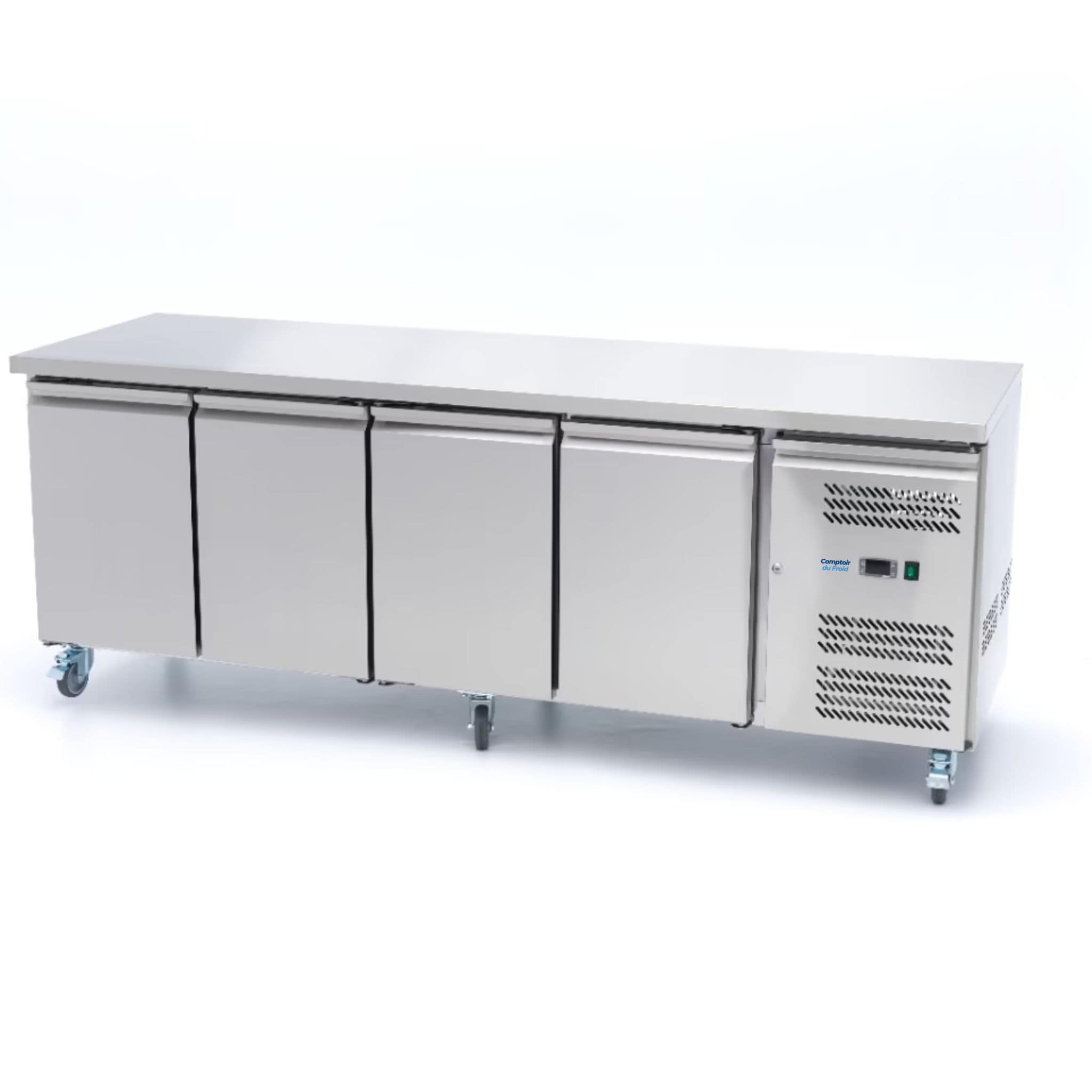
Large 4-Door Positive Refrigerated Undercounter 223cm (XXL)
- Very large capacity for high-volume kitchens
- Wide stainless steel top for continuous production and plating
- XXL format relevant when a simple 2-door unit quickly becomes too small
What mistakes to avoid before buying a professional refrigerated counter?
Errors almost always stem from incorrect sizing, poorly thought-out placement, or insufficient finishing level for actual service.
- Underestimating capacity needs and saturating the unit upon setup.
- Neglecting the GN format, which complicates daily organization.
- Installing the unit too close to a heat source, leading to loss of efficiency.
- Choosing solely based on price without looking at the stainless steel, the compressor unit, or maintenance.
- Forgetting cleaning conditions, especially access under and behind the equipment.
If your Mayn need is to combine production and cold storage in a compact line, a refrigerated counter often remains one of the smartest purchases for increasing efficiency without burdening service flows.
Need a refrigerated counter tailored to your actual workstation?
Compare our refrigerated counters and undercounters based on your space, pace, and actual storage level.
FAQ
What is the difference between a refrigerated counter and a saladette?
A refrigerated counter primarily offers a refrigerated work surface with lower storage, while a saladette is designed to keep ingredients in immediately accessible containers on top.
Is a refrigerated counter suitable for a small kitchen?
Yes, especially a 2-door model, as it combines work surface and cold storage in a reduced footprint.
Is ventilated refrigeration preferable for a refrigerated counter?
In most restaurant uses, yes: it provides better temperature uniformity and faster recovery after opening the doors.
How many doors should you choose for a restaurant?
Two doors are sufficient for a small station, three doors are often suitable for a standard kitchen, and four doors become relevant for high volumes or intensive services.