
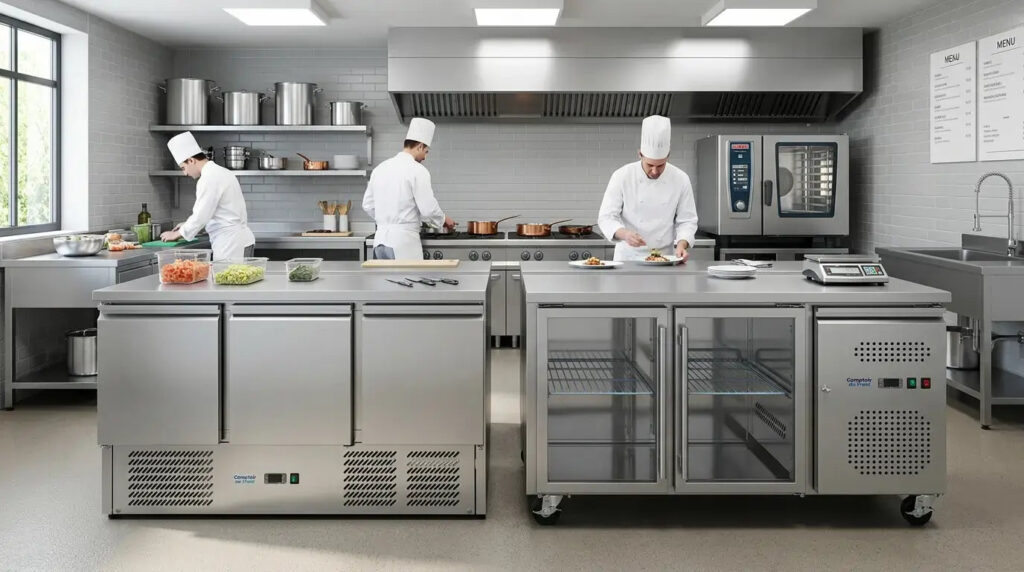
A positive and negative refrigerated table does not follow the same business logic depending on the products, service pace, and level of kitchen preparation. In practice, the positive one is used to keep fresh ingredients immediately available at the workstation, while the negative one secures frozen reserves or products that should not enter the service phase too early.
The right decision is therefore not “which table is best?” but where to place positive refrigeration, where to keep negative refrigeration, and when to transition from one zone to another. It is this distribution that improves service fluidity, limits HACCP errors, and prevents a preparation unit from being used as a simple buffer storage.
Do you need a positive, negative, or both types of refrigerated tables in a professional kitchen?
The real question is simple: do you need a preparation unit, a frozen reserve unit, or a combination of both? The answer depends on when your products need to be available and the temperature at which they need to remain during service.
A positive table is designed for fresh ingredients already in production: cold bases, garnishes, dairy products, meats or sauces currently in use. A negative table, on the other hand, takes over for frozen foods, pre-cut items kept secure, or flows where items from the negative zone must remain controlled until the last moment.
- Choose a positive table if the station needs to continuously prepare, assemble, and plate with fresh products.
- Choose a negative table if you need to store frozen items as close as possible to a cooking or re-heating area.
- Choose both if your line combines cold mise en place, rapid rotation, and reliance on frozen items.
- Avoid a single “catch-all” unit: this is often where storage confusion and temperature deviations arise.
To establish the basic sizing for a workstation, you can also read our article on choosing a refrigerated table based on your professional kitchen’s format.
How to distribute products between positive and negative cold storage without creating friction during service?
The operational question is: which products need to be immediately available and which should remain on controlled standby? The answer lies in thinking in terms of service timing, not just by unit type.
In commercial kitchens, the positive table should hold ingredients that are frequently accessed during peak hours. The negative table should remain a short-term holding or nearby reserve area for still-frozen products, to avoid back-and-forth trips to a distant freezer and disorderly handling.
| Service Situation | Positive Table | Negative Table |
|---|---|---|
| Cold mise en place and plating | Yes, to keep products ready for use between 0 and +8°C | No, unless there’s a very specific need for temporary storage |
| Reserve of frozen products near a hot station | No, risk of product logic breakdown | Yes, to limit premature removal from negative storage |
| Snack bar or fast food with fresh + frozen mix | Yes, for high-turnover assembly ingredients | Yes, if part of the menu depends on frozen items at pace |
| Clear HACCP organization | Very good if content is reserved for fresh items during service | Very good if content remains strictly dedicated to frozen items |
Verdict: if your kitchen primarily prepares fresh food, the positive table should remain the center of the workstation. If you utilize a significant amount of frozen food, the negative table becomes a strategic support unit. Both are complementary when they serve different times of the workflow, not when they store the same thing “just in case.”
Field Tip: The most common mistake is to transform the positive table into a mini-reserve stock or the negative table into a thawing area. In practice, this degrades the clarity of the workstation, overloads openings, and complicates compliance with HACCP standards.
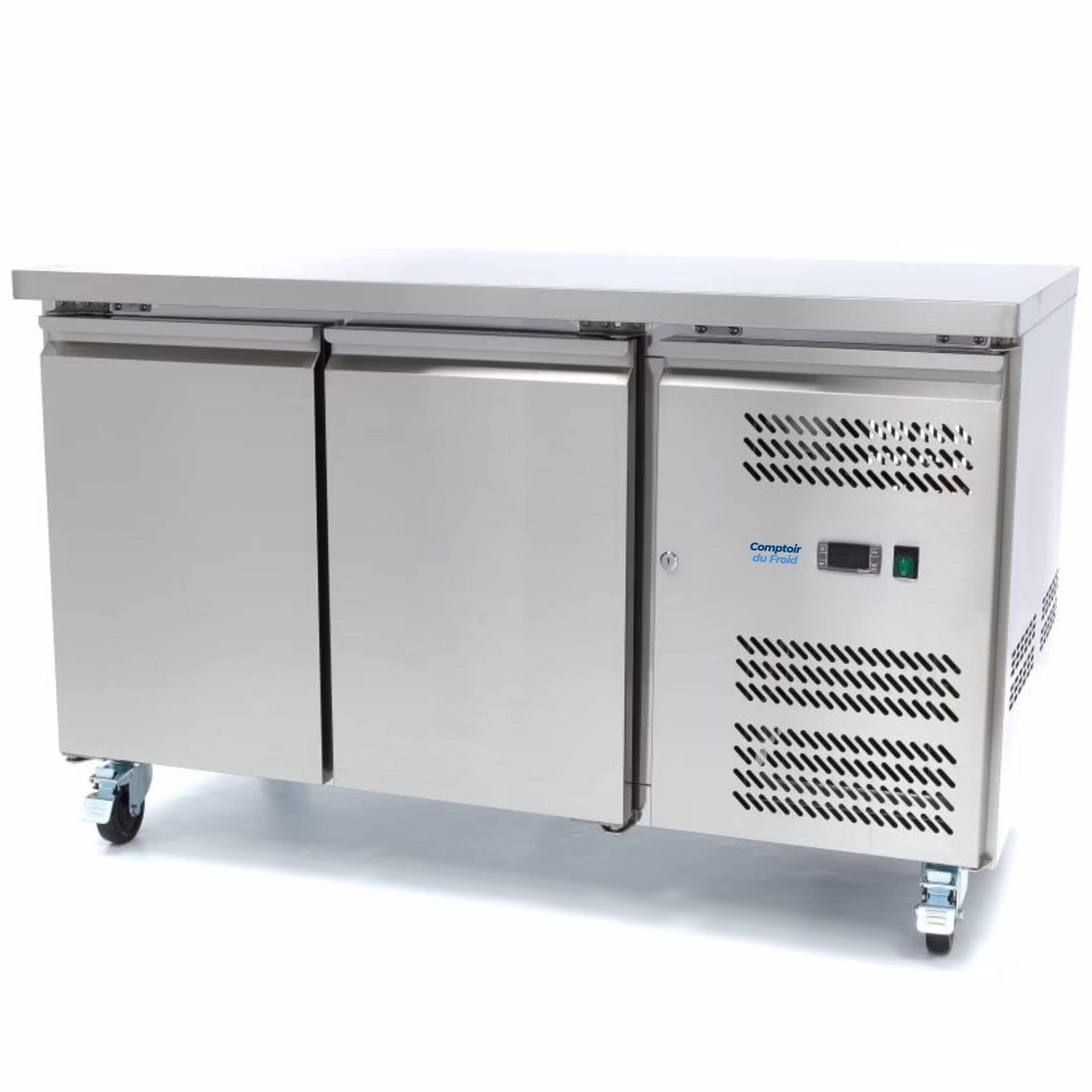
Positive Refrigerated Table 2 Doors 136cm (GN 1/1)
- Perfect for keeping fresh ingredients within immediate reach of the preparer.
- Useful GN 1/1 format for structuring a clean and clear mise en place.
- Integrated stainless steel top for a versatile preparation station in catering.
In which cases does a negative table truly improve the organization of a commercial kitchen workstation?
The question to ask is: does the negative table offer a real flow gain or just duplicate equipment? The answer is that it becomes relevant when a station consumes frozen goods regularly, quickly, and repeatedly.
In a kitchen that works with pre-portioned items, breaded products, ice cream, pastry bases, or certain emergency stock items, placing a negative table near the point of use reduces travel and avoids repeated openings of a Mayn storage freezer. It also helps to better separate fresh items ready for plating from frozen items still awaiting use.
- Identify products actually retrieved at pace during service.
- Verify if they must remain strictly frozen until use.
- Measure the trips saved compared to your Mayn storage.
- Confirm that the unit will be dedicated to a clear role and not for overflow.
If your need is primarily for low-temperature storage at the workstation, our guide on choosing a negative refrigerated table details specific points of vigilance.
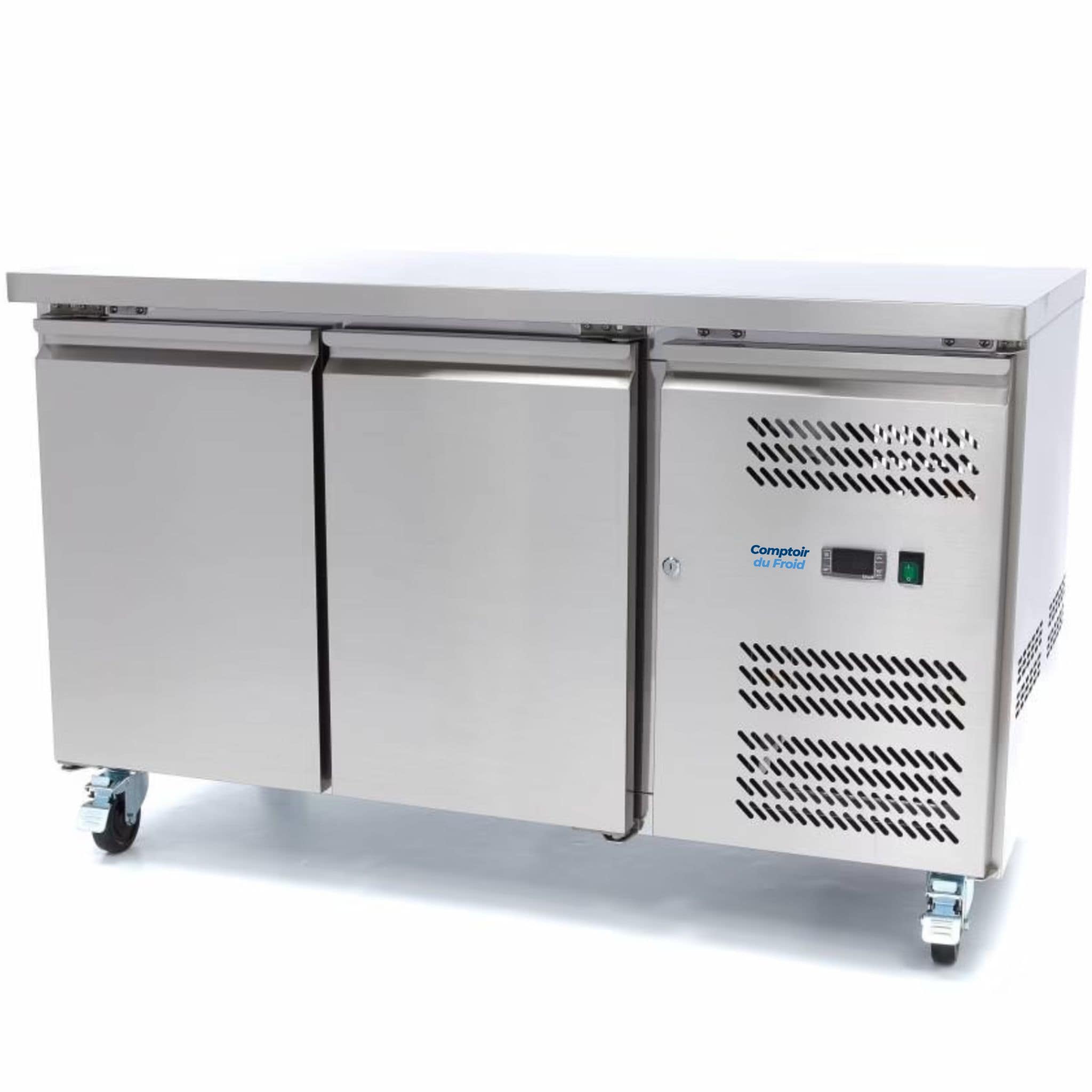
Freezer Table 2 Doors 136cm GN 1/1 (Stainless Steel Top)
- Provides a true nearby frozen reserve for high-pace workstations.
- Clearly separates the frozen flow from the fresh preparation flow.
- Useful stainless steel top if the unit becomes a functional support on the line.
What layout allows for fluid operation and HACCP compliance?
The right question is: where should each unit be placed to save time without disrupting the cold chain? The answer is to align the layout with the actual actions of the workstation: internal reception, preparation, potential cooking, plating, cleaning.
A positive table should generally be located closest to the preparation or assembly counter. A negative table, however, should be accessible but slightly offset if it feeds a hot station or finishing station, to prevent it from becoming the central point of the entire service. The goal is not to place two identical units side-by-side, but to create a clear distribution of temperatures and uses.
- keep the positive unit at the heart of fresh mise en place;
- reserve the negative unit for frozen items actually used at the workstation;
- avoid mixing raw, semi-finished, and ready-to-serve products without a logical zoning system;
- monitor actual temperatures and the condition of seals, especially on the most frequently opened stations.
In practice, the best layout is often one that reduces unnecessary openings and immediately clarifies the destination of each food item. This also reduces the risk of team errors during busy services or staff changes.
Need a positive cold station truly adapted to your pace?
Compare our positive refrigerated tables and counters to build a preparation line that’s more fluid, cleaner, and easier to manage daily.
FAQ
Can the same products be stored in a positive and a negative table?
No, their roles are not the same: the positive one is for fresh items ready for use, the negative one for maintaining frozen items or a dedicated nearby reserve.
Does a negative table replace an upright freezer?
Not always. It Maynly supplements Mayn storage when a workstation needs quick access to frozen items during service.
Which table should be installed first in a small commercial kitchen?
In most cases, the positive table comes first, as it directly supports the mise en place and plating of fresh products.
Why separate positive and negative cold storage at the workstation?
Because this separation makes actions clearer, limits storage errors, and helps maintain cleaner HACCP logic during service.