
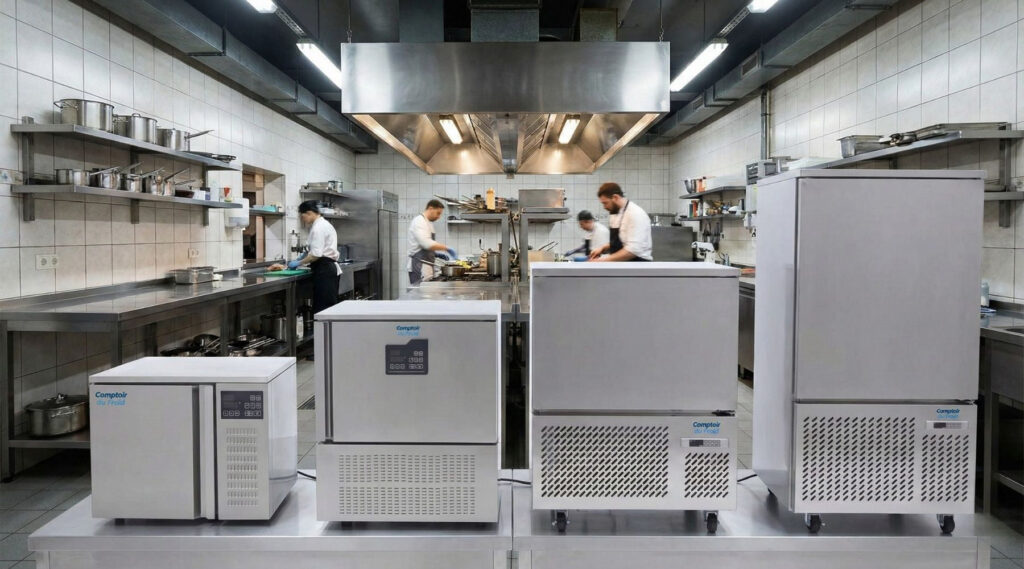
In catering, a blast chiller is not always explicitly required as a named piece of equipment. However, the rapid cooling of hot foodstuffs is a mandatory hygiene requirement, and in practice, a blast chiller quickly becomes indispensable for complying with HACCP requirements without taking risks.
In other words: the law demands a measurable result, not just good intentions. If you produce dishes in advance, sensitive preparations, or high volumes, it becomes very difficult to remain compliant without proper rapid cooling equipment.
Is a blast chiller legally mandatory?
The most accurate answer is: not explicitly as a named machine, but virtually yes in practice. The regulatory framework requires food to be cooled rapidly and controlled, with a clear focus on food safety (decree of December 21, 2009).
The key point is the obligation to lower the core temperature of a hot product within a timeframe compatible with HACCP requirements. In professional kitchens, trying to achieve this result with a simple cold room or a standard refrigerator is rarely defensible, especially as volumes increase.
- The law imposes an obligation of result, not a specific brand or model.
- A standard refrigerator is not sufficient for rapid cooling without disturbing other stored items.
- The more regular the production, the more a blast chiller becomes an operational necessity.
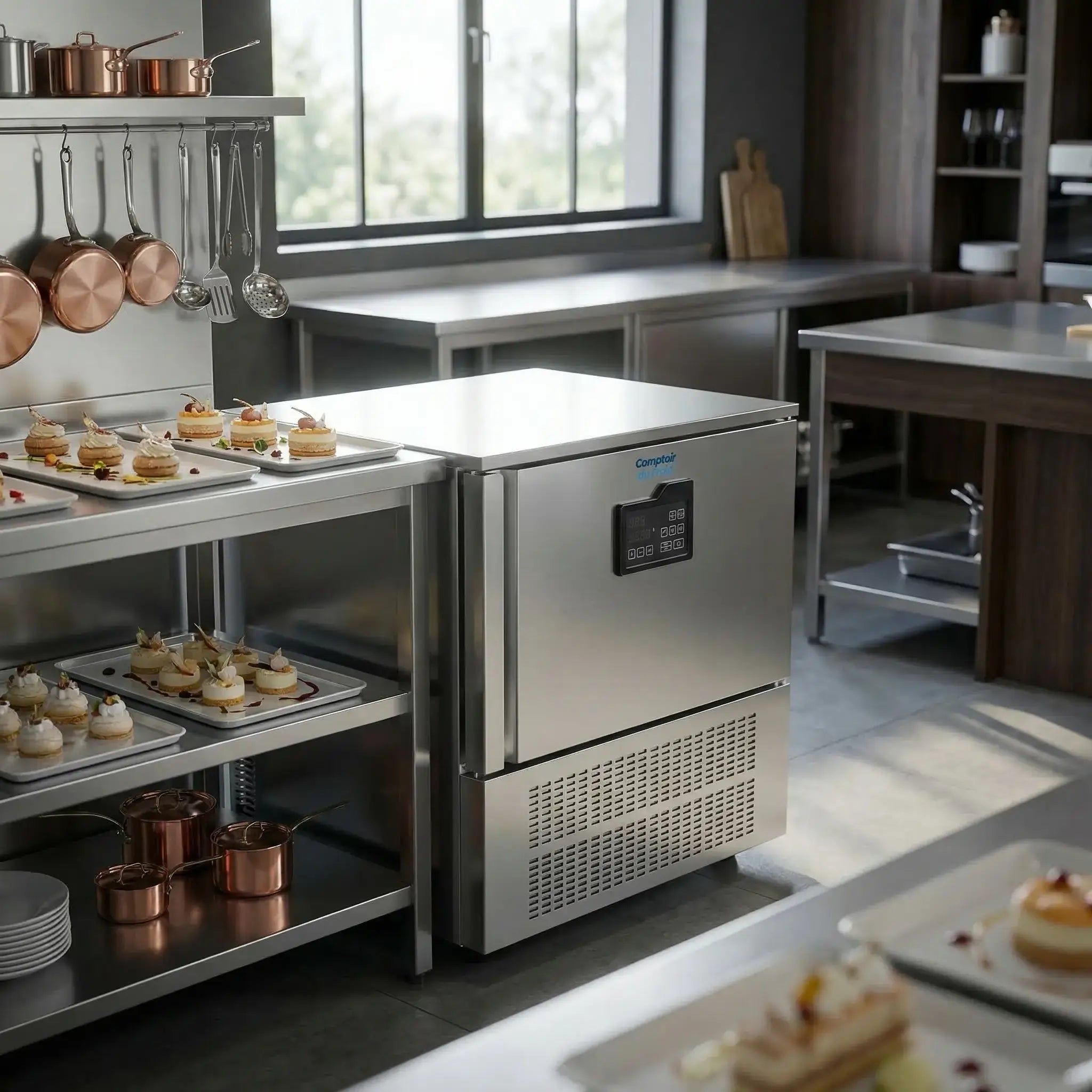
- Suitable size for a small establishment, snack bar, or kitchen with moderate pace
- Allows for rapid cooling without improvising with the storage fridge
- Good entry point to comply without over-investing
Why is rapid cooling a critical point in HACCP?
Because between cooking and storage temperature, food passes through a microbiological danger zone. If this phase lasts too long, the risk of bacterial proliferation increases significantly.
This is why cooling is treated as a critical point in many HACCP plans. A blast chiller doesn’t just speed things up: it makes this step traceable, repeatable, and defensible in case of inspection.
What risks does a restaurant owner face without a blast chiller?
The real risk is not just a health inspection: it’s the inability to prove that cooling has been controlled. Without appropriate equipment, you quickly find yourself in a gray area that is difficult to defend.
| Situation | Without suitable chiller | With blast chiller |
|---|---|---|
| Cooling a hot dish | Too long, uncertain method | Rapid and measurable cooling |
| Impact on cold storage | Risk of warming up existing cold storage | Dedicated cycle, without disturbing the rest |
| DDPP control | Justification often weak | Much more defensible approach |
| Production organization | Limited and stressful batch cooking | Cleaner and safer anticipated production |
Verdict: if you regularly cool cooked preparations, a blast chiller is not a luxury. It is the equipment that transforms a theoretical sanitary obligation into a truly sustainable process.
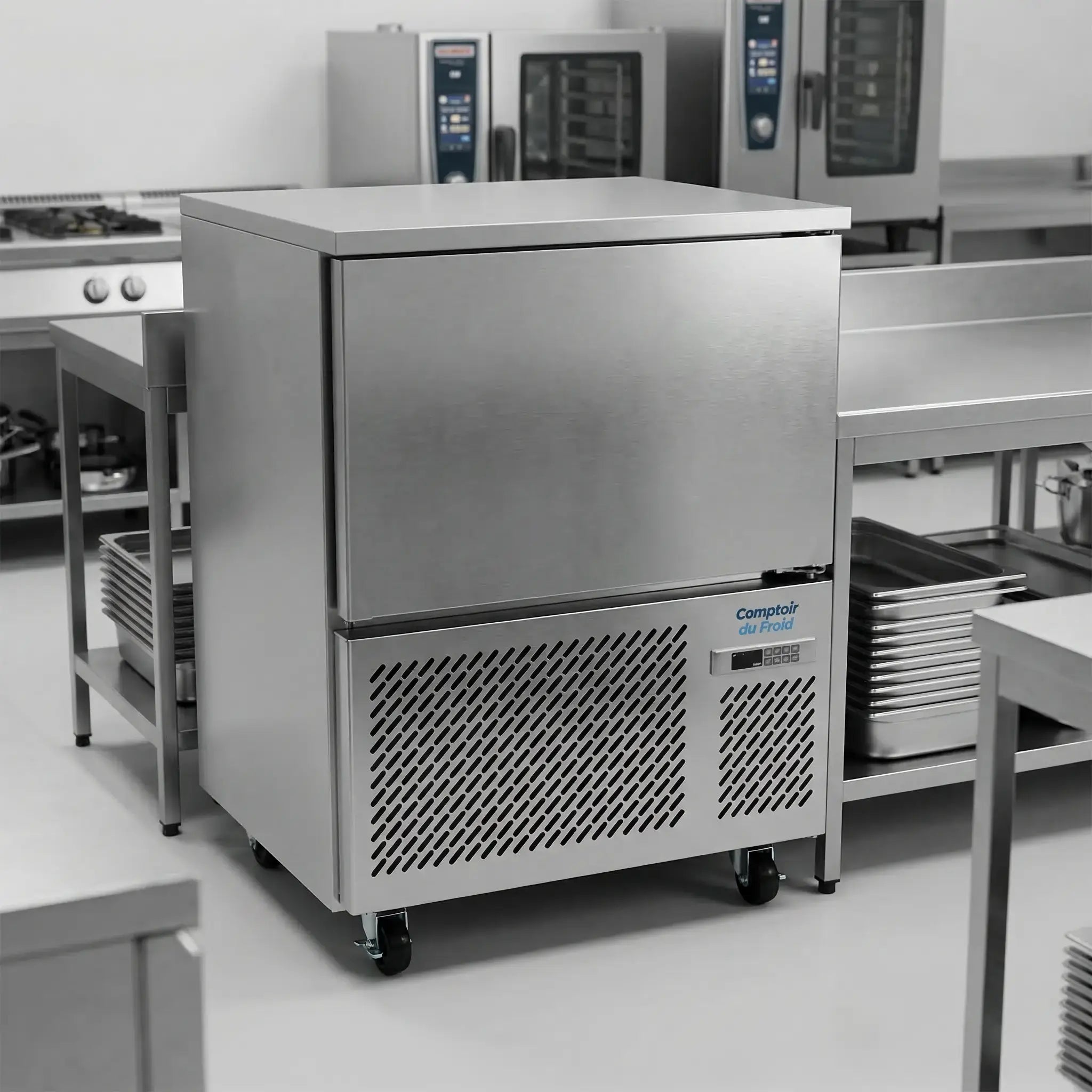
- More suitable format for catering with regular volume and significant setup
- Allows for cooling without blocking the entire kitchen organization
- Good choice if the chiller is part of the daily workflow and not for occasional use
Beyond compliance, why does this equipment become profitable?
A blast chiller doesn’t just prevent a sanitary problem. It also improves organization, limits waste, and makes production work more predictable.
- Less waste: preparations are cooled properly and can be better preserved.
- Better organization: you can cook in advance and smooth out the workload.
- More stable quality: textures, consistency, and sanitary safety are better controlled.
- More professional process: for growth, you start with an already healthy foundation.
If you are still comparing several approaches, you can also read our article on the difference between a freezer and a blast chiller as well as our guide on applying the HACCP protocol with a blast chiller.
Need a model consistent with your production?
Explore our selection of professional blast chillers to choose the right capacity according to your pace, volumes, and HACCP constraints.
FAQ
Is a blast chiller mandatory in catering?
Not always as an explicitly named piece of equipment, but rapid cooling of foodstuffs is mandatory. In practice, a blast chiller often becomes indispensable to meet this requirement.
Why isn’t a standard fridge sufficient?
Because it is not designed to rapidly cool hot dishes without disturbing other cold storage.
Which establishments most need a blast chiller?
Those that cook in advance, work with high volumes, do batch cooking, or handle sensitive preparations in terms of hygiene.
Is a small model better, or a higher capacity chiller?
It all depends on the actual volume to be cooled. A small model may be sufficient to start, but it must be consistent with your production rate and your GN containers.