
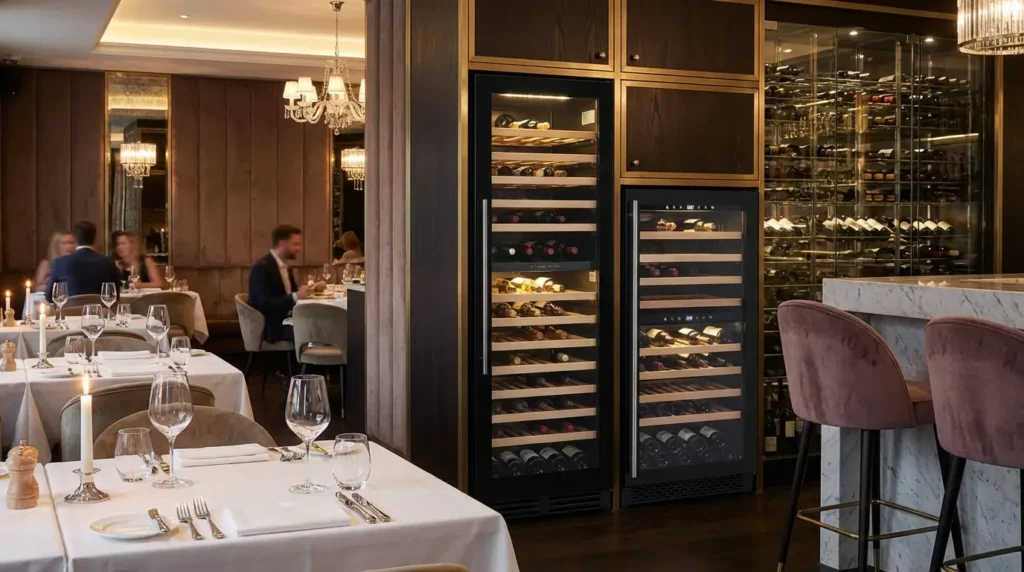
To expedite service, a restaurant wine cellar should be organized according to staff workflow, not solely by region or appellation. The most effective principle is to separate immediate service, reserve, and slow-moving bottles, then assign a stable location to each SKU.
This method reduces search times during peak hours, limits unnecessary handling, and makes stock discrepancies easier to spot.
How to Zone a Wine Cellar for Front-of-House Service?
First, create three functional zones: service, replenishment, and aging. The most frequently ordered bottles must remain accessible without moving cases or traversing the entire reserve.
- Service Zone: Wines by the glass, bestsellers, and current pairings.
- Replenishment Zone: Buffer stock intended to quickly resupply the service cellar.
- Aging Zone: Sensitive vintages, rare wines, and slow-moving bottles.
In a multi-zone cellar, place each family within the temperature range suited to its service use. Above all, maintain consistent logic: a moved bottle must be returned to the same location or immediately recorded.
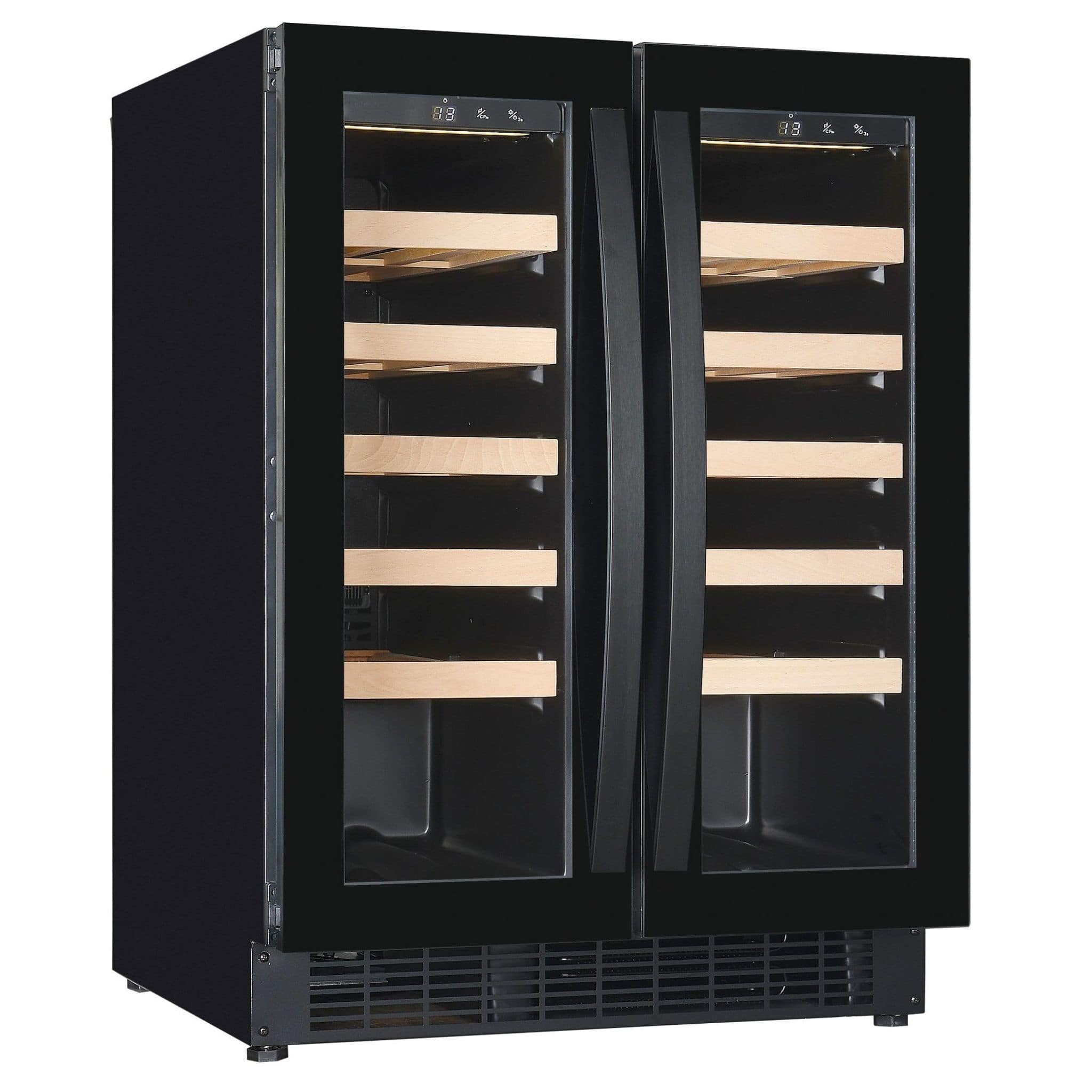
Dual-Zone Serving Wine Coolers (100 L to 379 L)
- Three dual-zone formats: 100 L with double door, 119 L with single door, and 379 L large format
- From under-counter format to a wine cooler holding approximately 154 bottles, depending on restaurant space and turnover
- Two independent temperatures, forced-air cooling, automatic defrost, and wooden shelves across the entire range
If the establishment still needs to decide between long-term preservation and service temperature, the comparison of wine storage cabinet or serving wine cooler clearly separates the two functions before organizing stock.
Which Labeling System Avoids Unnecessary Searches?
Use a short, visible, and identical addressing system in the cellar and in the inventory. A code like “B-03-2” can designate zone B, the third shelf, and the second position: the team finds the bottle without memorizing the entire wine list.
The storage plan must remain legible to a new employee. Prefer moisture-resistant labels, placed on the shelves rather than on the bottles, and keep essential information in a shared table:
- SKU and vintage;
- exact location;
- available quantity and replenishment threshold;
- entry date or lot when tracking requires it;
- associated service zone.
Field Tip: Photograph the approved cellar plan and display it near the preparation area. A simple convention, applied by the entire team, is better than a sophisticated classification that no one keeps up to date.
How to Organize Rotation Without Disturbing Bottles?
Replenishment must follow a planned rotation and occur during quiet periods. New arrivals go to their designated location, while existing bottles remain immediately accessible. For wines intended for aging, the decision to remove them also depends on their drinking window, not just their purchase date.
Avoid filling each level to maximum capacity. Maneuvering space reduces shocks, facilitates counting, and allows for integrating a delivery without disorganizing the entire cellar. Sensitive bottles also benefit from being kept away from vibrations, direct light, and repeated thermal variations.
This same discipline applies to other maturation equipment: the guide on the cheese and charcuterie aging cellar shows why zoning, stability, and stock monitoring must work together.
Which Storage Layout Suits the Restaurant’s Service Volume?
The higher the service volume, the more storage must follow order frequency. A small establishment can maintain a predominantly oenological classification; a high-turnover dining room benefits from placing best-selling SKUs closer to the service station.
| Context | Priority Organization | Service-Adjacent Stock | Key Consideration |
|---|---|---|---|
| Small Wine List | Wine type then appellation | One to two bottles per active SKU | Do not multiply codes |
| High-Volume Restaurant | Order frequency then color | Restock threshold defined per SKU | Replenish outside of peak hours |
| Premium Wine List | Immediate service separate from cellaring | Short and controlled selection | Limit light, vibrations, and handling |
| Wine by the Glass | Dedicated, highly accessible zone | Wines open for by-the-glass service and buffer stock | Monitor openings and rotation |
Verdict: For high-volume service, first sort by sales frequency and serving temperature. For a premium wine list, strictly separate cellaring from daily availability.
What errors slow down service the most?
The Mayn error is moving bottles without updating the inventory. Other time losses come from overly dense stock, illegible labels, or a service area filled with rarely requested SKUs.
- Do not mix long-term reserve and service stock on the same shelf.
- Do not block grilles or areas necessary for air circulation.
- Do not overload the cellar beyond the capacity and arrangement specified by the manufacturer.
- Do not restock during peak activity unless there is an urgent out-of-stock situation.
A brief weekly check is often sufficient: verify locations, count active SKUs, identify stagnant bottles, and adjust thresholds according to actual sales.
Need a cellar adapted to your organization?
Compare aging and service formats to build a storage system consistent with your wine list, space, and pace.
Restaurant Wine Cellar Layout FAQ
Should bottles be sorted by region or sales frequency?
For high-volume service, first sort SKUs by sales frequency, then by color or region. The arrangement should streamline staff movements.
How much stock should be kept near the service station?
Maintain buffer stock proportionate to usual sales and set a restock threshold per SKU. Avoid saturating the service cellar.
How to quickly locate a bottle in the cellar?
Assign a short code to each location and record it in the inventory. The same code must be visible on the shelf.
How often should the arrangement be checked?
A quick weekly check, supplemented by regular inventory, allows for correcting displacements and discrepancies before they slow down service.