
Buying a second-hand blast chiller might seem smart on paper. In reality, it’s often a riskier calculation than it appears, because a chiller isn’t a passive piece of furniture: it’s a technical machine that directly impacts health safety, production regularity, and cooling reliability.
The real question isn’t just “how much do I save on the purchase?”, but rather: how much can I lose if the machine is worn out, poorly maintained, or poorly calibrated?
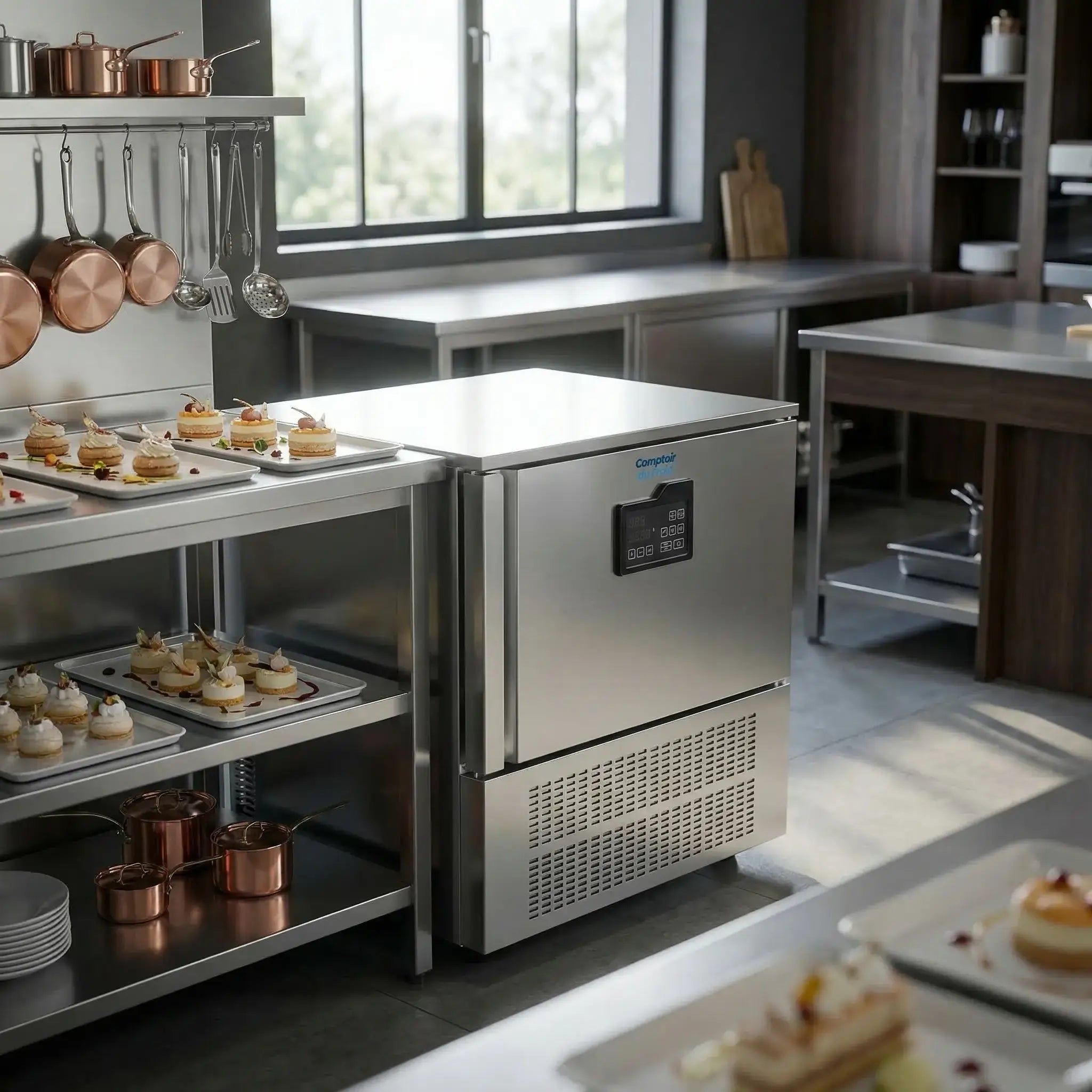
Stainless Steel Blast Chiller – 3 levels
- A sensible entry point to avoid an uncertain second-hand option from the start
- Good choice if you want a real HACCP foundation with a controlled budget
- More reassuring than old equipment with no clear history
1. The compressor may already be at the end of its life
With a used chiller, you almost never know how the refrigeration unit has fared. Yet, it’s the heart of the system. A chiller that has worked hard, been poorly ventilated or poorly maintained might still seem to function, while being close to breaking down.
The real trap is there: the machine seems like a good deal until the day the repair cost exceeds a large part of the initial savings.
2. The actual sanitary condition is often impossible to judge
A second-hand chiller also carries a hygiene history that you don’t control. Gaskets, evaporator, less visible areas, old residues: a machine can look clean on the outside but be dubious where the risk truly hides.
In an HACCP context, this lack of visibility is already a problem in itself.
3. The core probe can skew your entire process
A slightly miscalibrated probe is enough to give you a false sense of security. If the core temperature measurement is no longer reliable, you might believe you’ve chilled correctly when the product hasn’t reached the true target level.
This is a subtle but very serious risk, as it directly affects the validity of the cycle.
4. The lack of warranty makes any breakdown much more expensive
For an uncovered second-hand item, the problem isn’t just the breakdown. It’s the urgency. If the machine fails during production, you pay not only for the repair, but also for the stress, downtime, and sometimes compromised goods.
5. Electronics and hidden components can fail without warning
Circuit boards, displays, and electronic controls often age silently. A chiller might work during testing, then reveal its weaknesses after moving, recharging, or simply resuming intensive use.
This is what makes buying second-hand so uncomfortable for this type of equipment: you rarely buy just a machine, you also buy all its unknowns.
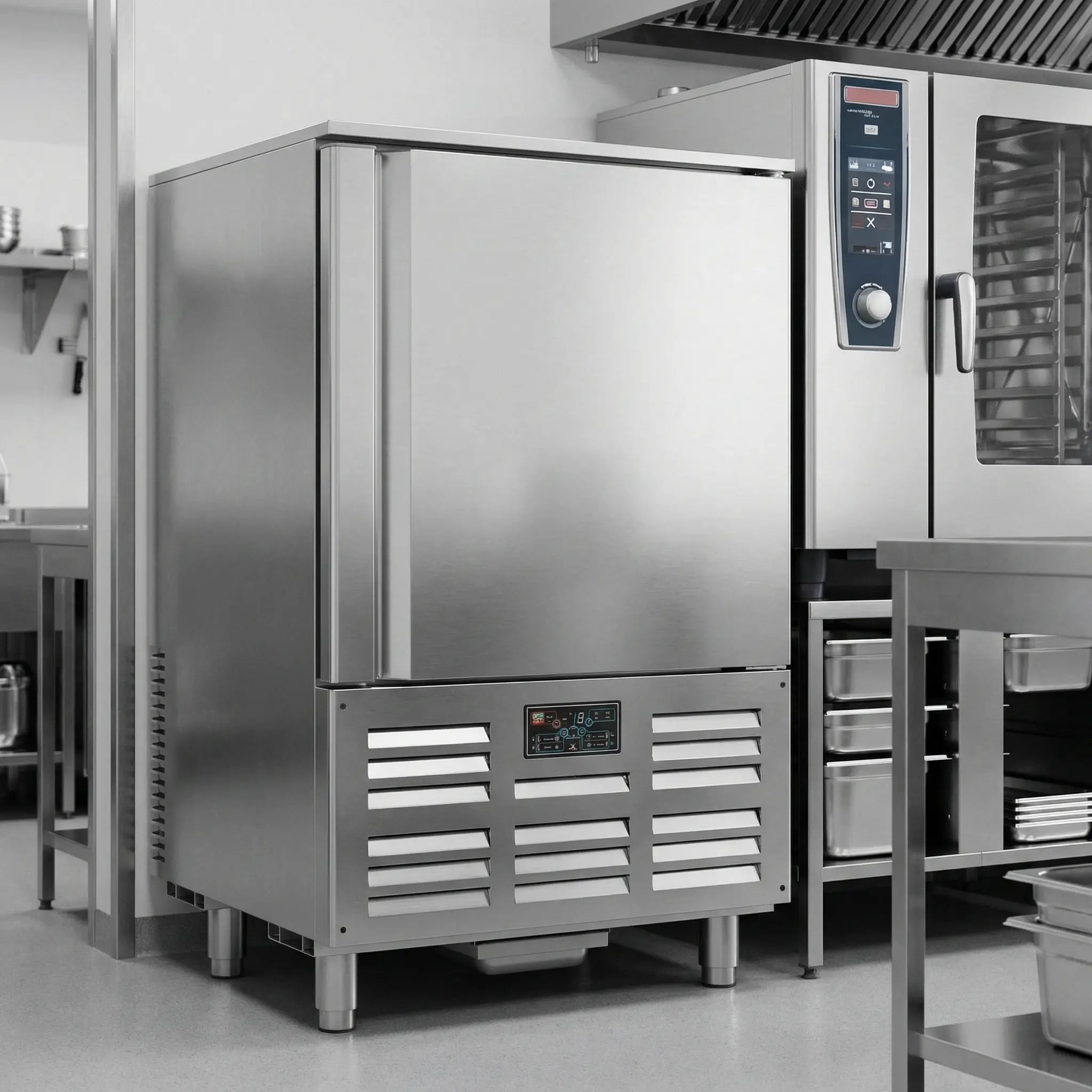
Fixed Blast Chiller – Pro Line Stainless Steel 304 – 7 levels
- More consistent choice if the chiller needs to handle a real production pace
- Helps avoid the false good deal of a fragile second-hand item in a critical position
- More reassuring if you are looking for a durable and more intensive base
What is the most rational alternative?
In many cases, it’s better to buy a well-chosen new chiller than an opaque second-hand one. The right compromise isn’t necessarily to aim for the biggest model, but to choose a suitable, guaranteed appliance that matches your actual pace.
| Option | Advantage | Main risk |
|---|---|---|
| Second-hand | Lower purchase price | Technical and sanitary uncertainty |
| New entry-level | Safer framework and still controllable budget | Capacity sometimes limited |
| More robust new | Peace of mind and better long-term durability | Higher investment |
If you’re also comparing other similar topics, you can read our article on cooling a dish without a chiller as well as our guide on the budget to plan for a truly suitable chiller.
Need to compare new chillers without falling for a false good deal?
Explore our selection to choose a model consistent with your budget, your pace, and your sanitary requirements.
FAQ
Should a second-hand blast chiller always be avoided?
Not systematically, but the risk level often remains high if the technical history, hygiene, and actual controls are not perfectly documented.
What is the most underestimated risk?
The combination of invisible mechanical fatigue and a false impression of good functionality at the time of purchase.
Why is a miscalibrated core probe so serious?
Because it can make you believe a product is safe when the core has not reached the correct actual temperature.
What is the best compromise if the budget is tight?
Often a well-sized new chiller, rather than a cheap but technically uncertain second-hand one.