
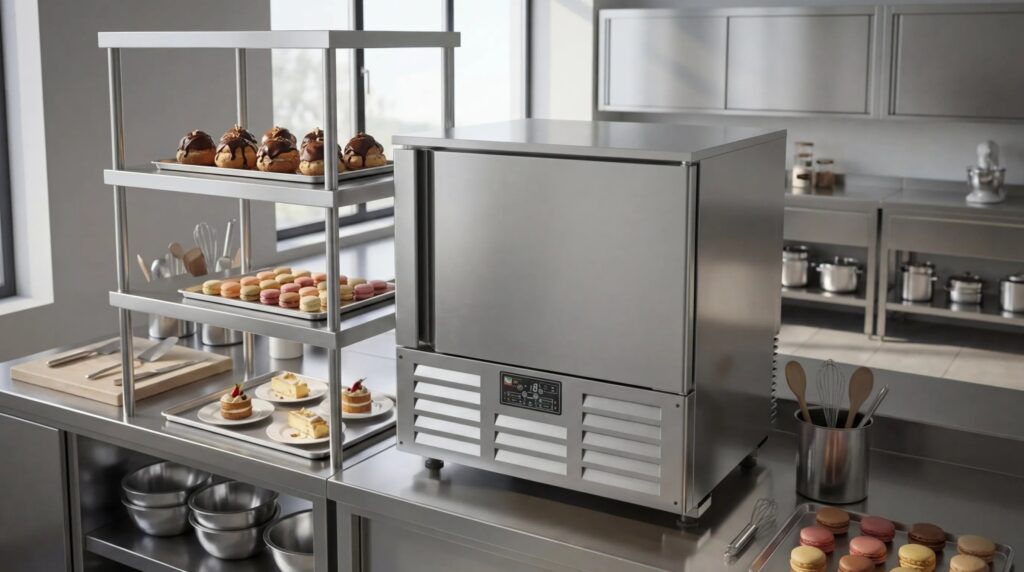
The price of a blast chiller depends less on a simple number of levels than on your production rate, your HACCP obligations, and the time you actually need to save in production. In practice, a properly sized purchase often costs less than an under-capacity model that slows down implementation, fatigues staff, and complicates traceability.
For a professional kitchen, it’s therefore necessary to think in terms of a total useful budget: capacity, temperature reduction speed, loading ergonomics, installation, and operating cost. This logic allows you to buy correctly, without overpaying or compromising food safety.
What budget should you plan for based on your activity level?
The short answer is simple: the denser your production, the more the blast chiller must absorb hot volumes without hindering your organization. The right budget is one that covers your actual needs during peak hours, not just your average usage.
In practice, we can distinguish three levels of consideration before purchasing:
- Small production or compact lab: occasional need, small quantities, limited space, priority for reduced footprint.
- Regular production: daily volumes, need to secure multiple services, seeking a good compromise between price and performance.
- Sustained production or trolley flow: large volumes, high pace, need for robustness, speed, and loading ergonomics.
If you are still unsure about the operational benefit of such equipment, you can also read what a rapid blast chiller is used for and how to use it. And if your Mayn concern is sizing, our guide 5-Level Blast Chiller: the professional buying guide helps validate the correct format.
What really makes the price of a blast chiller vary?
The price varies primarily with useful capacity, but this is not the only factor. Two blast chillers with a similar number of levels can cost differently if they do not offer the same cooling speed, the same quality of stainless steel, or the same flexibility of use.
Capacity, levels, and GN format
The more trays or plates the blast chiller can accommodate, the higher the price. But the real question is whether you work with GN 1/1, in pastry, with small batches, or with several successive productions. An ill-suited blast chiller quickly forces you to multiply cycles and loses the desired advantage.
Refrigeration power and actual speed
A professional blast chiller is judged on its ability to rapidly lower the temperature of a hot product within current standards. A more powerful machine will cost more, but it better secures activity peaks and limits bottlenecks at the end of service.
Pro tip: the most common mistake is to buy a blast chiller based solely on the advertised price. In institutional catering, bakeries, or catering production, the real extra cost Maynly comes from a model that is too small, requiring additional rotations and disrupting the cold chain.
Construction, mobility, and options
The quality of stainless steel, the robustness of the slides, the control interface, probes, automatic programs, and trolley compatibility also affect the budget. For intensive use, these elements are not a matter of comfort: they determine durability and the fluidity of daily work.
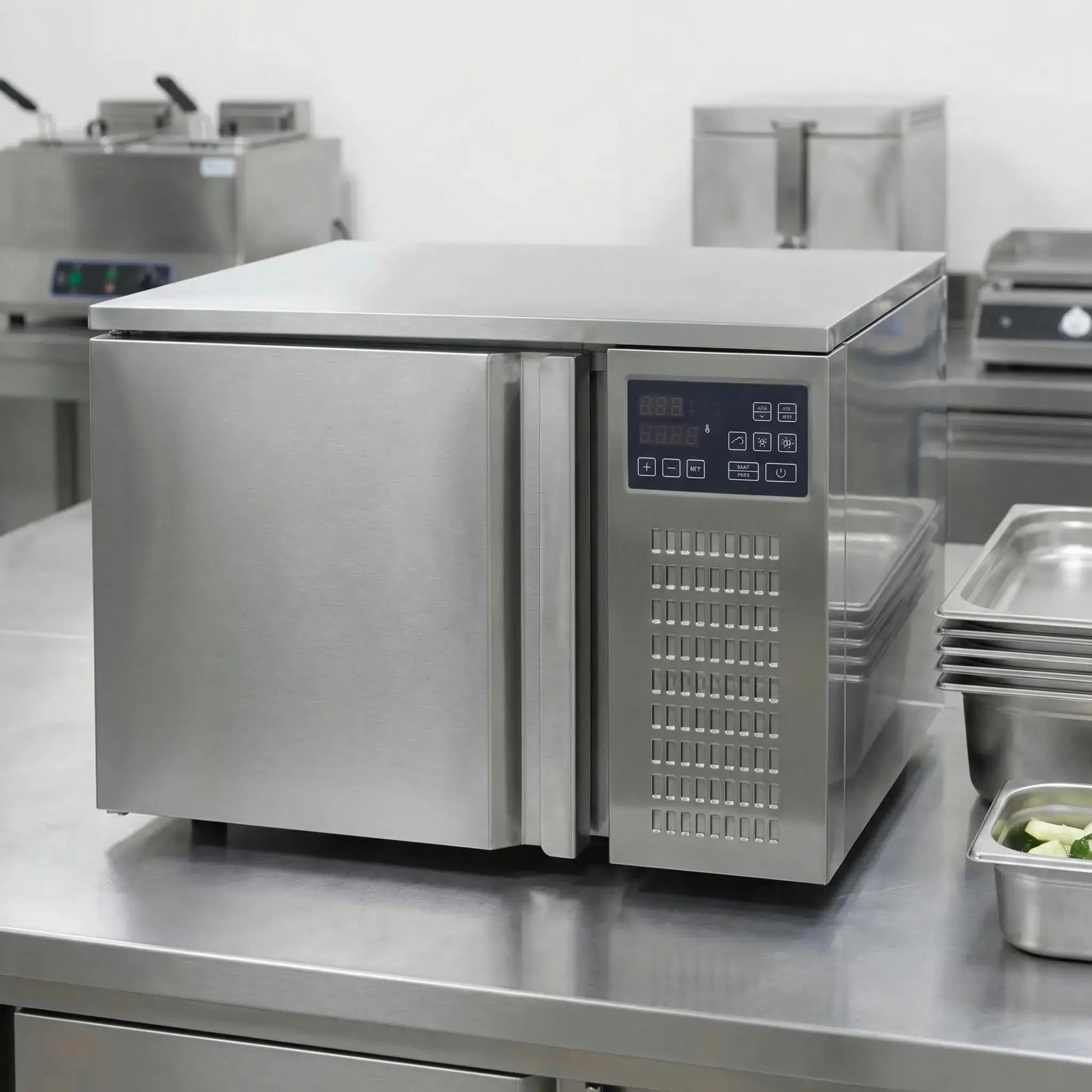
Mini Rapid Blast Chiller – Table Format (2x GN 2/3)
- Ideal for small productions and kitchens with limited space
- Compact format to ensure safe chilling without reconfiguring the entire workstation
- Good entry point to professionalize an artisanal activity
What price level corresponds to what business need?
The right compromise depends on the type of service you need to handle. A profitable blast chiller is not necessarily the cheapest: it is the one that matches your volume, your hygiene constraints, and your production organization.
| Business context | Relevant investment level | Why |
|---|---|---|
| Snack, small restaurant, compact lab | Well-sized professional entry-level | Allows for secure rapid chilling without tying up too much budget or space. |
| Traditional restaurant, caterer, regular pastry shop | Robust mid-range | Best compromise between speed, versatility, and daily reliability. |
| Sustained production, large volumes, structured flows | Higher range or more capacious mobile/fixed format | Reduces downtime, improves ergonomics, and handles repeated volumes. |
Verdict: if your business produces several hot preparations every day, it’s better to invest a little more in a truly sized blast chiller than to underestimate your needs and saturate the equipment from the first busy services.
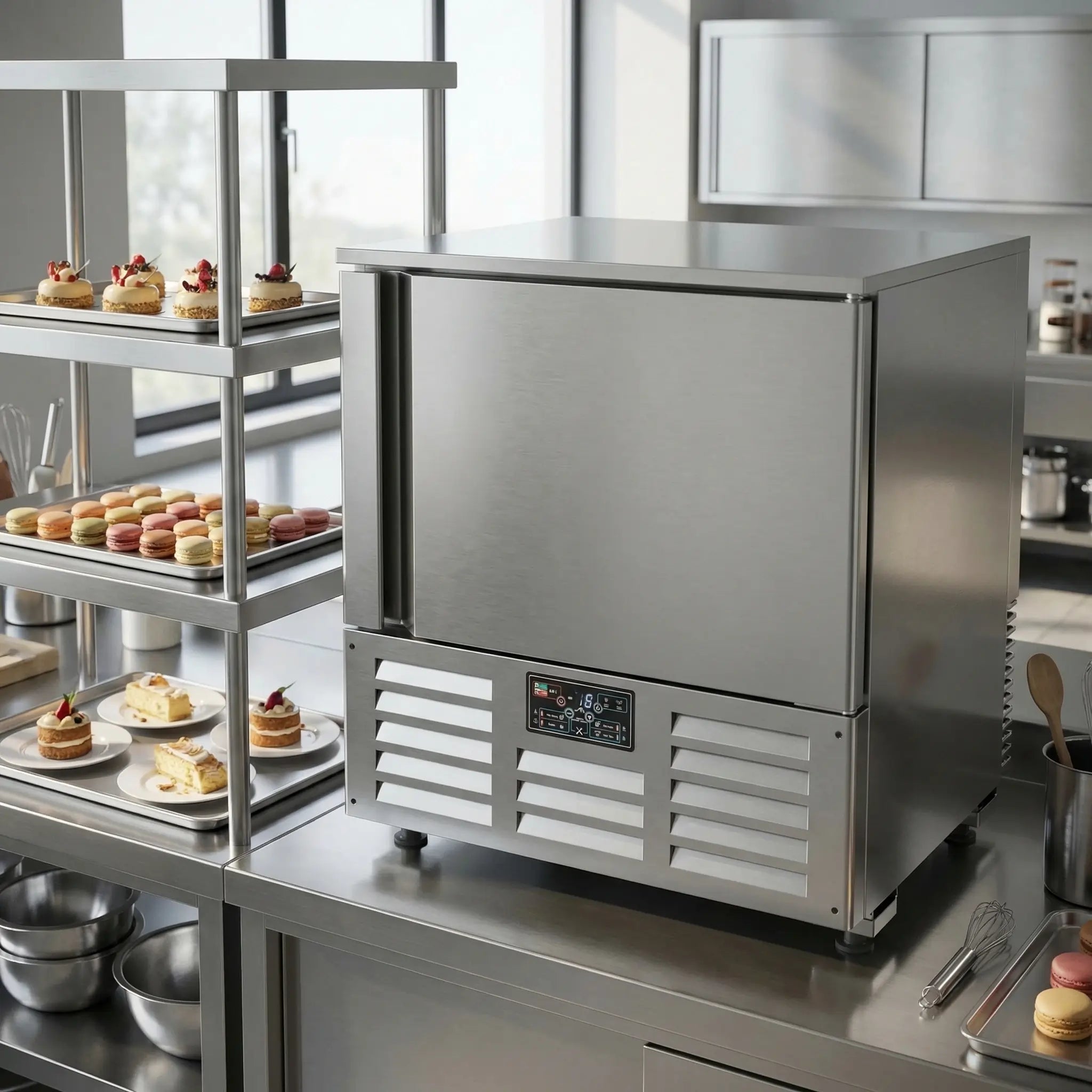
Fixed Blast Chiller – Pro Line Stainless Steel 304 – 5 Levels
- Credible solution for kitchens seeking more consistency across multiple services
- Stainless steel 304 construction designed for durable professional use
- Relevant format when the pace quickly exceeds small volumes
How to avoid overpaying or under-sizing your purchase?
The surest method is to start with your actual hot volumes, cycle frequency, and available space. A blast chiller that is too large ties up budget, but one that is too small often ends up costing more in lost time, operational inconvenience, and HACCP risk.
Before buying, ask yourself these questions:
- How many hot trays or plates need to be chilled within the same time frame?
- Do you work with occasional, daily, or intensive production?
- Do you need a compact, fixed, or mobile format?
- Does your team need to handle activity peaks at the end of service or after cooking?
In practice, the price must remain consistent with the expected operational gain: better compliance, less waiting, more regularity, better production rotation, and reduced stress in the kitchen.
Want to compare the right formats before investing?
Browse our selection of professional blast chillers to find the capacity level suited to your pace and HACCP constraints.
FAQ
What is the Mayn criterion influencing the price of a blast chiller?
The Mayn criterion is the truly useful capacity, but refrigeration power, manufacturing quality, and ergonomics also significantly affect the final price.
Can a small blast chiller be sufficient in catering?
Yes, if your volumes are modest and regular. However, it quickly becomes limiting if several hot productions need to be chilled within the same time frame.
Is a more expensive model necessarily more profitable?
Not always. It becomes profitable when it prevents production blockages, better secures the cold chain, and sustainably keeps up with your work pace.
Should one consider only the purchase price?
No. You must also include time saved, HACCP compliance, operational fluidity, and the ability to absorb your activity peaks.