
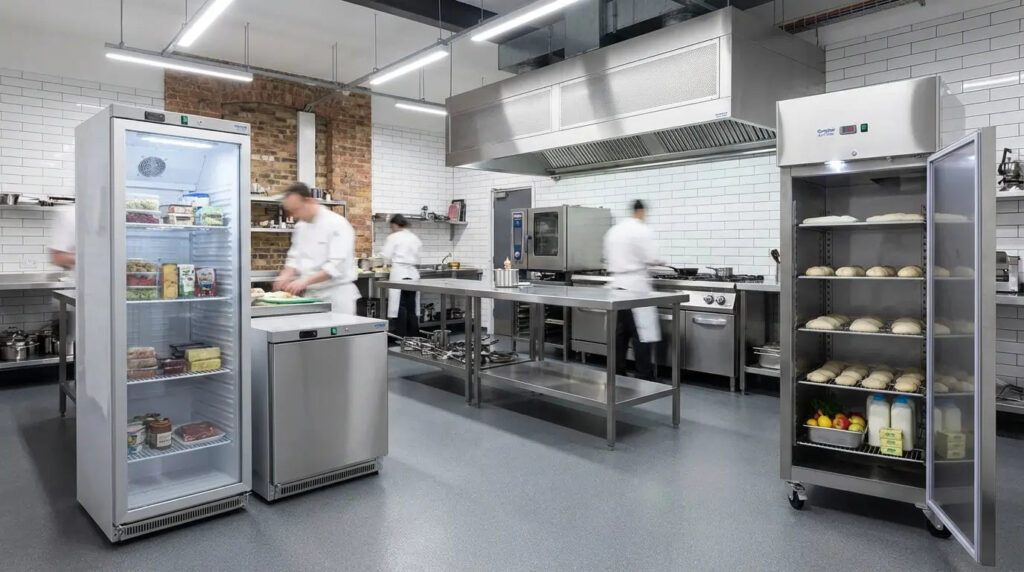
Professional refrigerated cabinets are used to store food at positive cold temperatures in stable, clean conditions compatible with the requirements of the hospitality industry (CHR). The right choice depends less on the “sticker price” than on four concrete criteria: useful volume, type of cold, type of pans used, and the actual function of the equipment in your kitchen or sales area.
In practice, a cabinet that is too small, poorly ventilated, or ill-suited to production flow ends up costing more than a properly sized model. To avoid this pitfall, it’s essential to consider its intended use: storage, availability in the kitchen, or presentation to the customer.
What is the purpose of a professional refrigerated cabinet in a CHR environment?
A professional refrigerated cabinet is primarily used to maintain a consistent positive cold temperature to store your products in good conditions of hygiene, rotation, and availability. It is difficult to replace a service cabinet when activity becomes sustained, as it offers more volume, better organization, and more consistent temperature maintenance.
In the field, it is used for fresh kitchen produce, intermediate preparations, desserts, dairy products, beverages, and items ready to be plated. In a restaurant, bakery, laboratory, or convenience store, it quickly becomes a central part of the cold chain.
- Store sensitive foodstuffs at a stable temperature.
- Organize service thanks to appropriate levels, shelves, or GN sizes.
- Secure HACCP procedures by limiting temperature fluctuations and unnecessary handling.
If your primary focus is worktop preparation, a well-sized refrigerated prep table can complement the setup. If your Mayn need is high-volume vertical storage, the cabinet remains the most coherent choice.
How to choose between solid door, glass door, compact format, or large volume?
The right format depends on the primary use. A solid door is better suited for pure storage, while a glass door is more relevant when product visibility, merchandising, or quick restocking are as important as preservation.
The choice of volume should follow your actual pace, not just your available space. A small brigade with daily restocking can operate with 200 to 400 liters. An establishment with high turnover or multiple production stations will often benefit from aiming for 600 liters or more.
Key considerations before buying
Before validating a model, ask yourself these simple questions:
- What useful volume do I need to store for 1 to 2 days of service?
- Do you work with GN 1/1 or GN 2/1 pans?
- Will the unit be in the kitchen, storage, or a customer-facing area?
- Should product presentation or thermal efficiency be prioritized?
- Are door clearances, rear ventilation, and technical clearances compatible?
For a need more oriented towards display, it may be useful to compare with glass-door refrigerated cabinets, which are better suited for assisted sales, beverages, or supervised self-service.
Pro tip: The most common mistake is to think only in liters. In catering, the real issues are often the pan format, the frequency of door openings, and the temperature recovery time between services.
Ventilated cold or simpler cold: which should be preferred?
In the majority of cases, ventilated cold should be preferred for a professional refrigerated cabinet. It allows for better temperature homogeneity, faster return to cold after opening, and better performance during peak activity.
This is particularly useful in kitchens where door openings are frequent, products move in and out quickly, and thermal consistency directly contributes to HACCP compliance. Recent market standards favor this type of cold distribution to limit warm spots within the enclosure.
| Configuration | For what use? | Strength | Point of caution |
|---|---|---|---|
| Positive solid-door cabinet | Kitchen storage, reserve, laboratory | Better efficiency for storage without display | Less practical if the team needs to quickly view contents |
| Glass-door cabinet | Beverages, snacks, sales, fast service | Product visibility and time saved on restocking | More sensitive to repeated openings in warm areas |
| Compact format 200 to 400L | Small kitchen, extra storage, controlled sub-volume | Small footprint | Capacity quickly saturated if the menu expands |
| Format 600L and above | Sustained service, continuous production, multi-station | Real storage comfort and better organizational flexibility | Requires more space and careful planning for installation |
Verdict: If your priority is preservation and robustness in the kitchen, opt for a solid-door positive ventilated cabinet. If you need to display products, speed up visual selection, or serve from the front, the glass-door version becomes more relevant.
Which models are recommended for serious professional use?
For a cost-effective purchase, it is necessary to recommend models that align with the intensity of use. A good professional cabinet must combine stainless steel structure, controlled ventilation, GN compatible format, and capacity consistent with service flow.
Here are two relevant configurations to cover the most frequent needs at Chiller Hub: a pure storage model for the kitchen and a glass-door model for presentation or visible service.
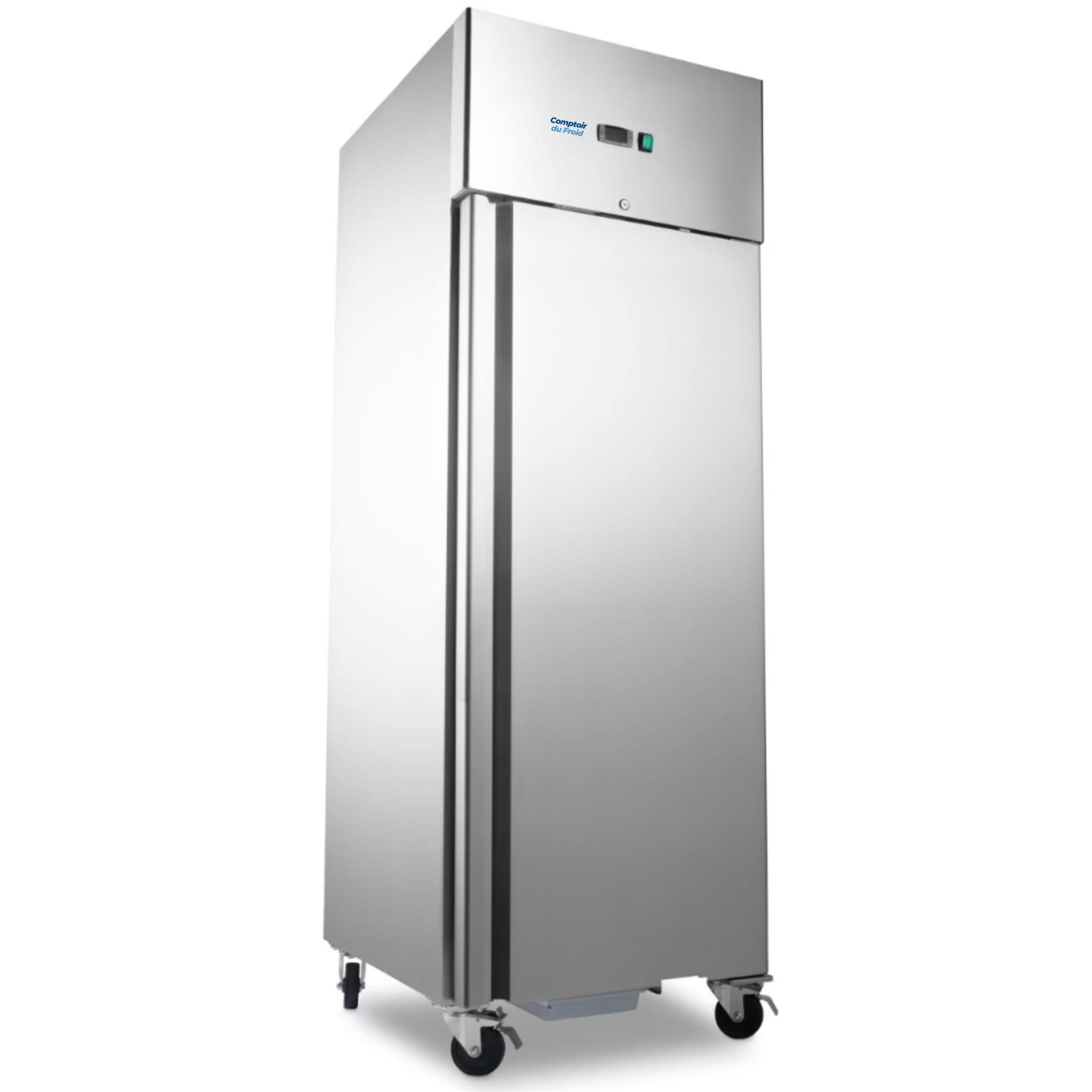
Professional Positive Refrigerated Cabinet – Ventilated Cold 600L
- ✓ Excellent compromise between useful capacity and footprint in the kitchen.
- ✓ Ventilated cold adapted to repeated openings during service.
- ✓ Relevant pro format for restaurants, institutions, and laboratories.
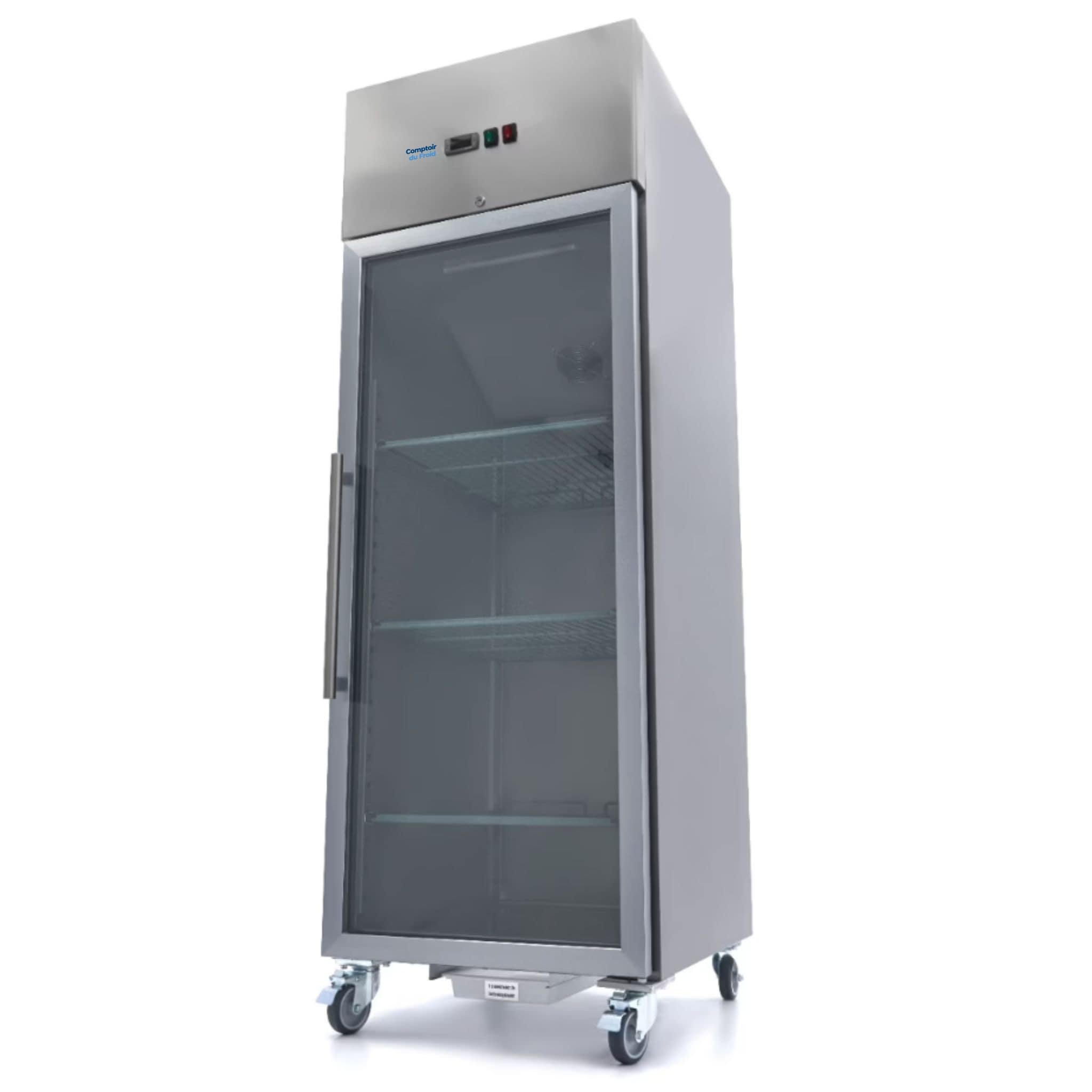
Professional Glass-Door Refrigerated Cabinet GN 2/1 – Presentation 600L
- ✓ Immediate product visibility for service and restocking.
- ✓ Serious capacity for beverages, desserts, or premium snacks.
- ✓ Credible solution when the cabinet also contributes to sales.
Which mistakes avoid the most operational losses?
The most costly mistakes are well-known: underestimating the volume, neglecting air circulation around the unit, choosing a glass door when storage is needed, or overlooking pan and door constraints.
In practice, a well-chosen cabinet reduces handling, space shortages, temperature fluctuations, and stress during setup. It also improves inventory visibility, directly impacting product turnover and profitability.
- Not anticipating increased demand: what is sufficient today may become too small during high season.
- Confusing visibility with storage performance: a glass door is not the best choice for all uses.
- Ignoring the GN format: an incorrect format leads to significant time loss daily.
- Installing the unit too close to a heat source: this degrades refrigeration efficiency.
If you’re looking for a simple solution: for a production kitchen, first choose a solid-door positive ventilated cabinet. For a sales area, beverages, or visible products, switch to a glass-door cabinet only if this use is truly central.
Need to compare different cabinet formats?
Find our selection of professional refrigerated cabinets to filter by capacity, door type, and professional use.
FAQ
What capacity should I choose for a professional refrigerated cabinet?
For a small establishment, 200 to 400 liters may be sufficient. As production volume increases, 600 liters often becomes the comfortable standard.
Is a glass door less efficient than a solid door?
Not necessarily, but a solid door generally remains more consistent for pure storage. A glass door makes sense when product visibility is useful for service.
Is ventilated cold essential?
In most CHR uses, yes. It improves temperature homogeneity and chilling after door openings.
Can a professional refrigerated cabinet be used in a sales area?
Yes, especially the glass-door version. It’s a good solution for beverages, desserts, pre-packaged fresh products, or displayed snacks.