
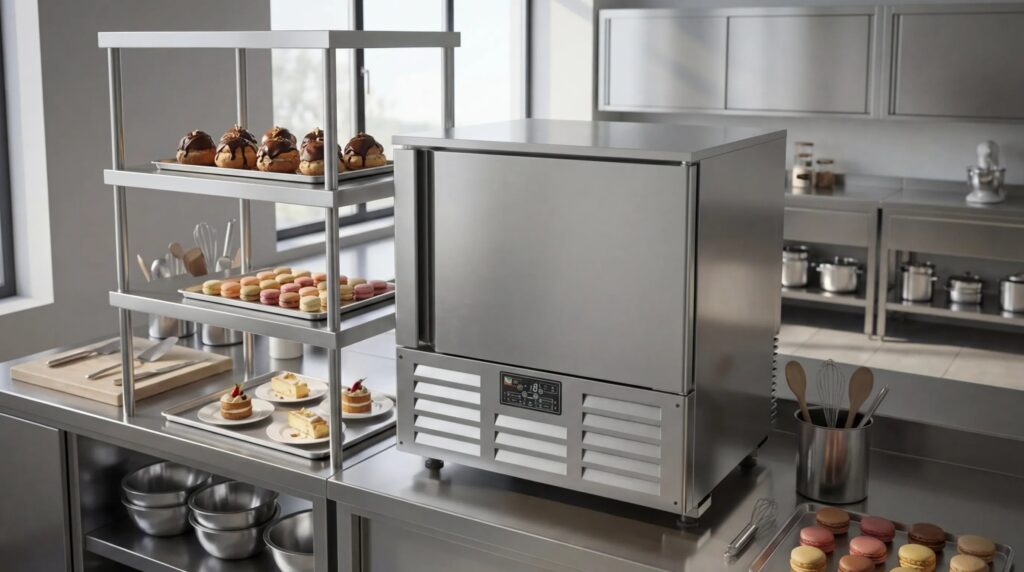
In professional kitchens, cooling a dish without a blast chiller is theoretically possible in a few very limited cases, but it quickly becomes difficult to defend from a sanitary perspective. As soon as there is volume, repetition, or real HACCP stakes, “no-machine” methods quickly show their limitations.
The real issue is not whether a dish eventually cools down. The real issue is how quickly it passes through the danger zone and whether you can prove that this step has been properly controlled.
Why is natural cooling a real problem?
Because a hot dish left to cool too slowly remains in the zone where bacteria multiply rapidly for too long. This is precisely what HACCP logic seeks to avoid.
In practice, natural cooling poses three problems:
- the temperature drop is too slow,
- the microbiological risk increases,
- the method remains very difficult to justify in case of inspection.
Can a hot dish be put in the fridge or freezer?
This is not a good solution. Many instinctively think of it, but this method puts the product, other stored food, and sometimes the equipment itself in an unfavorable situation.
- For the dish: cooling often remains too slow at the core.
- For the enclosure: you inject a high heat load into a cold volume.
- For other products: the overall temperature can rise.
- For the equipment: the refrigeration unit compensates more abruptly.
In other words, the storage fridge or freezer are not designed to absorb very hot dishes repeatedly.
Is there still a tolerable manual method?
Yes, but it remains very limited: the ice bath or “reverse bain-marie.” For small quantities, such as certain sauces or small preparations, this method can help accelerate the temperature drop.
In short:
- yes for a small, very controlled quantity,
- no as a true production method for a professional kitchen.
Why does the blast chiller remain the only truly reliable solution?
Because it is designed precisely to do what the fridge cannot: rapidly remove heat from a hot product while maintaining a consistent sanitary framework.
| Method | HACCP Credibility | Actual capacity in professional kitchens |
|---|---|---|
| Room temperature cooling | Very low | Very poor |
| Conventional fridge | Low | Insufficient for hot items |
| Ice bath | Limited | Small quantities only |
| Blast chiller | High | The only truly structured solution |
Verdict: for a true professional kitchen, the blast chiller is not just a convenience. It is the equipment that transforms a theoretical sanitary obligation into a truly sustainable working method.
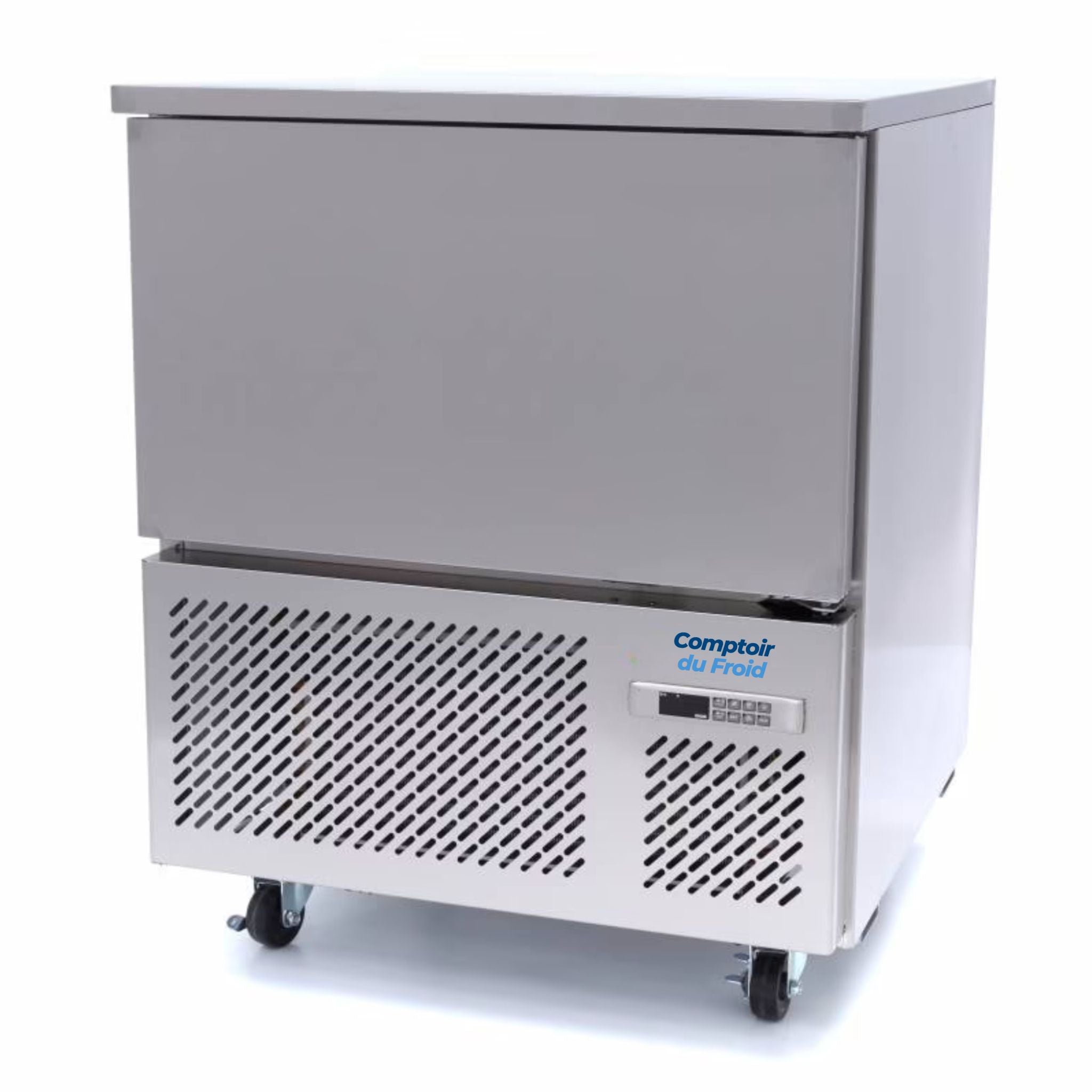
Mixed Cell – Standard Range
- Consistent solution for restaurants, pastry chefs and versatile kitchens
- Good balance between budget, capacity and compliance of use
- Compatible with a truly structured cooling logic
What level of equipment to choose depending on your activity?
It all depends on the production rate. If you cool little but regularly, a standard range may suffice. If you are a caterer, community, or very busy kitchen, you need to go for more robust equipment.
If you want to go further on the sanitary framework and obligations, you can also read our article on the actual obligation of the blast chiller in catering as well as our guide on the usefulness and proper use of a blast chiller.
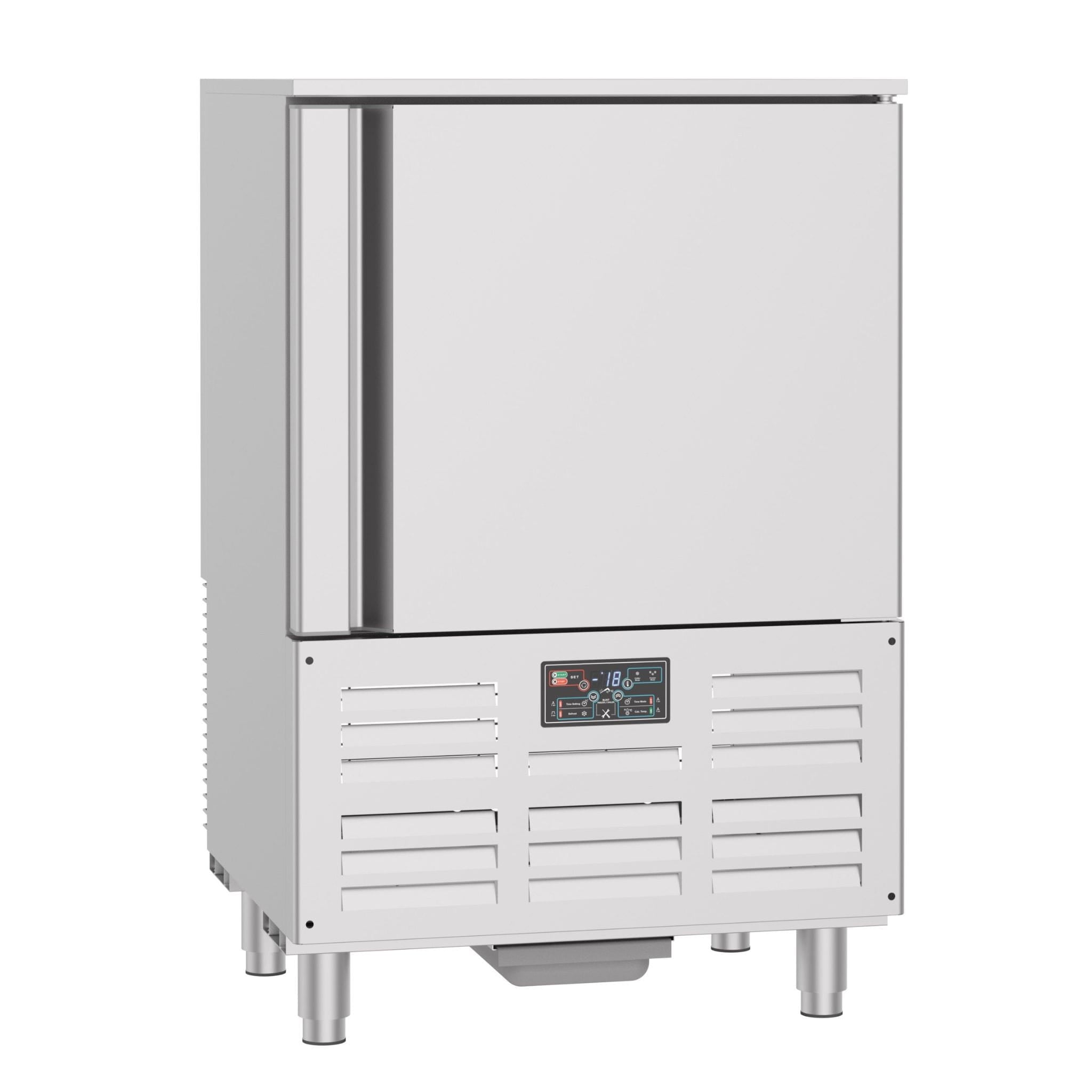
Fixed Blast Chiller – Pro Line Stainless Steel 304
- More suitable for sustained production and high thermal loads
- More consistent choice for caterers, communities, and high-volume kitchens
- Secures cooling without makeshift solutions or fragile compromises
Need a real solution to properly cool your dishes?
Explore our range of professional blast chillers to choose the right capacity level according to your volumes and HACCP constraints.
FAQ
Can a dish be cooled at room temperature in a restaurant?
This is not a reliable method for a professional kitchen, as the temperature drop is too slow and too risky from a sanitary point of view.
Can a fridge replace a blast chiller?
No, not for properly cooling a hot product in production. It is not designed for this and it can also disrupt other stored items.
Can an ice bath be sufficient?
Only for very small quantities and with great rigor. It is not a true production solution on a professional scale.
Why does the blast chiller remain the only truly defensible solution?
Because it allows for rapid, structured cooling that is much more compatible with HACCP requirements and the actual organization of a professional kitchen.