
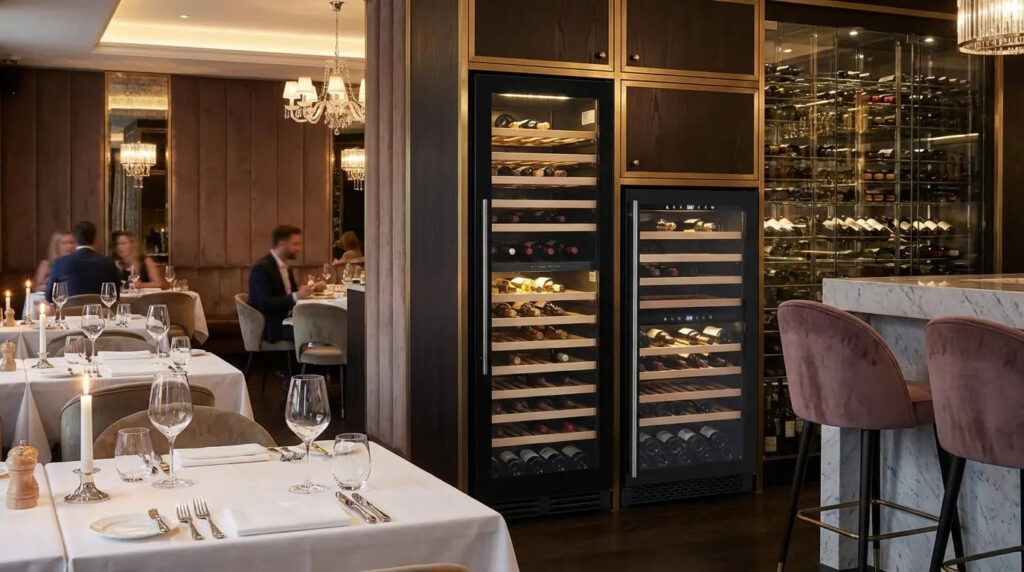
When choosing between a wine aging cellar and a wine serving cellar, the right choice depends first on your objective. Do you want to store bottles for several years under stable conditions, or keep them ready to be served at the right temperature on a daily basis?
These two pieces of equipment do not serve the same purpose. One protects wine over time, the other supports rotation and presentation. If you confuse them, you risk buying a cellar that looks appealing on paper but is unsuitable for your actual use.
What is a wine aging cellar used for?
An aging cellar is used to reproduce the conditions of a natural cellar as faithfully as possible. It is designed to allow wine to evolve slowly in a stable, discreet, and protective environment.
- Temperature: generally unique and constant, often around 12°C.
- Protection against light: solid door or UV-treated glass depending on the model.
- Humidity: more controlled to help preserve corks.
- Limited vibrations: essential to avoid unnecessarily tiring the wine.
This type of cellar is not designed as a quick serving tool. It is more suitable for long-term storage, for a heritage cellar, or for a progressive maturation approach for bottles.
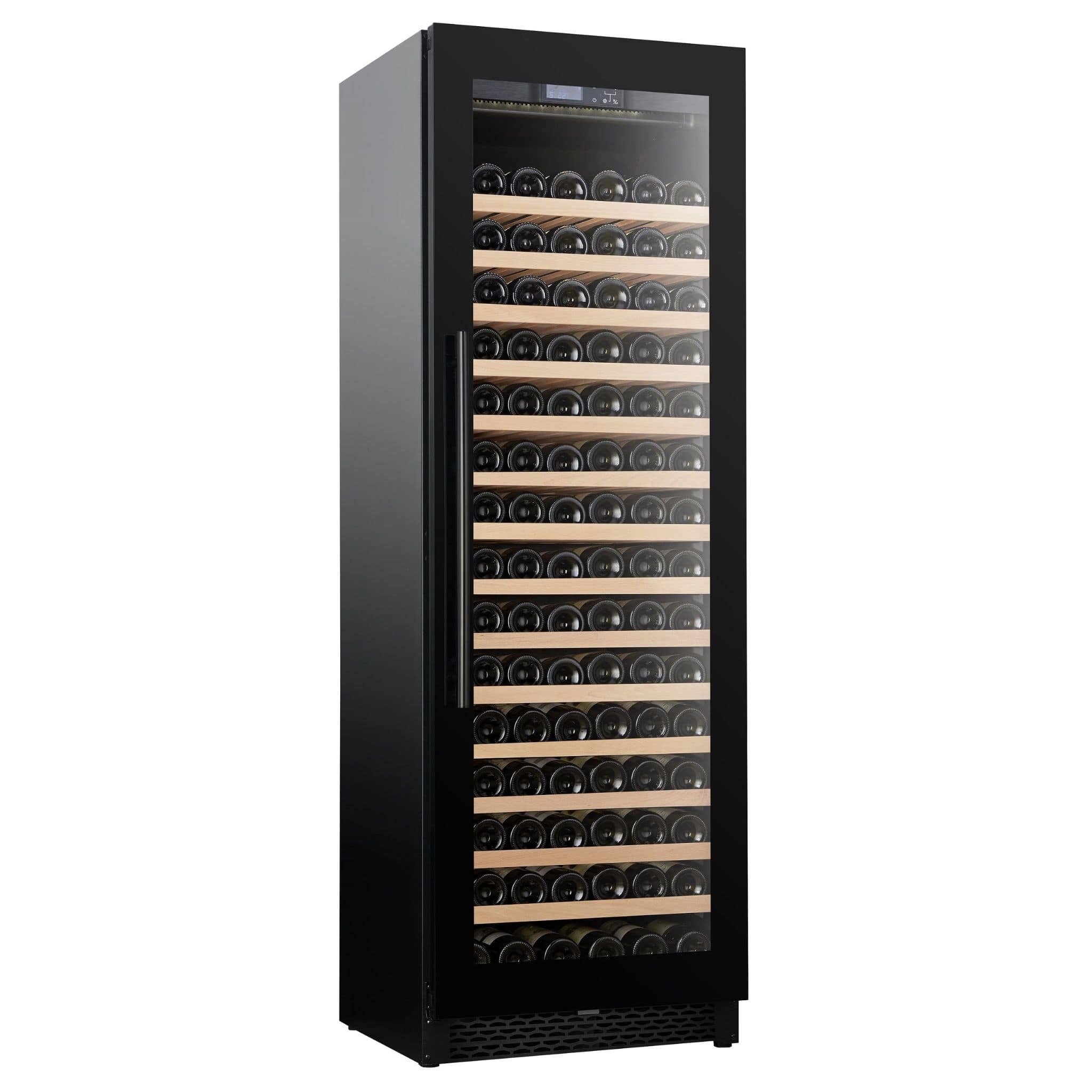
Single Zone Aging Wine Cellar – 325 Liters
- Stable temperature suitable for long-term storage
- Excellent choice for structuring a true wine reserve
- More suitable than a serving cellar if the wine needs to genuinely age
What is a wine serving cellar used for?
A serving cellar is designed to prepare wine for tasting, not to age it for years. It is the most logical equipment when bottles need to be ready to be served, visible, and accessible.
In a restaurant, a wine bar, or a reception area, the priority is not long maturation but the right temperature at the right time. This is where the serving cellar makes perfect sense, especially when it is multi-zone.
- Cool zone for whites, rosés, and champagnes.
- Temperate zone for reds ready to be served.
- Better visibility thanks to glass doors and lighting.
- Rotation more suitable for bottles that are regularly taken out.
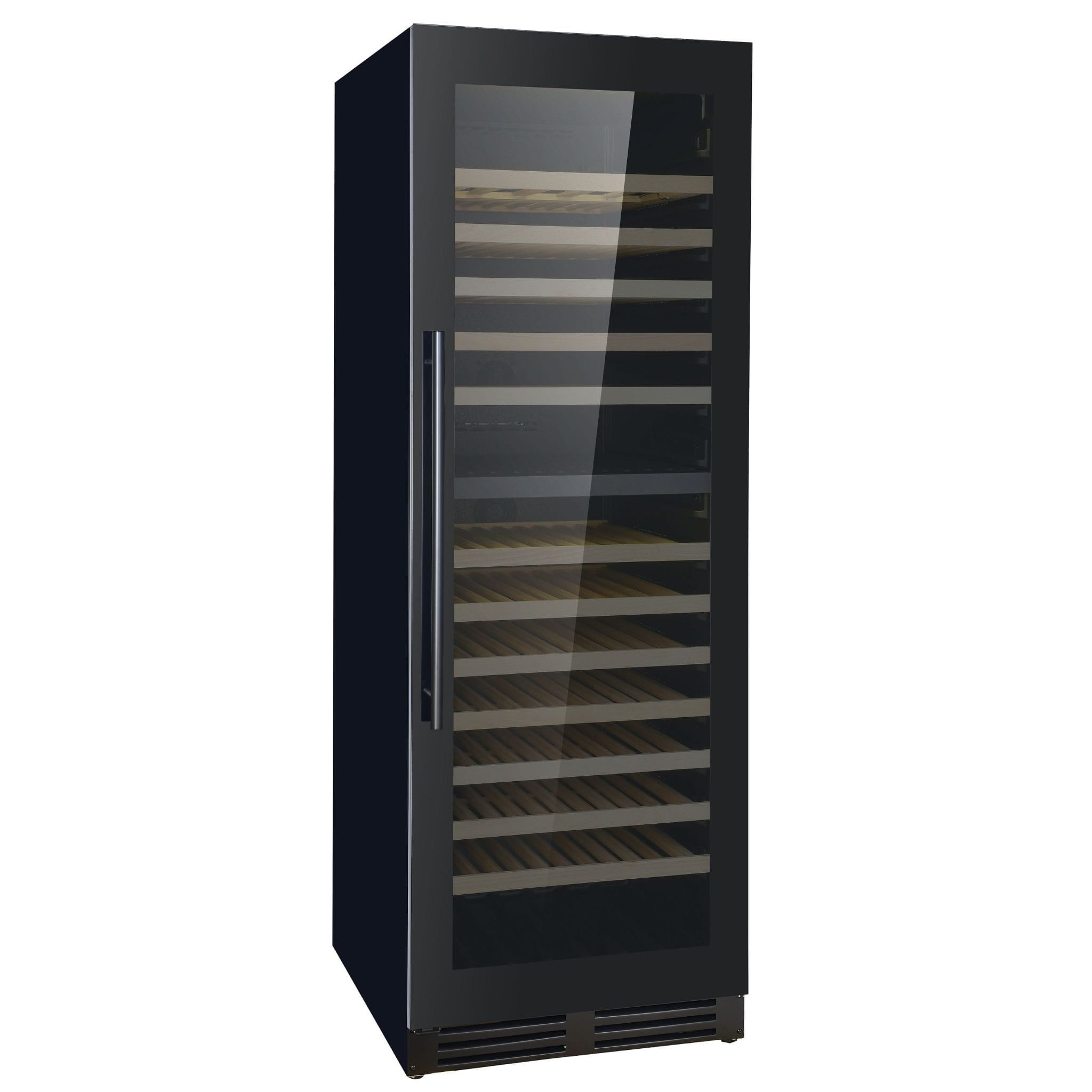
Dual Zone Serving Wine Cellar – 379 Liters
- Useful dual zone for separating reds and whites at serving temperature
- Excellent format for restaurant use or visible cellar in the dining room
- More suitable as soon as daily rotation becomes a real issue
How to decide between aging and serving?
The right choice depends less on the prestige of the wine than on its consumption horizon. If your bottles are intended for long-term storage, the aging logic applies. If they need to be ready to be served quickly, a serving cellar is significantly more relevant.
| Criterion | Aging Cellar | Serving Cellar |
|---|---|---|
| Main Use | Store and allow wine to evolve | Prepare wine for tasting |
| Temperature | Stable, often single-zone | Often multi-zone |
| Light / Presentation | Maximum protection | Stronger visual enhancement |
| Bottle Rotation | Slow | Fast to medium |
| Ideal Context | Reserve, collection, private or professional cellar | Dining room, bar, daily service |
Verdict: if you are storing to age, choose an aging cellar. If you need to serve at the right temperature daily, choose a serving cellar. And if you truly do both, you must accept that a single piece of furniture will always be a compromise.
In what cases should two separate pieces of equipment be considered?
When your activity combines storage and regular service, a single appliance often becomes insufficient. This is common in restaurants that want to both protect a small stock of fine bottles and serve an active menu under good conditions.
In this case, the best approach might be:
- an aging cellar for the Mayn stock,
- a serving cellar for the active menu,
- or a refrigerated cabinet that is better suited if the need extends beyond wine alone.
If you are still comparing uses according to the pace of your establishment, you can also read our article on choosing professional refrigerated cabinets according to service.
Need to store or serve your bottles under good conditions?
Explore our selection of professional wine cellars to choose the right model according to your rotation, your menu, and your storage logic.
FAQ
Can a serving cellar serve as an aging cellar?
Not ideally. It can help out for a short period, but it is not primarily designed for long-term stability and maximum wine protection.
Why is an aging cellar often single-zone?
Because its role is to maintain a constant and stable temperature, which is more favorable for the slow evolution of bottles.
When does a dual-zone cellar become truly useful?
As soon as you serve several types of wines at different temperatures, for example, whites and reds in the same service flow.
Can a restaurant need both types of cellars?
Yes, especially if it wants to both store some bottles for a long time and serve others daily under the best conditions.