
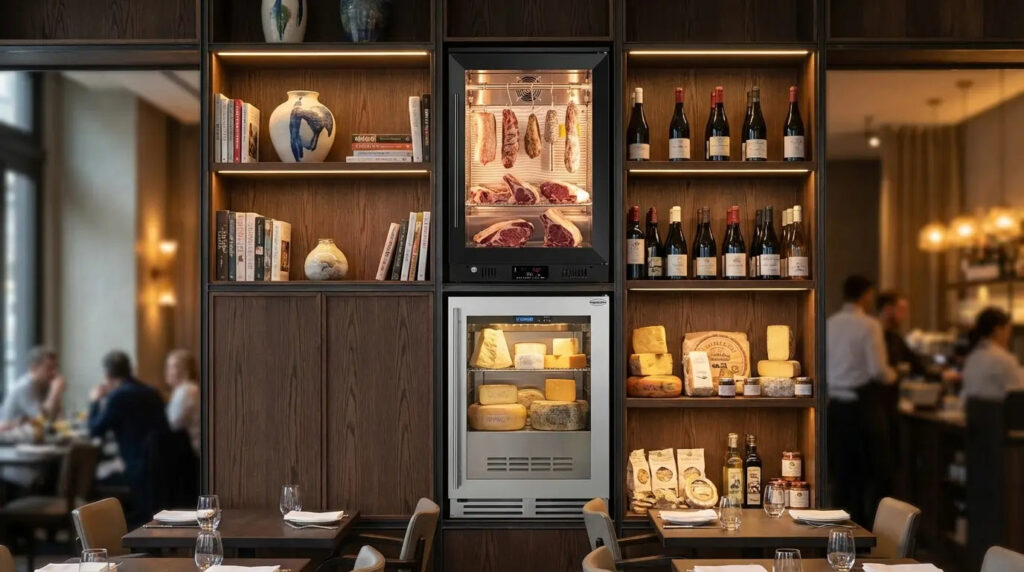
A professional aging cabinet isn’t just for storage. It allows you to control a living environment where temperature, humidity, and air circulation directly influence the texture, aromas, and consistency of the final product. This is what makes all the difference between classic cold storage and true aging work.
For cheese as well as charcuterie, the right equipment must provide precision. A poorly adapted cabinet can dry out products too quickly, encourage humidity drifts, or unnecessarily complicate product monitoring.
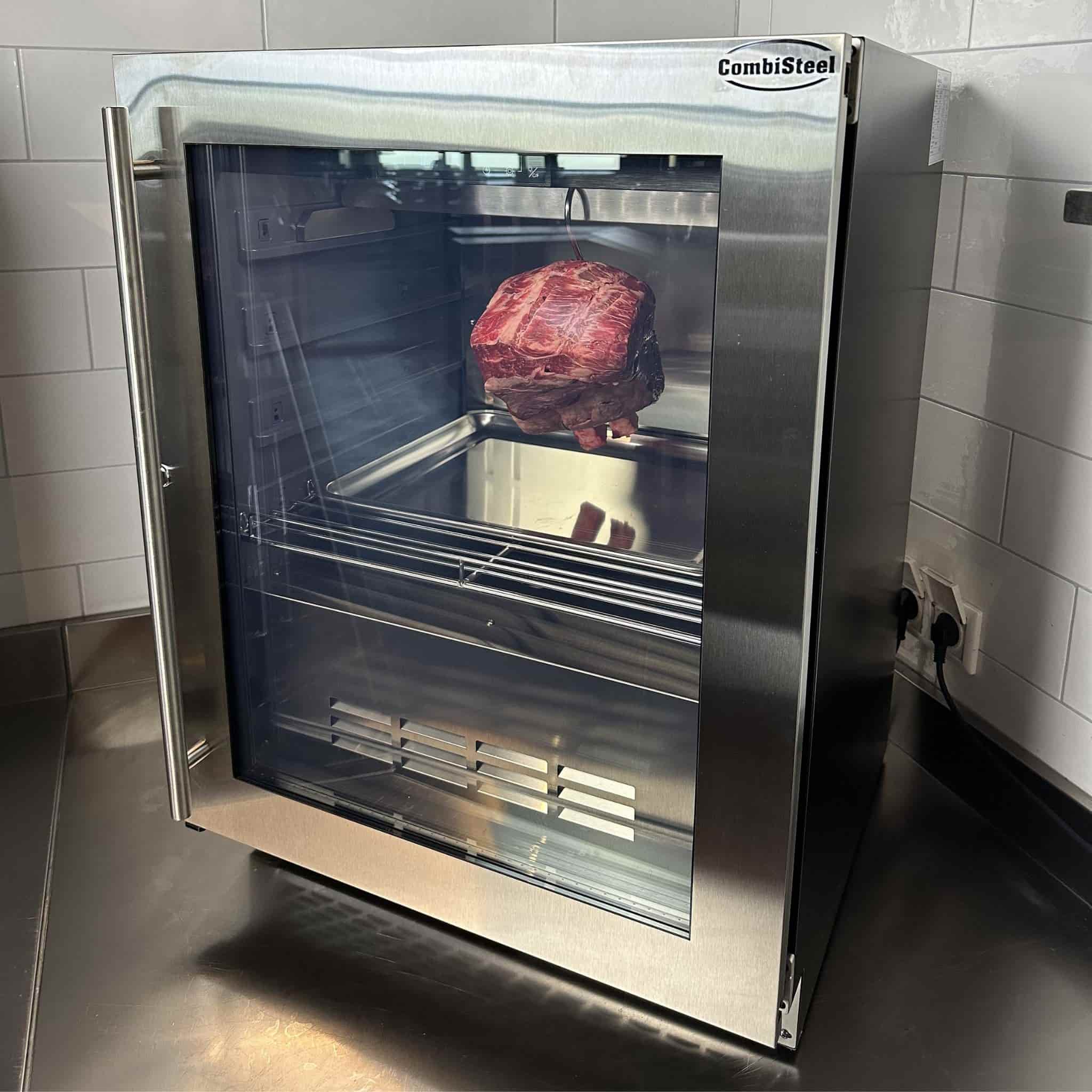
Versatile Aging & Maturation Cabinet – Cheese, Cured Meats, Meat (127L)
- Excellent choice for working with multiple product families in a compact format
- Interesting if you’re looking for a flexible cabinet that’s easier to integrate
- Good base for restaurants, creameries, or artisan workshops
Why is an aging cabinet different from a simple refrigerator?
Because a refrigerator preserves, while an aging cabinet supports product evolution. The goal is not just to keep products cool, but to maintain a consistent environment over time.
- Temperature must remain stable and suited to the product being worked on.
- Humidity must avoid both excessive drying and humidity fluctuations.
- Ventilation must be controlled to avoid damaging the products.
It’s this combination that leads to more consistent and higher quality aging.
What criteria truly matter for cheese and charcuterie?
The key point remains the cabinet’s ability to properly manage humidity. For these products, poor humidity quickly leads to defects in texture, rind, or drying.
| Criterion | Why it matters |
|---|---|
| Stable temperature | To avoid maturation drifts |
| Controlled humidity | To prevent drying out or deteriorating products |
| Gentle ventilation | To homogenize aging without harshness |
| Filtration / clean air | To limit certain contaminations or off-odors |
| Ease of cleaning | To align with HACCP principles |
Verdict: the right choice isn’t just about the number of liters. A well-adjustable and well-controlled cabinet will often be more relevant than a large volume that is poorly utilized.
Can the same cabinet be used for cheese and charcuterie?
Yes, in some cases, especially with a versatile cabinet. But it depends on your products, your settings, and your need for separation.
If humidity and temperature requirements remain similar, a versatile cabinet can work. However, if the profiles become too different or the risk of odor transfer increases, more caution is needed.
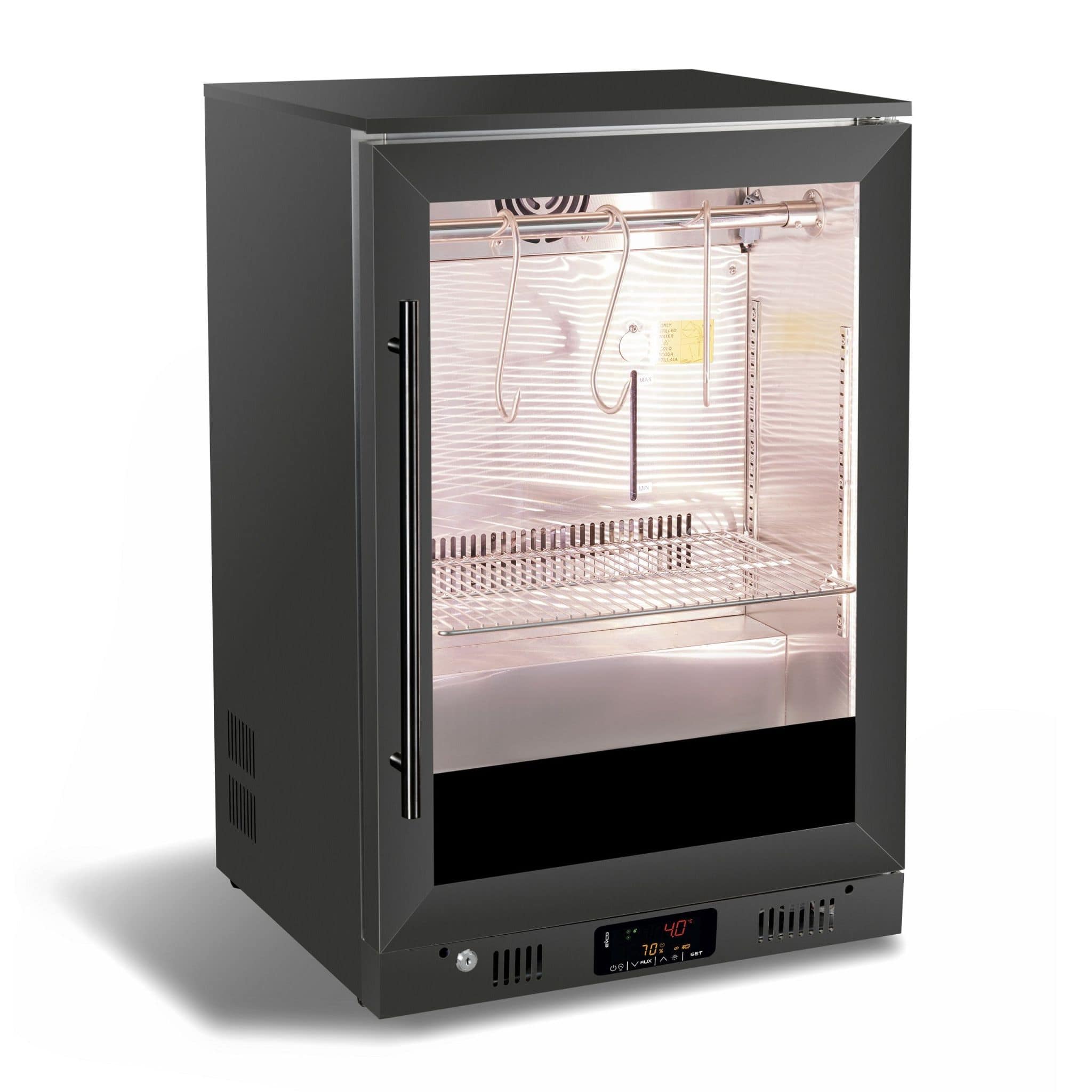
“Dry Aged” Meat Maturation Cabinet – With Salt Stone – 138L
- More consistent for a visual and premium maturation approach
- Good solution if you’re looking for a high-end result and more specialized control
- Also interesting as a comparison point for aging-related areas
Why is hygiene so crucial in an aging cabinet?
Because a living product is also a sensitive product. Working with humidity and time doesn’t negate the need for serious sanitary discipline; on the contrary.
Shelves, walls, condensation zones, and contact surfaces must adhere to rigorous cleaning protocols. If you’re also comparing other thermal control equipment, you can consult our article on dry aged maturation cabinets as well as our guide on the utility of a rapid chilling unit in an HACCP context.
Need a cabinet consistent with your aging work?
Compare our maturation and aging cabinets to choose the right format based on your products, volumes, and level of requirement.
FAQ
Can cheese and charcuterie be aged in the same cabinet?
Yes, if the necessary settings remain compatible and you effectively manage the risk of odor transfer.
What temperature should be aimed for with cheese?
Often around a temperate aging range, with a stable setting consistent with the type of cheese being worked on.
Why is humidity so important?
Because it directly influences drying, rind formation, texture, and the consistency of the final result.
Can an aging cabinet replace a classic refrigerator?
No, because its role is not just to preserve, but to control a maturation or aging environment.