
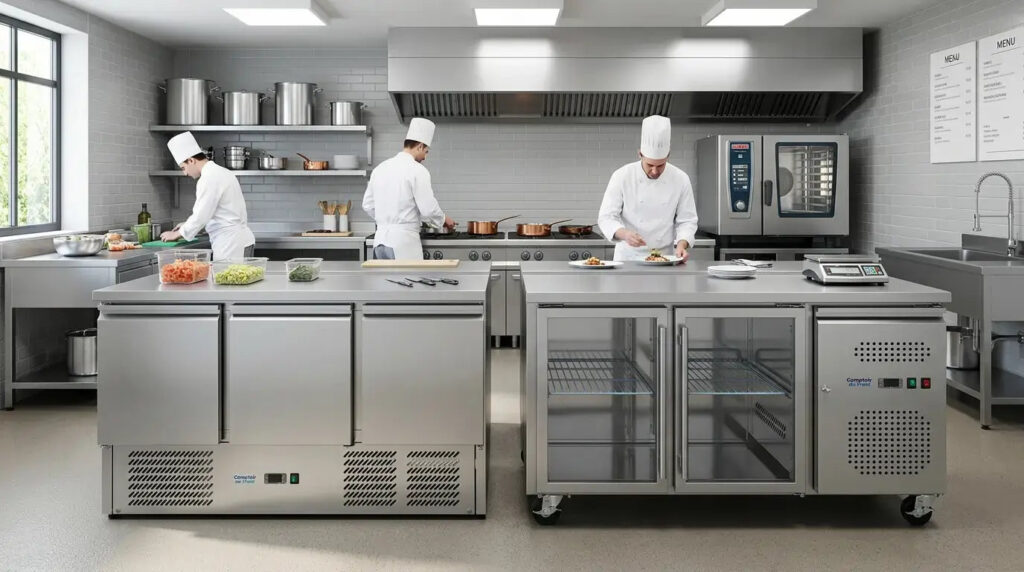
A refrigerated counter is the right choice when you need a stainless steel work surface and cold storage directly at the preparation station. In catering, it saves steps, reduces workflow disruptions, and secures the cold chain for the most frequently used products during service.
However, you still need to choose the right size, capacity, and type of refrigeration. A counter that is too small slows down setup, while an oversized model unnecessarily clutters the kitchen.
What is a refrigerated counter really used for in a professional kitchen?
A refrigerated counter is used to prepare, store, and have cold products at hand at the same station. It is particularly useful in snack bars, fast food restaurants, brasseries, bakery-snack shops, and small catering establishments where every square meter counts.
In practice, it combines three functions: a work surface for plating or assembly, a positive refrigerated volume for sensitive foodstuffs, and a more fluid station organization. Where a cold cabinet requires back-and-forth trips, the counter keeps ingredients directly within the production area.
- Time saving during setup and service
- Fewer unnecessary openings of large refrigerated units
- Better HACCP regularity thanks to quick access to products
- Working comfort in compact kitchens
If you are still hesitating between several types of low cabinets, you can also read our article on how to choose the right refrigerated table size for your professional kitchen.
How to choose the right size for a refrigerated counter?
The right size depends on the number of operators, the volume of preparation, and the space available in front of the station. A counter is not just a matter of liters: it must integrate into the actual workflow of the kitchen.
For a small snack business or a secondary preparation point, a short width with 2 doors is often sufficient. For a more sustained pace, more usable length is needed to avoid stacking trays, sauces, and ready-to-plate products.
Criteria to check before purchasing
Before validating a model, several technical criteria must be checked. This is what makes the difference between a practical purchase and a piece of furniture that hinders daily service.
| Criterion | What to look for | Impact on operation |
|---|---|---|
| Width | 90 cm, 136 cm, 180 cm or more | Determines the work surface and the number of possible stations |
| Number of doors | 2 doors or 3 doors generally | Conditions access to stock and product distribution |
| GN format | GN 1/1 most often | Facilitates integration with your existing trays and organization |
| Type of refrigeration | Ventilated refrigeration recommended for regularity | Better temperature maintenance during repeated openings |
| Use of stainless steel top | Plating, assembly, portioning | Influences the useful depth and desired robustness |
Verdict: if you are looking for a compact station for a small team, a 2-door counter is often the best compromise. For a more central preparation station, it is better to opt for a 3-door format to maintain working comfort during peak hours.
Field tip: the best refrigerated counter is not the one that offers the most volume, but the one that prevents your team from unnecessarily crossing paths. Always measure the door opening space, the circulation in front of the unit, and the remaining space for two people to work.
What is the difference between a refrigerated counter and a refrigerated workbench?
The Mayn difference lies in the depth of use and the purpose of the station. A refrigerated counter aims for compact preparation, while a refrigerated workbench is often chosen for longer lines and more sustained paces.
The refrigerated counter is ideal when you need a simple, robust, and space-saving low cabinet. The refrigerated workbench becomes more relevant when the station expands, particularly in hot kitchens, institutional catering, or multi-operator stations.
To go further on this station logic, our guide on the professional refrigerated workbench complements this topic very well.
In which cases is the counter the best choice?
The refrigerated counter is the best choice for compact stations, quick preparations, and kitchens with limited space. It is particularly relevant if you work with fast-moving products and want to maintain excellent accessibility.
- Snack bars and fast food
- Plating station in a brasserie
- Auxiliary cold zone in a small kitchen
- Preparation of sandwiches, salads, or minute desserts
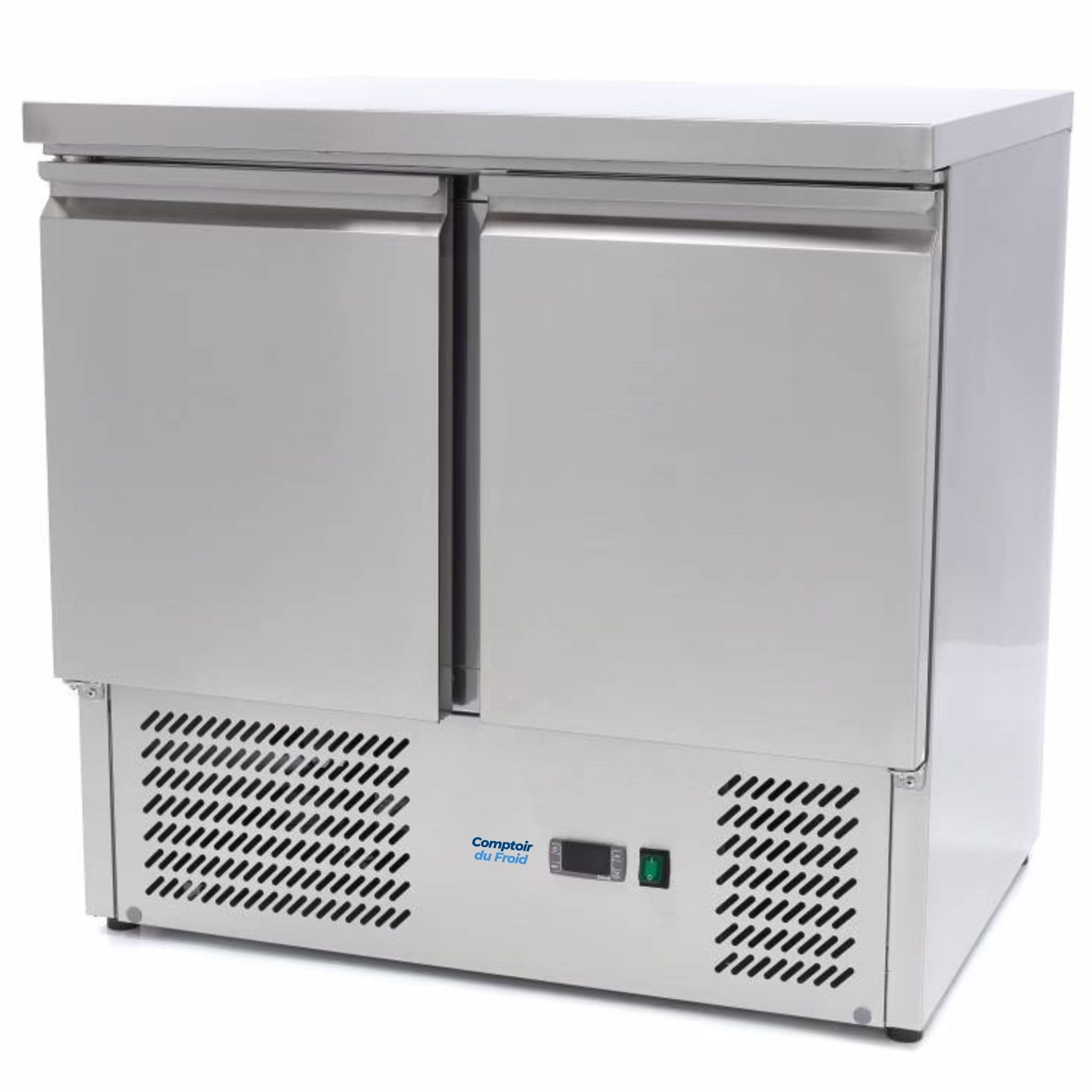
2-Door 90cm Positive Refrigerated Counter – Stainless Steel
- Compact format ideal for small kitchens and auxiliary stations
- Practical stainless steel top for minute preparation close to service
- Simple and efficient configuration for storing fast-moving products
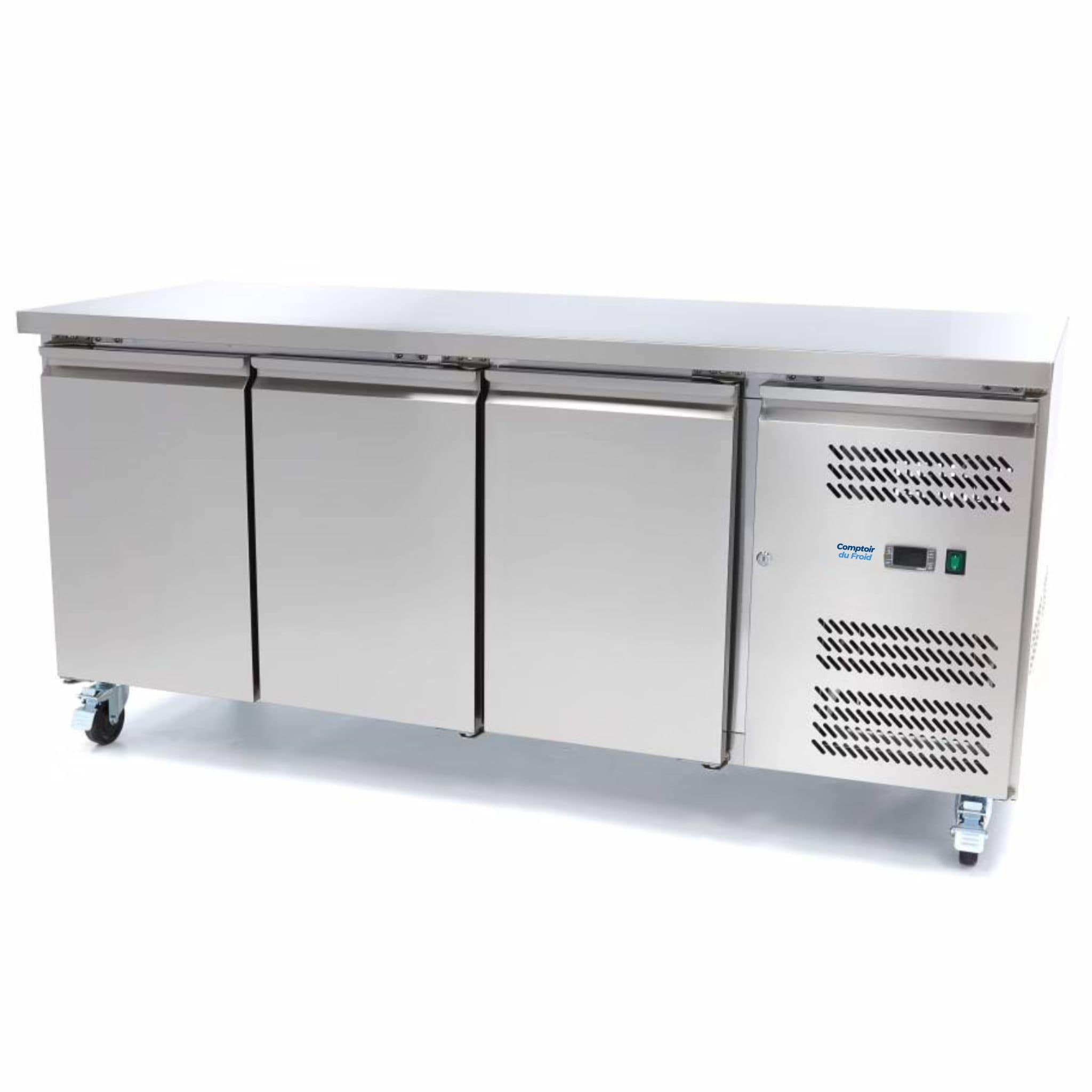
3-Door 180cm Positive Refrigerated Workbench (GN 1/1)
- Longer surface for intensive or multi-preparation stations
- Superior capacity to limit resupply during service
- Excellent choice when the compact counter becomes too small
What cold performance to expect from a refrigerated counter?
A good refrigerated counter must maintain a stable temperature despite repeated openings. In a professional kitchen, this stability is as important as the raw capacity, as it determines sanitary safety and service quality.
Recent market standards favor ventilated refrigeration units to maintain a more homogeneous air distribution. This becomes very useful when staff frequently open doors or when the station operates with tight service schedules.
In practice, the most common mistake is to overload the unit or block air circulation with poorly positioned trays. A well-chosen counter must remain accessible, breathe properly, and fit into a clear product rotation logic.
Best operating practices
For a counter to remain efficient, a few simple rules must also be followed. Good equipment never compensates for poor placement.
- Avoid placing the unit directly against a heat source.
- Maintain clear organization of products by family or service.
- Limit long openings during peak activity.
- Regularly clean seals, evaporator, and ventilation areas.
Looking for a refrigerated counter or low cabinet suited to your station?
Discover our selection of positive refrigerated tables and workbenches to equip a compact, fluid, and service-compliant catering kitchen.
FAQ on refrigerated counters
What is the difference between a refrigerated counter and a refrigerated table?
The line is often thin. In practice, a counter generally refers to a compact low cabinet dedicated to preparation, while a refrigerated table can cover larger formats.
Is a refrigerated counter sufficient for a professional kitchen?
Yes for a small station or a targeted activity. No if you need to store a large volume or equip several operators on the same line.
Should I choose ventilated refrigeration for a refrigerated counter?
In most cases, yes. Ventilated refrigeration helps to maintain temperature better during repeated openings in service.
What format should I choose for a snack bar or small brasserie?
A compact 2-door model is often the best starting point. It offers a good balance between footprint, work surface, and useful storage.