
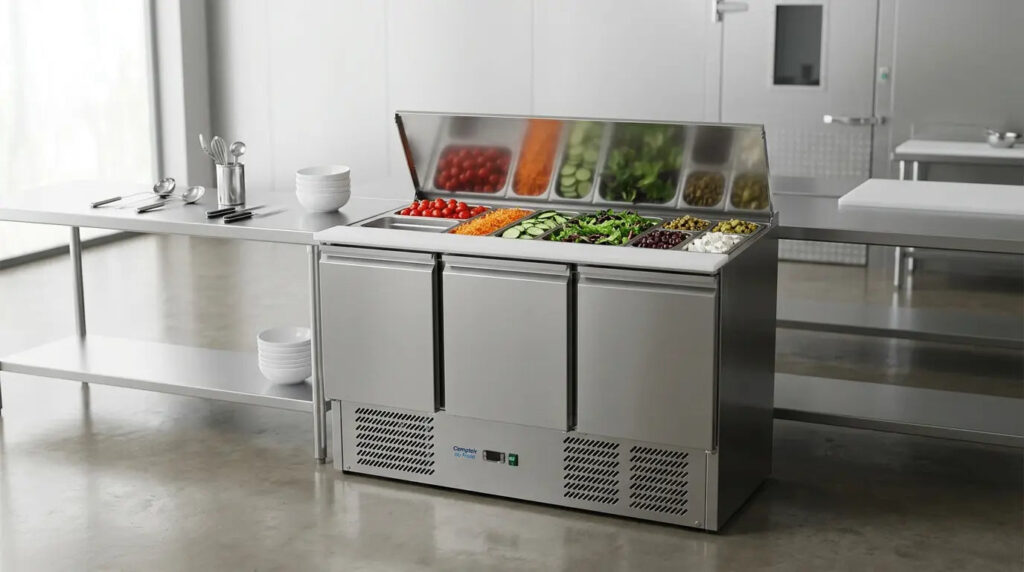
A Metro refrigerated saladette might be suitable for occasional needs, but it quickly becomes limiting if your cold station needs to maintain a real service. In professional kitchens, the right purchase depends less on the listed price and more on the GN capacity, cold stability, and the actual pace of preparation. If you’re still unsure about the basic format, also consult our guide to choosing a professional refrigerated saladette.
The real question isn’t where to buy, but whether the intended model will keep up with your pace, your setup, and your HACCP constraints.
Is a Metro refrigerated saladette really suitable for intensive professional use?
Not always. A saladette sold at a cash and carry can be a temporary fix, but an intensive cold station primarily requires usable storage, a consistent work surface, and rapid cold recovery after repeated openings.
In practice, the differences quickly become apparent on the ground:
- usable volume sometimes too small for continuous service,
- GN format or pan arrangement poorly optimized,
- work surface too short when prep work increases,
- less reliable cooling when doors are opened frequently.
For a snack bar, sandwich shop, or small restaurant, the right format must remain easy to use during rush hour, not just adequate on the spec sheet.
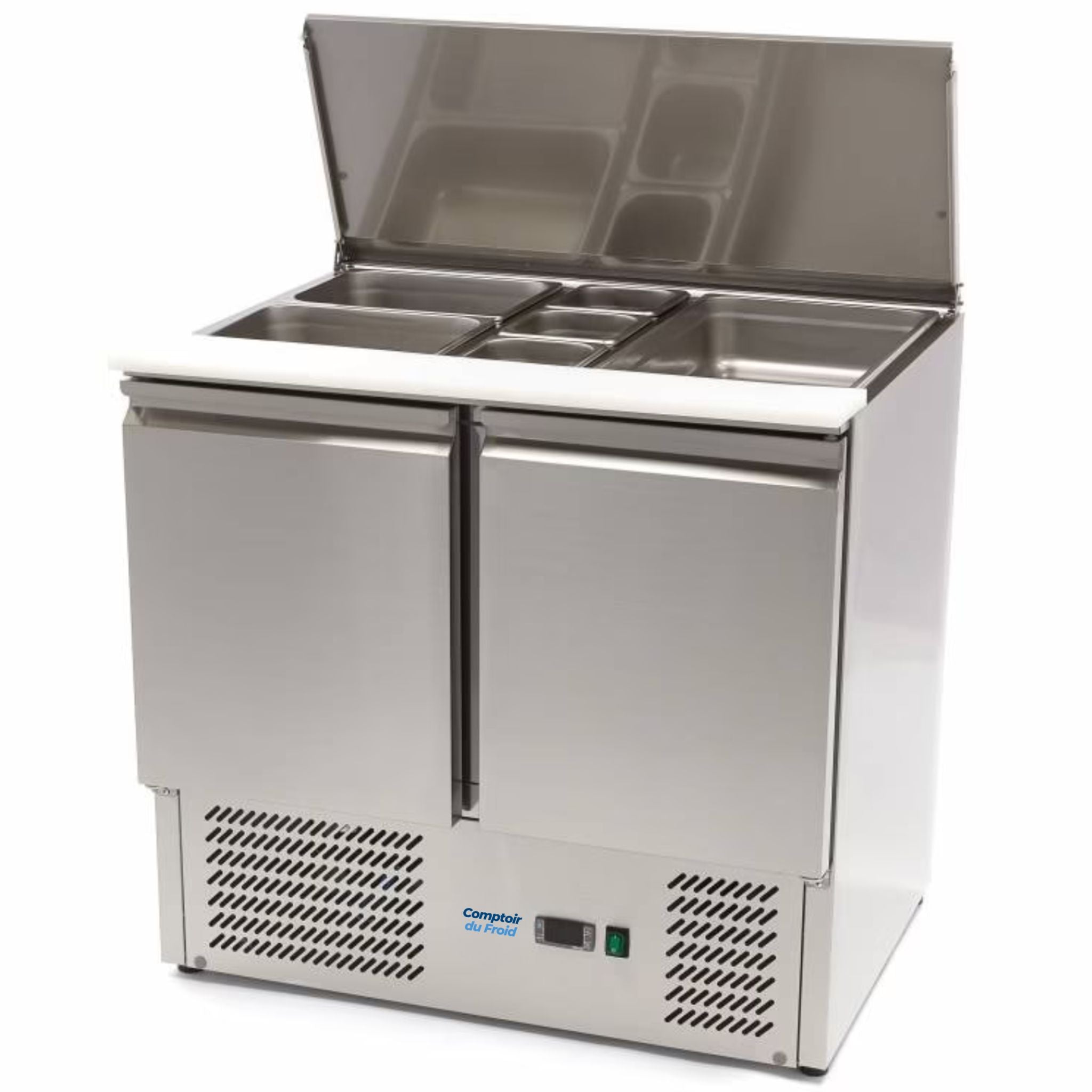
2-Door Stainless Steel Refrigerated Saladette 90cm (Stainless Steel Lid)
- Compact size that fits well in a snack or sandwich station
- Consistent cold storage for daily prep
- Practical stainless steel lid to protect ingredients out of service
What points should you check before buying instead of relying on the initial price?
You need to check the actual sizing of the station. A saladette that is too short or has too little capacity will end up costing more in lost time, restocking, and service discomfort.
1. The useful width of the counter
A 90 cm cold station is sufficient for compact operations. Beyond that, as soon as several items are being prepared simultaneously, a 3-door version often becomes more cost-effective.
2. Cold storage under the counter
The storage must be able to handle service without forcing the team to make frequent trips to the cold room. This is a key point for both pace and HACCP consistency.
3. Type of business use
A sandwich shop, a pizzeria, and a deli counter do not use the saladette in the same way. If your needs are very pizza-oriented, also read our article on pizza saladettes and the pace of a pizza station.
Field advice: the most profitable question is not “how much does the saladette cost?”, but “how many unnecessary manipulations does it save me per service?”. This is often where true professional equipment gains the advantage.
What format should you choose based on your preparation volume?
The right format depends on the number of operators, the variety of ingredients, and the peak hour throughput. Here’s the most useful benchmark for making a quick decision.
| Format | Recommended use | Main advantage | Point of vigilance |
|---|---|---|---|
| 2 doors, 90 cm | Snack, sandwich shop, small restaurant | Compact, quick to integrate | Can become saturated if menu expands |
| 3 doors, 137 cm | Regular volume, more structured team | More storage and more comfortable counter | Requires more floor space |
| Dedicated pizza version | Pizza station with high ingredient volumes | More fluid workflow | Less versatile for other uses |
Verdict: If you serve few items and lack space, a well-designed 2-door unit is largely sufficient. If your cold station operates continuously, the 3-door unit often becomes the best compromise between comfort, storage, and operational profitability.
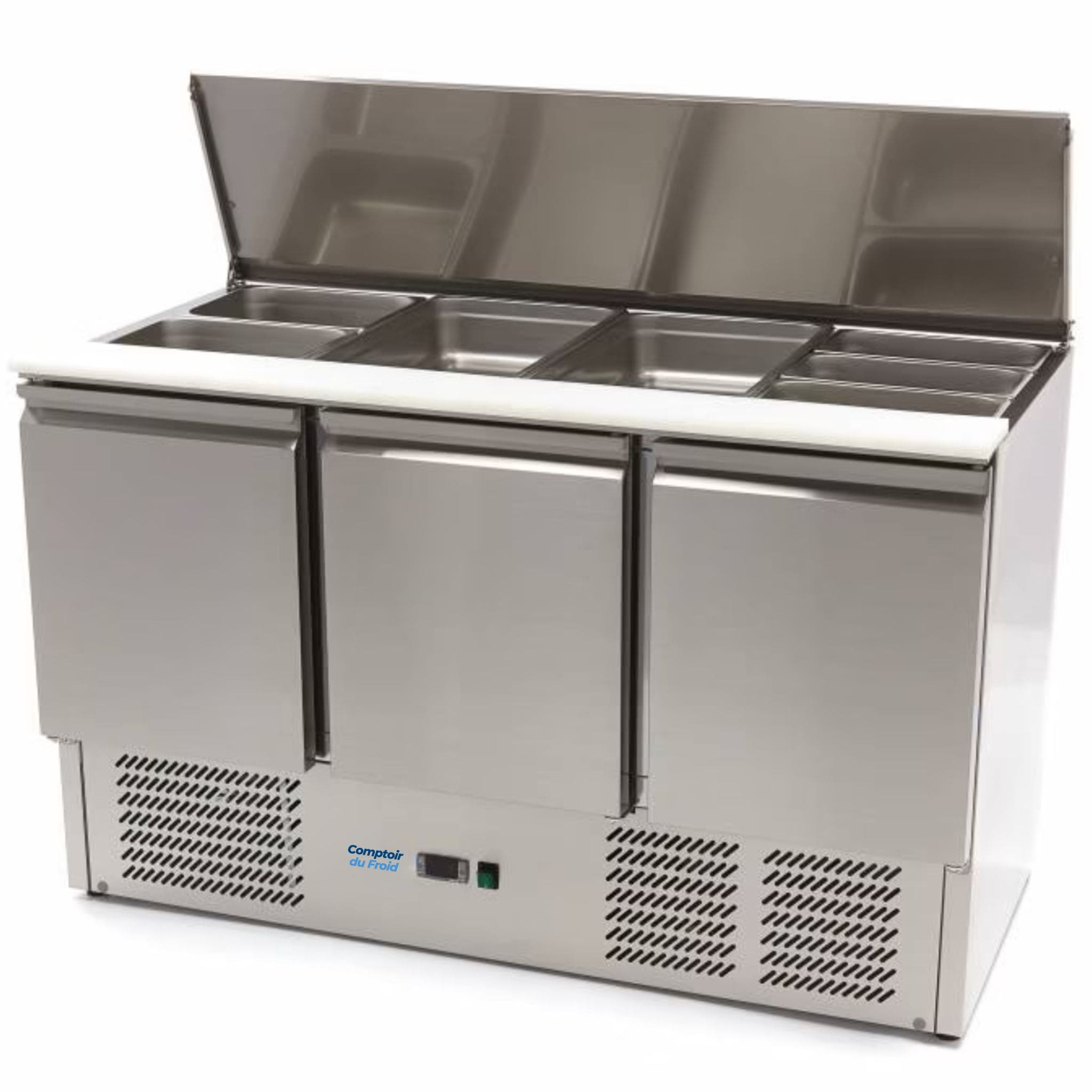
3-Door Stainless Steel Refrigerated Saladette 137cm (Stainless Steel Lid)
- More comfortable counter for regular-paced services
- Superior storage to limit restocking
- More reliable format when the menu or number of pans increases
Should you buy from Metro or go for a saladette designed from the outset for the hospitality industry?
You need to compare the overall cost, not just the entry price. A real hospitality saladette becomes more relevant as soon as your team frequently opens doors, replenishes many ingredients, and depends on a stable cold station throughout service.
In the field, a seemingly good deal turns out to be false when the equipment appears economical but:
- lacks sufficient storage by midday,
- disorganizes the preparation station,
- requires compensation with other equipment,
- becomes too weak to keep up with business growth.
For an establishment that wants to secure its setup and maintain a clean workflow, it’s better to have equipment directly calibrated for the hospitality industry rather than just an opportunistic purchase.
Want to compare real professional saladette formats?
Access our selection directly to choose a model consistent with your space, throughput, and type of service.
FAQ
Is a Metro refrigerated saladette suitable for a snack bar?
Yes, if the volume remains moderate and the capacity truly matches the number of ingredients needed during service.
When should you switch to a 3-door saladette?
As soon as under-counter storage becomes too small or multiple operators work at the same cold station.
What is the difference between a standard saladette and a pizza version?
The pizza version is designed for inline preparation with more ingredients and a more task-specific counter.
Is the lowest price necessarily the best choice?
No, because an undersized saladette leads to wasted time, uncomfortable service, and sometimes inconsistent cooling.