
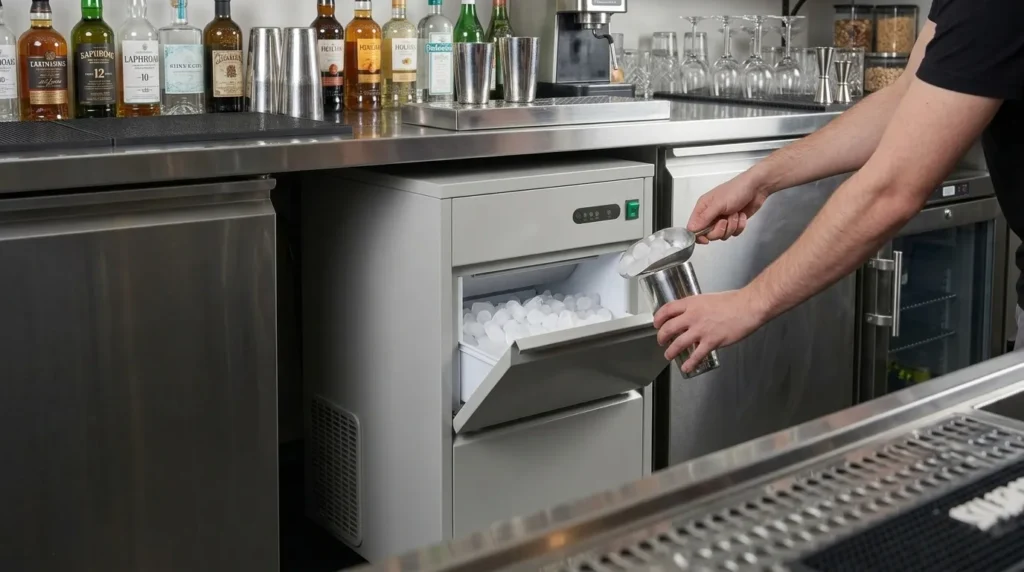
A used professional ice maker can still be a smart buy, but only if you purchase a machine that still matches your throughput, your installation constraints and your hygiene standards. In CHR/Horeca, the real risk is not just a breakdown; it is above all a service interruption in the middle of the rush or a machine that is difficult to sanitize properly.
Before signing, you therefore need to compare the advertised price with the real cost of refurbishment, energy consumption, the condition of the refrigeration unit and the availability of spare parts. If that calculation is not clear, a compact new model is often more profitable than a questionable second-hand unit.
When a used machine can still make sense
A used machine can be relevant if your requirement is simple, your budget is tight and your throughput is clearly known. This is especially true for a small bar, café or snack outlet that wants to produce ice cubes without targeting a high daily volume.
On the other hand, second-hand equipment quickly becomes risky if you operate long hours, if the machine has to run every day, or if you cannot afford a breakdown in the middle of service.
- Good use case: moderate need, limited budget, tested machine and clear history.
- Risky case: old equipment with no traceable maintenance, doubtful storage, vague seller.
- Case to avoid: strong seasonality, high drinks throughput, hot or poorly ventilated space.
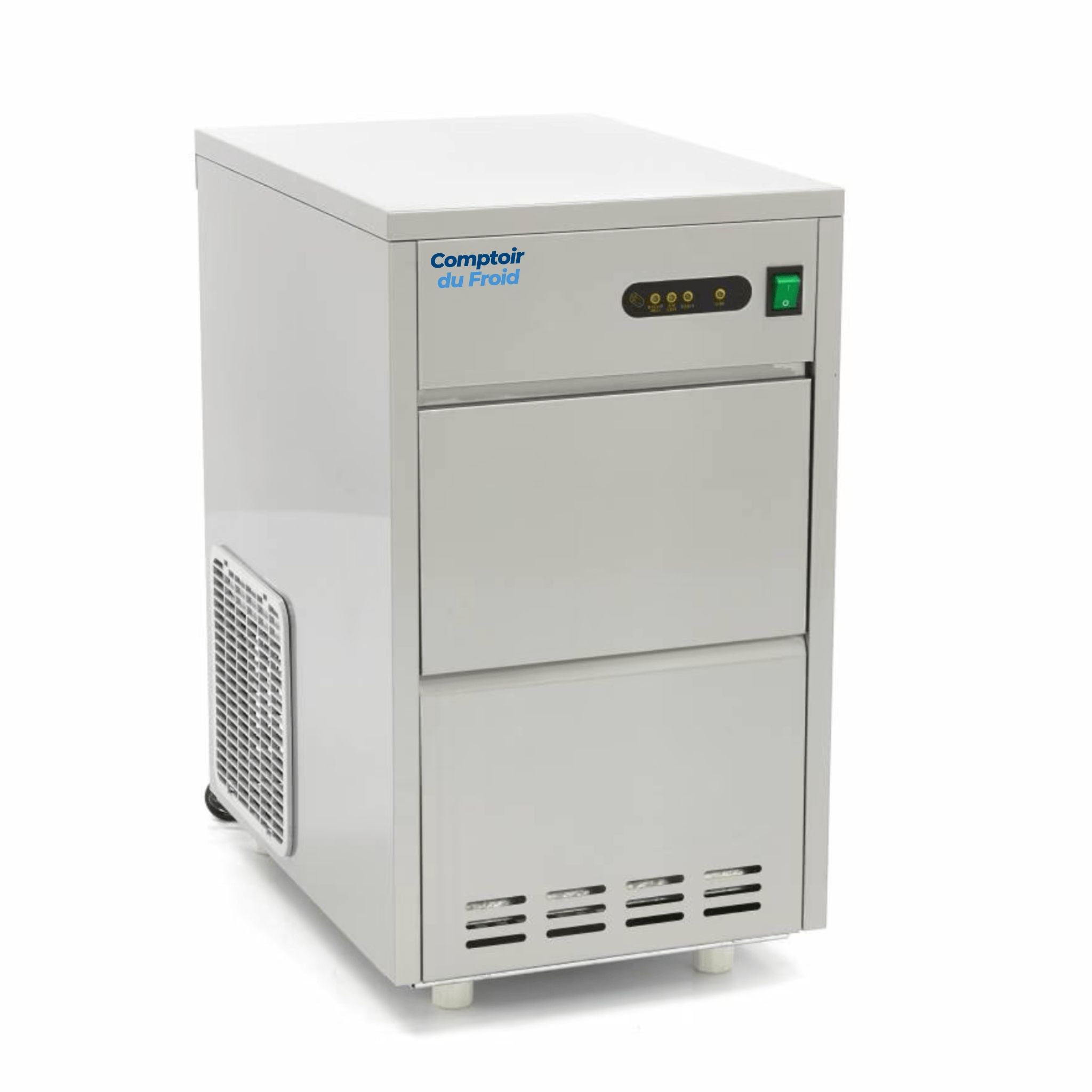
Professional Hollow Ice Cube Machine – 24 kg per day – Air Cooling
- 24 kg per day production with a 5 kg storage bin to cover the needs of a small, regular throughput
- Hollow ice cubes designed to chill sodas and cocktails quickly without excessively diluting the drink
- Air-cooled version suited to well-ventilated installations, more economical than water cooling
What to check before buying
Before buying, the question is simple: is the machine still reliable, cleanable and correctly sized for your use? A used unit that still produces cold but has lost efficiency, or has a poorly maintained circuit, can become expensive very quickly.
First check the actual production over 24 hours, the noise level, the condition of the bin, the cleanliness of areas in contact with water and any signs of corrosion. Also check whether the machine has operated in a greasy, hot or very dusty environment, as this quickly wears out the refrigeration unit.
You should also look at the following points:
- Type of ice cube produced and suitability for your drinks menu.
- Air or water cooling depending on your installation.
- Condition of the condenser, filters, seals and bin.
- Availability of spare parts and the cost of refrigeration servicing.
- Maintenance traceability, especially descaling and disinfection.
To frame your requirement before purchase, you can also consult our guide to choosing a professional ice maker. And to avoid an undersized machine, also look at what budget to plan according to your actual throughput.
Used or new: which option is more profitable for your service?
The right decision depends first on your acceptable level of risk. A used machine may seem cheaper, but it becomes a poor choice if you have to pay for an urgent repair, replace a pump or lose an evening of service.
| Criterion | Used | Compact new |
|---|---|---|
| Purchase price | Lower at the start | Higher, but clearer |
| Breakdown risk | Variable depending on history | Lower at start-up |
| Hygiene / cleaning | May be uncertain if maintenance is unclear | Clean condition and simpler follow-up |
| Actual performance | Sometimes degraded by wear | More reliable stated capacity |
| Cost visibility | Low if refurbishment is required | Better budget visibility |
Verdict: if you have a small, stable throughput and a tested machine with a clear history, second-hand can be justified. If your service truly depends on ice, a compact new unit often remains the most rational choice.
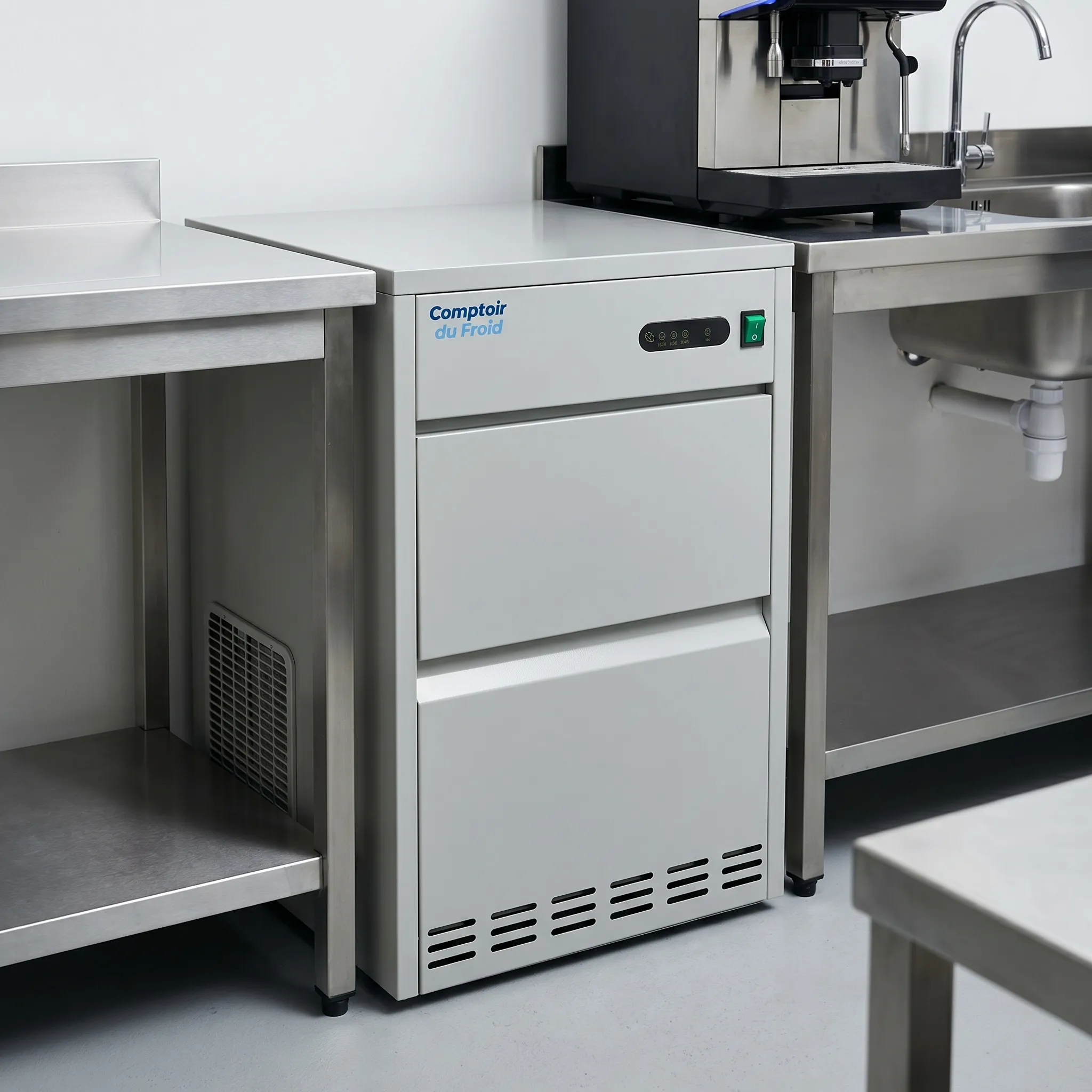
Professional Hollow Ice Cube Machine – 45 kg per day – Air Cooling
- 45 kg per day production with an air-cooled version designed for already more serious throughput in a bar or restaurant
- 9 kg bin to better absorb demand peaks without constant refilling
- 18/8 stainless steel body and insulated bin help keep ice cubes in good condition for longer
The most costly mistakes on the used market
The first mistake is buying on price alone. A cheap but poorly maintained machine can quickly cost more than an entry-level new model once transport, cleaning, descaling and recommissioning are added.
The second mistake is underestimating the installation. An air-cooled machine placed in a tight cabinet or behind a hot bar quickly loses efficiency. The third is buying a capacity that is too tight, which creates insufficient production during the rush and puts more strain on the machine.
- Not testing the machine with water and cooling before payment.
- Forgetting the cost of a refrigeration technician and parts.
- Choosing a theoretical capacity too close to your real requirement.
- Neglecting the hygiene level of the circuit and ice bin.
Want to avoid a false bargain?
Compare new models designed for CHR/Horeca directly, with clear capacity and use that matches your throughput.
FAQ
Is a used professional ice maker always profitable?
No. It is only profitable if its price remains clearly lower than an equivalent new unit after inspection, cleaning and any necessary refurbishment.
What is the most important point to check before buying?
Actual production while operating, with a cooling, drainage and bin test, remains the most important check.
Should you avoid a machine with no maintenance history?
Yes, especially in CHR/Horeca. Without a clear history, you take a risk on hygiene, limescale build-up and the service life of the refrigeration unit.
When is it better to buy new?
When ice is critical to your service, when your throughput is sustained, or when you do not want to absorb a short-term breakdown risk.