
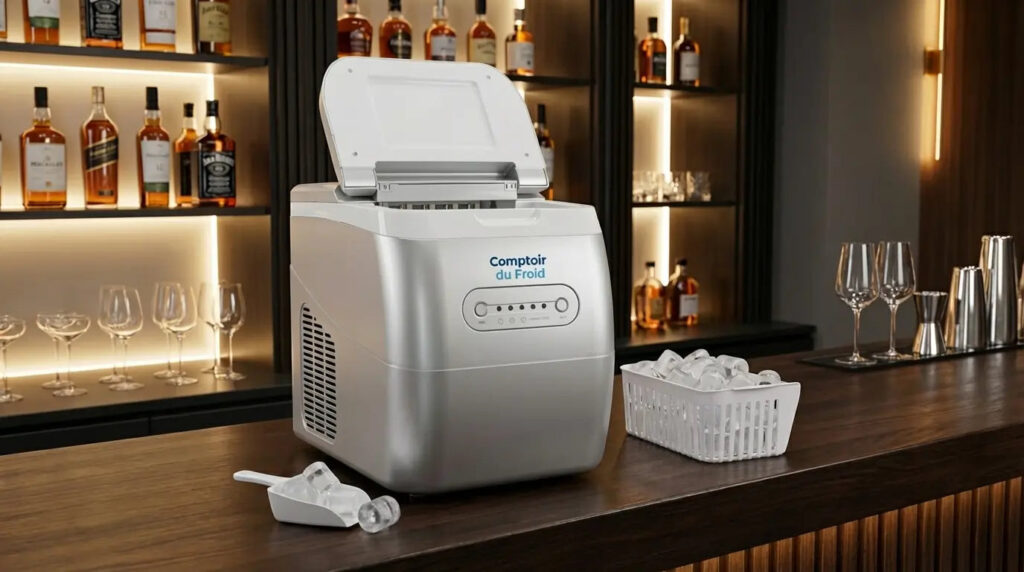
A Leclerc ice maker can be a temporary solution for occasional use, but it quickly reaches its limits when output, consistency, and hygiene become critical. In restaurants, bars, or snack bars, upgrading to a professional ice maker primarily secures production, service flow, and ice quality.
In practice, the right choice depends less on the initial price than on daily volume, the type of ice desired, and the actual pace of your establishment. This is what makes all the difference between a consumer appliance and a commercial kitchen equipment designed for daily operation.
Leclerc ice maker or professional machine: what’s the real difference?
The real question is simple: can a model sold in a supermarket keep up with professional service? The answer is no in most cases, as soon as you have several hours of service, peak demand, or a need for consistency.
A consumer machine is designed for home use or light events. A professional machine, on the other hand, is designed to produce continuously, withstand hot environments, better manage maintenance constraints, and offer ice more suited to commercial use.
| Criterion | Leclerc / Consumer Ice Maker | Professional Ice Maker |
|---|---|---|
| Output | Suitable for small, occasional use | Designed for consistent service |
| Ice Quality | Often more variable | More homogeneous depending on type chosen |
| Durability | Limited for intensive use | Designed for daily operation |
| Hygiene / Maintenance | Often more basic | Better designed for access, cleaning, and maintenance |
| Recommended Use | Home, small reception, occasional use | Bar, restaurant, hotel, caterer, community |
If you’re still unsure about the right sizing, you can also consult our guide to choosing a professional ice maker. And if your consideration is about the shape of the ice, our comparison of full vs. hollow ice cubes complements this analysis well.
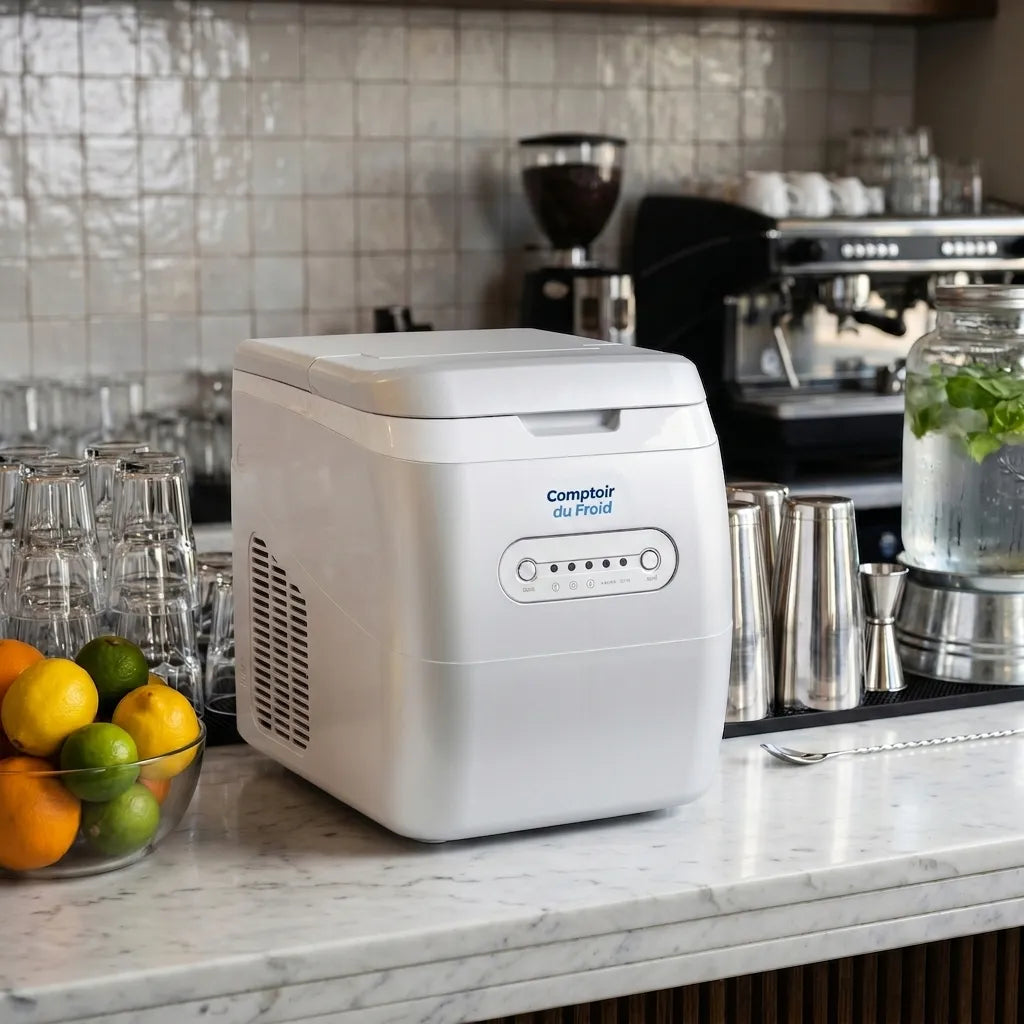
Small Professional Ice Maker 15 kg/24h
- Compact format ideal for temporary bars, small rooms, or complementary use
- True professional equipment, more consistent than a consumer appliance for light daily use
- Good entry point to secure production without oversizing
In which cases is a Leclerc model truly sufficient?
The question to ask is: do you need ice for comfort, or to run a service? A consumer model is mostly sufficient for occasional, low, and non-critical needs.
In practice, an auxiliary machine may be suitable in very limited contexts:
- home use during the summer;
- small internal break room with no demand for speed;
- occasional event with low turnover;
- temporary solution before purchasing real commercial kitchen equipment.
The most common mistake is to extrapolate home use to a bar, snack bar, or small restaurant. In the field, as soon as continuous service is required, bins need refilling, pace must be maintained for several hours, and HACCP cleanliness is crucial, limitations quickly become apparent.
When should you switch to a professional ice maker?
The right indicator is simple: as soon as an ice shortage penalizes your service, you need to go pro. This concerns establishments where ice is not an accessory, but an element of production or sales.
Recent market standards show that a good professional purchase is not just about “making cold”. You also need to consider storage, cooling type, recovery speed, ice type, and ease of integration into your workspace.
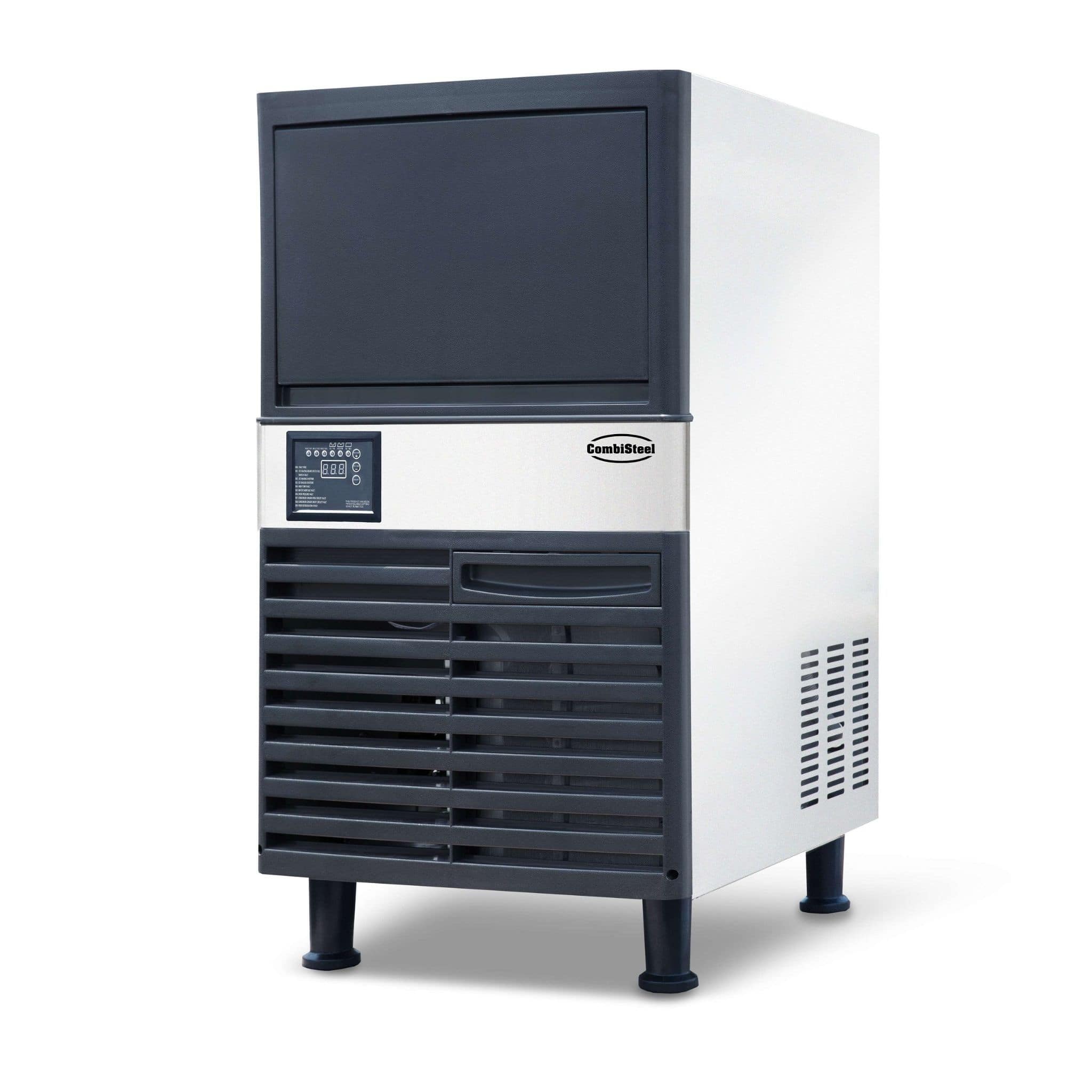
Full Cube Ice Maker 55 kg/day
- Higher output for bars, restaurants, or businesses with real daily needs
- Full cube ice suitable for premium drinks and better retention in glass
- A more confident choice when service continuity directly impacts revenue
What criteria should you consider before buying?
The question is not just “how much does the machine cost,” but how much service it saves you from losing. To choose well, you need to think in terms of actual production, operational comfort, and cost of use.
- production per 24 hours: it must cover your peaks, not just your average;
- storage capacity: useful for absorbing busy periods;
- type of ice: hollow, full, or crushed ice depending on your drinks and uses;
- air or water cooling: to choose according to location and ambient temperature;
- footprint: especially behind the bar or in an already crowded kitchen;
- cleaning: a central point for staying clean and compliant over time.
In practice, a properly sized machine is better than an undersized appliance bought on the cheap. A machine that is too small works constantly, wears out faster, and creates service tensions, whereas a well-chosen professional equipment streamlines operations.
Should you buy from a supermarket to save money, or invest right away?
If your business genuinely consumes ice, investing in the right level of machine right away is often more profitable. The face price of a Leclerc model may seem attractive, but it doesn’t account for the cost of an ice shortage during peak service.
In the field, hidden losses are numerous: unserved drinks, degraded organization, emergency purchases, team stress, unstable service quality, and sometimes insufficient lifespan. Conversely, well-targeted commercial kitchen equipment becomes a reliable production tool, more logical for a professional.
Need a real ice maker for your business?
Compare our models based on your output, ice type, and real-world requirements.
FAQ
Is a Leclerc ice maker suitable for a restaurant?
In most cases, no. For a restaurant, stable production, better durability, and easier hygiene management are required.
What capacity should I choose for a small bar?
It depends on the number of services and types of drinks, but a small bar often benefits from starting with a compact professional machine rather than a consumer appliance.
Should I choose full or hollow ice cubes?
Full ice cubes last longer in the glass and are well-suited for premium drinks. Hollow ice cubes are interesting when efficient production is needed for everyday use.
Is a professional machine easier to maintain?
Yes, generally. Commercial kitchen models are designed for more regular cleaning and operation that is consistent with professional hygiene constraints.