
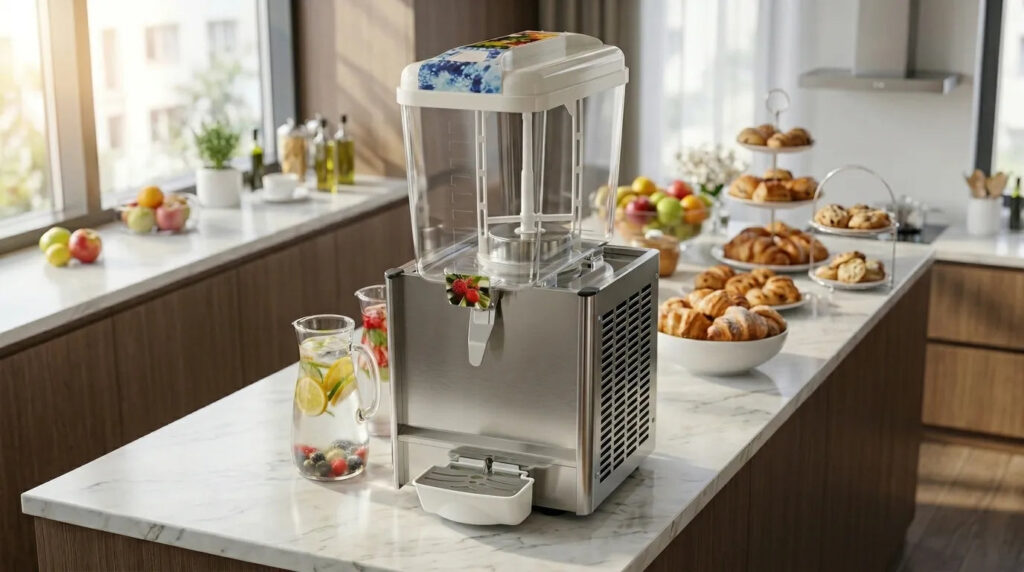
A refrigerated beverage dispenser is the right choice when you need to serve juices, iced teas, or flavored water at a stable temperature without slowing down service. The right model primarily depends on your throughput, the number of drinks to offer, and the space available on the counter.
In practice, a compact size is sufficient for a small buffet or a breakfast corner, while a double station quickly becomes more profitable as soon as you need to limit refills and offer more choices.
When is a refrigerated beverage dispenser truly useful?
The real question is simple: do you need to serve cold, quickly, and cleanly over several hours? If so, this type of equipment becomes more suitable than a simple carafe, especially in hotels, fast food, or buffets.
In the field, it Maynly helps to keep a consistent drink, reduce handling, and better maintain the cold chain during service.
- Hotel breakfast, for orange juice, multi-fruit juice, or flavored water.
- Snack bar and sandwich shop, to streamline counter service.
- Buffet or self-service restaurant, to let customers serve themselves without disrupting the team.
- Canteen or corporate space, when cleanliness and speed matter as much as freshness.
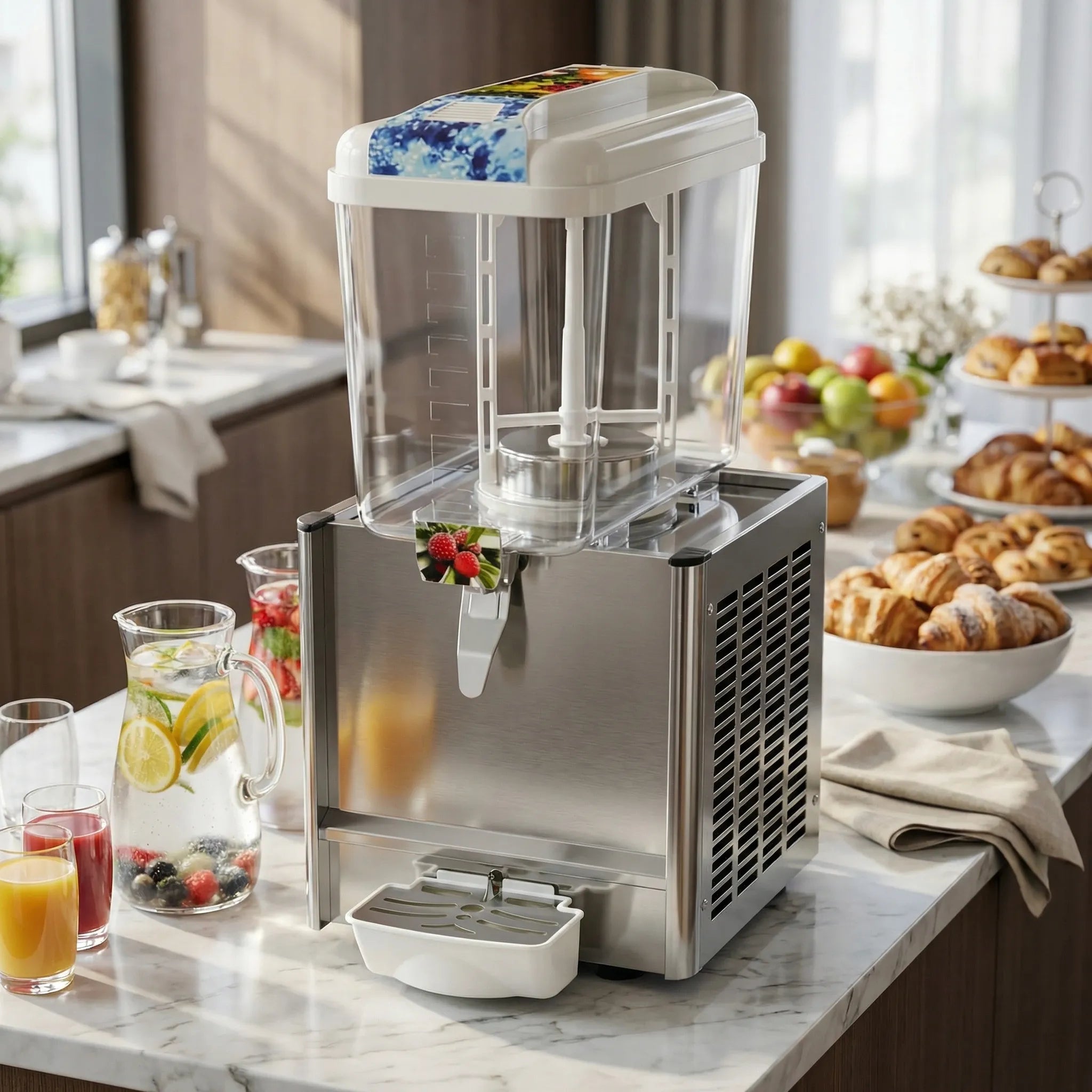
18-Liter Refrigerated Beverage Dispensers
- 18-liter tank useful for longer service without constant refilling
- Stirring arm and R134a refrigeration to maintain a homogeneous drink between +7°C and +12°C
- BPA-free tank, stainless steel body, and compact 34 cm size designed for clean buffet or breakfast service
What criteria truly make a difference when choosing?
To choose well, you must first look at actual use, not just the advertised liter capacity. An undersized appliance leads to either too frequent refills or unnecessary clutter at the station.
1. Useful capacity
Low throughput can work very well with 18 to 20 liters. As the flow increases, a double station becomes more comfortable, as it reduces interruptions and avoids monopolizing an employee for refills.
2. Number of tanks
If you offer only one signature drink, one tank is enough. If you need to serve two flavors or distinguish adult/child, sweet/unsweetened, a double version brings a real commercial advantage.
3. Countertop footprint
A dispenser that is too wide can disrupt the service flow. You need to check the available width, access to the tap, filling space, and circulation around the station.
4. Thermal stability and hygiene
Field standards recommend equipment that maintains a consistent drink, is easy to disassemble, and quick to clean. This is particularly important when serving drinks with pulp or repeated recipes over several services.
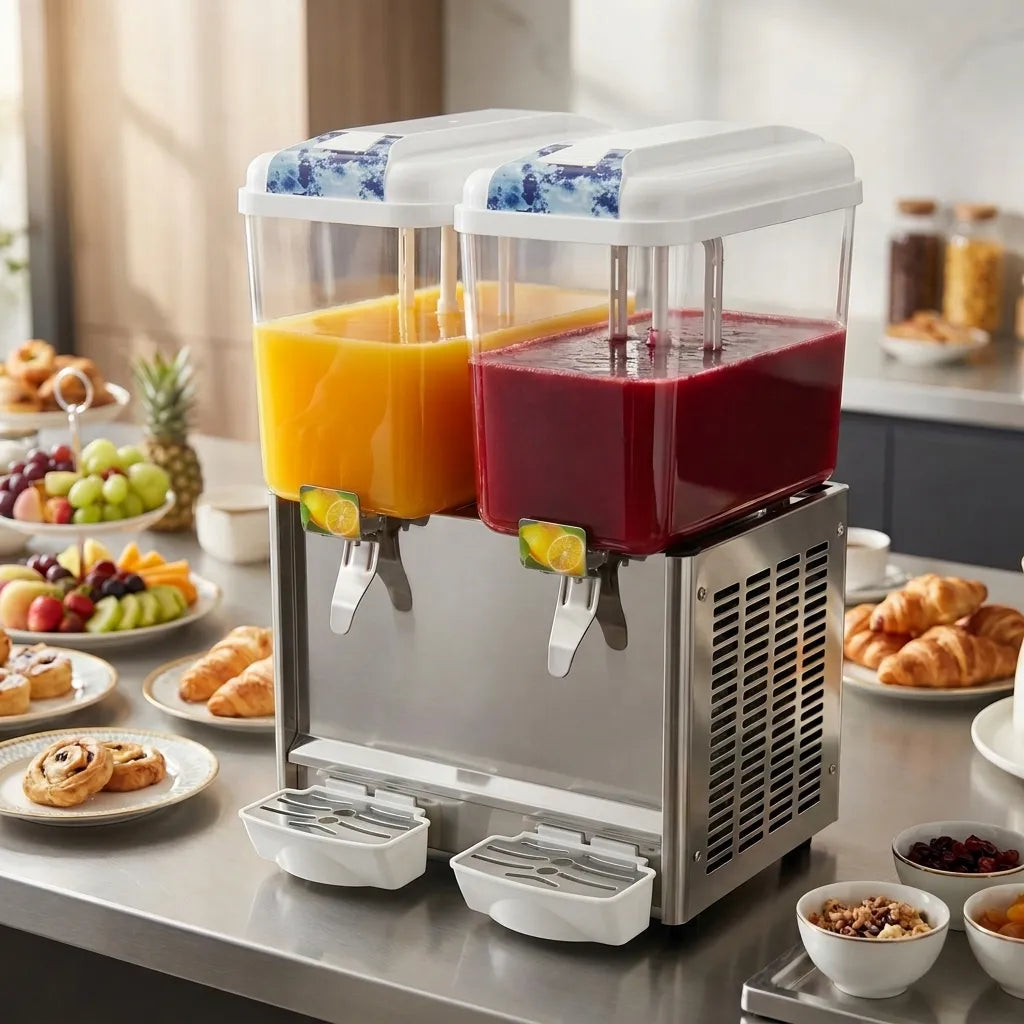
Refrigerated Beverage Dispensers, 2 x 18 Liter Tanks
- Two 18-liter tanks to offer 36 liters in total with true service comfort
- Stirring arm and adjustable cooling from +7°C to +12°C to keep drinks homogeneous even with pulp
- Double version designed to offer two flavors without switching to an overly bulky station
Should you choose a single or double tank version?
The right answer depends on your service throughput and your commercial promise. A single tank gets straight to the point. A double tank becomes relevant as soon as you want to sell more, better segment your offer, or avoid overly frequent refills.
| Configuration | When to choose it | Main advantage | Watch point |
|---|---|---|---|
| 1 tank | Small buffet, coffee corner, single-drink offering | Simple installation and reduced footprint | Less choice and more visible refills |
| 2 tanks | Hotel, busy buffet, snack bar with multiple recipes | Higher throughput and better commercial versatility | Requires more space and slightly longer cleaning |
Verdict: if you Maynly serve a single drink at a small station, the 18-liter version is more than enough. If you have high traffic or two recipes to offer, the double 2 x 18 liter tank quickly becomes the best compromise between speed, visibility, and operational comfort.
How to avoid an undersized purchase?
The classic trap is to buy too small to save a few hundred euros, then waste time every day on refills and cleaning. The other mistake is oversizing a machine that takes up too much space for modest actual use.
To stay fair, ask yourself these questions:
- How many glasses are actually dispensed during peak hours?
- One or two drinks need to be served in parallel?
- Is the station manned by a self-service customer or an employee?
- Will the machine be used every day or only during certain time slots?
If your need is more about showcasing ready-to-sell drinks, a refrigerated beverage display case may be more suitable. If you are looking for a compact counter service format, our guide on refrigerated counter display cases can also clarify the right trade-off.
Need a model truly suited to your service?
Discover our selection of refrigerated beverage dispensers for buffets, hotels, snack bars, and self-service.
FAQ
What capacity should I choose for a refrigerated beverage dispenser?
For small-scale service, 18 to 20 liters are often sufficient. Beyond that, a double station becomes more comfortable to limit refills.
Is a refrigerated beverage dispenser suitable for pulpy juices?
Yes, provided you choose a model with regular agitation to keep the drink homogeneous during service.
What is the difference between a dispenser and a refrigerated beverage display case?
The dispenser is designed for serving by the glass, while the display case is for displaying and storing packaged beverages.
Is a 2-tank version always preferable?
No. It only becomes profitable if you have high throughput, multiple recipes, or a real need for choice at the counter.