
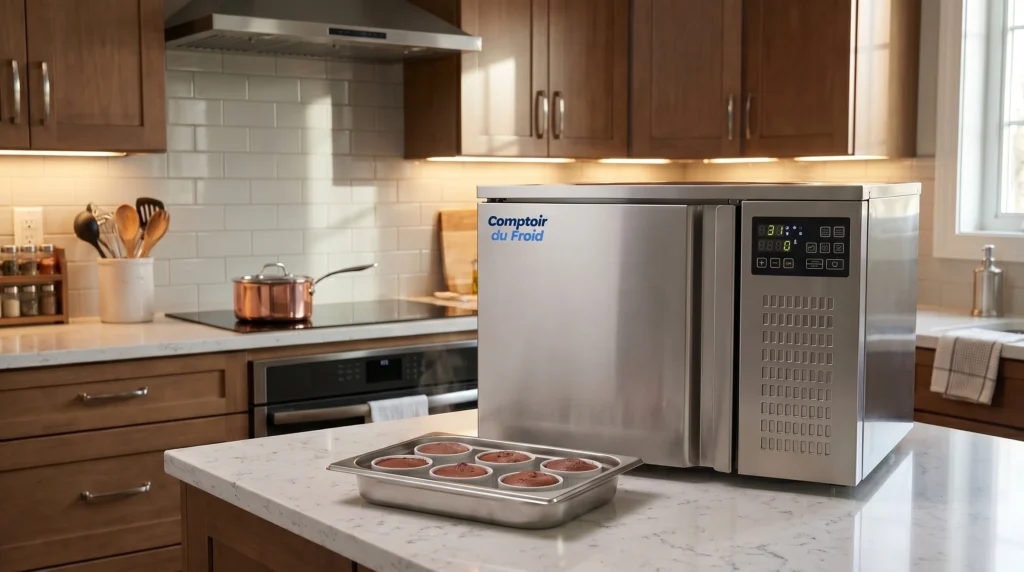
A blast chiller for home use is relevant only in very specific cases: intensive domestic cooking, regular make-ahead meal production, demanding pastry work, or a small registered home-based activity. For occasional family use, well-organised rapid cooling is often enough; for frequent use with large volumes, a compact mini professional blast chiller becomes more coherent.
When a blast chiller makes sense at home
The right question is simple: do you need to cool hot preparations quickly, often and hygienically? If the answer is no, the purchase will be oversized. If the answer is yes, a blast chiller can secure your workflow and avoid overloading the domestic refrigerator.
A blast chiller is used to rapidly lower the temperature of a dish after cooking. In practice, it becomes worthwhile for home users who cook like semi-professionals: very regular batch cooking, large receptions, made-to-order pastry, short-term culinary preserves, or a registered catering activity from a suitably equipped home kitchen.
- Occasional use: there is no need to invest; it is better to optimise containers, portions and transfer to cold storage.
- Intensive weekly use: a small blast chiller can save time and preserve texture.
- Semi-professional use: the blast chiller becomes a genuine process tool, especially if hygiene and traceability matter.
To understand the exact role of the equipment before buying, our guide on what a rapid blast chiller is used for sets out the technical basics without unnecessary jargon.
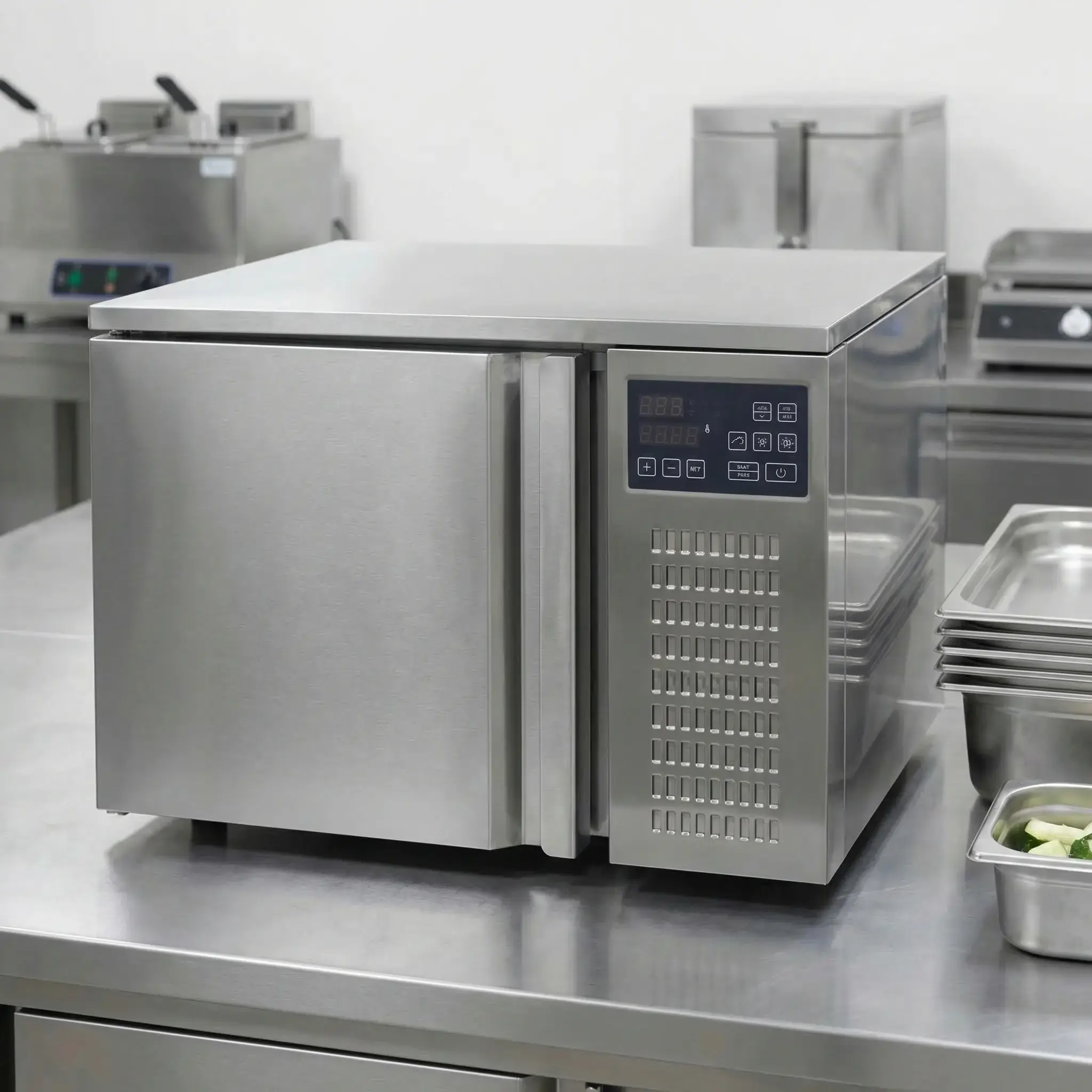
Mini Rapid Blast Chiller – Countertop Format (2x GN 2/3)
- 304 stainless steel designed for intensive use and easier cleaning in a professional environment
- More comfortable 7-level capacity for processing more preparations in sequence without overloading the workstation
- A strong compromise for increasing cooling volume while keeping the machine manageable day to day
Why it is not a standard domestic appliance
A blast chiller is not simply a more powerful small refrigerator: it is a rapid temperature pull-down machine, designed to absorb the heat from a cooked product. It therefore requires space, ventilation, a suitable power supply and a proper operating method.
The most common trap is buying a blast chiller “just to be safe” when the real need is simply to portion dishes more effectively. A blast chiller does not compensate for containers that are too deep, dishes covered while still piping hot, or a refrigerator that is already overloaded.
Field benchmark: if you only cool a soup or a gratin from time to time, stick with shallow portions and a fast transfer into low-depth containers. If you process several trays, creams, sauces or cooked dishes every week, a compact blast chiller becomes defensible.
Home user, semi-professional or professional kitchen: the right trade-off
The choice depends less on “home user” status than on the real volume to be cooled per cycle. A typical household does not have the same constraints as a home-based pastry chef or a catering production kitchen.
| Profile | Real need | Recommended decision |
|---|---|---|
| Family that cooks ahead | A few dishes per week, limited volumes | Organised cooling without a blast chiller, unless the constraint is very regular |
| Pastry enthusiast | Creams, inserts, sensitive preparations, repeated pace | Compact mini blast chiller if the rhythm justifies the investment |
| Registered caterer or home-based sales | Frequent cycles, hygiene, organisation, traceability | Compact professional blast chiller or higher model depending on production |
| Professional kitchen | High volumes, standards, continuous service | Machine sized according to the number of levels and weight per cycle |
Verdict: for a purely domestic user, a blast chiller often remains excessive. For semi-professional use or repeated culinary production, a small compact blast chiller is the best compromise before moving up to 3-, 5- or 10-level formats.
If your use already resembles a small production kitchen, also compare it with our article on blast chillers in professional kitchens so you do not undersize your equipment.
Mistakes to avoid before buying
Before choosing, first check the simple constraints: available space, ventilation, weight of preparations, cycle frequency and cleaning. A poorly integrated compact model will be less useful than a well-planned cold-chain organisation.
- Do not choose on price alone: a blast chiller that is too weak will slow down your cycles.
- Do not place the appliance in a corner without air clearance.
- Do not fill containers that are too deep if you need a rapid pull-down.
- Do not confuse rapid chilling with long-term freezing.
The right purchase is the one that matches your real pace. If the machine hardly ever runs, it ties up budget; if it runs every week, it can become a real organisational gain.
Need a compact format or a genuine professional solution? Find models suited to small-scale production, professional kitchens and demanding laboratories.
FAQ on blast chillers for home use
Is a blast chiller mandatory for a home user?
No. It is generally not mandatory for standard domestic use. It becomes relevant if the activity resembles semi-professional production.
Can a freezer replace a blast chiller?
No, not really. A freezer stores or freezes, but it is not designed to rapidly absorb the heat from hot dishes.
Which format should you choose for intensive home use?
A compact countertop format is the most logical option if volumes remain moderate. Beyond that, you need to think like a small professional kitchen.
Is a mini blast chiller enough for home pastry making?
Yes, if quantities remain limited and regular. For numerous trays or registered sales, you need to check capacity per cycle.