
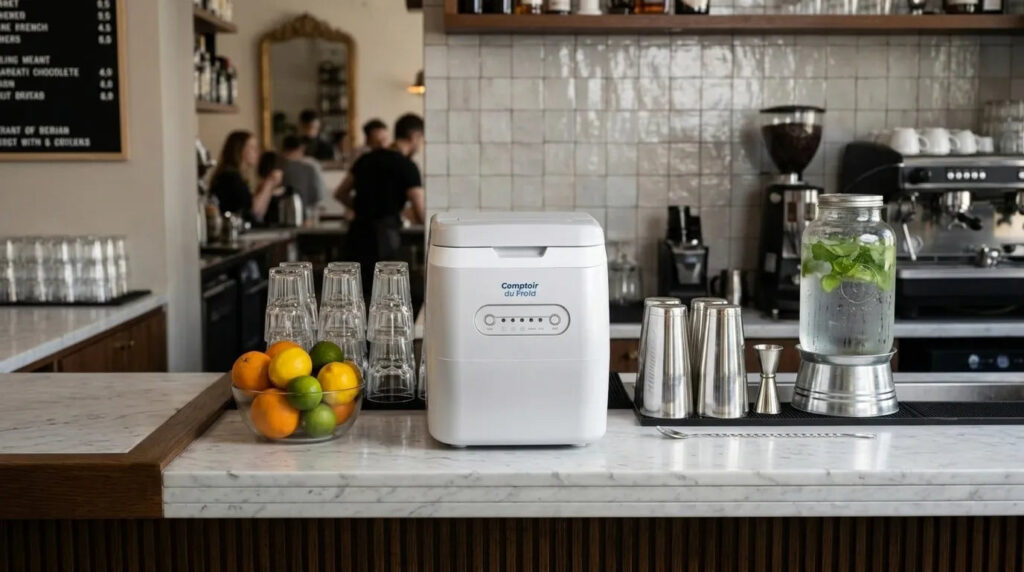
For professional use, buying an ice machine on Amazon is not necessarily a bad idea, but it’s almost never the right selection criterion. What really matters is actual capacity, ice type, cooling method, and the machine’s ability to withstand rush periods. An attractive product description on a marketplace can quickly hide equipment that is too light-duty for a bar, snack bar, or restaurant.
If you’re looking for a reliable purchase, you need to think like a hospitality industry operator, not a general consumer. The goal isn’t just to produce ice, but to maintain service without interruption, without overheating, and without poorly managed dilution.
Amazon Ice Machine, Is It Really Suitable for a Professional Establishment?
Yes, but only if you look beyond the marketplace. Amazon can be a sales channel, but it guarantees neither the relevance of the model nor its sizing for your actual output.
In practice, many “Amazon ice machine” searches come from an urgent need, with the idea of quickly comparing options. This is understandable, but the most common mistake is choosing a compact machine designed for occasional use when service requires continuous production.
- Low output: café, office, guesthouse, point of sale with low rotation.
- Medium output: snack bar, bar, small restaurant, regular beverage service.
- High output: busy restaurant, cocktail bar, seasonal site, continuous service.
If your business falls into the last two categories, the issue is not “where to buy,” but “which machine can keep up with your pace.” To learn more about overall sizing, you can also read our guide to choosing a professional ice machine.
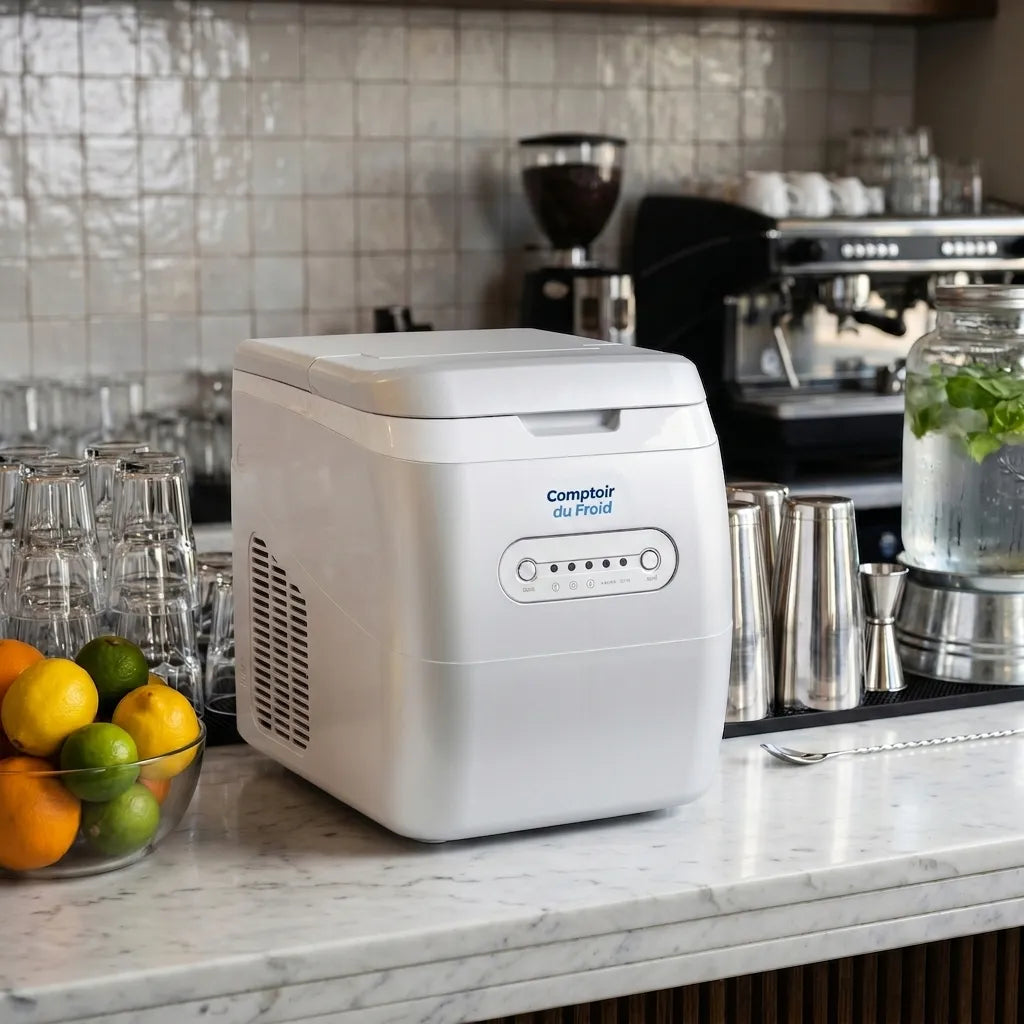
Small Ice Machine – 15kg/day
- Economical format relevant for a professional who prioritizes small prices before upgrading.
- 15 kg per day production of hollow ice cubes, useful for low-volume, an office, a quiet café, or supplemental beverage service.
- Stainless steel chassis, compact 33 cm width, and simple installation with water inlet and standard plug.
What criteria should you check before buying?
You must first check 24-hour production, then storage capacity, then the installation environment. This logic prevents buying a machine that looks good on paper but is inadequate in practice.
1. Actual Production
A machine advertised at 15 or 20 kg/day might suffice for occasional needs, but not for a bar that serves continuously. The correct volume depends on peak consumption, not the calm average of the day.
2. Type of Ice
Hollow ice cubes are well-suited for soft drinks, iced coffees, and quickly served beverages. If you’re looking for a more premium presentation in a glass, full ice cubes will often be more appropriate.
3. Air or Water Cooling
An air-cooled machine is often simpler and more energy-efficient, but it requires good ventilation. A water-cooled machine becomes more relevant in hot, confined, or semi-recessed spaces.
4. Storage Reserve
Sufficient production is not enough if the reserve is too small. The buffer stock helps absorb rush hours without waiting for the next cycle.
Field Tip: If your team regularly fills ice buckets, GN pans, or cocktail stations simultaneously, always size one notch above the theoretical need. In the hospitality industry, ice shortages often occur at the worst possible time, not during off-peak hours.
Marketplace or Dedicated Professional Equipment, Where Does the Real Difference Lie?
The real difference lies in technical clarity and compatibility with your use. On a marketplace, price, delivery, and reviews are often compared. In a professional environment, the operational logic should be the primary comparison.
| Comparison Point | General Marketplace | Professional Equipment Approach |
|---|---|---|
| Needs Assessment | Often focused on price or availability | Focused on output, service, and installation constraints |
| Capacity | Specifications sometimes flattering but poorly contextualized | Capacity recontextualized for concrete hospitality use |
| Type of ice | Not always clearly explained | Choice linked to type of beverage and service level |
| Air or Water | Often underestimated at the time of purchase | Technical decision linked to actual installation |
| Durability of use | Varies depending on model and seller | Clearer understanding of daily admissible pace |
Verdict: Amazon can help identify a reference, but a professional purchase must remain guided by your output, your setup, and your service promise. If these three points are not clear, the risk of a limited purchase quickly increases.
If you are also comparing other consumer channels before deciding, our article on ice machines sold at Darty and their limitations in professional use complements this reflection well.
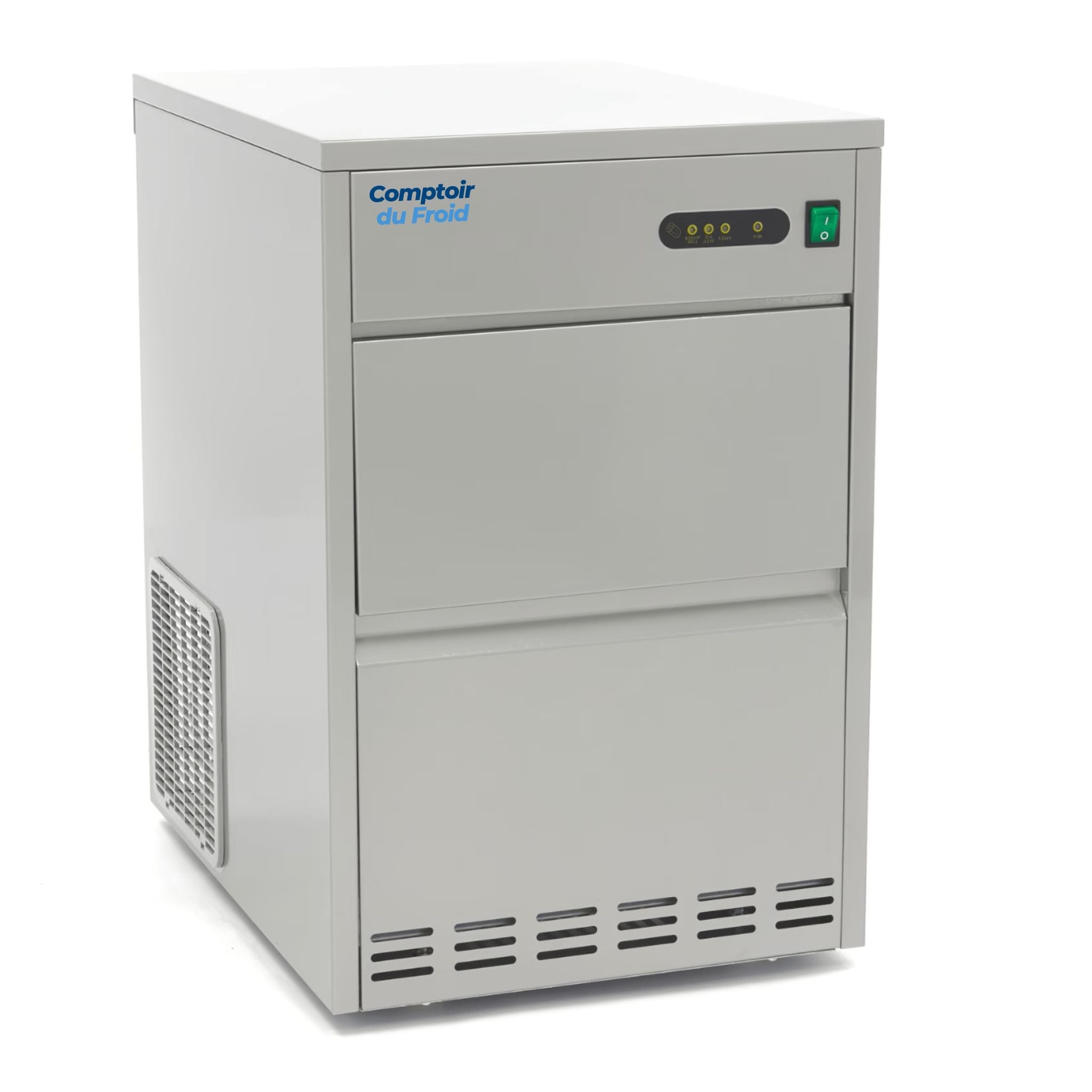
Professional Hollow Ice Machine – 45 kg per day – Air Cooling
- 45 kg per day production with an air version designed for a more serious output in bars or restaurants.
- 9 kg bin to better handle peak demand without constant refilling.
- 18/8 stainless steel body and tank insulation useful for keeping ice in good condition longer.
Which format to choose depending on your activity?
The right format depends on the pace of the beverage station, not the total number of covers. Two establishments with the same foot traffic can have very different needs depending on the menu and the season.
| Activity | Typical Need | Often Relevant Format |
|---|---|---|
| Small snack bar, café, office | Moderate use, simple service, low peak | Compact machine around 24 kg/day |
| Bar, sandwich shop, small restaurant | Regular beverage service with identifiable rush | Intermediate format around 45 kg/day |
| Busy restaurant, seasonal site | Continuous need, high demand for ice | Higher capacity with a more comfortable reserve |
Verdict: If ice remains a secondary item, a compact format is sufficient. If ice is part of the normal pace of service, an intermediate or higher model should be aimed for from the start.
Mistakes that are costly after purchase
The first mistake is under-sizing the machine. The second is installing an air-cooled model in a poorly ventilated environment. The third is choosing without considering the type of beverage served.
- Buying too small and forcing the machine to run constantly.
- Ignoring the location when it determines actual performance.
- Choosing an unsuitable ice type for your beverage offering.
- Focusing solely on purchase price instead of service continuity.
A machine that is too small rarely remains cheaper for long. It penalizes service, fatigues the team, and often leads to a second purchase sooner than expected.
Want to compare real formats adapted to the hospitality industry?
Browse our selection of professional ice machines to choose according to your output, type of service, and actual installation.
FAQ
Can an Amazon ice machine be suitable for a restaurant?
Yes, but only if the capacity, reserve, and installation truly match the restaurant’s pace.
Should I choose an air-cooled or water-cooled model?
Air-cooled in a well-ventilated area, water-cooled if the machine operates in a hot or more confined space.
Is 24 kg per day sufficient for professional use?
It’s sufficient for small, regular output, but often too little for a bar or restaurant with real rush periods.
What is the Mayn risk of a rushed marketplace purchase?
Choosing a machine that is too light-duty for actual service, leading to ice shortages during critical hours.