
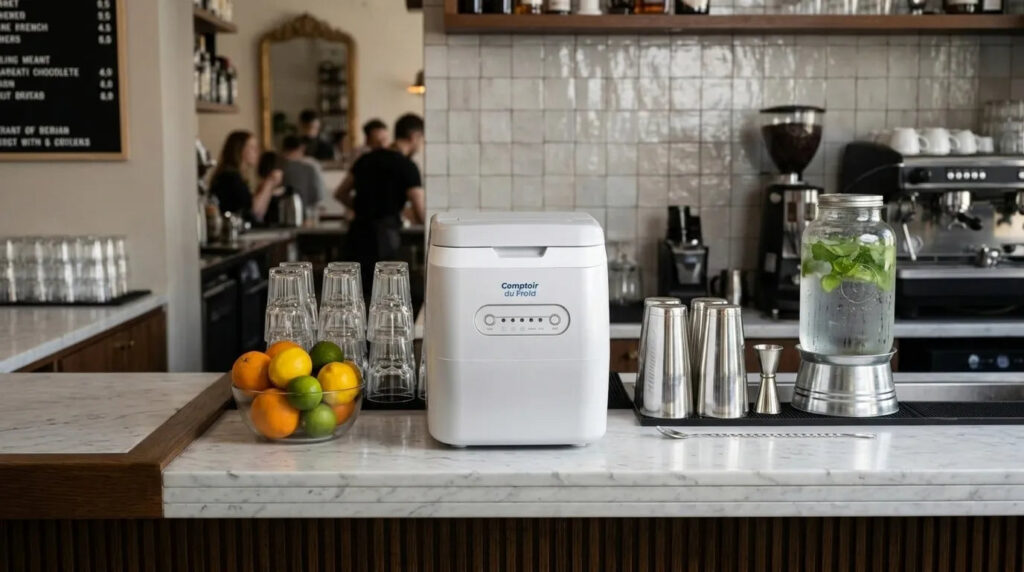
The price of a professional ice machine varies greatly depending on the range, actual capacity, and ice technology. In our selection, a small professional countertop machine starts at around €200, while a more serious hollow ice machine quickly ranges from €700 to over €2,000, and full cube ice machines typically start above €1,000. The right approach is to consider the purchase price based on actual need, then the total cost of ownership, not just an initial price tag.
What budget should you plan for based on your service needs?
The right question is not “how much does a professional ice machine cost?” but “how many kilograms of ice do I really need per day?” A too-low budget often leads to an undersized machine, service interruptions during busy periods, and accelerated wear.
To quickly frame your budget, you need to consider four criteria: the volume of ice to be produced over 24 hours, the onboard storage capacity, the type of ice expected at the bar or in catering, and the quality of ventilation around the machine.
As a simple guideline based on our current ranges, a small, economical model for low output remains around €200 to €300, a professional hollow ice machine for small to medium output starts around €700, and more robust or better-stocked models then easily exceed €1,000, €1,500, or €2,000 depending on capacity and cooling.
- Low output: coffee shop, office, small counter, regular but limited need.
- Medium output: bar, restaurant, or hotel with sustained beverage service.
- High output: large bar, seasonal establishment, nightclub, very busy buffet.
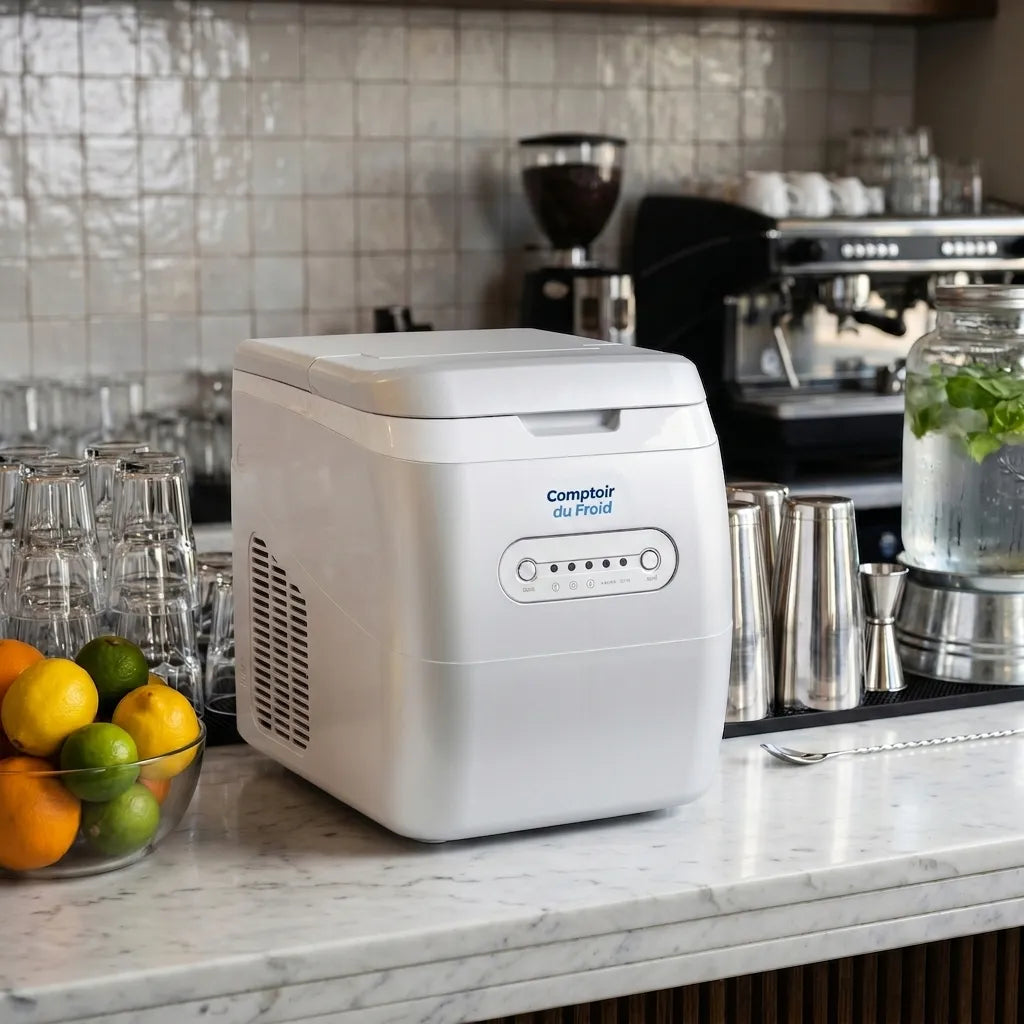
Small Ice Machine – 15kg/day
- Relevant low price for a reader primarily looking for an economical professional ice machine
- 15 kg/day production of hollow ice, useful for an office, quiet cafe, or supplementary need
- Compact format, stainless steel chassis, and simple installation to enter the professional equipment market without aiming too high from the start
What really drives up the price of a professional ice machine?
The price increases when the machine needs to produce more, store more, or offer higher quality ice. This is logical, as you pay more for refrigeration power, capacity, and sometimes more robust construction.
In practice, price differences Maynly come from these factors:
- daily production, for example, 24 kg, 45 kg, 60 kg, or 100 kg,
- storage capacity, very important for absorbing peak demand,
- type of ice, hollow or full depending on use,
- air or water cooling, depending on installation,
- body and insulation quality, which is important for durability.
Clearly, the price increases in fairly clear steps on the site: a small countertop machine around €200, the first real professional hollow ice range starting at approximately €700, then a progressive increase depending on the number of kilograms produced per 24 hours, the storage bin, and the choice of air or water cooling. Full cube ice machines are the most expensive for comparable technology, with an entry-level starting point typically around €1,000.
If you’re still unsure about the overall format, the article Guide: Choosing your Professional Ice Machine (Horeca) helps define the need before discussing the budget.
Pro tip: The most common mistake is to buy a machine calibrated for average volume and not for peak service. In Horeca, it’s the rush that determines the right investment.
What type of machine to choose based on price and intended use?
For an equivalent budget, not all machines offer the same service. A hollow ice model often aims for rapid cooling and versatility, while a full ice model is more expensive but better enhances cocktails and spirits.
| Profile / need | Type of machine | Price reference | Specific criterion |
|---|---|---|---|
| Small office, small cafe, beverage supplement | Small countertop hollow ice machine | Around €200 to €300 | Low output, small reserve, economical logic |
| More serious small professional output | Hollow ice machine 24 kg / 24 h | From approximately €700 | Around 1 kg per hour, with small integrated reserve |
| Bar or restaurant with a real daily rhythm | Intermediate hollow ice machine | Often around €1,000 to €2,000 | More solid capacity, more comfortable reserve, depending on air or water cooling |
| Premium cocktails, spirits, higher-end service | Full cube ice machine | Rather from €1,000 | More premium technology, dense and less diluting ice |
| High traffic, hotel, nightclub, busy season | Large capacity with large reserve | Several thousand euros | High production + storage sized to absorb large peaks |
Verdict: if you’re primarily looking for a small budget, the real entry point is around €200 to €300 for a small countertop machine. As soon as you need a real professional output of hollow ice, the entry price rises to around €700, then increases with capacity. And if you’re looking for full cube ice, you need to budget more from the start. In other words, the right price is not the lowest, it’s the one that truly corresponds to your output and type of beverage.
To decide between ice formats, you can also read Full vs. Hollow Ice: Which Ice Machine to Choose?, which complements the budgetary logic well.
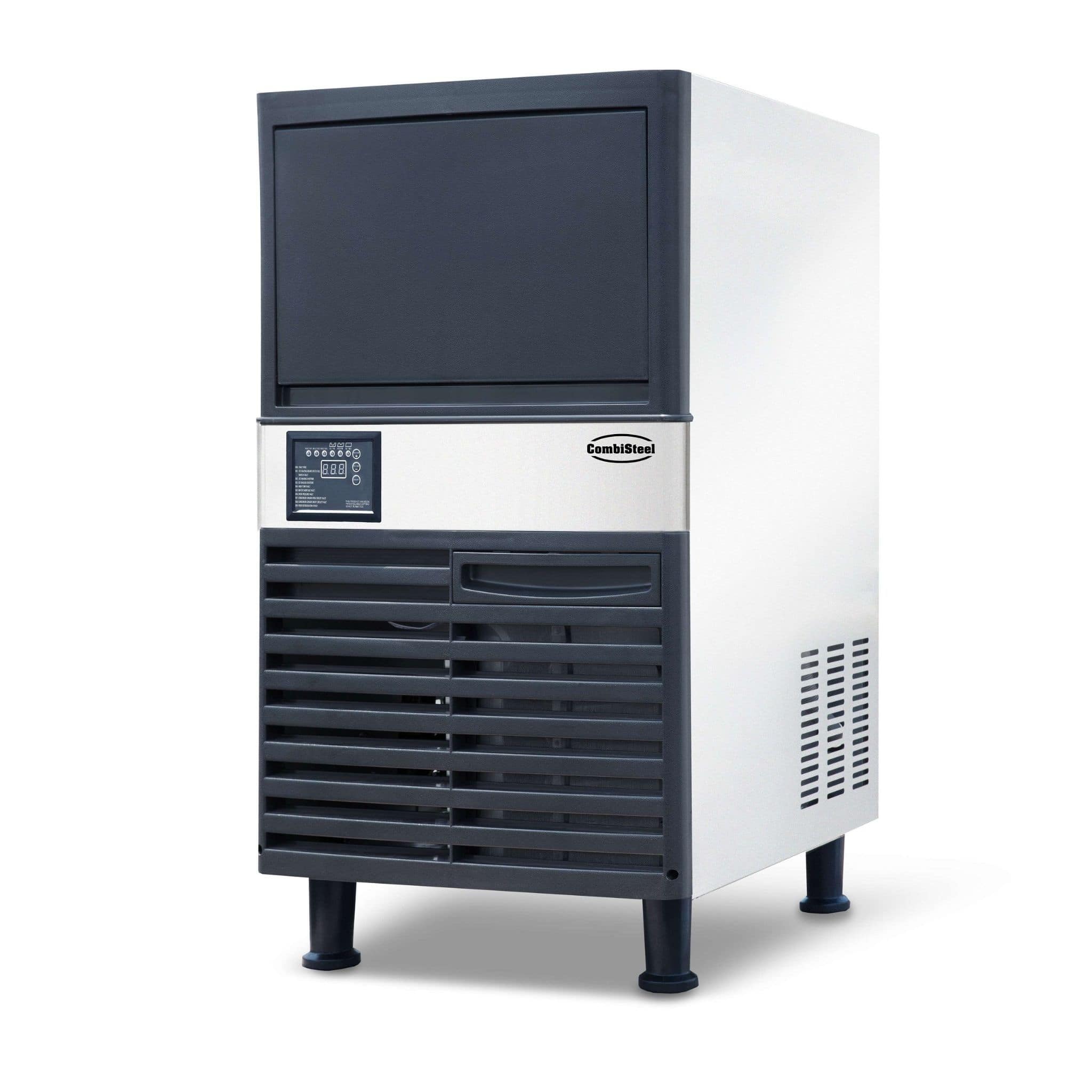
Full Cube Industrial Ice Machine (Pro & Industrial) – 36 kg/day (15kg Reserve)
- Full cube ice designed to cool without diluting, ideal for spirits, cocktails, and more premium service
- 36 kg/day production with a 15 kg reserve to cover a small bar or supplementary kitchen needs
- Undercounter format in AISI 304 stainless steel, air-cooled, useful when you want full ice without a massive machine
What total cost should you look at beyond the purchase price?
The true cost of a professional ice machine also plays out after the purchase. A cheaper but ill-suited machine can cost more in water, energy, maintenance, and service losses.
Before confirming a quote, always consider:
- electricity consumption, especially for a heavily used machine,
- cooling method, as water does not have the same operating impact as air,
- ease of HACCP maintenance, essential for keeping ice clean,
- available space around the machine for proper heat dissipation,
- useful reserve, because good production without storage quickly becomes limiting.
In practice, a well-sized machine is often more profitable than an entry-level model purchased too small. You avoid forced cycles, downtime, and compromises during busy periods.
How to set a consistent budget without overpaying or undersizing?
To budget effectively, start with the actual service to be provided, then choose the level of comfort you want to maintain during the rush. This logic protects profitability.
If you are a small establishment, a contained budget for a small hollow ice machine may suffice. If you have a busy bar, a restaurant with cocktails, or a hotel buffet, aiming too small quickly becomes more expensive than moving up a notch from the start.
The good benchmark is simple: buy the machine that covers reasonable peak demand, not just the average day. This is often where the price becomes a good investment instead of a mere material purchase.
Need to compare the right models without making a budget mistake?
Browse our selection of professional ice machines to choose a format consistent with your output, service type, and installation.
FAQ
What is the entry price for a professional ice machine?
In our range, a small professional machine starts around €200 to €300, then the budget quickly increases as soon as you move to a true Horeca output.
Why does a full cube ice machine often cost more?
Because it aims for a denser, more premium, and less diluting ice, with technology that drives up the budget faster than for hollow ice.
Should you choose air or water cooling to control the budget?
Air cooling is often more economical to use if the area is well-ventilated. In hot or enclosed spaces, water may still be more relevant.
How to avoid buying a machine that is too small?
Calculate your needs based on peak service, not on a theoretical average. This is the best way to avoid disruptions and false economies.