
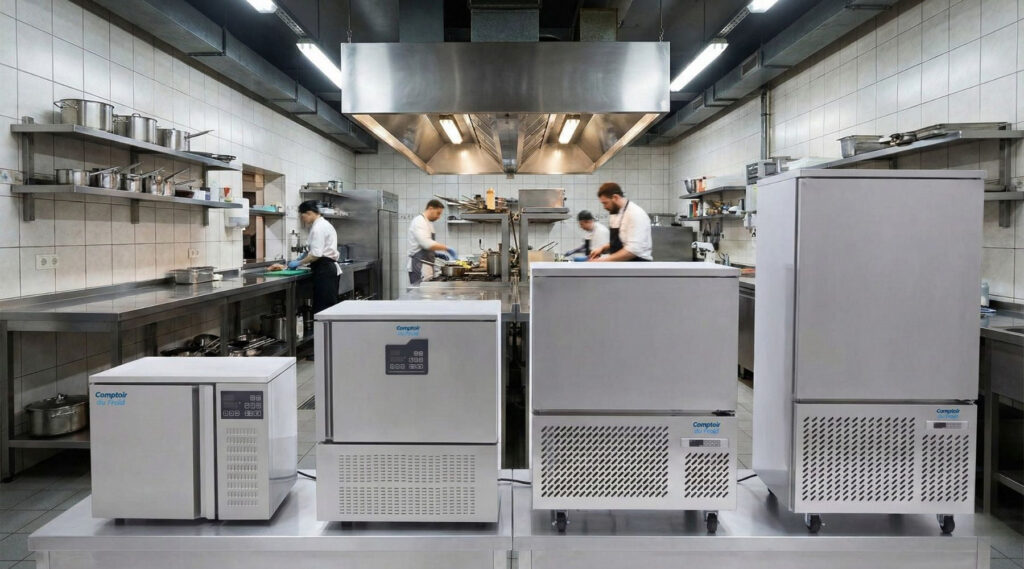
Cleaning a blast chiller is not just about keeping a machine visually clean. It’s a key step to protect hygiene, maintain good cooling performance, and prevent an expensive appliance from getting dirty or wearing out too quickly.
In catering, a blast chiller operates in a demanding environment: steam, splashes, food residues, thermal variations, and repeated use. Light but regular maintenance is therefore much better than a deep clean forgotten for weeks.
What needs to be cleaned daily?
Daily cleaning should primarily focus on the tank, supports, and core probe. These are the areas most exposed to splashes and direct contact with products.
- Walls and bottom of the tank: to remove residues, condensation, and greasy marks.
- Grids and racks: to be removed for proper cleaning without leaving dead zones.
- Core probe: to be rigorously disinfected after use.
- Door: to be left ajar when not in use if the internal protocol allows, to prevent odors and stagnant moisture.
The right approach is to use food-grade stainless steel compatible products and simple actions, without unnecessarily damaging surfaces.
Why is the core probe a critical point?
Because it goes directly into the heart of the food. If it is poorly cleaned, you carry a microbiological risk from one product to another.
In a blast chiller, the probe is not a secondary accessory. It is a sensitive contact point that deserves systematic and clean cleaning between uses, especially with a serious HACCP approach.
What weekly maintenance should be planned?
Weekly cleaning goes beyond simple wiping. It should include seals, visible air circulation areas, and points that influence good cold retention.
- Door seals: to prevent cold loss and premature wear.
- Fan / accessible evaporator area: to remove visible dust or debris without forcing.
- General check: absence of paper, film, or dirt obstructing air circulation.
The goal is not to turn the kitchen into a refrigeration workshop, but to detect signs of fouling early before they degrade the machine.
Why is the condenser so important in the long run?
Because a dirty condenser makes the machine work harder. When this part gets dirty, the blast chiller dissipates heat less effectively, cools less efficiently, and consumes more.
A simple monthly check, with gentle vacuuming of dust on accessible areas, can already make a real difference in the longevity of the equipment.
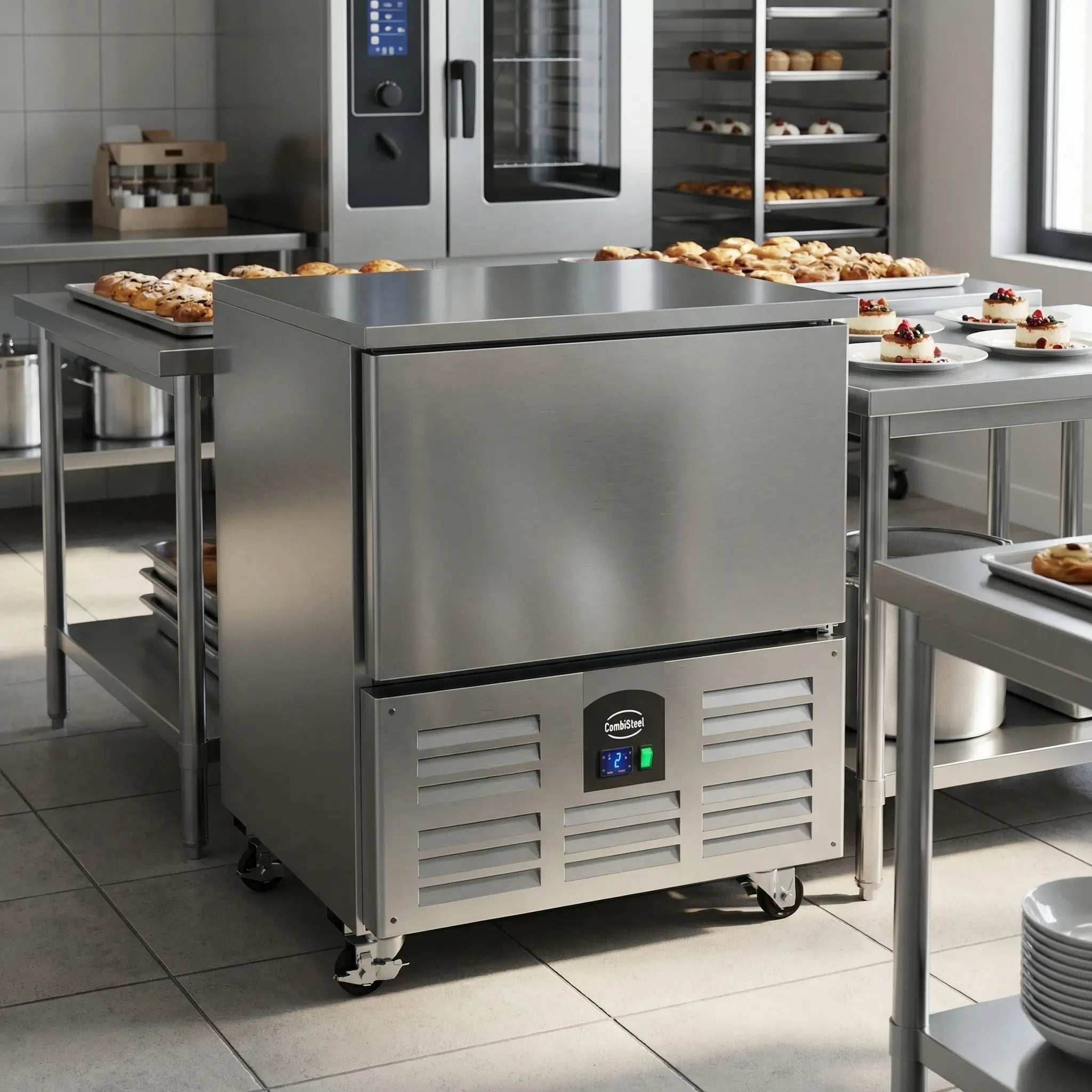
- Useful castors for easier cleaning around and under the machine
- Very interesting if floor hygiene is a real concern in your kitchen
- Good choice for caterers and teams who often move equipment
What errors should be absolutely avoided?
Wrong products and wrong actions quickly damage a blast chiller. Simple, regular cleaning is better than aggressive “heavy-duty cleaning.”
- Avoid chlorine / bleach on stainless steel.
- Avoid metallic sponges that scratch and then complicate hygiene.
- Avoid aggressive water jets on sensitive and technical parts.
If you want to delve deeper into the logic of use and compliance, you can also read our article on the usefulness of a rapid blast chiller as well as our guide on HACCP temperature guidelines in blast chillers.
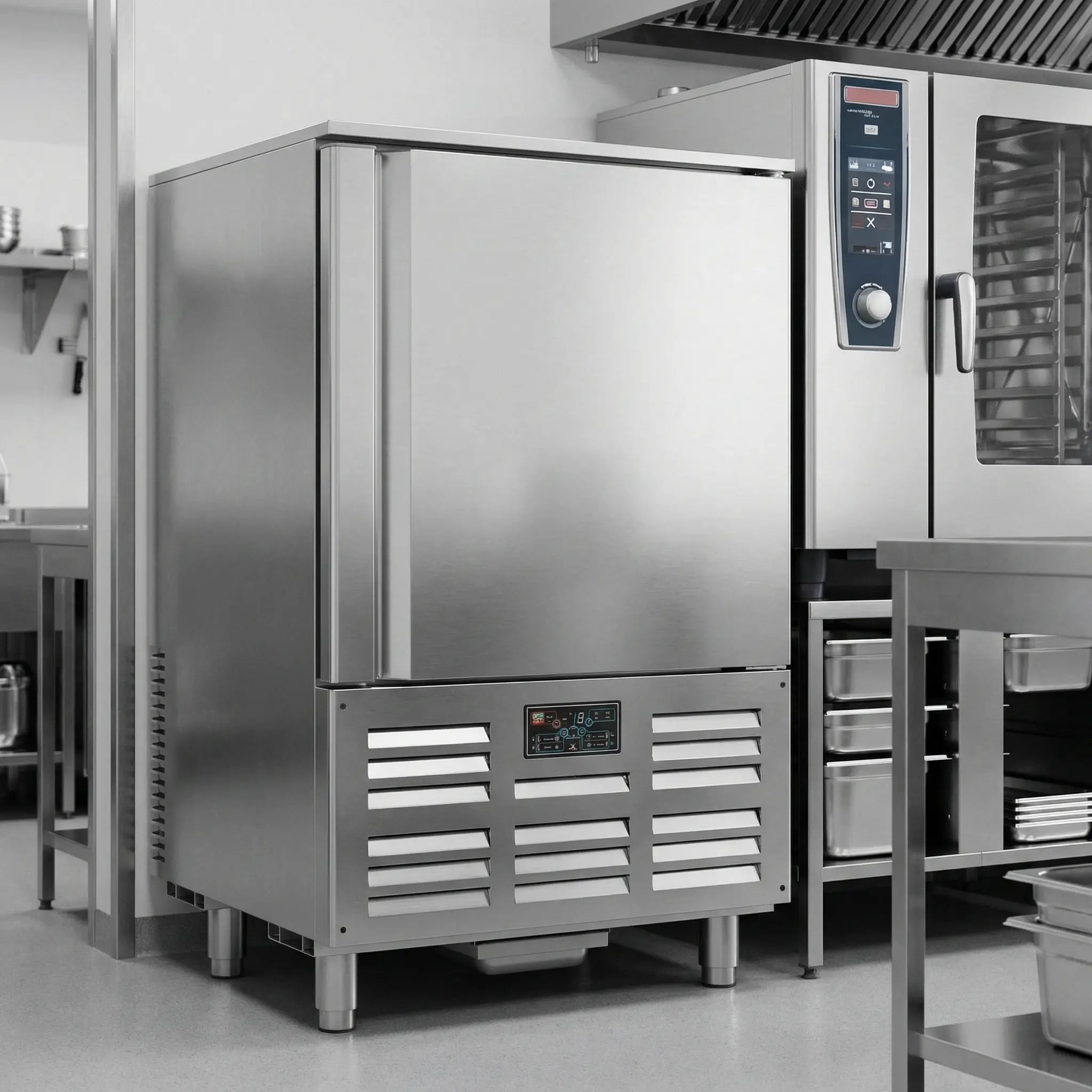
- More suitable if your maintenance protocol needs to support more sustained production
- Allows comparing a mobile format to a truly higher capacity blast chiller
- Good choice if the blast chiller is part of a more intensive daily workflow
Need a blast chiller that is easier to operate and maintain?
Explore our selection of professional blast chillers to choose a model adapted to your pace, space, and hygiene requirements.
FAQ
Should a blast chiller be cleaned every day?
Yes, at least on the areas in direct contact with activity: tank, supports, probe, and surfaces exposed to splashes.
Why must the core probe be systematically disinfected?
Because it penetrates food and can become a real vector for cross-contamination if neglected.
Does the condenser also need to be maintained?
Yes, because a dirty condenser strains the machine, degrades performance, and increases energy consumption.
Does a blast chiller on wheels really help with hygiene?
Yes, especially for easier cleaning of floors and the back of the machine without strenuous handling.