
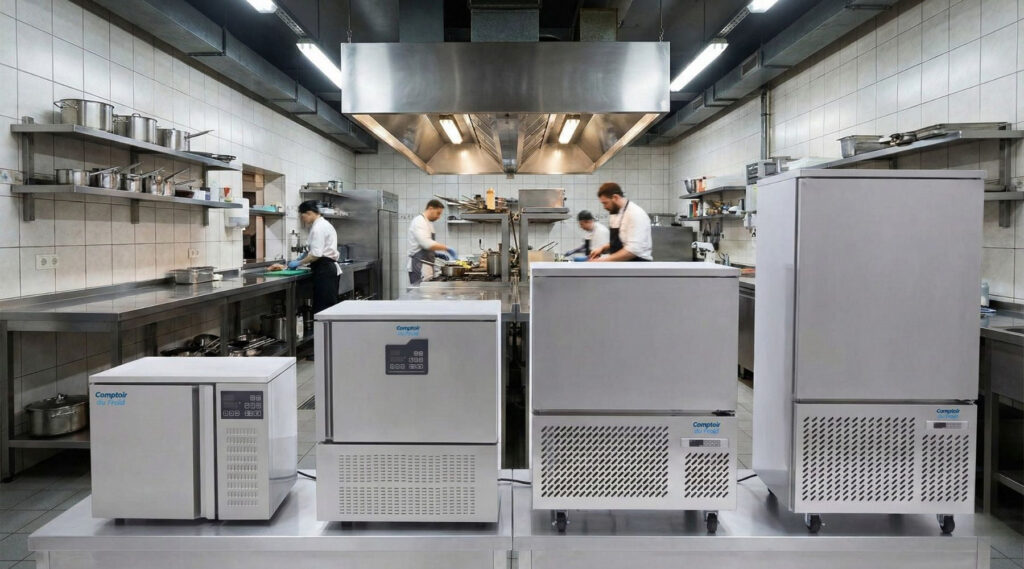
A blast chiller is used to quickly bring down the temperature of hot food, taking it out of the critical zone where bacteria multiply fastest. In catering, it’s not just a convenience: it’s a central tool for ensuring production safety and maintaining proper organization.
When used correctly, it allows for better compliance with HACCP requirements, working in advance, and minimizing waste. But to achieve this result, one must understand what it truly does and how to use it without errors.
What exactly is a blast chiller used for?
Its primary mission is to quickly pass through the microbiological danger zone. Between coming out of cooking and reaching storage temperature, a product remains vulnerable if cooling is too slow.
- Positive blast chilling: allows for a quick transition from a hot product to a temperature compatible with positive cold storage.
- Blast freezing: useful for quickly reaching negative temperatures with better control over product quality.
- Production organization: facilitates setup, batch cooking, and working ahead.
In other words, the chiller is not just for “cooling faster.” It is used to make your production safer, more consistent, and more defensible in case of inspection.
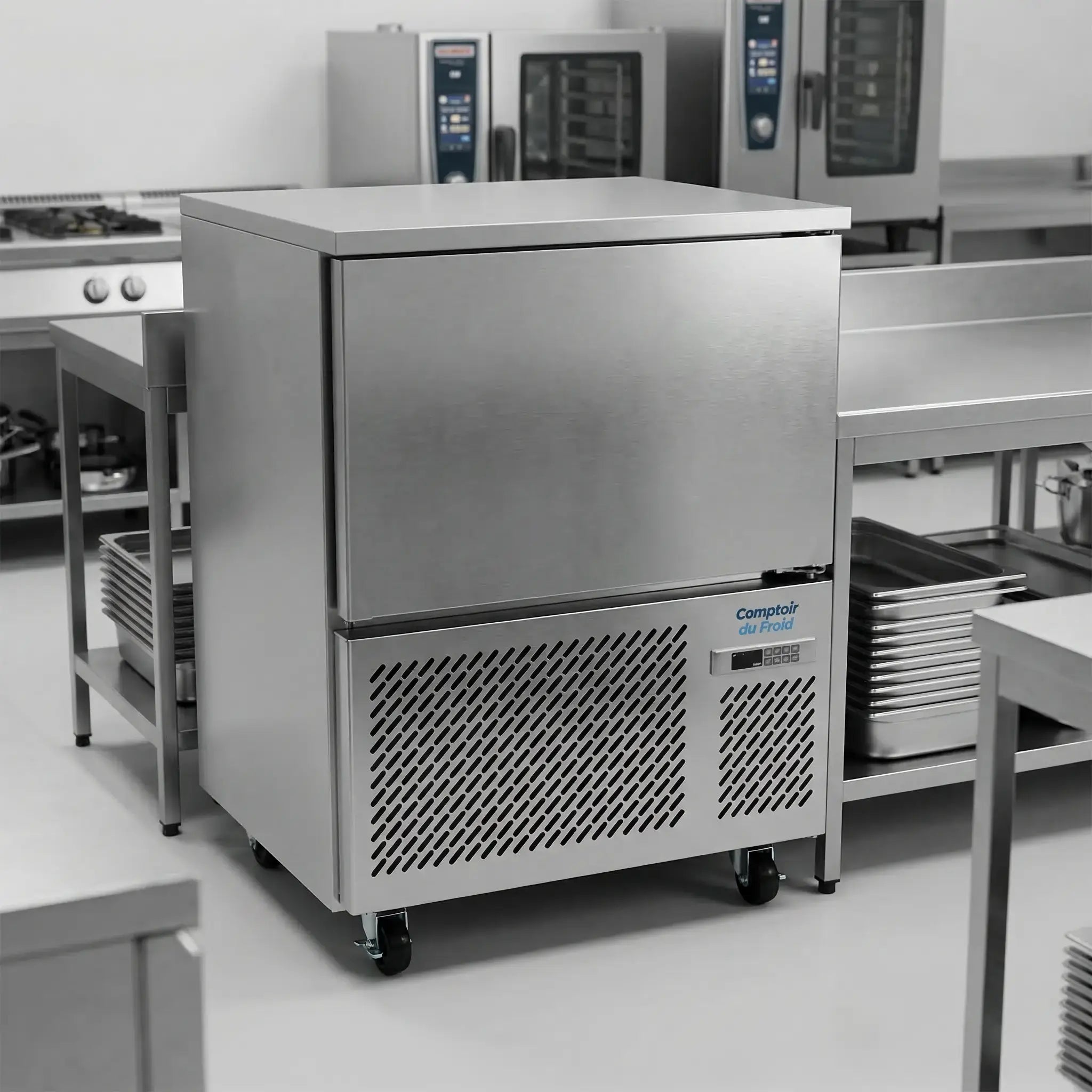
Stainless Steel Blast Chiller – 5 levels
- Good compromise for kitchens that want to chill properly without oversizing
- Suitable format for restaurants, pastry chefs, and structured small-scale productions
- Secures chilling with a truly professional approach
How to properly use a blast chiller?
Having the machine is not enough: the method of use matters greatly. A chiller becomes truly effective if loading, operation, and cycle completion are well managed.
- Pre-chill the chamber a few minutes before loading when relevant.
- Use appropriate, shallow containers, and avoid overloading the levels.
- Allow air to circulate: do not isolate products during the cycle.
- Prioritize the core temperature probe whenever precision truly matters.
- Remove and store products quickly after the cycle, with labeling and traceability.
The real goal is simple: to achieve a measurable, repeatable, and clean cycle, not just to “put a hot dish in a machine.”
Blast chilling or blast freezing: what’s the difference?
The two functions do not address the same need. Blast chilling is Maynly used to prepare for positive cold storage, while blast freezing aims for a controlled transition to negative temperatures.
| Function | Primary Use | Why it’s useful |
|---|---|---|
| Blast chilling | Pre-preparation, cooked dishes, positive storage | Secures temperature reduction without disrupting organization |
| Blast freezing | Long-term storage, advanced production, product quality | Limits degradation associated with slow freezing |
Verdict: if you primarily work with daily production and short-term preservation, blast chilling is often the priority. If you store more or manage significant volumes for freezing, blast freezing becomes more important in equipment selection.
Which range to choose based on your activity?
The right choice depends on your actual production pace. A “standard” chiller may suffice in many kitchens, but as intensity increases, power and robustness become more critical.
- Standard range: suitable for regular but still versatile activity.
- Heavy duty / pro line range: more appropriate for caterers, institutions, and intensive hot kitchens.
- Key criterion: choose not just by the number of levels, but by the actual loading pace and the thermal intensity of the products.
If you wish to delve deeper into the sanitary framework, you can also read our article on applying the HACCP protocol with a blast chiller as well as our article on the actual requirement for a chiller in catering.
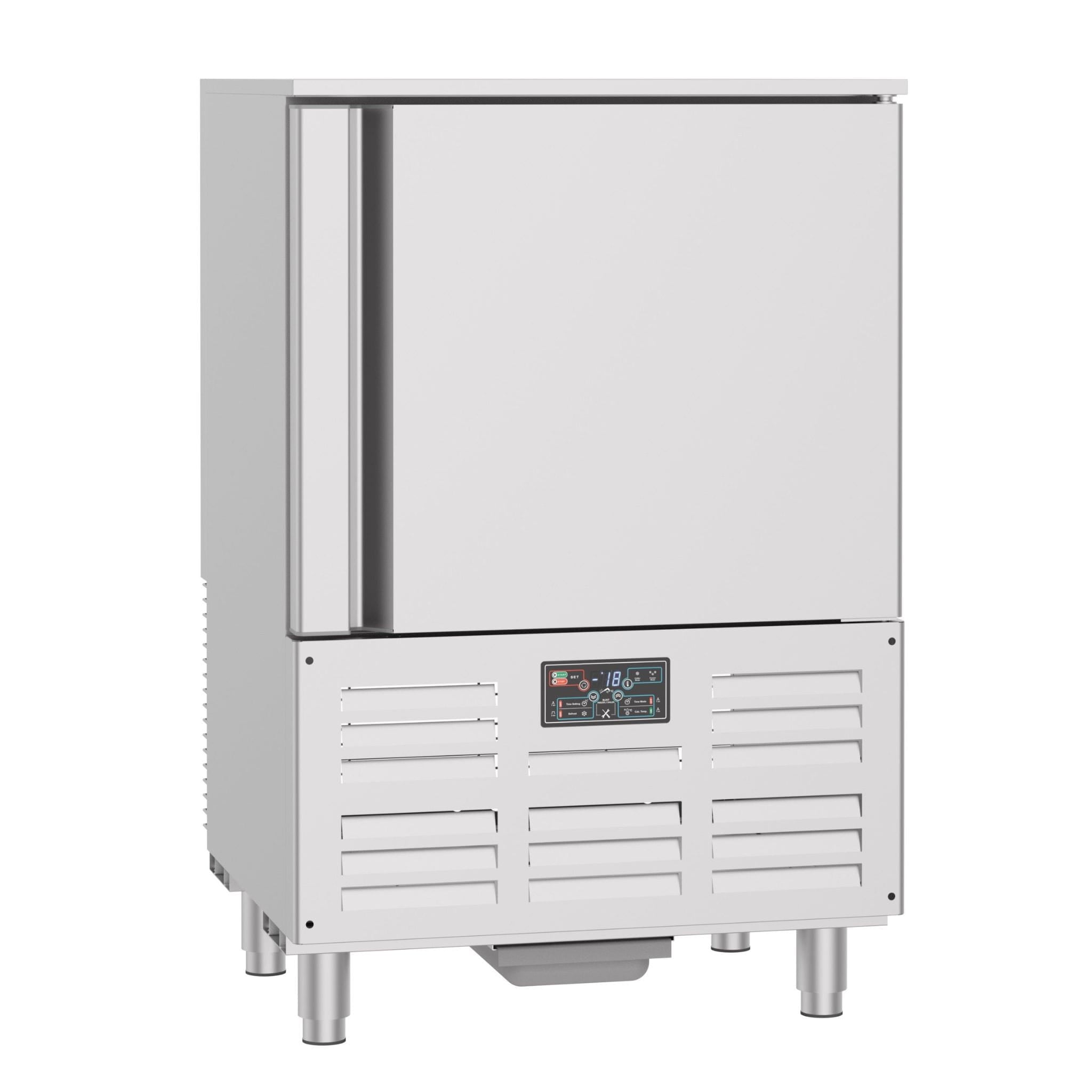
Fixed Blast Chiller – Pro Line Stainless Steel 304 – 7 levels
- More robust format for sustained and structured production
- More suitable when the chiller becomes a true daily workstation
- Good choice for caterers, institutions, and high-paced kitchens
Need to choose a chiller adapted to your production?
Explore our range to compare formats, levels, and capacities according to your chilling speed and HACCP requirements.
FAQ
What is the Mayn purpose of a blast chiller?
It serves to rapidly lower the temperature of hot foods to ensure safe preservation and better comply with sanitary requirements.
Can it only be used for positive chilling?
Yes, depending on the model and your uses. Many establishments primarily use it for this function daily.
Why is the core temperature probe recommended?
Because it allows the cycle to be controlled based on the actual product temperature, not just an estimated duration.
When should you upgrade to a higher-end blast chiller?
Whenever the pace, volumes, or thermal intensity of production make a standard range too limited for daily use.