
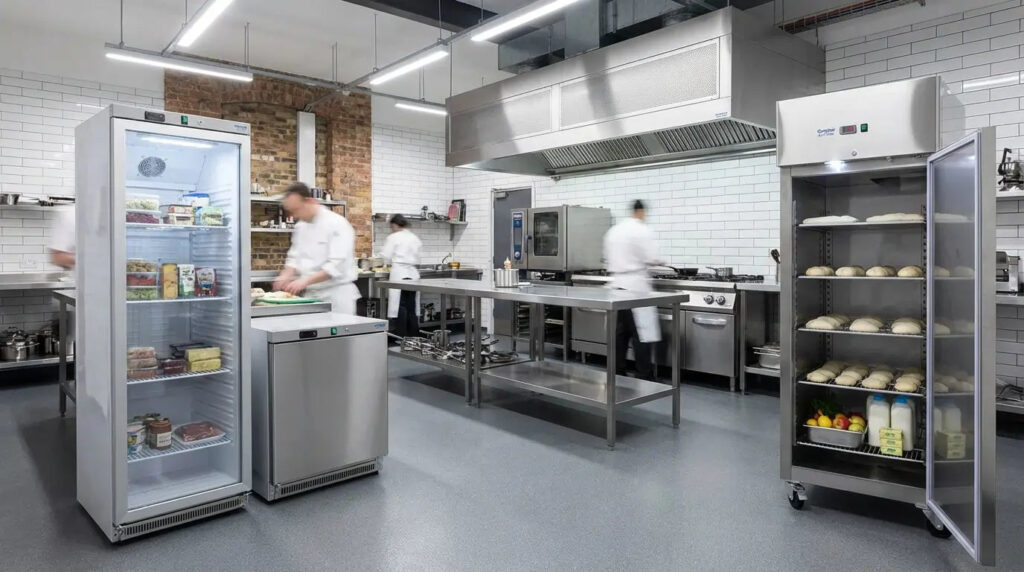
A glass-door refrigerated cabinet is not just for cold storage. In the HORECA environment, it must also showcase products, streamline service, and keep up with demand during peak hours. For a bar, bakery, snack bar, convenience store, or breakfast area, the right model improves both commercial visibility and cold chain management.
The classic pitfall is choosing a vertical display case as one would choose a simple positive cabinet. However, the needs are not exactly the same: display, frequency of opening, LED lighting, visual clearance, ergonomics of shelves, and temperature stability become central. If you are primarily looking for a classic storage unit, please also consult our guide to choosing a professional positive refrigerated cabinet.
In this guide, we will look at what a glass-door refrigerated cabinet is truly for, which criteria to compare, and which models to prioritize based on your business.
Why choose a glass-door refrigerated cabinet in a professional environment?
A glass door serves a dual purpose: preserve and sell. Where a solid door cabinet primarily optimizes storage, the glass-door version allows for displaying drinks, desserts, snack products, or premium items without unnecessary door opening.
- Better product visibility: your customers and team can quickly identify available items.
- Faster service: less time wasted searching for a product during rushes.
- Fewer unnecessary openings: temperature is better maintained when contents remain visible.
- Commercial enhancement: lighting and vertical presentation encourage impulse purchases.
In an establishment where display is as important as preservation, this is often a better choice than a simple closed cabinet. For preparation or production areas, however, a refrigerated counter or table might be more suitable; you can also read our complete guide to professional refrigerated counters if your priority is workbench space and quick access in the kitchen.
Essential criteria for making the right choice
The right volume depends less on available space than on your establishment’s actual turnover. An undersized model empties too quickly and leads to overstocking elsewhere. An oversized model ties up budget and space unnecessarily.
- Approx. 200L: ideal for a small bar, snack bar, or secondary service area.
- 400L: a very good compromise for a point of sale with regular rotation.
- 600L and above: recommended for establishments with long operating hours or a wide assortment.
- 1200L to 1400L: relevant for large volumes, self-service areas, or multi-reference sales spaces.
For a professional glass-door refrigerated cabinet, ventilated cooling is generally the most advantageous. It distributes air homogeneously, limits temperature variations between levels, and promotes more stable temperature recovery after door opening.
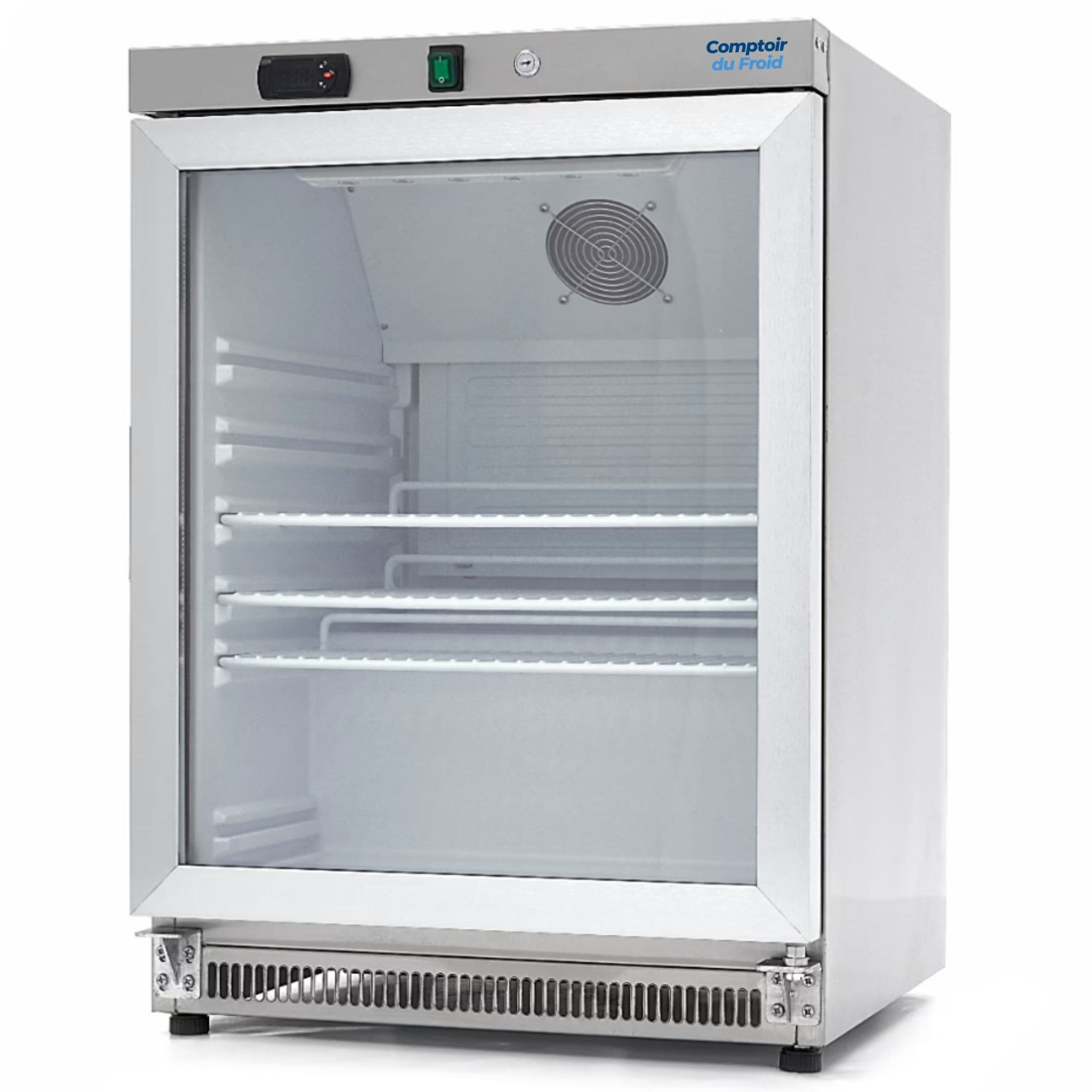
Small 200L Stainless Steel Glass Refrigerator (Display)
- Compact format ideal for bars, snack bars, counters, or breakfast areas
- Glass door for quick visual identification of items without unnecessary opening
- Clean and professional stainless steel finish for demanding HORECA environments
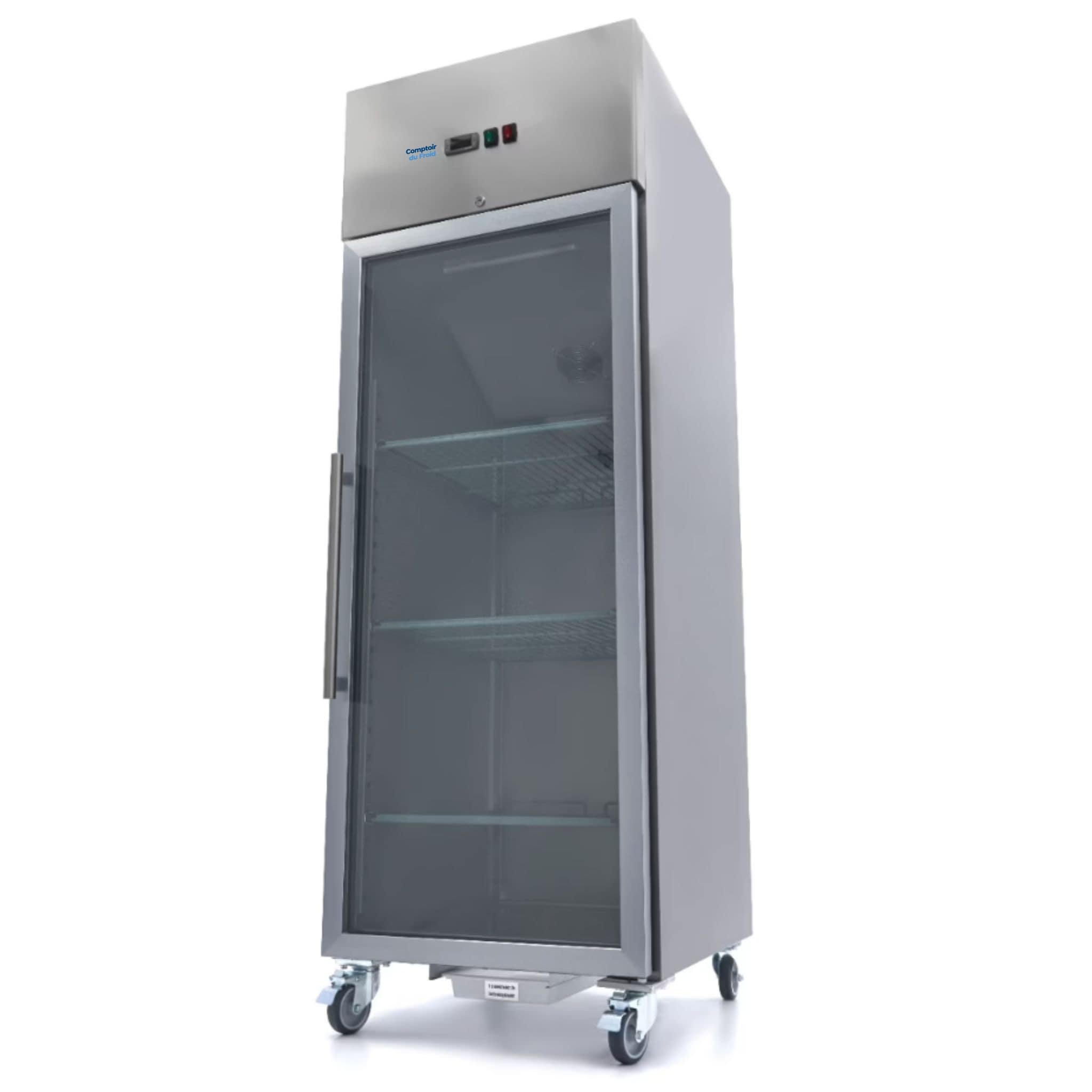
Professional GN 2/1 Glass-Door Refrigerated Cabinet – Display 600L
- Generous capacity for establishments with sustained rotation
- Practical GN 2/1 format for more rational organization
- Excellent solution for combining storage, presentation, and operational comfort
Storage, self-service, or premium display?
Before buying, ask yourself a simple question: who opens the cabinet, and how many times a day? A cabinet placed behind a counter does not have the same constraints as a visible model in a dining room, hotel lobby, or breakfast area.
| Usage | Priority | Recommended format |
|---|---|---|
| Bar / drinks | Visibility + fast rotation | 200 to 600L glass-door |
| Bakery / packaged pastry | Clear presentation + easy access | 400 to 600L glass-door |
| Convenience store / self-service | Capacity + display | 600 to 1400L glass-door |
| Open kitchen / auxiliary area | Compactness + accessibility | 200L compact |
A good glass door should offer a good compromise between visibility, insulation, and robustness. LED lighting should highlight products without unnecessarily heating the interior. Also check the quality of the seals, ease of cleaning the glass, solidity of the shelves, readability of the temperature display, and practical opening in your actual setup.
Mistakes to avoid before buying
- Choosing solely based on price: a cheaper but improperly sized cabinet will quickly penalize your service.
- Neglecting location: ventilation, door passage, opening clearance, and cleaning access are essential.
- Forgetting display logic: if your products are not well visible, the glass door loses some of its interest.
- Confusing storage with sales: a glass-door cabinet is ideal for display, but not necessarily for all your back stock.
Which model for which type of establishment?
In practice, the choice can be summarized as follows:
- Small establishment: opt for a compact 200L format, easy to integrate and profitable from the first services.
- High-turnover bar or snack bar: aim for 400L to 600L to avoid too frequent restocking.
- Self-service or long operating hours: go for capacities of 600L to 1400L to maintain a wide product offering.
- Mixed kitchen + display needs: combine a glass-door cabinet for sales with a storage unit for production.
The goal is not to have the largest possible cabinet, but the best balance between visibility, useful volume, and operational fluidity.
Need a glass-door cabinet that matches your business?
Compare our models based on your volume, rotation rate, and display logic.
FAQ: Glass-door refrigerated cabinets
What is the difference between a glass-door and a solid-door refrigerated cabinet?
The glass-door version allows products to be viewed without opening the door, which improves display and limits some unnecessary openings.
Is a glass-door refrigerated cabinet suitable for a bar?
Yes, it’s one of the most common uses for drinks, desserts, cans, bottles, and ready-to-serve products.
What volume should I choose for a professional glass-door refrigerated cabinet?
Count about 200L for a small point of sale, 400 to 600L for regular use, and more for self-service or high rotation.
Is ventilated cooling preferable for a glass-door cabinet?
In most cases, yes: it offers better temperature homogeneity and more stable recovery after door openings.