
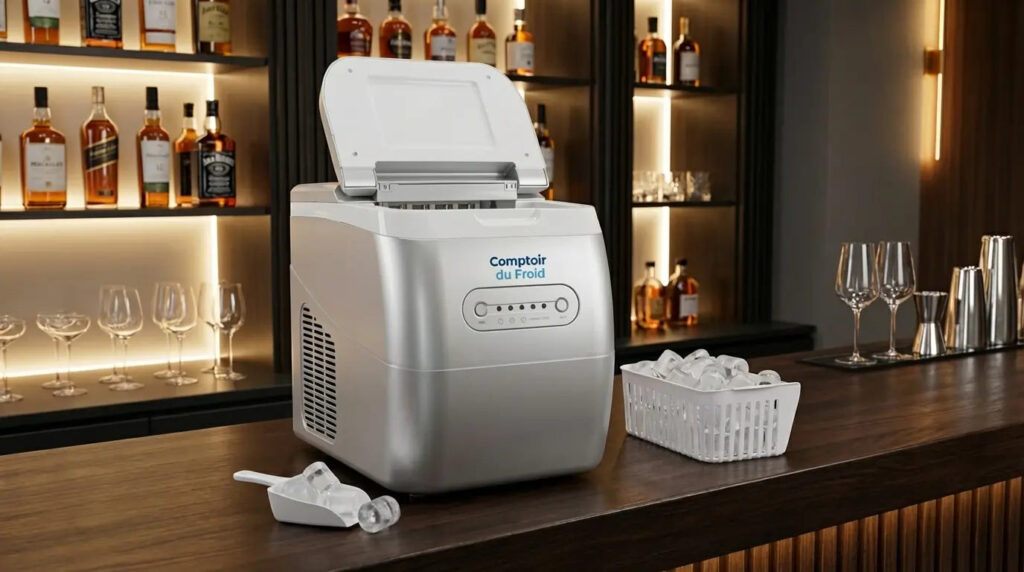
A cheap ice maker can be a good purchase if it genuinely covers your output, ice type, and hygiene requirements. In the restaurant industry, the real cost isn’t just in the purchase: it’s also measured by production consistency, water consumption, ease of cleaning, and the risk of breakdown during service.
In practice, an overly economical model quickly becomes expensive if it lacks reserve capacity, produces unsuitable ice cubes, or slows down the bar. Conversely, a well-sized professional machine often remains the most cost-effective choice for regular activity.
When is a cheap ice maker a good idea?
Yes, a cheap ice maker can be relevant if your need is simple, predictable, and moderate. This type of machine is primarily suitable for low output, occasional use, or establishments looking to start with a tight budget without completely sacrificing reliability.
In the field, the decisive point is not the advertised price, but the suitability of the machine for your service pace. A snack bar serving a few cold drinks does not have the same requirements as a cocktail bar, a brasserie, or a hotel at breakfast.
- Limited daily output, with few consumption peaks.
- Standard ice needs, without strong aesthetic requirements.
- Short-term or seasonal service, for example on a terrace or at an event.
- Limited space, requiring a compact format.
- Tight start-up budget, but a desire to buy equipment designed for the hospitality industry.
If your business grows quickly, it is still better to avoid under-sizing. The most common mistake is to buy “the cheapest possible” and then have to replace the machine a few months later because it can no longer keep up.
How to spot a false good deal before buying?
To spot a false good deal, you need to look at the real operating cost and not just the initial price. A cheap machine becomes a bad purchase as soon as it causes ice shortages, tedious cleaning, or irregular ice quality.
In practice, several signs should alert you:
- Vague or overestimated daily production, with no specified ambient temperature conditions.
- Insufficient reserve capacity, requiring waiting between two services.
- Lack of information on the cooling type (air or water), which is crucial depending on the location.
- Complicated cleaning, with difficult access to sensitive areas for hygiene.
- Uncertain parts or after-sales service, which increases the risk of downtime.
If you are still unsure about the right level of equipment, you can also consult our guide to choosing a professional ice maker, then compare it with our dedicated analysis of the professional alternative to a Carrefour ice maker.
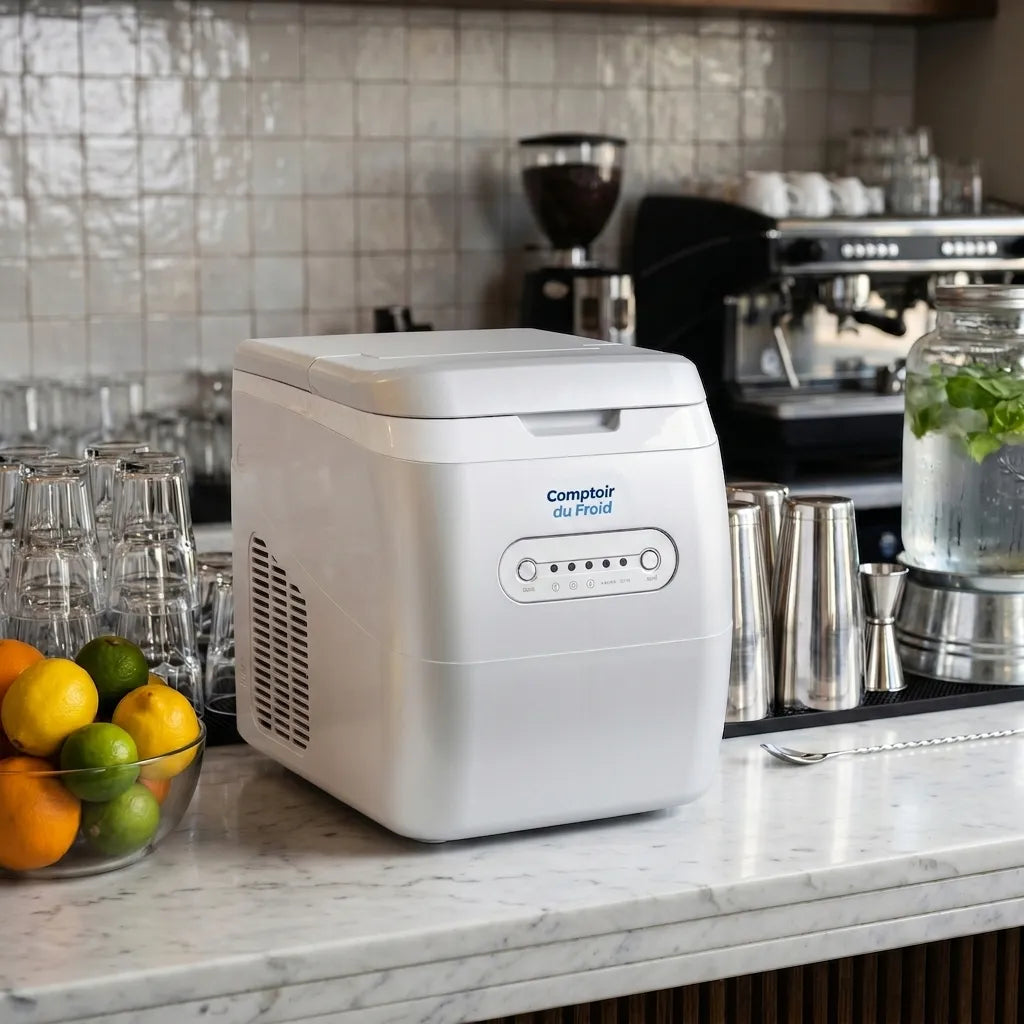
Small Professional Ice Maker 15 kg/24h
- Compact format ideal for a small counter, snack bar or office
- Controlled investment to start without over-equipping the business
- Designed for light professional use, more consistent than a consumer appliance
What capacity to choose to avoid paying twice?
The right capacity is one that covers your service without interruption, with a safety margin. For a cheap ice maker, the right approach is to size according to actual peaks, not according to the quiet daily average.
| Establishment Profile | Recommended Need | Purchase Logic |
|---|---|---|
| Small snack bar, office, occasional activity | Around 15 kg/24h | Tight budget, low output, simple need |
| Quiet bar, cafe, small restaurant | 24 to 45 kg/24h | Best compromise between price and service security |
| Busy restaurant, active terrace, high output | 60 kg/24h and more | “Cheap” becomes secondary compared to business continuity |
If you sell soft drinks, cocktails, iced coffees or spirits on ice, it’s best to keep a margin. A machine that is too small forces you to manage shortages during peak hours, which costs much more than a slight initial overinvestment.
Should you choose a compact model or go directly for a higher-end one?
The right choice depends on the level of pressure your service experiences. A compact model is sufficient when the need remains occasional or moderate. However, as soon as orders pile up, upgrading prevents ice shortages and operational tensions.
- Estimate your consumption during peak periods, not just on an average day.
- Check if you need simple continuous production or also a true buffer reserve.
- Look at the installation environment: heat, ventilation, proximity to a water inlet, available space.
- Opt for a machine designed for the hospitality industry if ice is part of daily service.
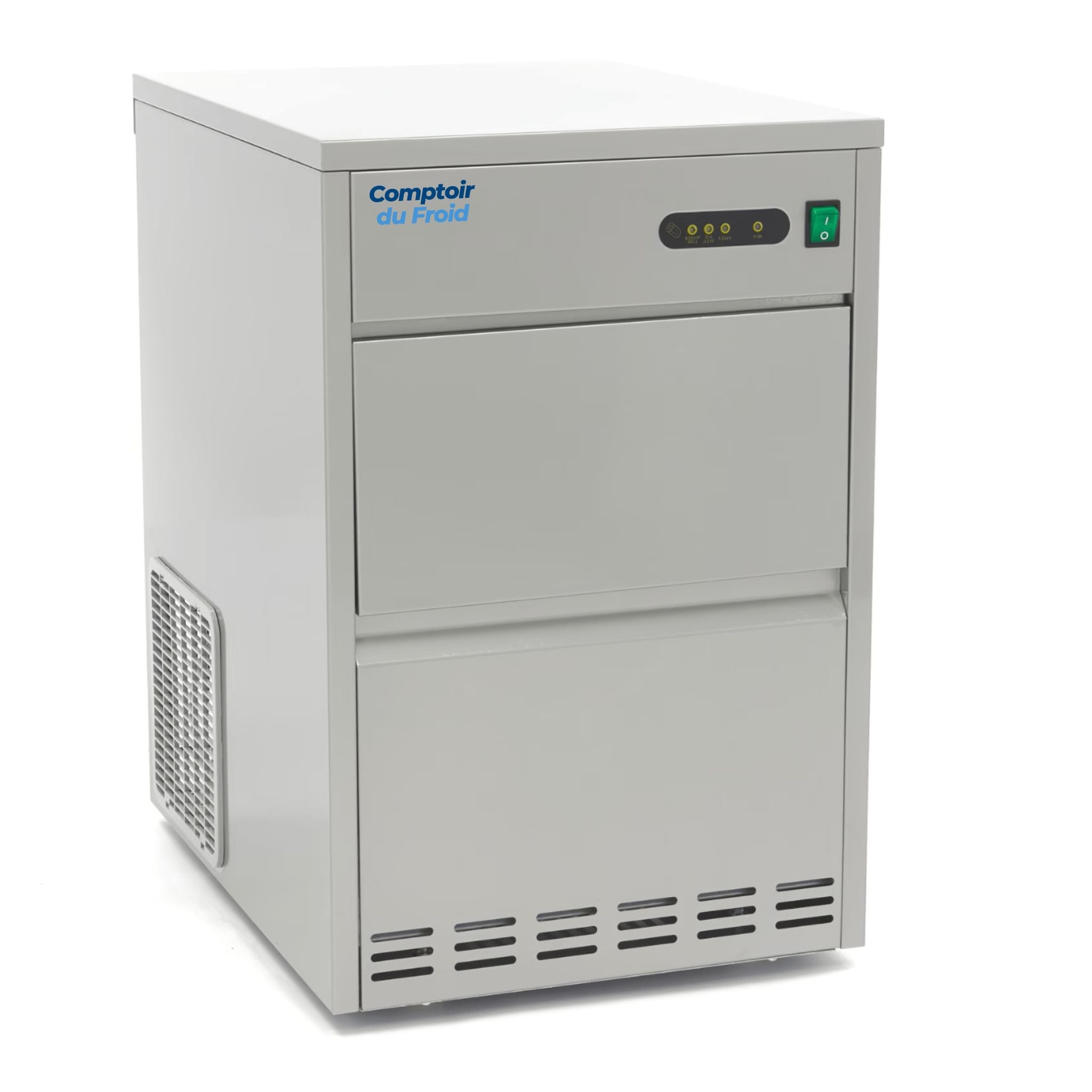
Professional Hollow Ice Maker – 45 kg per day – Air Cooling
- More secure capacity for a bar, cafe or restaurant with real output
- Air cooling practical to install in many hospitality environments
- Good compromise between budget, service continuity and scalability
What type of economical ice maker is right for your business?
The right type of machine depends primarily on your business use. You need to choose according to the output, the type of drink served, and the organization of the station, not solely according to the price.
- Snack bar, small restaurant, occasional use: a compact model may suffice.
- Bar or continuous catering: a machine with higher production and comfortable reserve is preferable.
- Intensive service: priority should be given to consistency, recovery speed, and durability.
You also need to consider the type of ice cube. Hollow ice cubes cool quickly and are suitable for many beverage services. For more premium or intensive uses, other formats may be more appropriate.
How to truly make your purchase profitable in the hospitality industry?
To make a cheap ice maker profitable, you need to aim for service continuity, hygiene, and durability. These three levers transform an economical purchase into a profitable one.
- Install the machine in a properly ventilated area.
- Follow regular cleaning procedures to prevent limescale and deposits.
- Slightly oversize if you have seasonal peaks or terraces.
- Choose a professional model rather than a consumer appliance if used daily.
Ultimately, a cheap ice maker remains an excellent choice when it covers your actual needs without dangerous compromises on the service chain.
Need a truly profitable machine for your output?
Compare our professional ice makers to find the right balance between budget, capacity, and service continuity.
FAQ: cheap ice maker
Can a cheap ice maker be suitable for a restaurant?
Yes, if the output remains moderate and the machine is well-sized. For continuous service, it is better to increase capacity to avoid shortages.
What is the Mayn risk of an overly economical model?
The Mayn risk is buying an undersized or unreliable machine, which then costs time, breakdowns, and shortages in service.
Should you choose a professional machine even with a small budget?
Yes, as soon as there is daily use in the hospitality industry. An entry-level professional model is often more coherent than a consumer appliance.
What is the minimum capacity to aim for in a small bar?
For a small bar, it is generally prudent to aim for at least 24 to 45 kg per day, depending on peak traffic and the type of beverages served.