
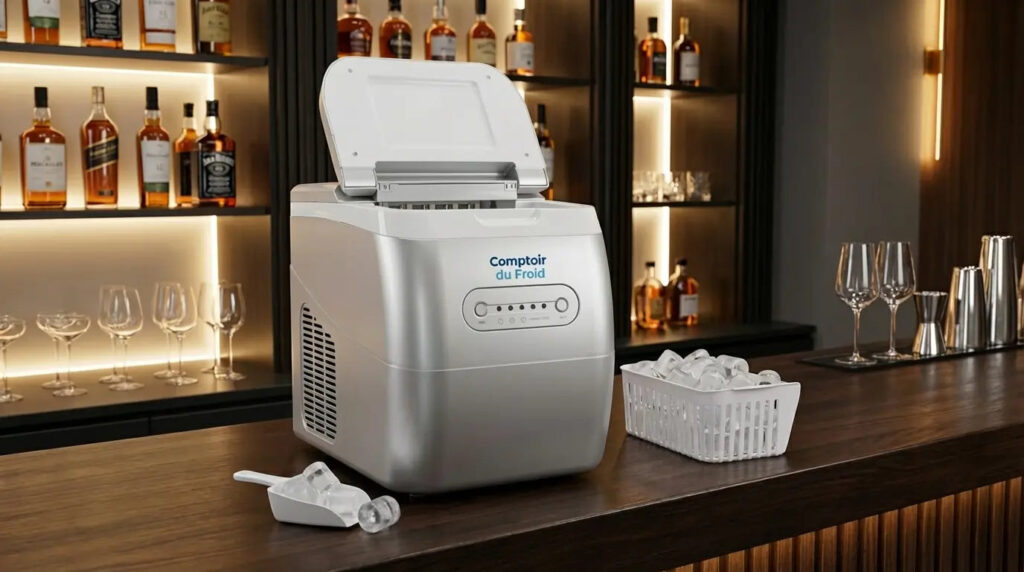
A Darty ice maker might be suitable for occasional use, but it quickly reaches its limits as soon as a bar, snack bar, or hospitality service needs to produce cold regularly. In practice, the real issue isn’t the advertised price: it’s the actual capacity, consistent production, and ability to keep up during peak hours.
If you serve a few drinks a day, a compact appliance might suffice. If you experience demand spikes, serve cocktails, soft drinks, iced coffees, or have stricter hygiene requirements, a professional ice maker quickly becomes more cost-effective and reliable.
Is a Darty ice maker suitable for professional use?
The short answer is no in most cases. Consumer models sold in retail stores are designed to help out a kitchen, a patio, or a small event, not to sustain a continuous service rhythm.
In practice, a hospitality establishment needs a machine capable of producing homogeneous ice cubes, quickly refilling its reserve, and remaining reliable for several hours at a time. This is precisely where the gap widens between a domestic appliance and equipment designed for professional service.
- Daily production: the actual need often far exceeds marketing claims.
- Buffer reserve: a small tray empties very quickly during busy service.
- Robustness: intensive use quickly wears out consumer components.
- Hygiene: cleaning and sanitary control must remain simple and regular.
If you also compare other consumer distribution channels, you can consult our analysis on ice makers sold at Boulanger and their professional alternatives, as well as our feedback on Carrefour ice makers versus the needs of real service.
How do you know if a consumer model will limit you?
The right question is simple: how many kilograms of ice cubes do you really need over 24 hours, and especially during a 2-hour rush? If you don’t have this answer, you risk buying too small.
In practice, an establishment that serves sodas, cocktails, iced coffees, or premium drinks needs a steady flow. An underpowered machine forces staff to ration ice, slows down service, and can degrade the customer experience.
Signs that it’s time to go professional
You should aim for a professional machine if you identify with any of these situations:
- you serve ice every day, not just occasionally;
- you have peak traffic at noon, in the evening, or on the terrace;
- you need a specific type of ice cube for the bar or restaurant;
- you cannot afford a breakdown during peak season;
- you want equipment that is consistent with a catering / HACCP logic.
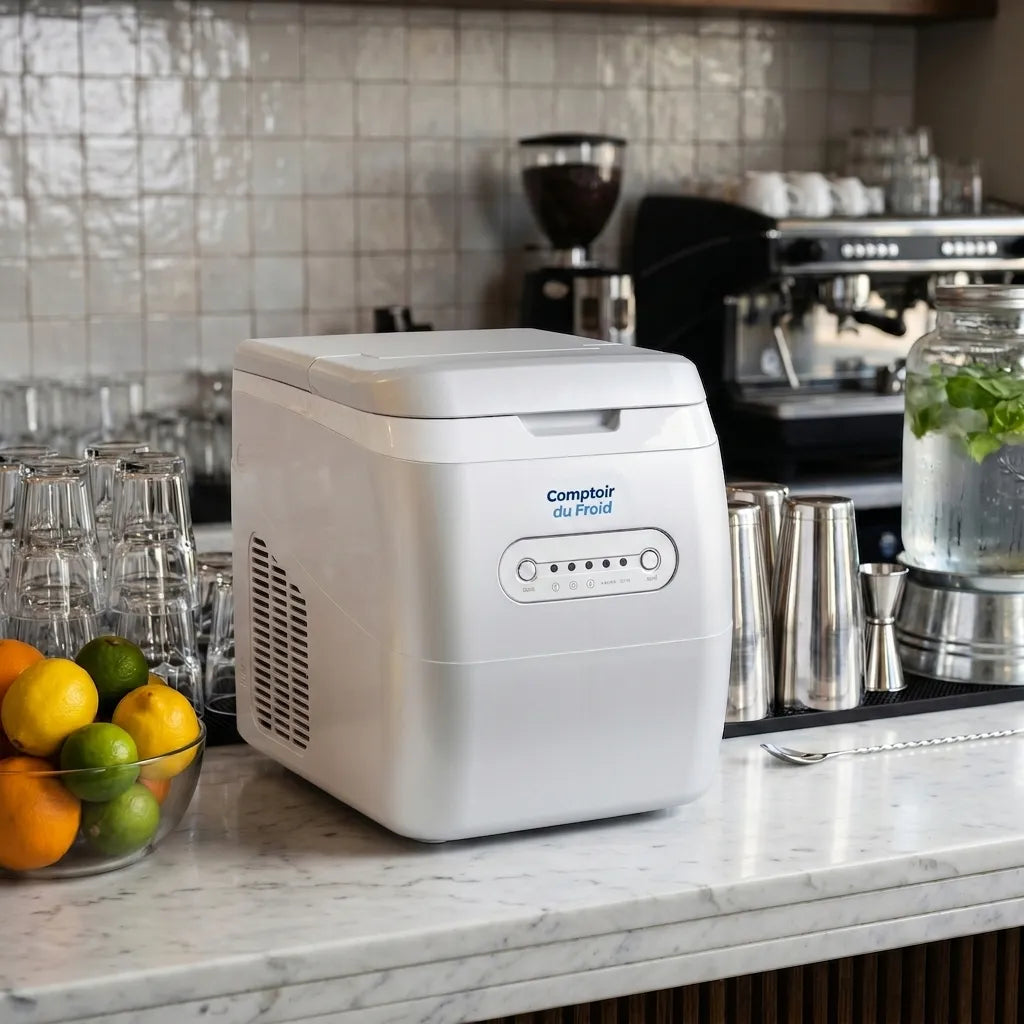
Small Professional Ice Maker 15 kg/24h
- More consistent with an auxiliary need or a truly entry-level use
- Compact format suitable for a small office, a small kitchen, or very limited output
- Best comparison point against consumer models sold at Darty
What are the concrete differences between a Darty model and a professional machine?
The short answer is that a professional machine doesn’t just offer more power: it offers service continuity. This is what makes the difference between a pleasant appliance at home and a usable tool in catering.
Recent market standards favor equipment that is appropriately sized, easy to maintain, and capable of maintaining stable production despite repeated openings, warm environments, and prolonged use.
| Criterion | Consumer machine | Pro machine |
|---|---|---|
| Target use | Domestic kitchen, occasional use | Bar, snack bar, restaurant, hotel, community |
| Pace | Limited, sensitive to peaks | Designed for a more regular flow |
| Reserve | Often small | More suitable for continuous service |
| Ice cube choice | Often little differentiation | Formats better suited for beverage and bar use |
| Durability | Good for occasional use | More consistent with intensive operation |
| Actual profitability | Good if needs are low | Better as soon as ice becomes a daily service item |
Verdict: If you have an event-based or very light use, a consumer model can be a temporary solution. However, for daily output, a team in production, and a requirement for regularity, the professional machine is the best compromise between cost, peace of mind, and quality of service.
Field advice: The most common mistake is to reason based on the “average” number of drinks per day. You need to consider the hourly peak: it’s what empties the reserve, causes shortages, and reveals if the machine is truly suitable.
What type of machine should you choose according to your activity?
The short answer depends on the volume and role of ice in your offering. The more ice contributes to sales, the more you need to secure production.
A small point of sale does not have the same constraints as a cocktail bar, a sandwich shop with cold drinks, or a high-turnover restaurant. In practice, you need to align the machine with your service flow, available space, and operational comfort.
Simple sizing benchmarks
- Light use: low-volume point of sale, a few cold drinks per service.
- Intermediate use: snack bar, bar, or fast food with several rush periods.
- Sustained use: establishment where ice is a true production or sales item.
For more intensive service, it is wise to aim for a machine with more margin than your theoretical minimum need. This reserve avoids working at permanent saturation, which improves actual daily availability.
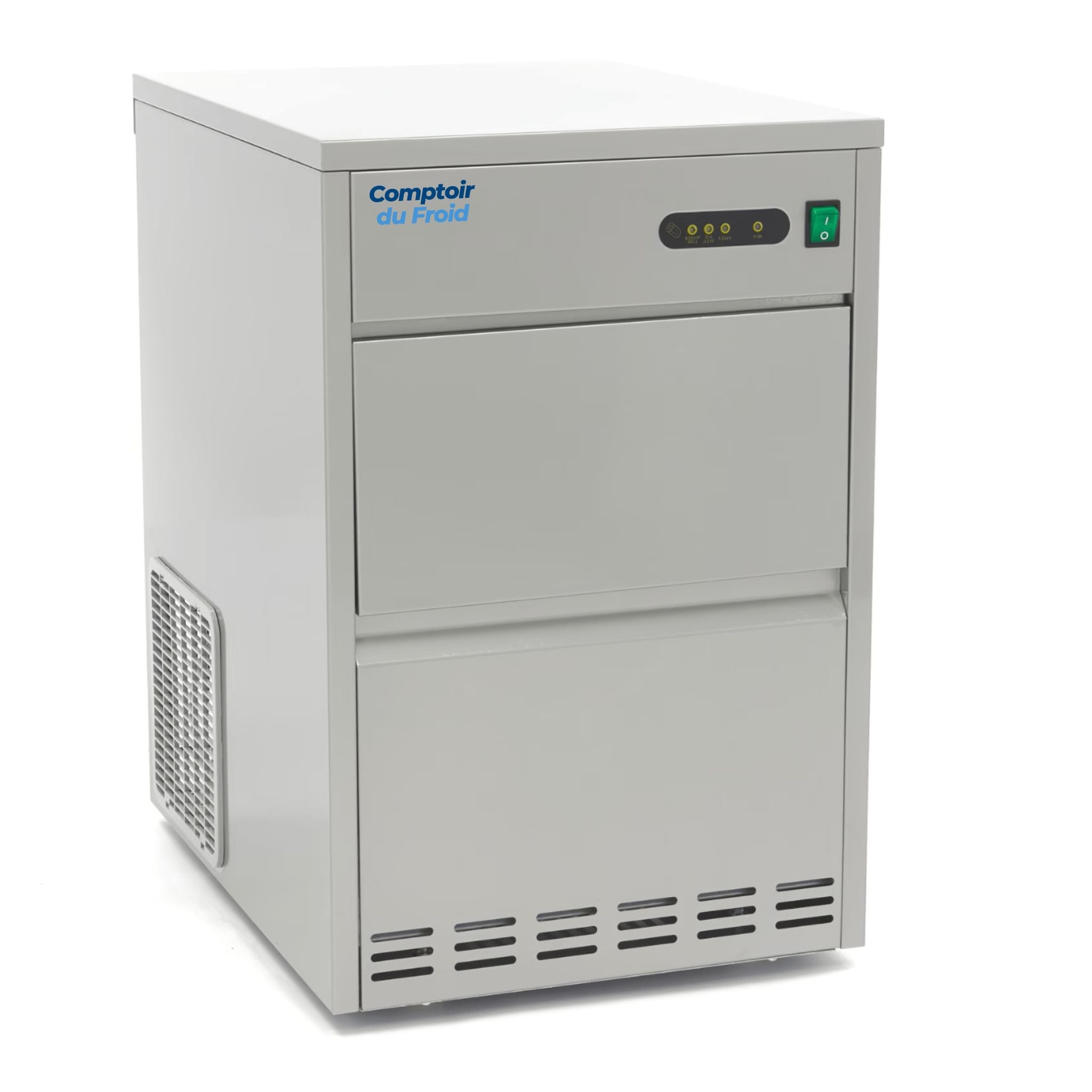
Professional Hollow Ice Maker – 45 kg per day – Air Cooling
- Consistent capacity for snack bars, bars, or small restaurants with regular flow
- Air cooling suitable for simple installations and dynamic services
- More stable production than a domestic appliance used beyond its intended purpose
Should you buy cheaper or invest directly in a professional machine?
The short answer is that a cheaper purchase is only worthwhile if your need remains truly occasional. As soon as the machine becomes an operational link in the service, the right calculation involves securing production and avoiding structural limitations.
An undersized appliance may seem economical at first, but it actually costs time, ice stockouts, degraded organization, and sometimes a less professional image at the counter. For a hospitality establishment, profitability is also measured in service fluidity.
A more serious investment becomes relevant if you are looking for:
- more predictable production;
- better performance during hot periods;
- easier hygiene maintenance;
- a sustainable equipment approach rather than a temporary fix.
Need a real machine adapted to your output?
Discover our selection of professional ice makers to choose the right capacity according to your activity and service rhythm.
FAQ
Can a Darty ice maker be suitable for a snack bar?
Yes, only if the volume of drinks is very low. As soon as service becomes regular, a professional model is safer.
What capacity should I aim for a small bar?
You need to consider service peaks. In practice, a machine that is too small quickly leads to shortages during the rush.
Why choose solid ice cubes rather than hollow ones?
Solid ice cubes melt more slowly and are well suited for premium drinks or bar use.
Is the lowest price always the best option?
No. If the machine is used daily, reliability and consistent production are more important than just the purchase price.